停止缩表

Search documents
11月24日:比特币、以太坊持续反弹?WLFI 、ASTER 、LTC、PLUME行情分析
Sou Hu Cai Jing· 2025-11-26 15:27
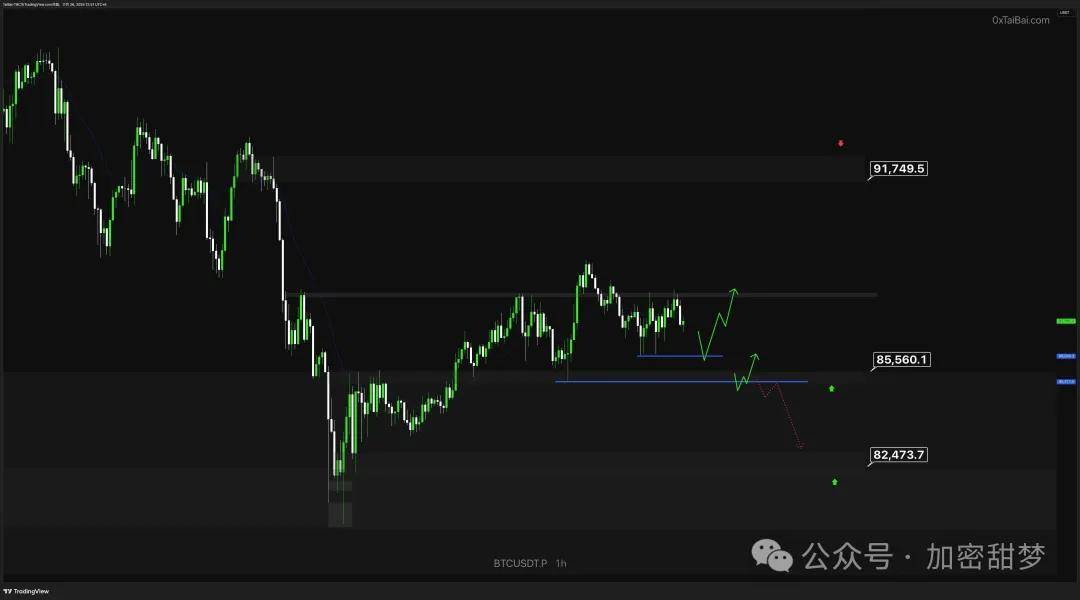
Group 1: Bitcoin Market Analysis - Bitcoin is currently experiencing a weak recovery after a significant drop, with market expectations leaning towards interest rate cuts and halting of balance sheet reduction in December, which may provide liquidity to the market [1] - The short-term support level for Bitcoin is at 86,000, while major resistance is observed between 88,000 and 89,000, indicating a period of consolidation [1] Group 2: Ethereum Market Dynamics - Ethereum is showing signs of increased rebound momentum on the 2-hour to daily charts, with a critical support level at 2,855; a strong bearish candle breaking this level could signal a downturn [3] - Key resistance levels for Ethereum are identified at 3,046, 3,082, and 3,130, with the latter being the first strong resistance above the 3,000 mark [3] Group 3: Altcoin Insights - WLFI has broken through its accumulation zone and is maintaining above $0.15, with potential targets set between $0.18 and $0.20, indicating a bullish trend [6] - ASTER has shown a lack of upward movement despite market rallies, suggesting that the main players have completed their distribution at high levels, with a potential drop back to $1.05 if it fails to break above $1.21 [8] - PLUME has seen significant trading activity, with a surge of over 80% in a short time, indicating potential for further gains upon pullback [11] Group 4: Litecoin and Market Conditions - Litecoin has triggered a daily oversold signal, historically leading to rebounds; however, the current market context is weaker than previous instances [12] - The overall liquidity in the altcoin market remains precarious following a major liquidation event, with many assets experiencing significant declines [13]

今夜,美联储祭出“降息+停止缩表”组合拳?
华尔街见闻· 2025-10-29 09:58
Core Viewpoint - The Federal Reserve is expected to announce a 25 basis point interest rate cut, primarily due to concerns over labor market risks and liquidity pressures in the money market, while also potentially halting its balance sheet reduction plan [4][5][21]. Group 1: Interest Rate Decision - The market anticipates a 25 basis point rate cut, which is seen as almost certain due to increasing concerns about the labor market, despite ongoing inflation pressures [5][10]. - The Federal Reserve's decision to cut rates is largely influenced by the need to address risks in the labor market, as indicated by recent comments from Fed Chair Powell [9][10]. - There is a notable division among FOMC members regarding the future outlook on interest rates, with some officials expressing concerns about inflation while acknowledging labor market risks [10][19]. Group 2: Labor Market Concerns - Analysts warn that the U.S. economy is in a "low hiring, low firing" state, with a clear risk of evolving into a "no hiring, layoffs" scenario, which could jeopardize the Fed's goal of maximizing employment [15][16]. - The FOMC's September meeting minutes revealed that most participants acknowledged increased downside risks to employment, highlighting concerns over potential hiring cuts and layoffs [16][20]. - The labor market's health is being monitored through weekly unemployment claims data, which remains a key indicator [17]. Group 3: Balance Sheet Reduction - The Fed is likely to announce the cessation of its balance sheet reduction plan due to recent signs of liquidity tightening in the money market [21][22]. - Major banks, including Goldman Sachs and JPMorgan, expect the Fed to take action to stabilize the financial system, especially after recent fluctuations in overnight financing rates [22][23]. - The Fed currently allows $5 billion in Treasury securities and $35 billion in mortgage-backed securities (MBS) to roll off its balance sheet each month, but may shift to reinvesting all maturing Treasuries [26][27]. Group 4: Data Limitations - The ongoing government shutdown has led to a lack of critical economic data, making it difficult for the Fed to provide clear guidance on future policy paths [6][28]. - The absence of reliable employment and inflation data complicates the Fed's decision-making process, with expectations that Powell may avoid giving explicit forward guidance during the upcoming press conference [30][31]. - Analysts suggest that the Fed may still proceed with a rate cut in December, despite the data vacuum, as the market has fully priced in the likelihood of another cut [32][34].
今夜,美联储祭出“降息+停止缩表”组合拳?
Hua Er Jie Jian Wen· 2025-10-29 08:34
Core Viewpoint - The Federal Reserve is expected to make a significant interest rate decision amid the uncertainty caused by the U.S. government shutdown, with a likely 25 basis point rate cut and an end to the balance sheet reduction plan to address labor market risks and liquidity pressures in the money market [1][2][3]. Group 1: Interest Rate Decision - A 25 basis point rate cut is almost certain, driven by concerns over labor market risks despite ongoing inflation pressures [1][3]. - The Federal Open Market Committee (FOMC) is focusing on labor market threats, with recent data indicating a potential shift from "low hiring, low firing" to "no hiring, layoffs," which could jeopardize the Fed's employment goals [4][6]. - The FOMC's internal divisions are increasing, with some members advocating for a more aggressive 50 basis point cut while others express concerns about inflation [3][4]. Group 2: Balance Sheet Reduction - Major banks, including Goldman Sachs and JPMorgan, anticipate that the Fed will announce a halt to its balance sheet reduction due to recent liquidity tightening in the money market [5]. - The Fed currently allows $50 billion in Treasury securities and $350 billion in mortgage-backed securities (MBS) to roll off its balance sheet monthly, but may shift to reinvesting all maturing Treasuries while allowing MBS to continue rolling off [5]. Group 3: Economic Data and Guidance - The ongoing government shutdown is causing a lack of critical economic data, making it difficult for the Fed to provide clear guidance on future policy paths [2][6]. - Analysts expect that the Fed will refrain from giving explicit forward guidance for December due to the unreliability of upcoming labor market data [6][7]. - The absence of reliable data may lead to a situation where skipping a widely anticipated rate cut could appear awkward for the Fed [6][7].
德意志银行:预计美联储下周宣布停止缩表
Sou Hu Cai Jing· 2025-10-24 22:43
Core Viewpoint - Deutsche Bank expects the Federal Reserve to announce the halt of balance sheet reduction in the upcoming policy meeting rather than in December, aiming to maintain its policy credibility after unexpected high repo rates this week [1] Group 1 - Deutsche Bank strategists revealed the expectation of the Federal Reserve's announcement regarding the cessation of balance sheet reduction [1] - The decision is influenced by the need to avoid a "serious blow" to the Fed's policy credibility due to the recent spike in repo rates [1]

抹掉本轮国产AI涨幅并不合理,港股科技ETF(159751)本周共4日获资金净申购
Sou Hu Cai Jing· 2025-10-17 13:22
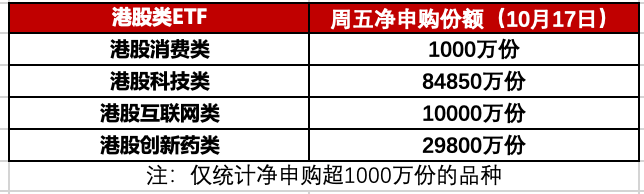
Group 1 - The Hong Kong stock market experienced a significant decline, particularly in the technology sector, which fell nearly 4%, with the Hang Seng Index breaking the support level of 25,700 [1] - The decline is attributed to the risk exposure of U.S. regional banks, but its direct impact on Hong Kong stocks is limited. The resulting decrease in U.S. Treasury yields and potential Federal Reserve rate cuts may be beneficial [1] - The market correction is seen as a result of excessive prior gains, with tariffs also contributing to a suppression of risk appetite [1] Group 2 - In the trading session, only two Hong Kong stock ETFs experienced redemptions, with one related to negative news about two automotive companies. The remaining ETFs saw net inflows, with 13 products collectively gaining over 1.256 billion shares [2] - The Hong Kong technology ETF received significant attention, with a net subscription of 84.85 million shares, indicating strong investor interest despite the market downturn [3] Group 3 - Long-term investors are advised to view the current market adjustment as a buying opportunity, particularly in leading technology and innovative pharmaceutical stocks, which have seen substantial corrections [3] - The copper-to-oil ratio is highlighted as a potential indicator of market trends, with a higher ratio suggesting stronger economic growth and lower inflation, serving as a predictive tool for market movements [3]
鲍威尔看到危机信号了
Hua Er Jie Jian Wen· 2025-10-15 10:39
Core Points - The primary motivation for Powell to halt the balance sheet reduction is to prevent a liquidity crisis in the financial markets [1] - Powell indicated that signs of tightening liquidity conditions are emerging, including a general rise in repo rates and more pronounced temporary pressures on specific dates [2][15] - The Federal Reserve's long-term plan is to stop the balance sheet reduction when bank reserves are "slightly above" what is considered "adequate" [15][17] Group 1: Liquidity and Market Rates - SOFR (Secured Overnight Financing Rate) is a key short-term interest rate mentioned by Powell, representing the average rate for overnight repo transactions secured by U.S. Treasury securities [5][6] - The current Federal Funds Rate (FFR) is set between 4.00% and 4.25%, with the ON RRP (Overnight Reverse Repo Rate) at 4.00% and IORB (Interest on Reserve Balances) at 4.25% [8][9] - The mechanism of the Federal Reserve's interest rate corridor is designed to keep market rates, including SOFR, within this range, but temporary breaches can occur if bank reserves are insufficient [11][12] Group 2: Historical Context and Risks - A similar liquidity crisis occurred in September 2019, when the SOFR jumped from 2.2% to 5.25% due to a sudden drop in bank reserves, leading to a freeze in repo transactions [14] - Powell's remarks reflect a desire to avoid repeating the 2019 crisis, where the Fed had to intervene urgently to restore liquidity [15] - The potential for a systemic risk arises if the balance sheet reduction continues beyond the target level, leading to overly scarce reserves [17] Group 3: Employment and Economic Conditions - Powell noted an increase in downside risks to employment and described the labor market as "slightly weak," indicating a need for a more neutral policy stance [18][19] - Halting the balance sheet reduction is seen as a preventive measure to provide a stable financial environment, especially as the economy shows signs of fatigue [19] - The Fed's cautious communication regarding balance sheet operations aims to manage market expectations and avoid unnecessary volatility [22]

鲍威尔看到危机信号了
华尔街见闻· 2025-10-15 10:22
Core Viewpoint - Powell's primary motivation for halting the balance sheet reduction is to prevent a liquidity crisis in the financial markets [4][19][21]. Group 1: Primary Motivation - Powell observed signs indicating that liquidity conditions are tightening, including a general rise in repo rates and specific temporary pressures on certain dates [4][19]. - The plan aims to avoid a situation similar to the liquidity crunch experienced in September 2019, where the SOFR spiked dramatically due to a sudden drop in bank reserves [18][20]. - The Federal Reserve's long-term strategy is to stop reducing the balance sheet when bank reserves are slightly above what is considered "adequate" [21][22]. Group 2: Secondary Motivation - Powell noted an increase in downside risks to employment and described the labor market as "slightly fatigued," suggesting that halting the balance sheet reduction could help stabilize the financial environment [23][24]. - This shift in policy is seen as a preventive measure to avoid exacerbating recession risks amid signs of economic fatigue [24]. - Powell emphasized the importance of clear communication to allow market participants to adjust their portfolios in response to the anticipated policy changes [26].