冷冻电子断层扫描技术

Search documents
我国光刻胶领域研究取得新突破
Ke Ji Ri Bao· 2025-10-29 02:18
Group 1: Lithography Technology and Research Findings - Lithography technology is a core driver for the continuous miniaturization of integrated circuit chip manufacturing processes [1] - A research team led by Professor Peng Hailin from Peking University has utilized cryo-electron tomography to analyze the microscopic three-dimensional structure and entanglement behavior of photoresist molecules in a liquid phase environment [1] - This research has resulted in a significant reduction of lithography defects, which is crucial for improving yield rates in advanced processes below 7nm [1] Group 2: Electronic Chemicals Industry and Conference Announcement - The electronic chemicals industry is highly competitive, with China being the largest manufacturer of electronic products, yet it heavily relies on imports for high-end products [3] - A conference titled "2025 Wet Electronic Chemicals and Electronic Gases High-end Development Conference" is scheduled to be held from November 20-22, 2025, in Fushun County, Sichuan Province [3][5] - The conference aims to enhance the manufacturing level and application of wet electronic chemicals, fostering deep integration of industry, academia, and research [3] Group 3: Conference Agenda and Participation - The conference will feature keynote speeches on topics such as engineering innovation in electronic chemicals, the current state and trends of electronic chemicals for integrated circuits, and the challenges and opportunities in the wet electronic chemicals manufacturing system [5][6] - Participants will include industry experts, production enterprises, and representatives from the electronic gas and packaging sectors [8] - The conference fee is set at 2000 yuan per person, with additional costs for accompanying enterprises [9]


国内团队破解芯片光刻缺陷难题?研究者回应一财
Di Yi Cai Jing· 2025-10-27 09:20
Core Viewpoint - The article emphasizes the need for early investment in extreme ultraviolet (EUV) photoresist technology to catch up with international peers in the semiconductor industry [8]. Group 1: Research Breakthroughs - A research team led by Professor Peng Hailin from Peking University has made significant advancements in the field of photoresist, utilizing cryo-electron tomography (Cryo-ET) to analyze the micro-3D structure and behavior of photoresist molecules in liquid environments [1][4]. - The study published in *Nature Communications* indicates that the proposed method can achieve over 99% improvement in reducing pattern defects in lithography processes [1][5]. Group 2: Technical Insights - The research reveals that the behavior of photoresist in developing solutions has been poorly understood, leading to trial-and-error approaches in the industry, which hampers the optimization of advanced manufacturing processes [3][4]. - The study suggests that suppressing polymer entanglement during the development process is crucial for mitigating surface defects, with an optimal post-exposure bake (PEB) temperature of 105°C recommended to facilitate polymer disentanglement [4][5]. Group 3: Market Context - The global semiconductor photoresist market is projected to grow from approximately $2.685 billion in 2024 to $4.547 billion by 2031, indicating a significant opportunity for domestic companies to enhance their market presence [8]. - Major players in the photoresist market include Tokyo Ohka Kogyo, JSR, and Shin-Etsu Chemical, predominantly from Japan, the U.S., and South Korea, with the top five companies holding about 86% of the market share in 2023 [8]. Group 4: Future Directions - The article highlights the importance of collaboration between industry and academia to address manufacturing defects in semiconductor production, with a call for domestic researchers to focus on EUV photoresist development to keep pace with international advancements [8]. - Recent achievements in photoresist research from various Chinese universities indicate a growing capability in the field, with ongoing efforts to transition research outcomes into practical applications [7].
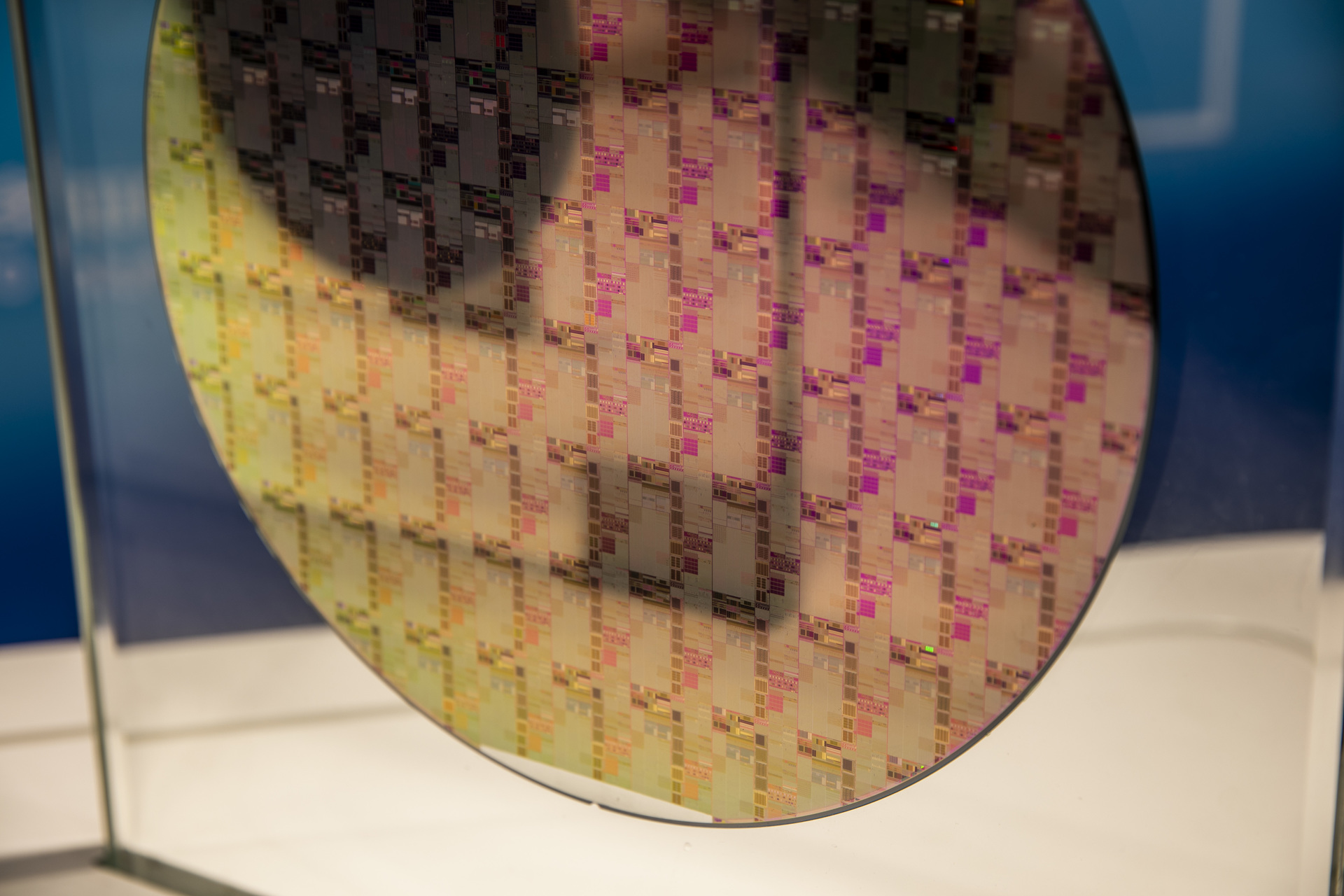
芯片光刻取得新突破!
Ke Ji Ri Bao· 2025-10-27 08:31
Core Insights - Recent advancements in photolithography technology have been achieved by a research team led by Professor Peng Hailin from Peking University, utilizing cryo-electron tomography to analyze the microscopic 3D structure and behavior of photoresist molecules in a liquid environment, which aids in developing industrial solutions to significantly reduce photolithography defects [1][2] Group 1: Photolithography Technology - Photolithography is a critical driver for the continuous miniaturization of integrated circuit chip manufacturing processes [1] - The core step of "development" in photolithography involves dissolving the exposed areas of photoresist with a developer solution to accurately transfer circuit patterns onto silicon wafers [1] - The microscopic behavior of photoresist in the developer solution has long been a "black box," limiting process optimization and becoming a key bottleneck for improving yield in advanced processes of 7nm and below [1] Group 2: Research Methodology - The research team introduced cryo-electron tomography into the semiconductor field, successfully synthesizing a high-resolution 3D "panoramic photo" with a resolution better than 5nm, overcoming traditional limitations of in-situ, three-dimensional, and high-resolution observation [1] - This technology provides a powerful tool for analyzing various liquid-phase interfacial reactions at the atomic/molecular scale, which can enhance defect control and yield improvement in critical processes such as photolithography, etching, and wet cleaning in advanced manufacturing [2]
首次!我国芯片领域取得新突破
半导体行业观察· 2025-10-27 00:51
Core Insights - The article discusses a breakthrough in photolithography technology, which is essential for the continuous miniaturization of integrated circuit chip manufacturing [2] - A research team led by Professor Peng Hailin from Peking University has utilized cryo-electron tomography to analyze the microscopic three-dimensional structure and behavior of photoresist molecules in a liquid environment [2] - This research aims to significantly reduce photolithography defects, which have been a critical bottleneck in improving yield rates for advanced processes at 7nm and below [2] Group 1 - Photolithography is a core step in chip manufacturing, where the movement of photoresist in the developer directly impacts circuit pattern accuracy and chip yield [2] - The microscopic behavior of photoresist in the developer has historically been a "black box," limiting industrial process optimization to trial and error [2] - The research team achieved a high-resolution three-dimensional "panorama" with a resolution better than 5 nanometers, overcoming traditional observational limitations [2] Group 2 - Cryo-electron tomography provides a powerful tool for analyzing liquid-phase interfacial reactions at the atomic/molecular scale [3] - Understanding the structure and microscopic behavior of polymers in liquid can enhance defect control and yield improvement in key processes such as photolithography, etching, and wet cleaning [3]
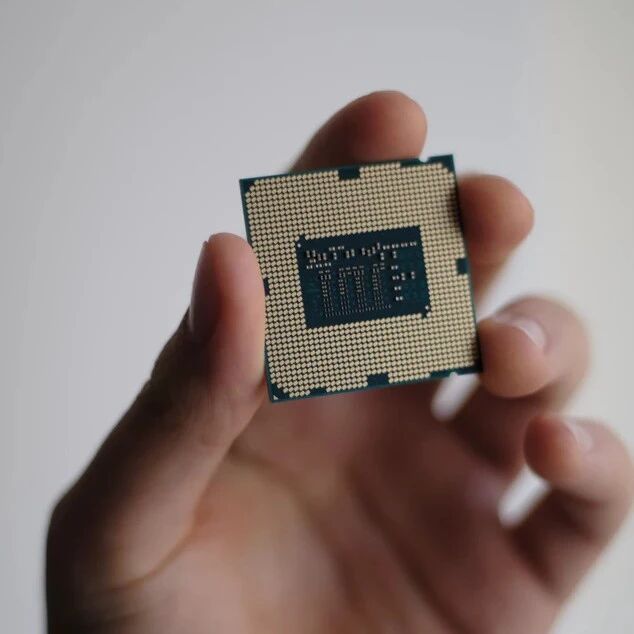
光刻胶领域,我国科学家取得新突破
DT新材料· 2025-10-26 14:26
Core Insights - The article discusses the advancements in photolithography technology, particularly the use of cryo-electron tomography to analyze the micro-3D structure of photoresist molecules in liquid environments, which can significantly reduce photolithography defects [2][3] Group 1: Photolithography Technology - Photolithography is a core driver for the continuous miniaturization of integrated circuit chip manufacturing processes [2] - The research team successfully synthesized a micro-3D "panoramic photo" with a resolution better than 5 nanometers, overcoming traditional technology limitations in real-time, three-dimensional, and high-resolution observation [2] Group 2: Research Implications - The introduction of cryo-electron tomography provides a powerful tool for analyzing various liquid-phase interfacial reactions at the atomic/molecular scale, which can enhance defect control and yield improvement in advanced processes such as photolithography, etching, and wet cleaning [3]

我国芯片领域,取得新突破
21世纪经济报道· 2025-10-25 23:31
Core Viewpoint - The research team from Peking University has successfully utilized cryo-electron tomography to analyze the micro-3D structure, interfacial distribution, and entanglement behavior of photoresist molecules in a liquid environment, leading to a significant reduction in lithography defects [1][4]. Group 1: Research Significance - The introduction of cryo-electron tomography in the semiconductor field allows for real-time, high-resolution observation of photoresist behavior in developing solutions, addressing the limitations of traditional methods [4][5]. - This advancement is expected to enhance defect control and yield improvement across various critical manufacturing processes in the chip industry, paving the way for the next generation of more powerful and reliable chips [5]. Group 2: Market Insights - The photoresist market in China is projected to grow from approximately 10.92 billion yuan in 2023 to over 11.4 billion yuan in 2024, with expectations to reach 12.3 billion yuan by 2025, driven by the acceleration of domestic substitution for mid-to-high-end products like KrF photoresists [5]. - Lithography is identified as the most time-consuming and challenging process in integrated circuit manufacturing, accounting for about 50% of the manufacturing time and approximately one-third of production costs [5]. Group 3: Domestic Equipment Development - The domestic lithography machine industry is progressing, although it still faces technological limitations compared to international standards, particularly in high-end lithography machines [7]. - The domestic supply chain for lithography machines includes upstream equipment and materials, midstream system integration and production, and downstream applications [7].

重大突破!芯片,大消息!
券商中国· 2025-10-25 15:40
Core Viewpoint - Recent advancements in China's semiconductor industry, particularly in photoresist technology, are expected to significantly enhance the manufacturing process and reduce defects in integrated circuits [2][3][5]. Group 1: Breakthrough in Photoresist Technology - A research team from Peking University has utilized cryo-electron tomography to analyze the micro-3D structure and behavior of photoresist molecules in liquid environments, leading to a new industrial solution that reduces lithography defects [2][3]. - The study revealed that traditional assumptions about photoresist behavior were incorrect, showing that most polymers are adsorbed at the gas-liquid interface rather than dispersed in the liquid [4]. - The research identified that aggregated particles, averaging about 30 nanometers in size, are potential sources of defects, which can lead to circuit patterns merging unintentionally [4]. Group 2: Market Growth and Demand - The photoresist market in China is projected to grow from approximately 109.2 billion yuan in 2023 to over 114 billion yuan in 2024, with expectations to reach 123 billion yuan by 2025 [2][6]. - The demand for semiconductor photoresists is increasing due to the rise of domestic semiconductor manufacturers and expanding downstream needs, accelerating the localization of mid-to-high-end products like KrF photoresists [6]. - The photoresist market has historically been dominated by international giants, but recent technological breakthroughs in China's semiconductor supply chain are changing this landscape [6]. Group 3: Importance of Lithography in IC Manufacturing - Lithography is the most time-consuming and challenging process in integrated circuit manufacturing, accounting for about 50% of the manufacturing time and approximately one-third of production costs [5]. - The quality of photoresist directly impacts the lithography process, which is critical for transferring circuit patterns onto silicon wafers [5]. - As integrated circuit feature sizes shrink, the requirements for photoresists are becoming increasingly stringent, necessitating advancements in resolution, contrast, and sensitivity [5].

光刻胶领域,我国取得新突破
中国基金报· 2025-10-25 13:02
Core Insights - The article discusses a new method using cryo-electron tomography to analyze the microscopic behavior of photoresist in liquid environments, which can significantly reduce defects in chip lithography [2][3]. Group 1: Technology and Methodology - The research team from Peking University applied cryo-electron tomography to observe the three-dimensional structure and entanglement behavior of photoresist molecules in situ, marking a breakthrough in semiconductor technology [2]. - This method allows for high-resolution imaging (better than 5 nanometers) and addresses the limitations of traditional techniques that could not observe the microscopic behavior of photoresist in real-time [3]. Group 2: Findings and Implications - The study revealed that contrary to previous beliefs, most dissolved photoresist polymers are adsorbed at the gas-liquid interface rather than dispersed in the liquid [5]. - The team identified "cohesive entanglement" of photoresist polymers, which can lead to the formation of aggregation particles averaging about 30 nanometers in size, posing a risk of defects in circuit patterns [5]. - Two practical solutions were proposed to control entanglement: increasing post-exposure bake temperature to suppress polymer entanglement and optimizing the development process to maintain a continuous liquid film on the wafer surface, successfully reducing defect counts by over 99% [5]. Group 3: Future Applications - The cryo-electron tomography technique provides a powerful tool for analyzing liquid-phase reactions at the atomic/molecular scale, which can enhance defect control and yield improvement in advanced processes such as lithography, etching, and wet cleaning [5].

光刻胶领域,我国取得新突破
证券时报· 2025-10-25 12:52
Core Insights - The article highlights a significant breakthrough in the field of photoresists in China, particularly in the context of semiconductor manufacturing [1][2]. Group 1: Breakthrough in Photoresist Technology - A research team led by Professor Peng Hailin from Peking University has utilized cryo-electron tomography to analyze the microscopic three-dimensional structure and behavior of photoresist molecules in a liquid phase, which aids in developing industrial solutions to reduce photoresist defects [1]. - The core step of "development" in photolithography involves dissolving the exposed areas of photoresist with a developer solution, which directly impacts the precision of circuit pattern transfer onto silicon wafers and ultimately affects chip yield [1]. - The long-standing challenge of understanding the microscopic behavior of photoresists in developer solutions has been likened to a "black box," hindering the optimization of processes for advanced manufacturing nodes of 7nm and below [1]. Group 2: Technological Advancements - The introduction of cryo-electron tomography into the semiconductor field allows for unprecedented observation of liquid-phase reactions at the atomic/molecular scale, providing a powerful tool for understanding polymer structures and behaviors in liquid [2]. - Mastery of the structure and microscopic behavior of polymers in liquid can enhance defect control and yield improvement in critical processes such as photolithography, etching, and wet cleaning in advanced manufacturing [2].

光刻胶领域,我国取得新突破
财联社· 2025-10-25 11:50
Core Insights - Lithography technology is a key driver for the continuous miniaturization of integrated circuit chip manufacturing processes [1] - The research team led by Professor Peng Hailin from Peking University has utilized cryo-electron tomography to analyze the micro three-dimensional structure and entanglement behavior of photoresist molecules in a liquid phase environment [1][2] - This breakthrough allows for the development of industrial solutions that significantly reduce lithography defects, which is crucial for improving yield rates in advanced processes below 7 nanometers [1] Group 1 - The core step of lithography, "development," involves dissolving the exposed areas of photoresist with a developer solution to accurately transfer circuit patterns onto silicon wafers [1] - The movement of photoresist in the developer solution directly impacts the precision and quality of the circuit, thereby affecting chip yield [1] - Historically, the microscopic behavior of photoresist in the developer solution has been a "black box," limiting process optimization in the industry to trial and error [1] Group 2 - The introduction of cryo-electron tomography into the semiconductor field has enabled the synthesis of a micro three-dimensional "panoramic photo" with a resolution better than 5 nanometers [1] - This advancement overcomes three major pain points of traditional techniques: the inability to observe in situ, three-dimensional structures, and high resolution [1] - Mastering the structure and microscopic behavior of polymers in liquid can enhance defect control and yield improvement in key processes such as lithography, etching, and wet cleaning in advanced manufacturing [2]