KrF光刻胶

Search documents
【太平洋科技-每日观点&资讯】(2026-03-30)
远峰电子· 2026-03-29 09:19
Market Overview - Major indices showed positive performance with Shenzhen Component Index up by 1.13%, Sci-Tech Innovation 50 Index up by 0.93%, and Shanghai Composite Index up by 0.63% [1] - TMT sector led the gains with SW Electronic Chemicals III increasing by 4.78% and SW Semiconductor Materials rising by 2.80% [1] - Conversely, TMT sector also saw declines with SW Communication Network Equipment down by 1.23% [1] Domestic News - Huahong Semiconductor is steadily expanding its capacity, achieving its first-phase target for 12-inch production lines and planning to reach its capacity goals by Q3 2026 [2] - The cumulative shipment of the Tianyue 510 SSD controller chip from Pingtouge has exceeded 500,000 units, making it one of the highest recent shipments in China [2] - Demand for data communication optical modules in the domestic market is expected to grow significantly, with an estimated total of 20 to 30 million units needed this year [2] - Dinglong has established China's first full-process production line for high-end wafer photoresist, with three products already in stable supply [2] Overseas News - Two U.S. senators plan to propose a U.S. Security Robot Act that would prohibit the federal government from purchasing or using unmanned ground vehicles made in China [3] - Some DDIC suppliers are assessing price adjustments to counteract rising upstream costs, with potential price increases depending on product type and market [3] - Counterpoint Research indicates that shipments of mobile SoCs with advanced process nodes (5nm and below) will exceed 50% by 2025, with TSMC supporting the production of 2nm nodes [3] AI Insights - OpenAI has indefinitely suspended the development of an "adult mode" for ChatGPT and has also halted its Instant Checkout shopping feature [4] - Webtoon announced significant updates to its user-uploaded comic platform, including an optional AI translation tool [4] - Mistral AI released an open-source voice synthesis model that supports multi-language and emotional voice generation [4] Industry Tracking - A satellite developed by the Chinese Academy of Sciences and the European Space Agency for solar wind-magnetosphere interaction has completed pre-launch preparations [5] - A foreign research team demonstrated a method for generating high-dimensional topological photon entanglement, providing a feasible path for scalable and fault-tolerant quantum photonic states [5] - The first national standard system covering the entire chain of embodied intelligence has been released, emphasizing unified interfaces and ecological collaboration [5] Annual Reports - Jingwang Electronics reported total revenue of 15.308 billion yuan for 2025, a year-on-year increase of 20.92%, with a net profit of 1.231 billion yuan, up 5.3% [8] - Sitaiwei achieved total revenue of 9.031 billion yuan, a 51.32% increase year-on-year, with a net profit of 1.001 billion yuan, up 154.94% [8] - Changfei Fiber reported total revenue of 14.252 billion yuan, a 16.85% increase year-on-year, with a net profit of 814 million yuan, up 20.4% [8] - Changxin Bochuang reported total revenue of 2.533 billion yuan, a 44.93% increase year-on-year, with a net profit of 335 million yuan, up 364.62% [8]






国产光刻胶关键一跃!KrF 原料自主、ArF 规模量产
是说芯语· 2026-03-08 02:14
Core Viewpoint - Recent breakthroughs in the domestic high-end photoresist industry indicate a significant shift towards industrialization, with key players achieving large-scale production and certification for critical materials [1][4]. Group 1: KrF Photoresist - KrF photoresist, essential for 248nm nodes, serves as a critical link between mature and advanced processes, covering a wide range of applications from power devices to advanced packaging, and accounts for approximately 34%-35% of the overall semiconductor photoresist market [3]. - Historically, the KrF photoresist market has been dominated by Japanese companies, which hold over 90% of the global market share, leading to challenges for domestic wafer fabs in terms of high costs, long lead times, and supply risks [3][4]. - The recent establishment of a domestic 100-ton production line for KrF resin marks a significant breakthrough, addressing the upstream material bottleneck and enabling local manufacturers to achieve stable and scalable supply [4][6]. Group 2: ArF Photoresist - ArF photoresist represents a strategic advancement towards high-end processes, with Nanda Optoelectronics achieving certification and large-scale production for leading wafer fabs, covering nodes from 28nm to 14nm [6][9]. - The successful integration of KrF and ArF photoresists creates a comprehensive and sustainable tiered structure for domestic photoresist production, enhancing collaboration with domestic DUV lithography equipment [6][9]. Group 3: Industry Progress and Challenges - Despite significant advancements in KrF resin production and ArF photoresist penetration, the domestic industry still faces challenges in higher-end fields such as ArF immersion and EUV photoresists, where R&D is ongoing and competitive gaps remain [7]. - The recent achievements in photoresist production signify a milestone, reflecting the collaborative enhancement of precision chemicals, material synthesis, process adaptation, and large-scale manufacturing capabilities within the domestic semiconductor materials sector [9].



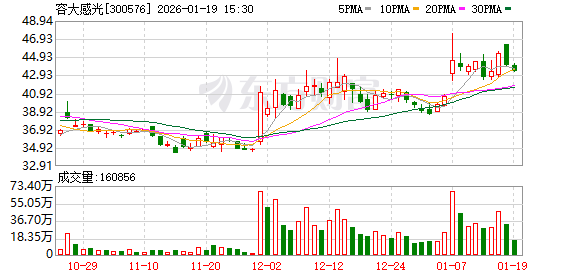
容大感光:公司KrF光刻胶项目已完成了光刻机等核心设备的配置工作,目前正积极开展相关产品的研发工作
Mei Ri Jing Ji Xin Wen· 2026-01-19 16:11
Group 1 - The company has completed the configuration of core equipment for its KrF photoresist project and is actively conducting related product research and development [2]

日本经济学家:中国就算造出光刻机,也无法量产,因为缺乏真正的“核心材料
Sou Hu Cai Jing· 2026-01-18 21:49
Core Viewpoint - The statement from a Japanese economist regarding China's inability to mass-produce lithography machines due to a lack of "core materials" reflects a sense of superiority and outdated thinking about China's capabilities in the semiconductor industry [1][8]. Group 1: Market Dynamics - The global photoresist market has been dominated by Japanese companies such as JSR, Tokyo Ohka, and Shin-Etsu Chemical, particularly in high-end ArF and EUV photoresists [3]. - Chinese company Tongcheng New Materials has achieved certification for its ArF/ArFi photoresist products from domestic chip manufacturers and secured mass production orders, projecting nearly 200 million yuan in revenue for 2025, with a growth rate exceeding 50% [3][5]. - Tongcheng New Materials has captured over 40% market share in the KrF photoresist sector and won 35% of the annual orders from Yangtze Memory Technologies [5]. Group 2: Technological Advancements - Nanda Optoelectronics has also received certification for its ArF photoresist from Yangtze Memory Technologies, with domestic production rates increasing from less than 1% in 2023 to over 5% [6]. - Chinese companies like Lante Optics and Sunny Optical have made significant advancements in optical lens materials, establishing themselves as key players in automotive and consumer electronics, although they still lag behind in high-end lithography lenses [6]. Group 3: Structural Changes in Supply Chain - The Japanese economist's comments reveal a failure to recognize the structural changes occurring in the global semiconductor supply chain, particularly as the U.S., Japan, and the Netherlands impose technology restrictions on China [8]. - These restrictions have inadvertently accelerated the efforts of Chinese companies to overcome critical supply chain challenges, leading to a shift in market dynamics [8][11]. - The notion of "soul materials" being irreplaceable is challenged by historical precedents where technological monopolies have been disrupted [10]. Group 4: Future Outlook - The Japanese semiconductor industry's past dominance has been challenged by competitors from South Korea and Taiwan, suggesting that similar shifts could occur in the materials sector [10]. - While China still needs time to catch up in high-end photoresists and specialty optical materials, the assertion that it can "never mass-produce" is overly absolute and reflects emotional bias rather than technical analysis [10]. - The ongoing development of Shanghai Microelectronics' 28nm lithography machine and plans for EUV equipment delivery by 2026 indicate a synchronized advancement in both equipment and materials within the industry [10].
日本专家直言:中国永远造不出合格光刻胶?国产突破正在改写规则
Sou Hu Cai Jing· 2026-01-18 05:20
Core Viewpoint - The debate surrounding high-end photoresists highlights the ongoing competition between China and Japan in the semiconductor materials sector, emphasizing the importance of domestic industry discourse and technological independence [1][5]. Group 1: Market Dynamics - Japanese companies dominate over 90% of the global high-end photoresist market, with major players like Tokyo Ohka Kogyo, Shin-Etsu Chemical, JSR, and Fujifilm controlling essential materials for processes from ArF to EUV [3]. - The long-standing technological advantage of Japan in photoresist production is attributed to nearly 60 years of continuous innovation in chemical synthesis, molecular design, and process optimization [3]. - China's photoresist industry has historically faced significant challenges, with a domestic production rate of less than 5% and a complete reliance on Japanese imports for high-end materials, particularly EUV photoresists used in advanced processes [3]. Group 2: China's Response - In response to technological barriers, China has adopted a dual approach of targeted breakthroughs and systematic development, prioritizing photoresists as a key area for semiconductor material innovation [4]. - Local companies such as Nanda Optoelectronics, Rongda Photosensitive, and Tongcheng New Materials have made significant progress, achieving mass production of KrF photoresists and validating ArF photoresists for small-scale sales, with domestic production rates exceeding 30% in the KrF market and double-digit growth in the ArF market [4]. - Notably, Chinese-developed EUV photoresists have entered pilot testing, achieving international advanced levels in critical metrics such as linewidth control and sensitivity optimization [4]. Group 3: Strategic Implications - The competition over photoresists transcends mere technological rivalry, as Japan seeks to stifle China's semiconductor industry growth through material monopolization, while China aims to reconstruct a self-sufficient industrial ecosystem [5]. - Despite the existing performance gaps in stability, supply capacity, and process compatibility, China's substantial market demand, ongoing research investment, and agile engineering capabilities are gradually dismantling Japan's perceived irreplaceability [5]. - The journey from laboratory innovations to large-scale commercialization for Chinese photoresists is expected to be lengthy, requiring extensive process refinement and market validation [5]. Group 4: Future Outlook - The successful validation of Chinese photoresists on a global scale would mark a significant milestone for China's semiconductor industry, symbolizing a robust response to technological hegemony [6].

光刻胶国产替代迎来机会!美国关税倒逼+政策红利护航+头部企业技术破壁,头部企业A+H股上市助力行业加速
Xin Lang Cai Jing· 2026-01-15 14:09
Group 1 - Nanda Optoelectronics is a core enterprise in the semiconductor materials field, focusing on the R&D and mass production of ArF photoresists, having achieved breakthroughs that disrupt the monopoly of Japanese and American companies in the mid-to-high-end photoresist market [1][38][39] - The company has established deep cooperation with foundries in the Yangtze River Delta and has successfully validated its ArF photoresist for 28nm processes, leading to significant order growth and capacity expansion following the introduction of U.S. semiconductor tariffs in 2026 [1][39] - The National Big Fund has provided financial support for its photoresist projects, enhancing its first-mover advantage in the domestic photoresist market [1][39] Group 2 - Tongcheng New Materials, based in Shanghai, is a leading domestic rubber additive company that has entered the photoresist market through the acquisition of Beixu Electronics, focusing on the R&D and production of KrF photoresists [2][40] - The company has established stable partnerships with major domestic foundries, achieving large-scale production of KrF photoresists widely used in memory chips and power devices [2][40] - Plans for an H-share listing in 2026 aim to raise funds for high-end photoresist R&D and capacity expansion, further enhancing its competitive edge in the domestic market [2][40] Group 3 - Dinglong Co., headquartered in Wuhan, is a leader in printing and copying consumables, diversifying into semiconductor materials with a focus on polishing pads and supporting materials for photoresists [3][41] - The company has established close cooperation with major foundries like SMIC, achieving import substitution for its CMP polishing pads, which supports its photoresist business [3][41] - Following the U.S. semiconductor tariffs, there has been a surge in demand for localized supporting materials, leading to increased orders for its photoresist and related products [3][41] Group 4 - Yake Technology, located in Jiangsu, has entered the semiconductor photoresist market through the acquisition of South Korea's UP Chemical, focusing on KrF and ArF photoresists [4][42] - The company has integrated the technical advantages of the Korean team with domestic market resources, positioning itself as a core supplier of mid-to-high-end photoresists in the global semiconductor supply chain [4][42] - The electronic specialty gas business complements its photoresist offerings, providing a one-stop material solution for foundries [4][42] Group 5 - Dongcai Technology, based in Sichuan, specializes in high polymer resin materials for photoresists, leveraging its chemical industry foundation in the Southwest [5][43] - The company has achieved batch supply of resin products for various photoresist models, including G/I line and KrF, validated by multiple domestic photoresist manufacturers [5][43] - The demand for localized raw materials has surged following the U.S. semiconductor tariffs, leading to increased production capacity and a focus on high-end resin materials for ArF photoresists [5][43] Group 6 - Lianhong New Materials, located in Shandong, produces core raw materials such as monomers and solvents for photoresists, achieving low-cost production with quality meeting import standards [6][44] - The company has established long-term partnerships with downstream photoresist manufacturers, enhancing product adaptability and market share [6][44] - The acceleration of domestic substitution due to U.S. tariffs has led to a significant increase in orders for its photoresist raw materials [6][44] Group 7 - Shengquan Group, based in Shandong, focuses on developing phenolic and epoxy resins for photoresists, achieving breakthroughs in green and high-performance materials [7][45] - The company has become a core supplier for downstream photoresist manufacturers, benefiting from the growing demand for upstream resin materials following the U.S. semiconductor tariffs [7][45] - Increased R&D investment aims to develop high-end resin materials for KrF photoresists, further extending its position in the semiconductor materials industry [7][45] Group 8 - Shanghai Xinyang, a leader in semiconductor cleaning liquids, has diversified into the photoresist market, focusing on G/I line and electroplating photoresists [8][46] - The company has achieved large-scale production of G/I line photoresists, becoming a major supplier for domestic packaging applications [8][46] - The introduction of U.S. tariffs has accelerated the domestic adoption of photoresist materials, significantly increasing order volumes for its products [8][46] Group 9 - Jingrui Electric Materials, located in Jiangsu, is a leader in microelectronic materials, with its photoresist business covering multiple models including G/I line and KrF [9][48] - The company has accumulated extensive experience in photoresist R&D and production, with KrF photoresists entering the customer validation phase [9][48] - The U.S. semiconductor tariffs have led to a significant increase in domestic procurement of photoresists, resulting in notable revenue growth for the company [9][48] Group 10 - Huamao Technology, based in Fujian, has entered the photoresist market through the acquisition of XuZhou Bokan, focusing on ArF photoresist R&D [10][49] - The company aims to leverage its technical reserves to achieve breakthroughs in the production of mid-to-high-end photoresists, particularly in automotive semiconductor applications [10][49] - The acceleration of domestic substitution due to U.S. tariffs positions the company favorably in the ArF photoresist market [10][49] Group 11 - Jingfang Technology, headquartered in Jiangsu, specializes in semiconductor packaging and testing, relying on photoresists as a core consumable in its processes [11][50] - The company is enhancing cooperation with domestic photoresist manufacturers to optimize supply chain costs amid the push for domestic substitution [11][50] - The growth in demand from automotive electronics and AIoT sectors is driving the expansion of its packaging business, indirectly benefiting from the photoresist market [11][50] Group 12 - Xinlai Yingcai, based in Jiangsu, is a leader in ultra-pure fluid equipment, providing clean production equipment for photoresist manufacturing [12][51] - The company is expanding its product offerings to include ultra-clean equipment suitable for ArF and EUV photoresist production [12][51] - The demand for clean equipment has surged following the U.S. semiconductor tariffs, leading to significant order growth [12][51] Group 13 - Hubei Yihua, located in Hubei, is a leader in basic chemicals, producing raw materials for photoresists such as chlorobenzene and phosphorus trichloride [13][53] - The company has achieved large-scale production of photoresist raw materials, benefiting from the growing demand for localized supply following U.S. tariffs [13][53] - Its integrated chemical industry advantages help reduce production costs, enhancing its competitiveness in the photoresist supply chain [13][53]


南大光电:控股子公司宁波南大光电主要从事中高端光刻胶的研发和产业化
Zheng Quan Ri Bao Wang· 2025-12-30 13:42
Core Viewpoint - Nanda Optoelectronics (300346) is focusing on the research and industrialization of mid-to-high-end photoresists, specifically ArF and KrF photoresists, with an emphasis on product validation and process stability [1] Company Summary - The company's subsidiary, Ningbo Nanda Optoelectronics, is primarily engaged in the development and industrialization of mid-to-high-end photoresists [1] - The core raw materials for the products are developed independently by the company [1]
南大光电:宁波南大光电主要从事中高端光刻胶的研发和产业化,核心原材料由公司自主开发
Mei Ri Jing Ji Xin Wen· 2025-12-30 04:00
Group 1 - The core viewpoint of the article revolves around the potential impact of stricter export approvals for photoresists from Japan on leading companies in the sector, such as Strongly New Materials and Jiu Ri New Materials [1] - The company, Nanda Optoelectronics, focuses on the research and industrialization of mid-to-high-end photoresists, specifically ArF and KrF photoresists, and is currently concentrating on product validation and process stability [1] - The core raw materials for the company's products are developed in-house, indicating a level of self-sufficiency in their supply chain [1]
上海新阳:光刻胶各类产品已实现稳定连续销售
Xin Lang Cai Jing· 2025-12-18 13:17
Core Viewpoint - The company Shanghai Xinyang has confirmed that it is actively developing various types of photoresists for integrated circuit manufacturing, including I-line, KrF, ArF dry, and ArF immersion photoresists, with stable and continuous products currently available for sale [1] Group 1 - The company is engaged in the research and development of photoresists specifically for integrated circuit manufacturing [1] - The types of photoresists being developed include I-line, KrF, ArF dry, and ArF immersion [1] - The company has achieved stable and continuous product sales in its offerings [1]

光刻胶股从30元跌到4.4元,暴跌85%,外资却狂买2亿!到底为什么?
Sou Hu Cai Jing· 2025-12-09 23:53
Group 1 - In Q3 2025, a notable change occurred in the shareholder list of a domestic photoresist company, with Goldman Sachs, JPMorgan Chase, UBS, and Morgan Stanley collectively purchasing nearly 5 million shares despite the company's stock price plummeting from 30 yuan to 4.4 yuan, marking a 1700% drop in net profit in the mid-2025 report [1][3] - The foreign investment strategy reflects a significant bet on domestic substitution, as these institutions entered the top ten shareholders for the first time, with acquisition costs concentrated in the 6-7 yuan range, resulting in over 30% floating profit by early December [3][9] - The company has a total market value of 4.8 billion yuan, with its photoresist business accounting for 62% of revenue and a gross margin of 32%, despite an overall decline in performance [3] Group 2 - Photoresist is a critical consumable in semiconductor manufacturing, with the global market dominated by Japanese and American companies, which hold 87% of the market share, particularly in high-end sectors where domestic production is less than 1% for ArF photoresists and completely reliant on imports for EUV photoresists [5] - The Chinese semiconductor photoresist market is projected to reach 5.63 billion yuan in 2024, reflecting a 42.25% year-on-year growth, driven by increased demand from wafer fabs like SMIC and Huahong Group adopting domestic materials [5] - Domestic photoresist companies are advancing in production capabilities, with firms like Nanda Optoelectronics and Tongcheng New Materials achieving mass production of ArF/KrF photoresists, while others focus on specific segments like PCB photoresists [7] Group 3 - Foreign investors are betting on photoresist companies based on three clear logics: high certainty of domestic substitution due to Japanese export controls, low historical valuation with a price-to-book ratio of 1.2 compared to the industry average of 3.54, and the potential for significant performance improvement in small-cap stocks upon technological breakthroughs [9] - Similar cases have emerged where companies with traditional chemical businesses, like Xilong Science, have seen foreign investment despite poor performance, indicating a trend of foreign capital seeking opportunities in the photoresist sector [9]