创新教育

Search documents
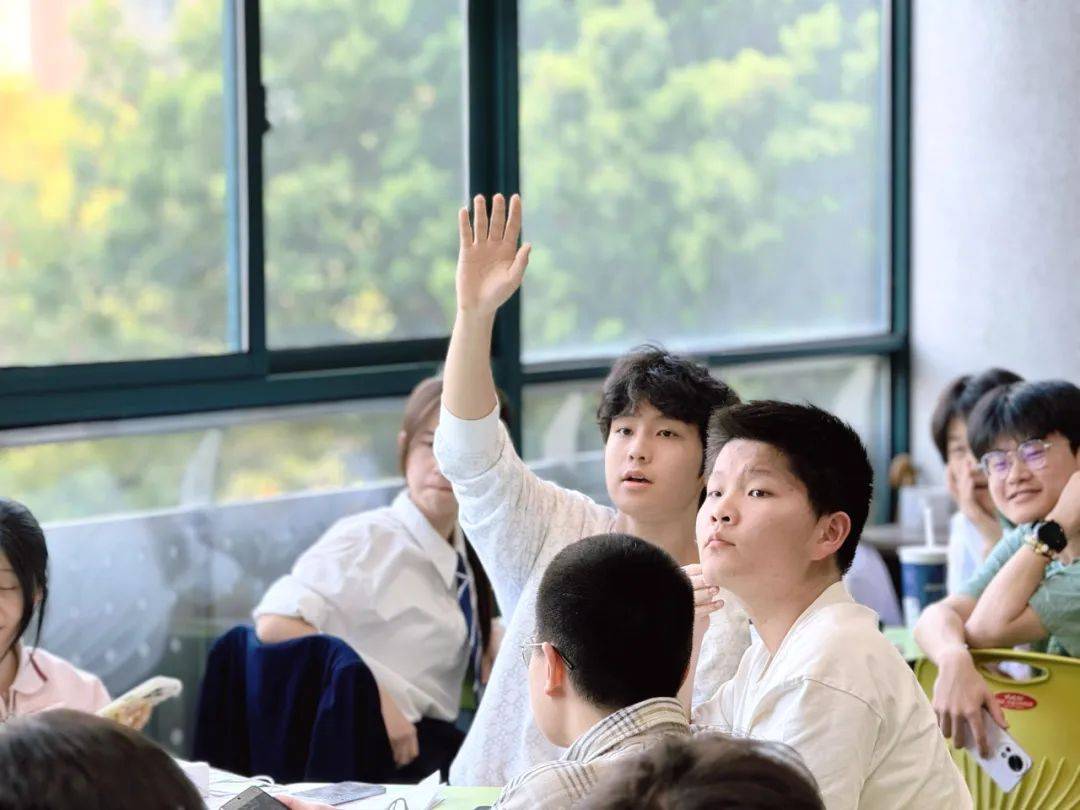
一土停办,民办教育不该“背锅”
Xin Lang Cai Jing· 2026-02-27 22:32
Core Viewpoint - The closure of the innovative school "Yitu" has sparked ongoing discussions about the management and regulation of private education in China, highlighting the need for a balance between oversight and the autonomy of educational institutions [4][15]. Group 1: Background and Context - "Yitu" was one of the early adopters of innovative educational practices in China, such as small class sizes and project-based learning, and was seen as a representative model of innovative schools [5]. - The closure of "Yitu" is viewed as an isolated incident rather than a failure of the entire private education sector, with experts cautioning against overregulation that could stifle educational diversity [4][11]. Group 2: Parental Concerns and Experiences - Parents of students at "Yitu" are advocating for better management of private education, particularly in terms of financial oversight and governance [4][12]. - The case of a parent, Qin Haiyang, illustrates the struggles faced by families seeking alternative educational options for children who do not thrive in traditional public school settings [7][10]. Group 3: Regulatory Environment - The current regulatory framework for private education in China includes provisions for financial management, but parents argue that these regulations need to be more detailed and effectively enforced [12][13]. - Experts suggest that the existing regulatory measures may inadvertently harm well-functioning private schools, as the sector is already facing challenges such as declining student enrollment and rising costs [13][14]. Group 4: Industry Perspectives - There is a concern among industry insiders that the negative publicity surrounding "Yitu" could lead to a broader backlash against the private education sector, potentially resulting in stricter regulations that may not be warranted [14][15]. - The balance between ensuring financial security and allowing for educational innovation remains a complex challenge for regulators, parents, and educators alike [15].

桂林市第七届“青少年创客马拉松”举行
Xin Lang Cai Jing· 2025-12-25 05:02
Core Insights - The seventh "Youth Maker Marathon" in Guilin was held from December 20 to 21, featuring 271 teams and nearly 1,000 participants, showcasing the enthusiasm for innovation among students and teachers [2][3] - The event serves as a significant platform for enhancing innovation education and cultivating scientific literacy among youth, having expanded its reach from primary education to include higher education and teachers [3][7] Event Highlights - This year's event included a new category for teachers, promoting deeper collaboration in educational practices and integrating maker education into classrooms [4][7] - The competition themes varied by educational level, with elementary focusing on "Alien Base Builder," middle school on "Green Circular Ecosystem," high school on "Key to Memory," university on "Vanishing," and teachers on the core of "Joy" [6] Educational Impact - The event emphasizes the importance of technology education and aims to enhance youth's technological literacy, aligning with regional initiatives to leverage opportunities in artificial intelligence [7] - The marathon has become a key platform for deepening innovation education and developing digital literacy and practical skills among students and teachers, laying a solid foundation for nurturing future innovative talents [7]

北京朝阳成立未来创新教育中心 搭建开放融合创新育人体系
Xin Lang Cai Jing· 2025-12-20 11:52
Core Insights - The Future Innovation Education Center was officially established on December 20, aiming to integrate resources from academicians, enterprises, and universities to create an innovative educational practice resource library [1][4] - The center's structure is based on an "1+1+4+N" ecosystem, which includes a central hub, upgraded resource attraction, four major practical scenarios, and a diverse growth acceleration platform [3][4] Group 1: Center's Responsibilities - The center will focus on five main responsibilities: integrating resources for innovative education, incubating science and technology projects, building a global educational exchange platform, conducting theoretical research, and organizing teacher training [4] - It aims to create a high-quality ecosystem for innovative education that spans from early childhood to high school, ensuring a continuous cycle of talent development [4] Group 2: Educational Philosophy and Global Impact - The center's approach aligns with national innovation-driven development strategies and offers a model for global basic education innovation [5] - It has established a student-led executive committee for project management, supported by a core advisory team of academicians, promoting a model where every child's interest can be recognized and nurtured [5]
北京朝阳成立未来创新教育中心
Xin Lang Cai Jing· 2025-12-20 04:40
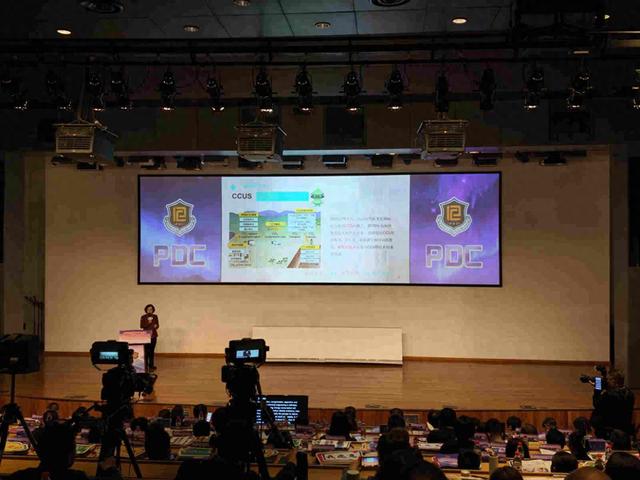
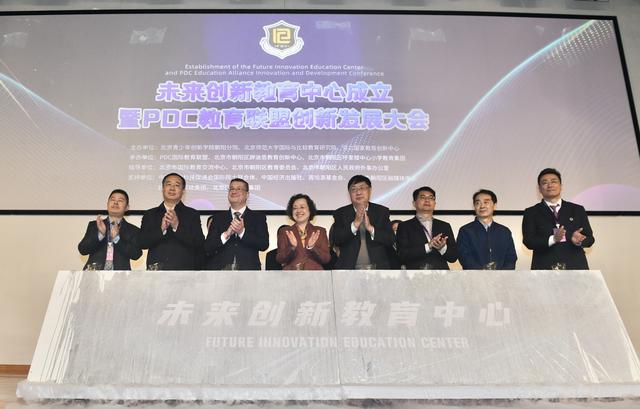
Group 1 - The Future Innovation Education Center was officially inaugurated in Chaoyang District, Beijing, aiming to integrate resources from academicians, experts, enterprises, and universities to cultivate innovative talents from preschool to high school [2] - The center will focus on five main responsibilities: building an innovation education practice resource library, incubating science and technology projects, establishing a global innovation education exchange platform, conducting theoretical research and results transformation in innovation education, and organizing teacher training and international workshops to enhance teaching capabilities [4] - A student-led executive committee has been established to oversee project operations, supported by a core advisory team of academicians and experts [6] Group 2 - The PDC (Project-Driven-Creation) educational concept was proposed by Hujialou Central Primary School in 2015, leading to the establishment of the PDC International Education Alliance in 2017, which includes members from ten overseas countries and 400 educational institutions across 29 provinces and cities in China [6]
专家:不能让80%学生为20%精英陪跑
2 1 Shi Ji Jing Ji Bao Dao· 2025-12-17 07:25
Core Viewpoint - The core of educational reform should focus on shifting from a score-based system to a more holistic approach that emphasizes student interest and active learning, as highlighted by Gu Mingyuan, a prominent figure in Chinese education [1] Group 1: Educational Reform Perspectives - Gu Mingyuan emphasizes the need for three major shifts in education: from "teaching" to "learning," from "score-oriented" to "person-oriented," and from passive to active learning [1] - Experts at the forum discussed the importance of fostering student interest as a starting point for effective learning [1] Group 2: Challenges of Traditional Education - Jiang Li from Stanford University pointed out that in the AI era, skills are more important than grades, which contradicts the traditional emphasis on academic performance in East Asia [3] - The traditional education system may lead to a fundamental conflict in thinking, as students with high grades may lack practical experience, making them less competitive in the job market [3] Group 3: Innovation and Practical Learning - Ni Minjing, a member of the National Committee of the Chinese People's Political Consultative Conference, stated that overcoming the misconception that "excellent learners" are synonymous with "outstanding innovators" is crucial for educational transformation [4] - Zheng Quanshui, an academician, highlighted that the pursuit of "excellence" often creates a comfort zone that hinders true innovation and exploration of the unknown [5] Group 4: New Educational Practices - Beijing First Experimental School has implemented a modular curriculum that allows students to focus on core competency goals, promoting personalized learning paths [7] - The school has integrated subjects into broader fields and established a collaborative teaching mechanism to ensure alignment with competency goals [8] Group 5: Addressing Student Needs - The "Conscience Class" at Beijing Dongfanghong School aims to support students who are disengaged from traditional learning by focusing on self-discovery and emotional well-being [8] - The emphasis on caring for students' mental health and interpersonal relationships is seen as essential for future education [9] Group 6: Assessment and Evaluation Reform - There is a call for deeper reform in the college entrance examination system to allow for diverse evaluation methods that reflect different talents and interests [11] - The need for a more flexible and scientifically grounded assessment system is emphasized to provide equitable opportunities for students with varying abilities [11] Group 7: Teaching Methodology and Structure - Gu Mingyuan advocates for dual innovation in teaching methods and structures, promoting inquiry-based and project-based learning while implementing modular courses [13] - The ultimate goal is to respect each student's unique strengths and return to the essence of education, which is nurturing individuals [13]

深圳迎来首所“钱学森校”,创新教育迈入新阶段
Nan Fang Du Shi Bao· 2025-11-12 17:38
Core Points - Shenzhen Zhili Middle School has officially received approval from the Qian Xuesen Naming Management Committee to be renamed "Qian Xuesen School," becoming the first school in Shenzhen to receive this honor, marking a new stage in innovative education and elite talent cultivation [1] - The renaming is not only a recognition of the school's achievements but also an expectation for its future development, leveraging resources from the Qian Xuesen Education Work Committee to enhance educational quality [1] - The school aims to create a new educational model characterized by resource sharing, platform co-construction, and collaborative development, integrating various forces to boost educational initiatives [1] Educational Initiatives - Under the guidance of Qian Xuesen's educational philosophy, the school will deepen reforms in cultivating innovative talents, improving the educational mechanism through small class teaching, dual mentorship systems, and dynamic adjustment mechanisms [1] - The school plans to strengthen collaboration with universities and research institutions, systematically developing aerospace-related courses and accelerating the establishment of high-end laboratories [1] - A variety of study tours and research practice activities will be organized to immerse students in the spirit of scientific inquiry, aiming to cultivate their innovative awareness and enhance their scientific literacy and practical abilities [1]
双11 送大课 | 新 · 混沌,用AI续写创新经典
混沌学园· 2025-10-31 13:31
Core Insights - The article emphasizes the transformation of learning methods due to the advent of AI, highlighting a shift from passive knowledge acquisition to a collaborative evolution with intelligence [2][3] - The upgrade of the HUNDUN membership is positioned as a crucial step into the intelligent era, enabling learners to enhance their cognitive and innovative capabilities alongside AI [3] Membership Upgrade - The HUNDUN membership has been upgraded to a dual-version system, allowing for a more tailored learning experience [4] - The "Innovation Member" program is designed for decision-makers and managers focused on business innovation, featuring courses on commercial insights and operational landscapes [5][8] Learning System - The new AI-driven learning system integrates the HUNDUN business school curriculum with intelligent learning assistants, providing resources such as AI business consultants and meeting assistants [9][27] - The curriculum includes a comprehensive approach to innovation thinking and business cognition, aimed at those seeking systematic learning in business innovation [8][13] Exclusive Benefits - During the promotional period from November 1 to November 15, 2025, new and existing members can enjoy exclusive benefits, including discounts and complimentary courses [10][11] - Members will gain access to a wealth of resources, including insights from over 700 innovators and a variety of courses designed to enhance cognitive capabilities and broaden thinking boundaries [15][16][17] Cognitive Engine - The HUNDUN Cognitive Engine serves as the core framework, integrating over 1,000 business think tanks and 700 classic innovation texts, allowing for continuous evolution in intelligent learning [25][22] - The system is designed to facilitate business modeling using AI, enhancing the learning experience through self-iteration and intelligent recommendations [23][25]
把“会读书的人”培养成“会创造的人”
Ren Min Ri Bao· 2025-10-30 01:46
Core Perspective - The transformation from "being able to read" to "being able to create" is essential in education, emphasizing the need for innovative teaching methods and a shift in educational philosophy [1][2][3] Group 1: Educational Philosophy and Methods - The shift from "being able to read" to "being able to create" reflects a change in educational philosophy and training methods, requiring a transition from "input" to "output" and from "theory" to "practice" [1][3] - Zhejiang University is leveraging artificial intelligence as a key tool to cultivate "creative individuals," integrating AI into various disciplines to enhance interdisciplinary talent development [2][3] Group 2: Importance of Innovation in Education - Cultivating "creative individuals" necessitates enhancing the innovative capacity of educational institutions, focusing on foundational knowledge while fostering scientific exploration and innovative thinking [3][4] - The process of transitioning from "being able to read" to "being able to create" is described as a spiral transformation, where knowledge accumulation is essential for fostering new insights and creativity [3][4] Group 3: Societal and Cultural Context - A societal shift towards a culture that values innovation and lifelong learning is crucial, creating an environment that encourages creativity and supports continuous education [4] - The goal is to make "being able to read" a learning method and "being able to create" a value pursuit, fostering a generation of innovative talents [4]
刷题时代终结,最稳定的工作或许是创业
Hu Xiu· 2025-08-14 13:04
Group 1 - The core argument presented is that traditional math competitions have shifted from fostering critical thinking to merely focusing on rote problem-solving, which diminishes their educational value [1][13][22] - The emphasis should be on encouraging students to ask meaningful questions and explore concepts rather than just solving exam-related problems [2][4][7] - The current educational system is criticized for being overly competitive, which may waste talent instead of nurturing it, as it prioritizes rankings over creativity and problem-solving skills [8][9][12] Group 2 - The speaker advocates for a change in teaching methods, suggesting that education should focus on developing original thinking and problem-solving abilities rather than just teaching how to solve specific problems [6][20] - The importance of emotional intelligence and creativity in students is highlighted, indicating that these traits are more valuable than merely excelling in standardized tests [8][18] - The speaker's personal experiences in hiring emphasize the significance of practical skills and innovative thinking over academic scores, showcasing a preference for candidates who demonstrate entrepreneurial spirit and problem-solving capabilities [16][17][18] Group 3 - The speaker notes that entrepreneurship may become the most stable career path in the future, as many traditional jobs could be replaced by AI within the next 5 to 10 years [22][26] - The current job market is evolving, and individuals need to adapt by developing skills that AI cannot replicate, such as critical thinking and interpersonal communication [22][26] - The speaker's company operates with a unique structure that prioritizes educational access for both paying and non-paying students, reflecting a commitment to social responsibility and community engagement [24][25]

从“教育洼地”到“牛剑高地”:这所二线城市国际学校如何逆袭?
Sou Hu Cai Jing· 2025-05-21 10:52
Core Insights - The article highlights the success of Hefei No. 168 International Department, which has achieved remarkable results in international education, including multiple admissions to prestigious universities like Oxford and Cambridge within just five years [4][8][39] - The school has broken the stereotype of limited resources and opportunities in second-tier cities, demonstrating that quality education can thrive outside major metropolitan areas [4][9][40] Group 1: Admission Achievements - Hefei No. 168 International Department has secured three admissions to Oxford and Cambridge, marking a significant milestone as the first in Anhui Province to achieve this feat [4][8] - The school has received over 600 offers from world-renowned universities, including 67 offers from University College London (UCL) alone [4][8] - The success of the school's students spans various disciplines, including not only STEM fields but also social sciences and arts [5][19] Group 2: Educational Approach - The school emphasizes a solid academic foundation, focusing on deep knowledge retention rather than rote memorization, which is often criticized in traditional Chinese education [5][6] - The A-Level curriculum is tailored to enhance students' strengths, allowing for flexible subject choices that cater to individual interests [5][6] - Innovative teaching methods are employed, integrating traditional Chinese culture with global perspectives, enhancing students' engagement and understanding [14][15][19] Group 3: Teacher Development - The faculty at Hefei No. 168 International Department is committed to continuous professional development, participating in various training and workshops to stay updated with educational trends [11][14] - Teachers are encouraged to innovate in their teaching practices, leading to a dynamic curriculum that evolves annually [14][19] - The school fosters a supportive environment where teachers' efforts are recognized, contributing to high morale and dedication [37][40] Group 4: Student-Centric Philosophy - The school adopts a holistic approach to education, focusing on the overall development of each student rather than solely academic achievements [25][27] - Students are encouraged to explore diverse interests, with opportunities to participate in various extracurricular activities and competitions [22][29] - The school aims to instill a sense of responsibility and community engagement among students, ensuring they are well-rounded individuals [25][27]