
小单快反模式

Search documents
希音许仰天:百亿布局大湾区,打造世界级时尚产业集群
2 1 Shi Ji Jing Ji Bao Dao· 2026-02-24 23:09
Group 1 - The core viewpoint of the article highlights the rapid growth and future vision of Guangzhou Shein International Import and Export Co., Ltd., which has become one of the world's top three fashion retailers since its establishment in Guangzhou in 2014, with an expected export value exceeding 100 billion yuan by 2025 and operations in over 160 countries and regions [1][2] - The company's success is attributed to Guangdong's complete industrial ecosystem and a business environment characterized by responsiveness and support, which facilitates its unique "small order quick response" model, reducing the design-to-delivery cycle to 2-3 weeks [1] - The deep integration of manufacturing and service industries is identified as the core competitive advantage of the company, utilizing data to convert fragmented demands into production instructions and binding cross-border logistics with manufacturing processes for real-time market-driven capacity adjustments [1] Group 2 - The company is actively participating in the "cross-border e-commerce + industrial belt" pilot program to support the development of small and medium-sized factories, with initiatives like the "Guangdong Goods Going Global Spring Action - Shein Industrial Belt Overseas Plan" launched in various locations since January [1] - The digital tools developed by the company are open to the entire supply chain within its ecosystem, promoting transparency and refined management for factories, with plans to conduct nearly 600 training sessions by 2025, covering 37,000 suppliers [1] - The company plans to invest over 10 billion yuan to build a smart supply chain headquarters in Guangdong, aiming to establish a world-class fashion industry cluster and position "Guangdong manufacturing" as a new benchmark in the global fashion industry [2]
许仰天罕见亮相,宣布在广东追加投资超100亿元
Mei Ri Jing Ji Xin Wen· 2026-02-24 16:36
Core Insights - SHEIN has experienced rapid growth since its establishment in Guangzhou in 2014, with platform export revenue exceeding 100 billion yuan in 2025 [2][3] - The company is now one of the top three fashion retailers globally, with a valuation of 365 billion yuan, ranking ninth on the 2025 Global Unicorn List [3][7] - SHEIN plans to invest over 10 billion yuan in Guangdong over the next three years to build a smart supply chain [2][4] Group 1 - SHEIN operates in over 160 countries and regions, benefiting from Guangdong's complete industrial ecosystem and favorable business environment, which has supported its rapid growth [3] - The company has nearly 10,000 cooperative suppliers in Guangdong, creating over 600,000 jobs in the province [3] - The integration of manufacturing and service industries has allowed SHEIN to embed user demand insights and supply chain responses throughout the manufacturing process [3] Group 2 - SHEIN aims to fulfill its social responsibility as a leading enterprise by actively participating in cross-border e-commerce initiatives in Guangdong, helping small and medium-sized factories benefit from e-commerce [4] - The company will continue to invest in supply chain empowerment and talent development to enhance the digital transformation of traditional manufacturing [4] - SHEIN has surpassed ZARA, H&M, and Uniqlo to become the third-largest fashion retailer globally, with a projected net profit of 2 billion USD in 2025 [7]

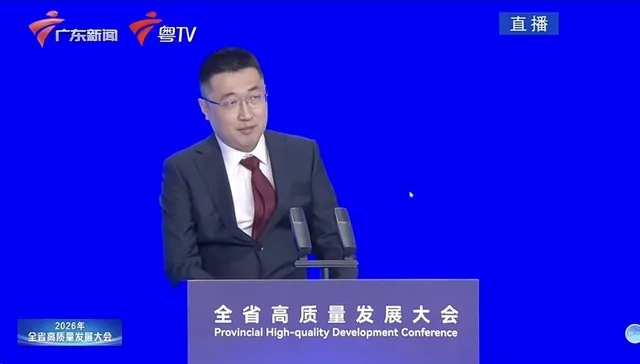
罕见露面!希音创始人许仰天分享成长感悟(完整版视频)
Xin Lang Cai Jing· 2026-02-24 06:08
Core Viewpoint - SHEIN has experienced rapid growth since its establishment in Guangzhou in 2014, with projected platform export revenue exceeding 100 billion yuan by 2025, and operations spanning over 160 countries and regions, positioning it among the top three global fashion retailers [1][2]. Group 1: Company Growth - SHEIN's growth is attributed to Guangdong's comprehensive industrial ecosystem and excellent business environment, which have supported its "small orders and quick response" model [1][2]. - The company has established a supply chain headquarters in Guangzhou, bolstered by the supportive services provided by the local government, described as "non-intrusive and responsive" [1][2]. Group 2: Industry Environment - Guangdong's industrial ecosystem includes garment factories in Panyu, logistics hubs in Baiyun, and a widespread cross-border e-commerce network, which are essential for SHEIN's operational model [1][2].
“链主”企业牵头搞大事,SHEIN的产业赋能密码藏不住了
Guan Cha Zhe Wang· 2026-01-09 07:52
Core Viewpoint - SHEIN has emerged as a leading player in the global fashion retail market, leveraging innovative digital supply chain solutions to address traditional industry challenges such as high inventory risks and production inefficiencies [2][12]. Group 1: Industry Transformation - The improvement in China's traditional manufacturing industry is attributed to continuous training of frontline workers, innovative tools, and the digitalization of the entire production and distribution chain [1]. - SHEIN's flexible supply chain model has allowed it to surpass competitors like ZARA, H&M, and Uniqlo, becoming the third-largest fashion retailer globally, following Nike and Adidas [2]. - The company has developed over 180 innovative tools by 2025, enhancing production efficiency by an average of 35% for suppliers [5]. Group 2: Technological Innovation - SHEIN's manufacturing innovation research center has played a crucial role in developing tools that streamline production processes, such as combining multiple sewing steps into one, which can increase efficiency by up to 40% [3][5]. - The introduction of digital heat transfer printing technology has significantly reduced the time from design to production, compressing the cycle from 4-6 weeks to just 7-15 days, while also minimizing water usage [9][10]. Group 3: Supplier Empowerment - SHEIN has conducted nearly 600 training sessions for suppliers in 2025, covering approximately 37,000 instances, to enhance skills and management capabilities within the industry [6]. - The company has established a robust digital management system that provides suppliers with stable orders and clear timelines, improving their operational efficiency [13]. Group 4: Environmental Impact - SHEIN's transition to using new energy vehicles for logistics has contributed to reducing carbon emissions, showcasing the company's commitment to sustainable practices [10]. - The digital heat transfer printing technology employed by SHEIN is verified to consume zero water resources, representing a significant advancement in eco-friendly production methods [9]. Group 5: Market Expansion - The cross-border e-commerce sector, represented by SHEIN, has shown steady growth, with exports reaching approximately 1.63 trillion yuan in the first three quarters of 2025, marking a 6.6% increase year-on-year [12]. - SHEIN's "500 Cities Industrial Belt Going Abroad Plan" has expanded its reach to nearly 400 cities, fostering brand development and international market access for local businesses [14].
营收370亿美元,利润与税收却在海外:SHEIN的全球化算盘为何打不响?
Sou Hu Cai Jing· 2025-11-02 10:15
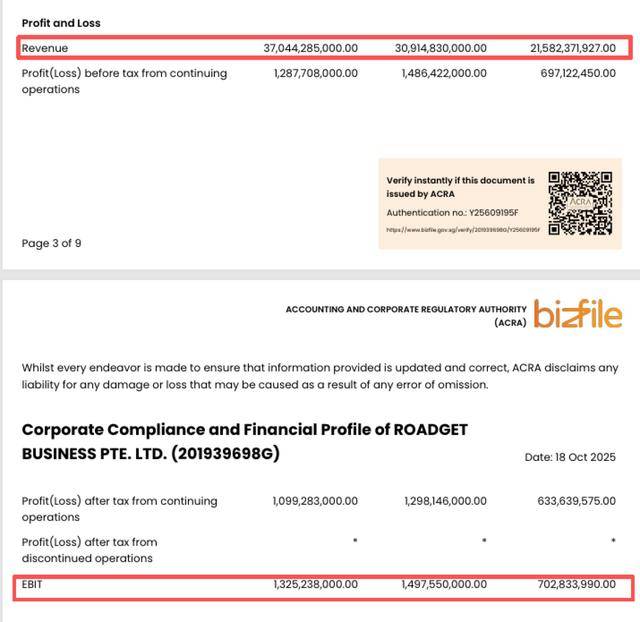
Core Viewpoint - SHEIN's latest financial report reveals that the majority of its profits and tax revenues are concentrated in Singapore rather than its supply chain hub in China, highlighting a strategic shift in its global operations [1][10]. Financial Performance - SHEIN's Singapore headquarters is projected to achieve revenue of $37.04 billion in 2024, representing a nearly 20% year-on-year growth, with pre-tax profits of $1.29 billion [1][3]. - The revenue figures for SHEIN's Singapore operations from 2022 to 2024 are $21.58 billion, $30.91 billion, and $37.04 billion respectively, with EBIT of $703 million, $1.49 billion, and $1.33 billion for the same years [2][3]. Tax Contributions - In 2024, SHEIN is expected to pay approximately $1.89 billion in taxes to Singapore, with cumulative tax payments exceeding 3.3 billion RMB over the past four years [1][3]. Global Headquarters Role - SHEIN's Singapore headquarters has evolved into a global hub encompassing procurement, trade, financial investment, brand management, and tax compliance, allowing the company to retain profit margins within Singapore [4][6]. Supply Chain Dynamics - The Singapore headquarters bears 82% of the group's sales costs and holds core procurement and pricing authority, indicating that Chinese factories primarily serve as production sites with limited profit margins [6][10]. Challenges in Globalization - SHEIN's efforts to downplay its Chinese background and present itself as a global company have faced challenges, particularly in its attempts to navigate regulatory scrutiny and pursue overseas listings [7][10]. - The company has encountered multiple setbacks in its listing journey, including stalled applications in the U.S. and U.K. due to regulatory concerns, with its valuation dropping to approximately $50 billion [9][10].
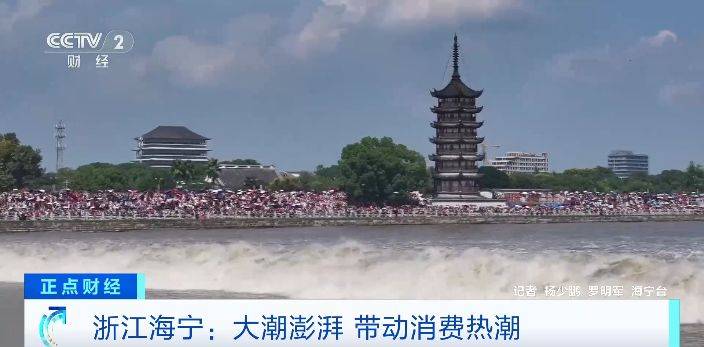
上午观潮、下午扫货!这个假期浙江海宁掀起消费热潮
Sou Hu Cai Jing· 2025-10-10 11:13
Core Insights - The overlap of the National Day and Mid-Autumn Festival holiday with the optimal viewing period of the Qiantang River tidal bore has significantly boosted tourism in Haining, Zhejiang [3] - Haining's A-level tourist attractions and 3A-level scenic villages received over 1.95 million visitors during the recent holiday, marking a year-on-year increase of 96.2% [3] - The tidal bore phenomenon has also stimulated local consumption, particularly in the China Leather City market, where many consumers visited after watching the tide [3] Industry Trends - To better convert tourist traffic into local spending, Haining's fashion industry is shifting towards a "small batch quick response" model, reducing the time from design to market launch to just two months, which is over 50% faster than traditional methods [5]
大潮引客来!大潮“东风”催热文旅、餐饮、时尚产业消费热潮
Yang Shi Wang· 2025-10-10 08:17
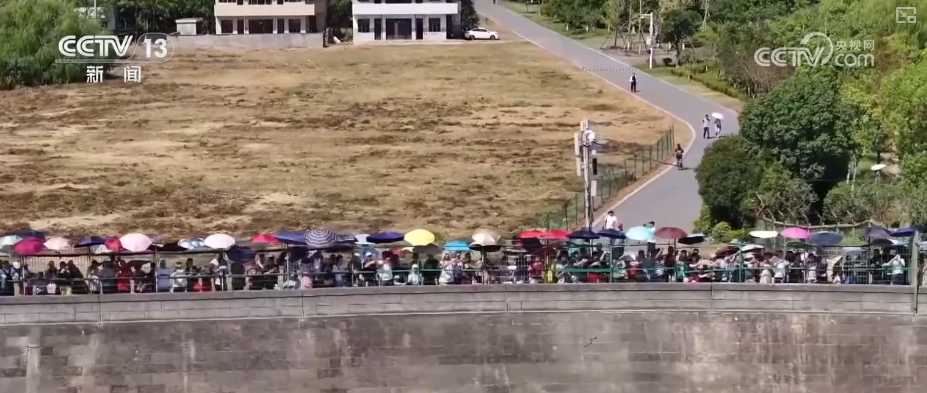
Group 1 - The recent National Day and Mid-Autumn Festival holiday coincided with the best viewing period for the Qiantang River tide, leading to a surge in tourism and consumption in Haining, Zhejiang [1][5] - During the holiday, Haining received over 1.95 million visitors, marking a year-on-year increase of 96.2% [5] - The influx of tourists has significantly boosted local consumption, particularly in the Haining China Leather City, where many consumers visited for shopping after viewing the tide [8] Group 2 - To better convert tourist traffic into local consumption, Haining's fashion industry is shifting towards a "small batch, quick response" model, reducing the time from design to market launch to just two months, which is over 50% faster than traditional methods [10] - The introduction of "AI designers" has further accelerated the process, enabling the creation of a new design in just half an hour [10] - During the holiday, Haining China Leather City saw a foot traffic of nearly 420,000 visitors, with sales of fashion items such as leather jackets and bags exceeding 100 million yuan [11]
小老板绝地逆袭!2年狂卖4000万,首曝跨境顶流玩法!
Sou Hu Cai Jing· 2025-09-20 23:27
Core Insights - A strong "employment wave" is emerging in certain manufacturing sectors despite widespread labor shortages faced by many manufacturers [1][2] - The surge in orders is driven by the global consumer market connected through cross-border e-commerce, contrasting sharply with the traditional stagnation in foreign trade [2] Group 1: Employment Demand - Manufacturers are urgently hiring due to increased orders, with some factories needing to expand their workforce significantly, such as a shoe factory in Guangdong requiring over 100 new employees [4] - The kitchenware manufacturer has expanded its factory size to 10,000 square meters and employs over 200 workers, reflecting a similar trend of growth and hiring challenges [6] Group 2: Order Stability and Production Expansion - The uncertainty of traditional foreign trade orders has historically deterred manufacturers from expanding production, but cross-border e-commerce has changed this dynamic by providing stable, predictable orders [8][10] - Platforms like SHEIN utilize a "small batch quick response" model, allowing factories to adjust production based on market feedback, thus reducing inventory risks and increasing production efficiency [10] Group 3: Talent Structure Transformation - The shift towards cross-border e-commerce is not only changing order models but also reshaping the operational capabilities and talent requirements of manufacturing businesses [14] - There is a dual upgrade in talent needs, with traditional roles requiring enhanced skills and new positions emerging that focus on comprehensive operations rather than just manufacturing [16] Group 4: High-Quality Export Engine - The integration of cross-border e-commerce with industrial clusters is becoming a new engine for high-quality exports from China, enabling factories to directly reach global consumers and gather market insights [18][20] - This proactive approach to product development, moving from reactive to predictive, is crucial for upgrading manufacturing capabilities [18] Group 5: Conclusion and Future Outlook - Cross-border e-commerce transcends mere transactions, driving industrial upgrades and individual growth by connecting local industrial clusters with global markets [22] - As the global e-commerce consumption peak approaches, the employment wave and underlying industrial transformation driven by cross-border e-commerce are set to continue across various industrial clusters in China [23]

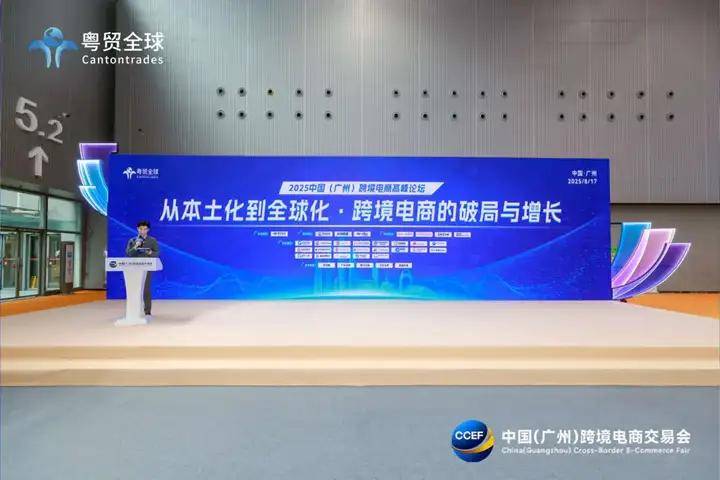
2025广州跨境电商高峰论坛落幕:解码本土化实践,共绘全球化蓝图
Sou Hu Cai Jing· 2025-08-18 05:11
Group 1 - The core theme of the "2025 China (Guangzhou) Cross-Border E-Commerce Summit Forum" is "From Localization to Globalization - Breaking Through and Growing in Cross-Border E-Commerce" [3] - The forum aims to provide insights on policy benefits, market trends, and practical solutions for industry practitioners to unlock new paths for global growth [3][29] - The event is organized by Guangdong Canton Trade Global Technology Co., Ltd., highlighting the importance of cross-border e-commerce as a key driver for Chinese brands to connect with global markets [1][29] Group 2 - The chairman of Guangdong Canton Trade Global Technology Co., Ltd., Chen Gang, emphasized the transition of Chinese cross-border e-commerce from "scale expansion" to "quality improvement" during his opening remarks [13] - The company introduced a subsidy policy for overseas exhibitions, offering up to 30,000 yuan per booth to cover 80% of costs, supporting participation in up to five overseas exhibitions per year [15] - The forum featured various experts discussing strategies for Chinese brands to adapt to the changing global consumer landscape, emphasizing the necessity of localization for survival [17] Group 3 - Coupang's South China regional recruitment manager, Phoebe Peng, discussed the "Rocket Delivery" model, which enables next-day delivery across South Korea and reduces seller logistics costs by over 30% [19] - AliExpress's South China regional operations expert shared insights on the platform's "cross-border dual-track" strategy, catering to different merchant needs with self-operated and fully managed services [21] - SHEIN's platform manager announced the expansion of its semi-managed model, allowing sellers to focus on supply while SHEIN handles operations, logistics, and after-sales services [23] Group 4 - Amazon's global store representative highlighted new opportunities in emerging markets like Saudi Arabia and Poland, where competition is low and local warehousing is established [25] - The chairman of Youida International Logistics presented a comprehensive logistics solution for Southeast Asia, addressing the "last mile" delivery challenges with a combination of sea freight and local distribution [27] - The forum served as a platform for industry trend analysis and practical resource connections, aiming to build a full-service ecosystem for Chinese enterprises to thrive globally [29]
广州“快时尚”,为何聚集在城中村?
Hu Xiu· 2025-08-11 03:28
Core Insights - The fast fashion industry in Guangzhou relies heavily on the unique ecosystem of urban villages, enabling a rapid response to market demands through a small-batch, quick-turnaround production model [1][21] - The high efficiency of the supply chain is supported by the geographical proximity of suppliers and manufacturers, allowing for minimal time costs and rapid order fulfillment [2][15] - The embedded distribution of support services within urban villages significantly reduces the time required for production processes, enhancing overall operational efficiency [3][10] Supply Chain Efficiency - Urban villages create a high-density supply chain cluster that minimizes time costs, ensuring swift conversion of production orders into physical products [2] - The proximity of fabric and accessory suppliers allows for near-instantaneous procurement, exemplified by a case where a dress order was completed in just 23 hours [2] - The spatial organization within urban villages allows for a 60% reduction in response costs for urgent orders compared to more traditional industrial parks [3] Cost Structure and Business Viability - The structure of the Guangzhou garment industry is pyramid-shaped, with a significant proportion of small enterprises benefiting from low-cost operational environments in urban villages [7] - The low entry barriers and flexible space utilization in urban villages enable small businesses to thrive, with rental costs significantly lower than those in formal industrial parks [8][20] - The ability to adjust production spaces flexibly allows for high utilization rates and reduced idle costs, enhancing the survival of small enterprises [9] Labor Flexibility - The seasonal nature of the garment industry necessitates a flexible labor system, which urban villages provide through a combination of informal labor markets and community networks [12] - Daily labor markets and familiar networks facilitate quick recruitment, allowing factories to adapt labor needs based on order fluctuations [12][13] - The implementation of flexible working hours and piece-rate pay incentivizes productivity while maintaining stable income for workers [14] Collaborative Efficiency - The close proximity of production stages within urban villages enhances collaboration and reduces logistical costs, significantly improving overall efficiency [15][16] - Informal information networks among stakeholders accelerate the flow of market signals, allowing for rapid adaptation to consumer demands [17] - Specialized production areas within urban villages foster expertise and resource sharing, leading to enhanced collective productivity [18] Inclusive Economic Environment - The presence of informal economic structures in urban villages lowers barriers to entry for new market participants, fostering a competitive and dynamic industry ecosystem [18][19] - Flexible governance strategies allow small enterprises to operate within regulatory frameworks while maintaining production continuity [19] - The active second-hand machinery market significantly reduces equipment costs for small businesses, facilitating their operational sustainability [20]