
咖啡产业链

Search documents
中国银行江门分行精准滴灌咖啡链,助力侨都咖啡香飘万家
Nan Fang Du Shi Bao· 2026-03-12 23:04
Group 1 - The event "Yuewei 21: One City One Station" and the 2026 Fourth China Qiaodu (Jiangmen) Coffee Festival showcased over 330 renowned coffee brands from 13 countries and regions, highlighting Jiangmen's role as a coffee industry base [1] - Jiangmen Bank is channeling credit resources into the coffee industry chain, supporting both upstream equipment manufacturing and downstream product processing for high-quality development [1] - Financial support has enabled companies like Jiangmen Kemei Metal Products Co., Ltd. to upgrade manufacturing capabilities, responding to increased demand driven by the home brewing trend [1][2] Group 2 - Jiangmen Bank's "Specialized and Innovative Loan" product provided a credit limit of 10 million yuan to Jiangmen Meizi Intelligent Technology Co., Ltd., facilitating the upgrade of coffee machine production [2] - The coffee industry is benefiting from financial support that enhances both hardware manufacturing and the "soft power" of the coffee supply chain, with companies like Xiangji (Jiangmen) Coffee Co., Ltd. receiving assistance for automation and quality sourcing [2] - Jiangmen Bank has established a comprehensive financial service network covering the entire coffee industry chain, injecting strong momentum into the Qiaodu characteristic industries through various financing activities [3]

2025年昆山进口咖啡生豆货值同比增长超五成
Zhong Guo Xin Wen Wang· 2026-01-27 07:16
Core Insights - In 2025, the value of imported green coffee beans in Kunshan reached 2.56 billion yuan, marking a year-on-year increase of 56.4% [1] - Kunshan has established a coffee industry chain from scratch, now accounting for approximately 60% of the national coffee bean roasting volume [1] - The city leverages its geographical advantages and national policies to enhance the coffee import and distribution industry [1] Group 1 - The demand for coffee consumption in China is currently very strong, with significant daily import and distribution volumes [1] - The company Su Kofina Coffee (Kunshan) imported over 1,000 tons of specialty coffee beans from countries like Uganda, Tanzania, and Indonesia in 2025 [1] - The "precise procurement" strategy aligns with the diverse quality and flavor demands of domestic roasters and brands [1] Group 2 - Kunshan Customs has implemented a comprehensive regulatory scheme covering the entire coffee product lifecycle, enhancing the efficiency of customs processes [2] - The overall customs efficiency has improved by approximately 50%, with a 75% reduction in declaration costs and a 20% decrease in logistics costs for companies [2] - The customs authority has optimized the regulatory model, allowing 90% of green coffee beans to undergo "report and inspection" simultaneously [2] Group 3 - Kunshan is building a dual-path strategy of "global procurement, centralized warehousing, and domestic distribution" to create a complementary coffee market [3] - This strategy enables consumers to experience a variety of global coffee flavors while fostering an efficient and open industry ecosystem [3]
长三角长出“世界咖啡港”
Jing Ji Ri Bao· 2026-01-27 00:59
Core Insights - The city of Kunshan, which does not produce coffee beans, is rapidly developing a coffee industry chain worth billions, leveraging efficient trade and logistics to bring coffee beans from Africa and South America to the Chinese market [1] - The establishment of the Asia-Pacific Coffee Green Bean Distribution Center in Kunshan is a key infrastructure development that supports the coffee industry [2] - The local customs have implemented streamlined processes for coffee bean imports, significantly improving efficiency and reducing costs for businesses [3] Group 1: Industry Development - Kunshan has transformed from not producing coffee beans to handling approximately 60% of the national coffee green bean roasting volume, establishing a complete coffee industry chain [1] - The city has attracted over a hundred leading coffee companies, covering the entire coffee industry chain from trade distribution to brand sales and equipment manufacturing [1] Group 2: Infrastructure and Efficiency - The Asia-Pacific Coffee Green Bean Distribution Center features advanced facilities that maintain optimal conditions for coffee beans, with 90% of imported beans undergoing "arrival inspection" [2] - The customs have reduced the inspection time for imported coffee beans by two-thirds and eliminated the need for re-inspection certificates for transshipment [2] - Overall customs efficiency has improved by approximately 50%, with a 75% reduction in declaration costs and a 20% decrease in logistics costs for companies [2] Group 3: Regulatory Support - The customs have optimized the regulatory framework for coffee bean imports, achieving over 90% of beans being processed with "arrival reporting and inspection" [3] - The local customs have provided support for the first import of Burundian coffee beans, expanding the sources of coffee raw materials in China [3] - By enhancing the customs experience and providing policy support, Kunshan aims to attract more production factors and promote the development of a robust coffee industry ecosystem [3]
咖啡系列四:云南咖啡产业特点总结
Hua Tai Qi Huo· 2026-01-21 00:41
1. Report Overview - The coffee series special report consists of four parts, with the fourth one summarizing the main characteristics of the current Yunnan coffee industry from four aspects: planting cost, grading classification, pricing mechanism, and industrial chain development [3] 2. Planting Cost: Diverse Accounting - As of November 2025, the average yield per mu of commercial coffee fresh fruit in Yunnan is about 700 - 800 kg, and about every 6 - 7 kg of fresh fruit can produce 1 kg of green beans, so the yield of green coffee beans is about 120 kg per mu. The cost of fresh coffee fruit is about 5 yuan/kg, and the cost of green coffee beans is between 25 - 40 yuan/kg. Cost components include rent, labor, fertilizers, picking, and initial processing [6] - Different business entities, production areas, varieties, and planting patterns have a significant impact on costs. Small and medium - sized coffee farmers mainly grow commercial beans, while boutique coffee is mainly planted in estates. The cost of boutique estates is 2 - 3 times that of small and medium - sized farmers [7] - High - altitude production areas have higher costs due to the need to optimize the planting environment and management standards for high - quality varieties. Yunnan coffee is often planted in a multi - layer composite structure with economic crops like macadamia, which can share costs and increase efficiency [7][8] 3. Bean Grading: Unique Standards - Coffee grading is based on various standards, with the ICO and SCA standards having an increasing influence. The market is divided into commodity beans and boutique beans, with different grading methods [9] - Physical attributes include bean size (classified by screen size), shape (round and uniform preferred), color (light blue or light green for Yunnan beans), density (higher density is better), moisture content (controlled at 9% - 12%), and processing methods (washed beans are cleaner) [15] - Defect assessment includes counting major and minor defects, with the boutique level requiring no major defects and no more than 5 total defects per 300g (SCA standard). Defects affect flavor purity [16] - Altitude is directly related to bean hardness and acidity, and regional soil properties also affect the bean grade. Cup - tasting is a unique and important part of coffee grading, with clear evaluation criteria for different dimensions [17][21] 4. Pricing Mechanism: Rich Dimensions - The global coffee pricing mechanism is a complex system composed of the futures market, the spot market, and special trading mechanisms. The futures market price dominates the global coffee spot market pricing [23] - The ICE Arabica coffee futures contract and the ICE Europe Robusta coffee futures contract are the most influential in the world. The spot market pricing generally uses the "futures price + premium/discount" model, and high - quality boutique coffee uses a flavor - based pricing mechanism [23][24][25] - Historically, Yunnan coffee prices were mainly determined by international coffee traders and large foreign - funded enterprises. Currently, domestic enterprises have become the main players in Yunnan coffee trade, and the dependence on the international futures market is decreasing [26][27] - The entire coffee industry chain looks forward to the construction of a domestic coffee futures market, which can help farmers, traders, and enterprises manage price risks and enhance China's international pricing power [29] 5. Industrial Chain: Uneven Development - The Yunnan coffee industry chain consists of upstream planting, mid - stream processing, and downstream distribution, showing an uneven development pattern. However, this situation has been continuously improved with policy support [30] - In terms of value distribution, the downstream distribution环节accounts for 93% of the value - added, while the upstream planting accounts for only 1% and the mid - stream processing accounts for 6%. The upstream is highly affected by price fluctuations, and the mid - stream has limited value - added due to low - end processing [31][32] - In terms of industrial chain concentration, the upstream and mid - stream have low concentration, with small - scale and scattered operations. The downstream has a relatively high concentration, and the market is shifting from extensive expansion to refined operation, but brand building and traceability systems still need improvement [34][35][36]
“咖啡浓度”超越北上广!粤港澳咖啡师竞技江门,撬动亿级消费池
2 1 Shi Ji Jing Ji Bao Dao· 2025-11-30 12:20
Group 1 - The coffee industry in China is approaching a market size of 1 trillion yuan, with cities like Jiangmen showing higher coffee shop density than major cities like Beijing and Shanghai [1][2] - As of October 15, 2025, Jiangmen has 2,718 coffee shops, ranking fifth in the country for coffee shop density, with an average of 5.64 shops per 10,000 people [1] - The Guangdong province is hosting the 2025 Guangdong Barista Skills Competition in Jiangmen, attracting 23 teams and 68 baristas, highlighting the region's focus on talent development in the coffee sector [1][4] Group 2 - Guangdong leads the coffee shop count among coastal provinces with 41,959 shops, followed by Zhejiang and Jiangsu, while cities like Guangzhou, Shenzhen, and Foshan rank in the top 10 for total coffee shops [2] - The coffee consumption market in China is expected to grow significantly, with the market size reaching 617.8 billion yuan in 2023 and projected to exceed 1 trillion yuan by 2025 [2] - The average per capita coffee consumption in China is expected to rise from 9 cups per year in 2020 to 22 cups per year by 2024 [2] Group 3 - Jiangmen has developed a complete coffee industry chain, with over 21 coffee enterprises producing more than 6,000 tons annually, accounting for over 20% of national exports [3] - The coffee equipment sector in Jiangmen includes over 300 companies with an annual output value exceeding 2 billion yuan, while more than 1,900 coffee businesses generate over 500 million yuan in sales [3] - The company Hongbozhi Coffee Technology has introduced a globally innovative coffee machine, with expected revenue growth to 2 million yuan by 2025, indicating strong market demand [3] Group 4 - The Guangdong government is focusing on talent development to support the coffee industry, aiming to establish Jiangmen as "China's Coffee Master City" and a hub for coffee talent in the Greater Bay Area [4][5] - The region is exploring new economic growth opportunities over the next five years, leveraging the coffee industry as a key component of modern service sectors and youth entrepreneurship [5]
上城区2600万元消费券大放送
Mei Ri Shang Bao· 2025-09-30 02:03
Core Insights - The "Coffee Culture Carnival" in Hangzhou, themed "Coffee + Digital Technology" and "Coffee + Culture," aims to enhance consumer engagement and promote local coffee brands [1][2] - The event features a variety of activities including coffee markets, skill competitions, product showcases, and themed concerts, attracting significant participation from local coffee brands and champions [1][2] Group 1: Event Overview - The carnival runs from September 30 to October 2, 2025, and is free for consumers [1] - It includes participation from 60 coffee brand owners showcasing regional coffee varieties, creating an immersive experience for attendees [1] - Notable coffee champions, such as World Cup champion Zhao Hongqiang and Taiwan Coffee Master Competition champion Lin Dongyuan, are present to enhance the tasting experience [1] Group 2: Technological Integration - The event features the launch of the "West Lake Magic Box" at the South Star Phoenix site, which serves as a digital experience space combining technology and culture [1] - The space includes advanced VR equipment and hosts themed experience days related to various films and digital art exhibitions [1] Group 3: Economic Incentives - A total of 26 million yuan in coffee consumption vouchers will be distributed during the carnival, with daily random draws for various amounts [2] - The event also includes 50,000 taxi vouchers worth 175 yuan each, provided by "Cao Cao Travel" [2] Group 4: Industry Development - The carnival serves as a platform for collaboration within the coffee industry, facilitating connections between coffee bean suppliers, equipment vendors, and e-commerce channels [2] - Several professional competitions will take place, including the Zhejiang Coffee Master Entrepreneur Competition and the "Qianchao Cup" Coffee Roasting Competition [2] - Hangzhou's Shangcheng District has seen a rise in coffee brands and shops, establishing a robust coffee industry ecosystem with a high number of operational coffee stores [2]
不种一粒咖啡豆,这个县城却让全国喝上9.9元咖啡
3 6 Ke· 2025-07-10 09:26
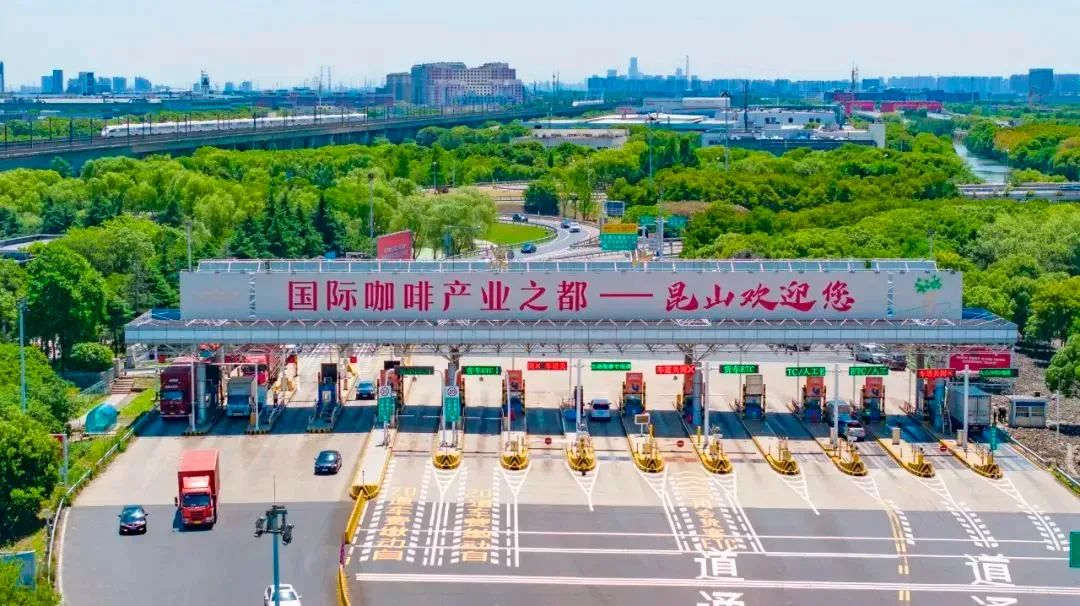
Core Insights - The article highlights that Kunshan controls 60% of China's raw coffee bean imports and 60% of its roasting capacity, indicating its significant role in the national coffee supply chain [1][4][12] - Kunshan has been recognized as an "International Coffee Capital" by the International Coffee Tasting Association, aiming for a coffee industry scale of 100 billion yuan [4][12][20] - The development of Kunshan's coffee industry has been supported by favorable government policies, including tax reductions and subsidies, creating a conducive business environment [11][12][20] Industry Overview - Kunshan's coffee industry has evolved from a late start in the 1990s to a robust sector, with major investments from global players like Starbucks and Luckin Coffee [9][12][18] - The establishment of the Starbucks China Coffee Innovation Park in 2023, with an investment of $220 million, marks a significant milestone in integrating the coffee supply chain in Kunshan [18] - The local coffee market is characterized by a high density of coffee shops, with over 500 cafes in Kunshan, reflecting a growing coffee culture among residents [23][24] Market Dynamics - The coffee bean import volume in China is projected to exceed 180,000 tons in 2024, with Kunshan accounting for nearly 60% of this volume [12][22] - The competitive landscape includes both international giants like Starbucks and local brands, with ongoing price wars affecting market dynamics [24] - The coffee industry in China is expected to reach a scale of 313.3 billion yuan by 2024, growing at a rate of 18.1% year-on-year [24]



品牌云集,咖啡在济何以越磨越“香”
Qi Lu Wan Bao Wang· 2025-06-25 11:25
Market Overview - The coffee market in Jinan is experiencing rapid expansion with numerous brands entering the scene, including Starbucks, Luckin Coffee, and local brands like PD and Fangsou [1][2] - The number of new coffee-related enterprises in Jinan reached 317 in 2024, with a 51.3% increase in new businesses by June 23, 2025 [3][4] Consumer Behavior - The customer base for coffee shops is expanding, with a significant portion of patrons being young people aged 20-35 [1][2] - Consumers are increasingly drawn to the coffee experience, with some seeking high-quality coffee while others prioritize ambiance and aesthetics [2][7] Competitive Landscape - The coffee market is highly competitive, with over 50 coffee shops within a one-kilometer radius of certain locations, leading to a "war" among brands [2] - Despite the competition, the presence of multiple brands is seen as beneficial for market maturity, attracting new consumers [2][7] Cost Structure - The operational costs for coffee shops are rising, with average survival periods for some cafes potentially decreasing from 2-3 years to 1.5 years due to high costs and competitive pricing [4][5] - The cost of raw materials varies significantly, with chain brands like Luckin and Kudi having lower costs per cup (1-2 RMB) compared to boutique cafes (5-6 RMB) [4][5] Profitability - Chain coffee shops in Jinan report daily sales of 400-800 cups, with monthly profits ranging from 60,000 to 80,000 RMB after deducting costs [6] - Jinan's coffee market is ranked among the top ten in sales in northern China, indicating strong profitability potential [6] Industry Development - Jinan has become a significant hub for coffee equipment and material trading, with a complete industry chain from roasting to consumer experience [6] - The coffee market in Jinan is growing at an annual rate of 15%, driven by increasing brand presence and consumer interest [6][7] Future Outlook - The market is expected to evolve into a diverse landscape with a mix of chain brands, boutique shops, and high-end custom offerings to cater to various consumer needs [7] - The local coffee association plans to support new brands with operational and technical assistance, aiming to enhance Jinan's coffee industry profile [7]
千咖万来聚江南:中国最强县昆山打造国际咖啡产业之都
Zhong Guo Xin Wen Wang· 2025-05-17 04:50
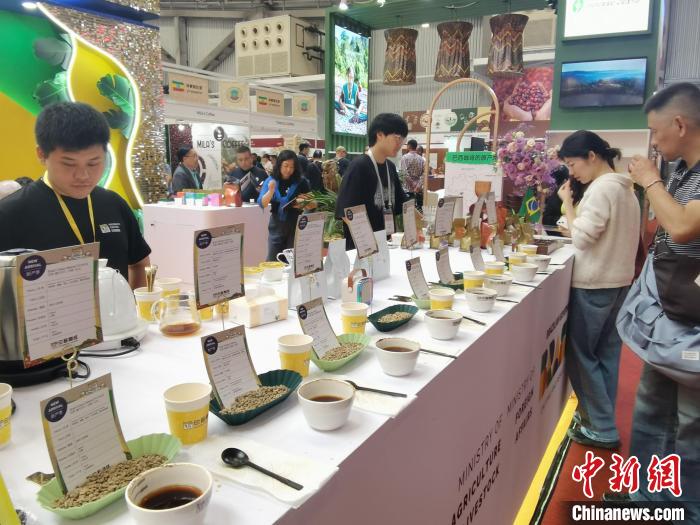
Core Insights - Kunshan, once known for its manufacturing, is now a central hub for China's coffee industry, hosting the 2025 Kunshan Coffee Industry Investment Conference with over 500 exhibitors and representatives from 17 coffee-producing regions worldwide [1][4] Industry Overview - Kunshan has developed a comprehensive coffee industry chain, integrating bean trade, platform transactions, research and roasting, and brand sales, with over 60% of China's green coffee bean imports and roasting occurring in the city [4] - The city has established connections with 24 countries and regions, including Ethiopia, Brazil, and Uganda, enhancing its global coffee trade network [4] Strategic Developments - The release of the "Kunshan International Coffee Industry Capital Three-Year Action Plan (2025-2027)" aims to create a coffee industry scale worth hundreds of billions, promoting a global identity for coffee production in Kunshan [6] - The plan includes the construction of the Kunshan Coffee Museum, further solidifying the city's commitment to becoming a global coffee industry leader [6] Partnerships and Growth - Major coffee brands such as Starbucks, Trung Nguyen Coffee, Louis Dreyfus Company, and Mitsui & Co. have established operations in Kunshan, contributing to its growth as a coffee hub [4] - Brazilian coffee exports to China have seen exponential growth, with Brazil looking to share its diverse coffee flavors with Chinese consumers through partnerships with Kunshan [4][5]
茶咖日报|淘宝闪购加码“奶茶免单”;星巴克或出售部分在华业务
Guan Cha Zhe Wang· 2025-05-16 12:06
Group 1: Company Updates - Nayuki Tea announced the appointment of Ms. Ong Mei Yi as the company secretary and authorized representative, effective from May 17, 2025, following the resignation of Ms. Shi Chao [1] - Starbucks is considering selling part of its business in China and has reached out to private equity and technology companies for potential investment, with the deal possibly valued at several billion dollars [2][3] - Grid Coffee has partnered with renowned coffee expert Esther Maasdam to launch limited-time tasting events featuring four premium coffee beans in Beijing and Chengdu [6] Group 2: Industry Developments - Starbucks reported over 7.4 billion USD in net revenue from its Chinese operations for the quarter ending March 31, while its competitor Luckin Coffee generated 12 billion USD in the same period [2] - The first Yunnan Gems of Coffee competition successfully concluded, with 19 coffee beans awarded from 144 participating teams, marking a significant step for Yunnan coffee in the international market [5] - The 2025 Kunshan International Coffee Industry Expo opened, attracting over 500 exhibitors and showcasing coffee beans from major producing countries, highlighting the growth of the coffee industry in Kunshan [7]
