
外资品牌本土化

Search documents
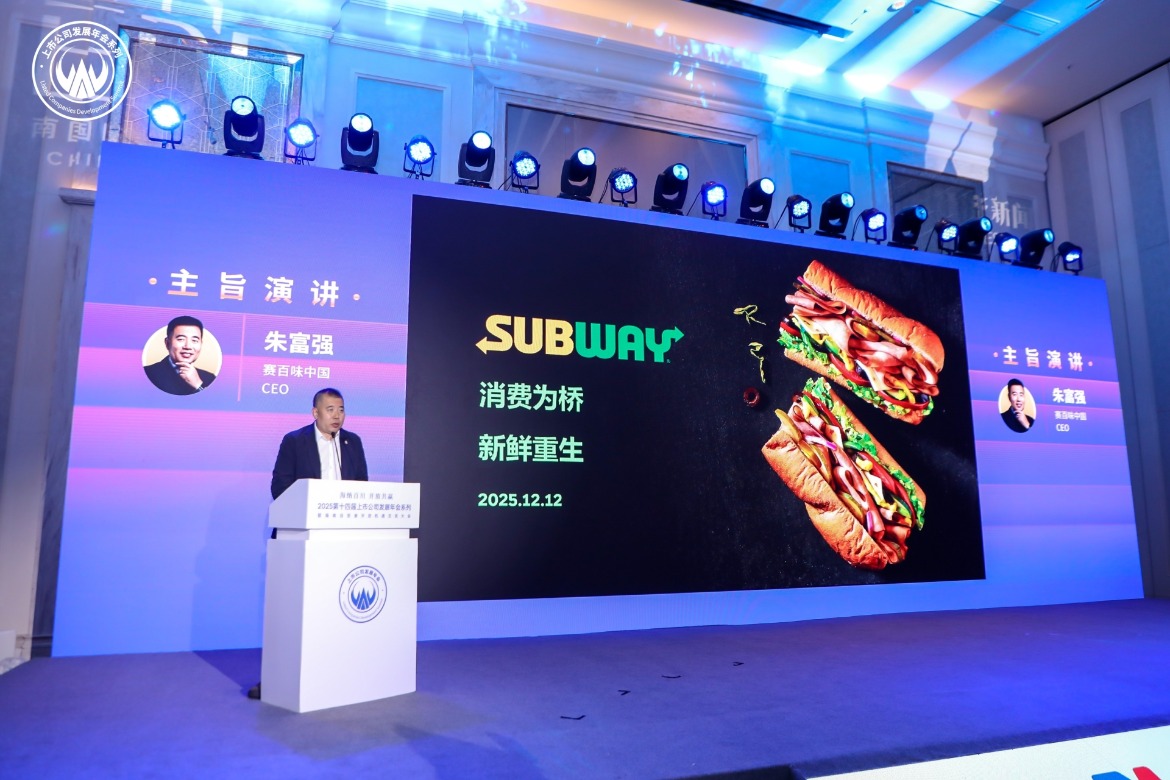
赛百味中国CEO朱富强:外资品牌扎根中国的核心不是卖全球产品,而是服务本土需求
Mei Ri Jing Ji Xin Wen· 2025-12-13 13:53
Core Insights - The core argument presented by the CEO of Subway China, Zhu Fuqiang, emphasizes the evolution of China's dining consumption from "eating enough" to "eating well" and now to "eating healthily," which is the fundamental logic behind foreign brands establishing a presence in China [1][2] Group 1: Market Evolution - The transformation in consumer behavior is attributed to the rapid economic development in China, leading to a dual upgrade in consumption capacity and demand, shifting from survival needs to health and emotional value [2][3] - The dining consumption landscape has changed significantly over the past 30 years, with the average cost of a meal for one person now being around 50 yuan, compared to 10 yuan for a family meal in the 1990s [1][2] Group 2: Consumer Demographics - The pursuit of health is not limited to the younger "Z generation"; older generations, including those over 60, are also increasingly prioritizing health in their food choices, indicating a broader demographic shift in consumer preferences [3] - Key indicators for assessing the potential of a dining sector include the continuous expansion of the target audience and the frequency of consumption, with high-frequency demand being crucial for market growth [3] Group 3: Competitive Strategy - Zhu Fuqiang highlights the importance of differentiation for foreign brands in China, noting that early market entry timing has shaped the competitive landscape, with brands like KFC and McDonald's entering the market before Subway [4] - The previous franchise model adopted by Subway led to a diluted brand image due to poor location choices by franchisees, which is a common pitfall for foreign brands in localizing their operations [4] Group 4: Product and Operational Innovation - To succeed, foreign brands must move beyond price competition and focus on genuine freshness and quality, as the market is saturated with "pseudo-health" concepts [4][5] - Subway's strategy includes not selling bread that has been produced for more than 24 hours, ensuring that most sandwiches are made with bread baked within 8 to 10 hours, appealing to a wide range of consumers [5] Group 5: Value Proposition - The shift from "cost-effectiveness" to "value perception" is essential for restaurant brands, with the ultimate goal being to serve Chinese consumer needs using global resources rather than merely selling global products in China [7]

18亿元卖身IDG:优诺中国八年三嫁,高端酸奶走下神坛
Guan Cha Zhe Wang· 2025-12-04 04:07
Core Insights - The ownership of Yuno China has changed hands again, with IDG Capital acquiring 100% of the company for a total consideration of 1.8 billion yuan, marking the third ownership change in eight years [1][2]. Group 1: Transaction Details - Tian Tu Investment announced the sale of its 45.22% stake in Yuno China for 814 million yuan, exiting alongside other shareholders [1]. - IDG Capital has been tracking the project for years, waiting for the profitability turning point, and has been in contact with the Yuno China team for about two years [7][22]. - The sale is expected to result in a minor loss of 799,000 yuan for Tian Tu, with the funds redirected to other investment opportunities [5]. Group 2: Company Performance - Yuno China reported a revenue of 454 million yuan and a net profit of 8.39 million yuan in 2023, with projections for the following year showing a revenue increase to 810 million yuan and a net profit of 95.45 million yuan, indicating significant growth [2]. - The company has positioned itself as a high-end yogurt brand, appealing to middle and high-income consumers, with a notable average price point of over 15 yuan [5]. Group 3: Market Challenges - The high-end yogurt market is facing intense competition, with new entrants and price reductions from competitors like Blueglass and other new tea brands [9][10][11]. - The overall dairy market is experiencing a sales decline, with a reported 2.7% drop in sales for 2024 and a 16.8% year-on-year decline in September 2023 [12]. - Analysts note that while Yuno has played a significant role in the premium yogurt segment, it now faces challenges from both traditional dairy giants and emerging local brands [14][15]. Group 4: Strategic Implications - The acquisition by IDG Capital may provide Yuno China with opportunities to leverage synergies with other consumer brands in IDG's portfolio, potentially enhancing its market position [21][22]. - The shift in ownership reflects broader trends of foreign brands adapting to local markets, as seen in other cases like Starbucks and McDonald's in China [16][19].

外资餐饮品牌密集“牵手”本土资本 两大巨头共43.5亿美元易主谋变
Chang Jiang Shang Bao· 2025-11-16 23:37
Core Insights - Foreign fast-food brands in China, such as Burger King and Starbucks, are undergoing ownership changes, raising market attention due to factors like local market challenges and increased competition [1][5][12] - The rise of domestic brands like Luckin Coffee and others is disrupting the previously dominant position of foreign brands in the market [1][7] Group 1: Ownership Changes - On November 4, Starbucks announced a change in ownership to Boyu Capital for $4 billion, retaining 40% equity and receiving over $13 billion in brand authorization and service fees over the next decade [4][8] - On November 10, Burger King announced its ownership transfer to CPE Yuanfeng for $350 million, with CPE acquiring 83% of the equity [3][9] - The combined ownership changes of these two brands amount to $4.35 billion, highlighting a significant shift in the market [9] Group 2: Market Dynamics - Starbucks has been in China for 26 years but is facing declining sales, with a 1.4% drop in revenue to $2.958 billion in fiscal year 2024 and a 6% decline in same-store sales in Q1 of fiscal year 2025 [12] - The market share of Starbucks has decreased from a peak of 42% in 2017 to 14% in 2024, while Luckin Coffee has risen to a 35% market share [12][13] - The competitive landscape is intensifying, with domestic brands offering lower prices and better value propositions, leading to significant market share losses for foreign brands [12][14] Group 3: Reasons for Ownership Changes - The ownership changes are attributed to several factors: operational pressures, the need for a shift to a lighter asset model, and the strong emergence of local brands [14][16] - Foreign brands are also facing challenges due to centralized decision-making processes that hinder quick responses to market changes [15] - Domestic investors are attracted to foreign brands due to their established brand recognition and customer loyalty, combined with local operational advantages [16]

“星巴克们”集中抛售中国业务?真相是他们换了一种打法
第一财经· 2025-11-13 15:39
Core Viewpoint - Recent trends indicate a significant shift in foreign investment strategies in China, particularly in the consumer goods sector, as companies like Starbucks and Burger King sell stakes to local investors, reflecting a broader trend of foreign brands adapting to the competitive landscape in China [5][12]. Group 1: Foreign Investment Changes - Starbucks announced the sale of 60% of its Chinese operations to local capital, while Burger King followed suit by selling a majority stake to a Chinese entity [4]. - The ongoing rumors about potential sales of other foreign brands, including Haagen-Dazs, Costa, and IKEA, highlight a growing concern regarding foreign brands' performance in the Chinese market [6][7]. - The trend of foreign brands divesting their Chinese operations is attributed to stagnant growth and declining profits amid fierce market competition [9][10]. Group 2: Market Performance and Strategy - Haagen-Dazs has experienced a double-digit decline in traffic in China, while Decathlon's growth has slowed significantly, prompting a shift towards higher-end products [10]. - IKEA's sales in China dropped from 12.07 billion yuan to 11.15 billion yuan, a nearly 10 billion yuan decrease year-on-year, indicating substantial pressure on its performance [10]. - Despite challenges, Starbucks reported a revenue increase of 5% in China for the 2025 fiscal year, with a strong single-store profitability, positioning it as one of the healthiest markets internationally [11]. Group 3: Local Adaptation and Future Outlook - The shift towards local ownership is seen as a necessary adaptation for foreign brands to thrive in the increasingly competitive Chinese market [12][14]. - The trend of localizing operations and management is becoming a common strategy among foreign brands, allowing them to reduce costs and better align with local consumer preferences [14]. - The partnership between CPE Yuanfeng and Burger King aims to expand the latter's store count from approximately 1,250 to over 4,000 by 2035, indicating a long-term commitment to growth in the Chinese market [15].
“星巴克们”集中抛售中国业务?真相是他们换了一种打法
Di Yi Cai Jing· 2025-11-13 14:16
Core Insights - Recent trends indicate a shift in foreign brands' operational strategies in China, with companies like Starbucks and Burger King selling significant stakes to local investors, raising concerns about foreign brands' future in the Chinese market [1][2][6] Group 1: Foreign Brands' Strategic Adjustments - Starbucks announced the sale of 60% of its Chinese operations to local capital, while Burger King followed suit by selling a majority stake to a Chinese entity [1][2] - The ongoing rumors about potential sales of other foreign brands, including Haagen-Dazs and Decathlon, reflect a broader trend of foreign brands reassessing their positions in the Chinese market [2][3] - Industry experts suggest that these moves are part of a localization strategy, driven by increased competition and declining performance of some foreign brands in China [3][4] Group 2: Performance Challenges - Haagen-Dazs has experienced a double-digit decline in traffic in China, while Decathlon's growth has slowed significantly, prompting a shift towards higher-end products [4] - IKEA's sales in China dropped from 12.07 billion yuan to 11.15 billion yuan, a nearly 10 billion yuan decrease year-on-year, highlighting the pressures faced by foreign retailers [4] - Burger King's store count in China has been in decline, contrasting with competitors like McDonald's, which have adapted more effectively to the local market [4] Group 3: Market Dynamics and Consumer Preferences - A report by Accenture indicates that by 2025, domestic brands will surpass international brands in consumer preference across various sectors, including beauty and electronics [7] - The competitive landscape is shifting, with local brands gaining ground due to better pricing and product offerings, forcing foreign brands to adapt to changing consumer demands [7][8] - Experts emphasize that foreign brands are not exiting the Chinese market but are instead adjusting their operational models to better align with local market conditions [8] Group 4: Investment and Future Outlook - The recent transaction involving Burger King China includes a $350 million investment from CPE Yuanfeng to support expansion and operational improvements, indicating a commitment to growth in the local market [8] - Shanghai continues to attract foreign investment, with a notable increase in the number of foreign enterprises, particularly in high-tech and financial sectors, suggesting a robust environment for foreign brands [9]
星巴克、汉堡王为何都交中国资本打理丨头条热评
Jing Ji Ri Bao· 2025-11-11 11:02
Core Viewpoint - Starbucks Coffee Company has announced a strategic partnership with Boyu Capital to jointly operate its retail business in the Chinese market, indicating a trend of foreign consumer brands accelerating localization efforts in response to the rise of domestic brands and evolving consumer demands [1] Group 1: Strategic Partnerships - CPE Yuanfeng has formed a strategic partnership with Burger King to establish a joint venture, Burger King China, highlighting the trend of foreign brands collaborating with local partners [1] - The collaboration with local capital is seen as a key strategy for foreign brands to achieve good performance in China [1] Group 2: Market Expansion - After introducing local capital, both McDonald's China and Yum China have significantly increased their store opening rates in China [1] - McDonald's store count in China has grown from 2,500 in 2017 to over 7,000 currently, while Yum China's KFC has surpassed 12,000 stores [1] Group 3: Market Potential - The Chinese market is characterized by great potential, resilience, and vitality, serving as a stage for global companies to test their strength and sharpen their competitiveness [1] - Foreign brands are adjusting their strategies and accelerating localization to better respond to competition and grow alongside the dynamic Chinese economy [1] - China's commitment to high-level opening-up and continuous optimization of the business environment provides foreign enterprises with stable policy expectations and strong development confidence [1]

汉堡王中国金主投资了泡泡玛特
Bei Jing Ri Bao Ke Hu Duan· 2025-11-11 01:02
Core Viewpoint - Burger King's China operations have been acquired by local investors, marking a trend of foreign brands seeking local partnerships to enhance their market presence in China [1] Group 1: Strategic Partnership - CPE Yuanfeng has reached a strategic cooperation agreement with Burger King, establishing a joint venture named Burger King China [1] - CPE Yuanfeng will inject an initial capital of $350 million into the joint venture, holding approximately 83% of the equity, while RBI retains about 17% [1] - The transaction is expected to be completed in the first quarter of 2026, with funds allocated for restaurant expansion, marketing, menu innovation, and operational improvements [1] Group 2: Market Expansion Plans - A 20-year master development agreement will be signed, granting exclusive rights to develop the Burger King brand in China [1] - Currently, Burger King operates around 1,250 stores in China, with plans to expand to over 4,000 stores by 2035 [1] Group 3: Industry Context - The acquisition reflects a common strategy among foreign consumer brands to sell partial equity and introduce local capital in response to a competitive market environment [1] - Recently, Starbucks also announced a joint venture with Boyu Capital to operate its retail business in China, indicating a broader trend of foreign brands deepening their localization efforts [1] - CPE Yuanfeng has significant experience in the chain consumer services sector, with cumulative investments of approximately 10 billion RMB in various companies [1]

星巴克中国易主,未来将再开1.2万家店
华尔街见闻· 2025-11-05 10:09
Core Viewpoint - Starbucks has entered a strategic partnership with Chinese alternative asset management company Boyu Capital to establish a joint venture for its retail operations in China, marking the first time in 26 years that Starbucks has relinquished control of its Chinese business [6][8]. Summary by Sections Joint Venture Details - The joint venture will see Boyu Capital holding up to 60% of the equity, making it the controlling shareholder, while Starbucks retains 40% and continues to own the brand and intellectual property [6][8]. - The joint venture is valued at approximately $4 billion, with Boyu expected to invest $2.4 billion (about 173 billion RMB) [7]. Expansion Plans - The joint venture aims to expand Starbucks' presence in China from 8,000 stores to 20,000 stores [8]. - As of the end of fiscal year 2025, Starbucks had 8,011 stores in China, with 415 new stores opened during the year [9]. Financial Performance - Starbucks China reported a revenue of $831.6 million in the fourth quarter of fiscal year 2025, a 6% year-over-year increase, contributing to a total annual revenue of $3.105 billion, which is a 5% increase [15][16]. - The total value of Starbucks' retail business in China is projected to exceed $13 billion, comprising the value from the equity transfer to Boyu, retained equity, and ongoing licensing fees [11]. Strategic Context - The partnership is a strategic adjustment for Starbucks amid increasing competition from local brands like Luckin Coffee and others [17][18]. - Starbucks' global comparable store sales fell by 7% in the fourth quarter of fiscal year 2024, prompting a need for a fundamental strategy change [13][18]. Boyu Capital's Role - Boyu Capital's local market expertise is expected to accelerate Starbucks' expansion, particularly in lower-tier cities [20]. - Boyu has a diversified investment portfolio and a strong track record, with historical fund net internal rates of return exceeding 25% [21]. Market Competition - Despite the joint venture, Starbucks faces ongoing competitive pressures, including price wars and market fragmentation [22]. - Starbucks has already taken measures to address competition, such as reducing prices on certain products, which led to a 12% increase in transaction volume [23]. Future Outlook - The partnership signifies a new era for Starbucks in China, with plans to evolve beyond being just a "third space" provider to a multi-dimensional business model [24].
星巴克卖身,一次“换打法”的进攻!
Jin Tou Wang· 2025-11-05 08:09
Core Viewpoint - Starbucks has sold 60% of its stake in its China operations to a local private equity firm, Boyu Capital, for 28.5 billion yuan, marking a significant shift in its business strategy in China [1][4] Group 1: Company Actions - Starbucks is transferring control of over 8,000 stores in China to local management, similar to the strategies employed by McDonald's and KFC [1] - Decathlon is also considering selling 30% of its stake in its China operations, while Häagen-Dazs is looking to sell its Chinese ice cream stores [3][5] - The trend of foreign brands divesting from their Chinese operations is becoming increasingly common, indicating a broader industry shift [3] Group 2: Market Challenges - The profitability of foreign brands in China has significantly declined, with Starbucks reporting an 85.4% drop in net profit, leaving it with less than 1 billion yuan, and its market share plummeting from 42% to 14% [4] - Decathlon's net profit fell by 15.5% last year, and Häagen-Dazs has seen its store count decrease from over 400 to around 200, reflecting a broader decline in customer traffic [4][7] - Foreign brands are struggling to adapt to the changing consumer environment in China, particularly in lower-tier cities, where local brands are gaining traction [8][10] Group 3: Local Brand Strategies - Local brands are effectively utilizing online marketing and competitive pricing to attract consumers, creating a closed-loop system of online engagement and offline experience [8][10] - The success of local brands is attributed to their deep understanding of the Chinese market and their ability to adapt to local consumer preferences [10] Group 4: Future Outlook - The sale of stakes by foreign brands is not necessarily a retreat but a strategic shift towards a lighter asset model, allowing for collaboration with local operators who better understand the market [11] - Historical examples, such as McDonald's and KFC, show that divesting to local management can lead to significant growth in store numbers and improved market performance [11]
