多层次支付体系

Search documents
山西证券研究早观点-20260320
Shanxi Securities· 2026-03-20 01:58
Core Insights - The report highlights that the Chinese pharmaceutical industry is entering a significant era of innovation, with a total of 204 innovative drugs and 265 innovative medical devices approved by the National Medical Products Administration since the 14th Five-Year Plan began. In the first seven months of 2025 alone, 50 innovative drugs and 49 innovative medical devices were approved, indicating a robust pipeline of approximately 30% of global innovative drugs under research in China [6]. Industry Commentary - The report emphasizes the development of a multi-tiered payment system that supports the growth of innovative drugs and medical devices. The State Council approved a comprehensive plan to support innovative drug development, which includes the promotion of commercial health insurance to facilitate the inclusion of innovative drugs in reimbursement lists. The 2025 National Medical Insurance Drug List added 114 new drugs, including 50 first-class innovative drugs, and the first commercial insurance innovative drug directory was also released, including 19 drugs [6]. Investment Strategy - The report suggests that the pharmaceutical sector's price-to-earnings (PE) valuation is currently below historical averages. With expectations of positive growth in 2026, the sector is anticipated to yield positive returns. Key areas of focus include innovative drugs, CXO companies, AI healthcare, brain-computer interfaces, innovative medical devices, and the recovery of medical equipment tenders and consumer spending [6].
医药行业2026年投资策略:多层次支付体系持续完善,中国创新初现锋芒
Shanxi Securities· 2026-03-19 06:24
Investment Strategy - The multi-level payment system supports the development of innovation in the pharmaceutical industry, with China's innovation beginning to shine [11][12][14] - The approval of innovative drugs and medical devices by the National Medical Products Administration has reached 204 and 265 respectively since the 14th Five-Year Plan, with 50 innovative drugs approved in the first seven months of 2025 [11][12] - The total amount of license-out transactions in China's pharmaceutical industry reached $92.03 billion in the first three quarters of 2025, indicating rapid growth and increased international competitiveness of Chinese innovative drugs [11][12] Medical Insurance and Payment Mechanisms - The commercial health insurance market is expected to grow, with a premium scale of CNY 977.3 billion in 2024, supporting the development of innovative drugs and devices [12][43] - The introduction of a commercial health insurance directory for innovative drugs in 2025 marks a shift towards a multi-payment model, enhancing the payment structure for innovative drugs [36][37] - The basic medical insurance system focuses on essential coverage, while commercial insurance emphasizes innovation and advanced treatments, facilitating the commercialization of leading-edge medical technologies [14][36] Pharmaceutical Industry Trends - Chinese innovative drugs are making significant strides in international markets, with a notable increase in license-out transactions, particularly in the oncology sector [48][49] - The global oncology drug expenditure is projected to grow from $144 billion in 2019 to $441 billion by 2029, driven by innovative therapies such as ADCs and bispecific antibodies [48][58] - The commercialization of biosimilars is steadily progressing, with opportunities arising from the expiration of original patents in the global market [48][49] Medical Devices and Services - The medical device sector is experiencing growth due to policy support and demand release, with a focus on high-end medical equipment and innovative medical consumables [15][23] - The trend of high-end customized medical consumables is gaining traction, with Chinese manufacturers increasingly integrated into the global supply chain [15][23] - The development of brain-computer interface technology and AI medical applications presents significant investment opportunities [15][23] CXO and Life Sciences - Chinese CXO companies are enhancing their global competitiveness through superior technology and cost efficiency, with a recovery in order volumes expected in 2026 [4][15] - The investment environment for innovative drugs is improving, leading to a resurgence in orders for CXO companies since 2025 [4][15]



药明巨诺核心管理层变更,迎接CAR-T市场支付新机遇
Jianghai Securities· 2025-12-23 07:23
Investment Rating - The industry investment rating is maintained at "Overweight" [5] Core Insights - The management change at WuXi AppTec is seen as a strategic move to leverage the expertise of both commercial and technical leaders to navigate the evolving payment landscape for CAR-T therapies. The new CEO, Tian Feng, brings over 20 years of experience in oncology commercialization, while the new chairman, Dr. Liu Cheng, is a leading scientist in the CAR-T field [5][7] - The establishment of the first national commercial health insurance innovation drug directory marks a significant shift in China's multi-tiered payment system, providing new payment channels for high-cost therapies like CAR-T. This policy change indicates a transition in market focus from "technical validation" to "payment capability and market access" [7] - The management aims to capitalize on this policy window by enhancing collaborations with insurance companies and optimizing costs, such as reducing core material costs by over 90% through self-developed lentiviral vectors. This strategic adjustment signals a broader industry shift from research-driven to a dual focus on research and commercialization [7] Summary by Sections Recent Industry Performance - The industry has shown relative returns of -3.06% over the past month, -9.84% over the past three months, and -7.91% over the past year compared to the CSI 300 index. Absolute returns were 0.49% for the last month, -7.88% for the last three months, and 9.5% for the last year [3] Management Changes - WuXi AppTec announced significant changes in its core management team, appointing Tian Feng as the new CEO and Dr. Liu Cheng as the chairman. This change is crucial as the company seeks to enhance its market performance amid evolving industry challenges [5][7] Investment Recommendations - The report suggests focusing on companies within the A-share market that have a strong position in the cell therapy industry, such as WuXi AppTec, Fosun Pharma, and others, due to the anticipated opportunities arising from the breakthrough in CAR-T therapy payment bottlenecks [7]

创新药“跃迁”这一年:从出海爆发到价值兑现
Shang Hai Zheng Quan Bao· 2025-12-22 18:23
Group 1 - The core viewpoint of the article highlights that the Chinese innovative pharmaceutical industry is transitioning from "transaction heat" to "value realization," with a total licensing transaction amount exceeding $92 billion in the first three quarters of 2025 [1][2] - The first edition of the "Commercial Health Insurance Innovative Drug Directory" was officially released in December, establishing a multi-layered payment system that opens new market pathways for high-value innovative drugs [1][6] - The industry is expected to see a surge in innovative drug business development (BD) activities, supported by favorable policies and the dual push of commercial insurance implementation and procurement optimization [1][2][3] Group 2 - In the first half of 2025, the total amount of license-out transactions for Chinese innovative drugs approached $66 billion, surpassing the total amount for 2024, which was $51.9 billion, marking a historical high [2] - Significant transactions include a $12.5 billion upfront payment from 3SBio to Pfizer for exclusive global rights to a self-developed PD-1/VEGF bispecific antibody, and a strategic cooperation agreement between Hengrui Medicine and GlaxoSmithKline potentially worth up to $12 billion [2][3] - The release of the commercial health insurance directory and the dynamic adjustment of the national medical insurance directory are seen as crucial steps in creating a multi-layered payment system that alleviates the payment challenges for high-value innovative drugs [6][7] Group 3 - The past year has seen a surge in innovative drug exports, driven by policy support, capital influx, talent, and innovative business models [3] - The "NewCo" model, where investment funds lead the establishment of new companies, allows local pharmaceutical companies to license overseas rights while gaining equity, facilitating large transactions [3] - The successful value realization cases are expected to enhance international buyers' trust in the delivery capabilities of Chinese biotech, creating a positive cycle of high-value transactions [4][5] Group 4 - The comprehensive reforms in the pharmaceutical sector over the past decade have laid the groundwork for the current wave of innovative drug exports, with significant policy breakthroughs expected to further enhance the industry's global competitiveness [6][8] - The establishment of a complete closed-loop system from research and development to international multi-center clinical trials indicates a more mature future for the innovative drug industry [8]
国家医保政策持续加码支持创新药发展,创新药板块强势反弹,港股创新药ETF(513120)最高涨超3%,创新药ETF(515120)盘中涨超2%
Xin Lang Cai Jing· 2025-12-19 03:38
Group 1: Policy and Regulatory Developments - The National Healthcare Security Administration and the Ministry of Human Resources and Social Security announced the "National Basic Medical Insurance, Maternity Insurance, and Work Injury Insurance Drug Catalog (2025)" and the "Commercial Health Insurance Innovative Drug Catalog (2025)", effective from January 1, 2026, nationwide [1] - The medical insurance catalog adds 114 new drugs, including 50 innovative first-class drugs, with an overall success rate of 88%, a 12 percentage point increase from 2024 [1] - The first version of the commercial health insurance innovative drug catalog includes 19 drugs, marking a significant breakthrough in the "medical insurance + commercial insurance" multi-layered medical security system [1] Group 2: Market Trends and Investment Opportunities - The Chinese innovative drug sector is experiencing active out-licensing (BD) transactions, with a total transaction amount exceeding $92 billion and 103 deals completed in the first three quarters of 2025, indicating strong international recognition of Chinese R&D achievements [2] - The innovative drug R&D is entering a harvest period, with pipeline values gradually being realized, supported by overseas payment capabilities and a shift towards hard-core technology-driven growth [2] - Emerging technologies such as small nucleic acids, in vivo CAR-T, and AI drug development platforms are expected to see a clinical value explosion, while the CXO industry remains robust, benefiting from new tracks like ADC, peptides, and CGT [2] Group 3: ETF Performance and Market Sentiment - As of December 18, 2025, the Hong Kong innovative drug ETF (513120) has seen a strong increase of 10.56% over the past six months, with significant contributions from major stocks like WuXi Biologics and 3SBio [3] - The latest scale of the Hong Kong innovative drug ETF reached 24.322 billion yuan, making it the largest in the Hong Kong market for pharmaceutical ETFs, with a net inflow of 327 million yuan over the past five trading days [3] - The innovative drug ETF (515120) also experienced a rise, with major stocks like Zai Lab and WuXi AppTec contributing to the gains, indicating a positive market sentiment towards innovative drug investments [4]
湘财证券晨会纪要-20251211
Xiangcai Securities· 2025-12-11 00:28
Industry Overview - The medical and health industry is experiencing stable development, but the willingness to pay needs to be considered under aging demographics [5] - Last week, the pharmaceutical and biological sector declined by 0.74%, ranking 21st among 31 primary industries [2] - The medical service sector's PE (ttm) is 31.14X, with a PB (lf) of 3.14X, showing a slight decrease from the previous week [3][4] Key Data Points - The medical service sector's PE decreased by 0.48X and PB decreased by 0.04X compared to the previous week [4] - According to the National Health Commission, the average life expectancy in China reached 79 years, with maternal mortality at 14.3 per 100,000 and infant mortality at 4.0 per thousand [5] - Medical expenses as a percentage of GDP decreased by 0.3 percentage points, with government spending on healthcare dropping by 6.4% [5] Market Insights - The aging population is increasing medical demand, but there is a need to consider the willingness to pay [6] - The medical service sector is expected to see opportunities for leading companies like Aier Eye Hospital due to the rising barriers for new entrants [6] - The innovative pharmaceutical chain is likely to benefit companies focusing on breakthrough drugs, such as WuXi AppTec and Haoyuan Pharmaceutical [6] Investment Recommendations - Despite recent market volatility, the medical industry is expected to stabilize due to the establishment of a multi-tiered payment system [7] - Investment focus should be on high-growth areas such as ADC CDMO and weight-loss drug supply chains, with companies like WuXi AppTec and Haoyuan Pharmaceutical recommended [7] - Companies in the third-party testing laboratory sector and consumer healthcare, particularly in ophthalmology and dentistry, are also suggested for investment [8]
中信证券:商保创新药目录进入实质性落地阶段 建议关注镁信健康、思派等综合服务提供商
Zhi Tong Cai Jing· 2025-08-27 02:29
Core Viewpoint - The initiation of the commercial insurance innovation drug directory adjustment by the National Medical Insurance Administration marks a significant step towards the practical implementation of commercial insurance innovation drug coverage, potentially leading to a revaluation of the healthcare industry [1][2] Group 1: Investment Opportunities - The healthcare industry is expected to experience a "Davis Double Hit," with a restructured valuation system due to the introduction of the commercial insurance innovation drug directory [1] - Three main investment themes are suggested: 1. Innovative drugs and medical devices, which are likely to benefit from increased payment amounts from commercial insurance [1] 2. Comprehensive service providers that enhance insurance companies' product design capabilities and negotiation power for medical products [1][2] 3. Differentiated medical terminals that could open up future growth opportunities and elevate valuation levels [1] Group 2: Market Growth Projections - From 2023 to 2030, the payment amount from commercial health insurance for innovative drugs and medical devices is projected to grow from 7.3 billion to 126.2 billion, with a compound annual growth rate (CAGR) of 50.3% [1] - The introduction of the commercial health insurance directory is expected to increase the usage rate of innovative drugs and medical devices in hospitals, thereby encouraging upstream innovation [1] Group 3: Comprehensive Service Providers - Comprehensive service providers are anticipated to benefit from the commercial insurance innovation drug directory by offering solutions such as clinical value analysis and marketing to insurance companies, as well as consulting and medical inquiry services to insurance clients [2] - Companies like Sipai Health (00314) and Shanghai Pharmaceuticals (601607) with its subsidiary Meixin Health are highlighted as potential beneficiaries [2] Group 4: Multi-layered Payment System - The expansion of commercial health insurance is expected to enhance China's multi-layered payment system, unlocking potential in diverse medical needs that were previously limited [2] - New payment sources are likely to emerge for medical terminals and pharmacies, creating future growth opportunities for medical service companies and the pharmacy sector [2]


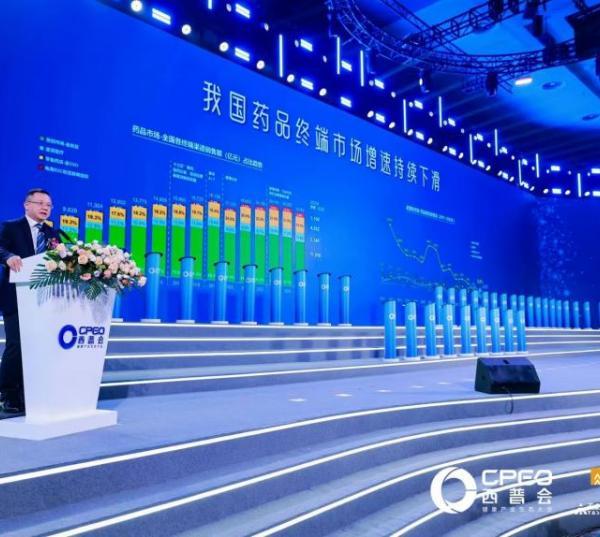
药品终端市场全年预降2.9%背后,支付错配与创新洪流下的生存法则
Hua Xia Shi Bao· 2025-08-20 11:11
Core Insights - The Chinese pharmaceutical terminal market is expected to decline by 2.9% in 2025, with hospital channels down 5.7% and retail pharmacies slightly down by 0.4% [1][2] - The industry is experiencing a significant transformation as it shifts from a "generic drug powerhouse" to an "innovation-driven" model, with 403 innovative drugs approved in the last five years [2][5] Market Challenges - The decline in market performance is attributed to a mismatch between payment structures and the pace of innovative supply, with an average price reduction of 60% in innovative drug negotiations [2][4] - The hospital market faces challenges from the optimization of drug usage structures, with a notable decrease in the share of generic and traditional Chinese medicines [4][5] Opportunities for Growth - Despite current challenges, the long-term outlook remains positive, driven by increasing health demands, optimized payment structures, and innovation in supply [5][6] - The aging population is projected to create a silver economy exceeding 10 trillion yuan by 2025, with healthcare consumption accounting for 35% and a compound annual growth rate of over 15% [6][7] Strategic Shifts - The industry is transitioning from passive growth to proactive evolution, with five structural changes identified: artificial intelligence, biotechnology, payment reform, the silver economy, and internationalization [5][7] - Retail pharmacies are encouraged to shift from merely selling drugs to providing comprehensive health solutions, leveraging AI to enhance their service offerings and consumer trust [6][7]