
存储行业周期性

Search documents
2026存储“超级牛市”仍未结束?
Jing Ji Guan Cha Wang· 2026-02-26 11:46
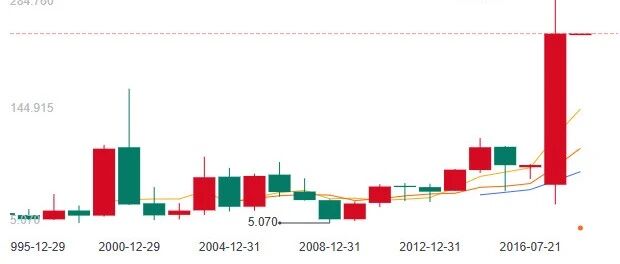
Core Viewpoint - The short-selling report by Citron Research on SanDisk highlights concerns over the storage chip market's supply-demand dynamics, suggesting that the current supply tightness is temporary and that SanDisk's valuation is significantly overstated [1] Group 1: Market Dynamics - Citron Research argues that the storage industry is characterized by strong cyclicality, with NAND flash memory prices and profitability heavily influenced by supply-demand cycles [1] - Historical trends show that the storage industry has experienced cycles of "boom—oversupply—collapse," with significant price drops following periods of high demand and subsequent capacity expansions [1] - The report indicates that the current high gross margins of approximately 50% are often indicative of a market peak rather than a sustainable state [1] Group 2: Company-Specific Insights - Citron compares SanDisk to high-growth stocks like Nvidia, asserting that its products are essentially commoditized and lack long-term technological barriers [1] - The report notes that Western Digital, SanDisk's former parent company and a significant shareholder, has recently sold shares at below-market prices, which Citron interprets as an insider prediction of a market peak [1] Group 3: Stock Performance and Market Reaction - Prior to the report, SanDisk's stock was at a high of $666.49, with a cumulative increase of approximately 175% since the beginning of 2026 and over 1200% in the past 12 months [2] - Following the report, SanDisk's stock fell to a low of $612.92, closing at $638.52, reflecting a decline of 4.20% and a significant increase in trading volume to over 30.4 million shares [2] - Despite the initial impact of the short-selling report, SanDisk's stock rebounded close to pre-report levels within two trading days, while competitors like Samsung and SK Hynix reached historical highs [2] Group 4: Industry Outlook - The CEO of SanDisk previously stated that AI-driven demand for high-bandwidth memory and NAND represents a structural change in the storage market, challenging the cyclical view presented by Citron [2] - Citigroup has raised its 2026 forecasts for DRAM and NAND average selling prices, predicting increases of 88% and 74% respectively, indicating a "runaway" market and a severe seller's market due to AI infrastructure investments [2] - For investors in mainland China, the China-Korea semiconductor ETFs have become important tools for exposure to Korean and American semiconductor giants, with a notable single-day increase of nearly 10% and a closing premium rate of 21.1% [2]
存储“超级牛市”仍未结束?闪迪被香橼做空后重回前高、韩国存储双雄股价创历史新高
Jing Ji Guan Cha Wang· 2026-02-26 10:50
Core Viewpoint - Citron Research has initiated a short position on SanDisk, arguing that the current supply tightness in the storage chip industry is temporary and that once major manufacturers restore yields and release capacity, the supply-demand dynamics could reverse dramatically [1][2]. Group 1: Citron Research's Short Report - The report claims that SanDisk's current valuation is significantly overestimated and that the market fundamentally misjudges its growth potential [1]. - Citron compares SanDisk to "NVIDIA-like" growth stocks, emphasizing that its products are essentially highly commoditized rather than possessing a long-term competitive moat [1]. - The report highlights the cyclical nature of the storage industry, stating that NAND flash memory, SanDisk's main product, is a commodity whose price and profitability are primarily driven by supply-demand cycles rather than structural innovation [1][2]. Group 2: Historical Context and Market Dynamics - Citron cites historical examples where high margins, currently around 50%, are typical characteristics of market peaks rather than sustainable states, with past instances showing price drops of approximately 50% and 70% following periods of high demand [2]. - The report emphasizes that unlike NVIDIA's GPU ecosystem, NAND flash products are highly interchangeable, with competition primarily based on cost and scale rather than technological barriers [2]. - Citron notes that SanDisk's former parent company, Western Digital, recently sold a significant portion of its SanDisk shares at a price about 25% lower than the current market price, indicating an internal judgment of a market peak [2]. Group 3: Market Reaction and Stock Performance - Following the release of Citron's report, SanDisk's stock price fell from $666.49 to a low of $612.92, reflecting an 8% drop, before closing at $638.52, down 4.20% [3]. - The trading volume surged to over 30.4 million shares, indicating a rapid shift in market sentiment [3]. - However, just two trading days later, SanDisk's stock price rebounded to around $665, nearly returning to pre-report levels [3]. Group 4: Broader Industry Trends - Concurrently, South Korean storage giants Samsung and SK Hynix reached historical highs in their stock prices, with Samsung's market capitalization surpassing $1 trillion [4]. - Citigroup has raised its 2026 price forecasts for DRAM and NAND, indicating a "runaway increase" in the market, with demand driven by AI infrastructure investments outpacing supply [4]. - For Chinese investors, the China-Korea semiconductor ETF has emerged as a key investment vehicle, reflecting strong performance with a closing increase of 9.64% [4].
香橼资本做空闪迪引发存储概念调整 澜起科技跌超6%
Xin Lang Cai Jing· 2026-02-25 02:33
Core Viewpoint - The stock price of SanDisk, a leading storage chip company, experienced significant volatility after Citron Research announced a short position and released a bearish report, causing the stock to drop nearly 8% intraday [1] Group 1: Market Reaction - The negative news about SanDisk triggered a chain reaction affecting Hong Kong storage concept stocks, with Lianqi Technology and Zhaoyi Innovation dropping 6.38% and 4.77% respectively, indicating growing market concerns about cyclical risks in the storage industry [2][3] - Lianqi Technology's stock price fell to 193.6, down 13.2, while Zhaoyi Innovation's stock price reached 411.6, down 20.6 [4] Group 2: Citron Research's Analysis - Citron Research highlighted that West Digital, a significant long-term shareholder of SanDisk, recently sold a large portion of its shares at a 25% discount to the current market price, signaling a warning that internal investors are cashing out as the storage cycle may be peaking [4] - The report refuted the common belief that AI demand would help NAND flash memory escape cyclical fluctuations, citing historical patterns from 2008, 2012, and 2018 where similar expectations did not alter the cyclical nature of the market [5] Group 3: Competitive Landscape - Citron emphasized the competitive threat from Samsung Electronics, which historically prioritizes market share over profit during storage cycles, potentially leading to aggressive pricing strategies that could undermine SanDisk's market position [5] - Samsung's current strategy includes not selling products with a gross margin below 50% and pushing advanced chips into the high-end SSD market, directly encroaching on SanDisk's core territory [5] - The report concluded that the current supply constraints are merely temporary, and once resolved, Samsung's lower pricing and advanced technology could further pressure SanDisk's market share [5] Group 4: Impact on Related Companies - The declines in SanDisk's stock affected Lianqi Technology and Zhaoyi Innovation due to their core positions in the storage industry supply chain, with Lianqi being a leading supplier of memory interface chips and Zhaoyi being a major player in the semiconductor design space [6] - Lianqi Technology's performance is closely tied to server memory module shipments and technology iterations, while Zhaoyi Innovation's product pricing and inventory levels are directly linked to global storage cycles [6]



观察 | AI热潮下的“隐形赢家”:一年涨559%,这门生意比挖金子还赚
未可知人工智能研究院· 2026-01-03 04:02
Core Viewpoint - The article emphasizes the importance of recognizing trends in the business world, highlighting that the infrastructure supporting these trends often contains the most certain investment opportunities. The significant rise in the stock price of SanDisk, which increased by 559% in 2025, exemplifies this point, as it outperformed well-known tech companies like Nvidia and Tesla [1][2]. Group 1: Market Dynamics - SanDisk's stock surge reflects a broader trend where storage companies dominated the top gainers in the market, with Western Digital, Micron, and Seagate also ranking high [2]. - The demand for storage in AI applications has skyrocketed, with a single AI server requiring 5 to 10 times more storage than traditional servers [4][5]. - The shift in AI usage from training to inference means that real-time data access is crucial, leading to increased demand for high-speed storage solutions [8]. Group 2: Supply and Demand - The supply-demand gap in the storage industry is significant, with predictions indicating a 26% increase in DRAM demand by 2026, while supply is expected to grow only by 20% [14]. - The price of enterprise SSDs has already risen by over 20% in Q4 2025, with some models experiencing increases of 30% to 40% [15]. - Major cloud service providers are stockpiling storage solutions, with investments in data center storage expected to exceed $1.2 trillion by 2025 [9]. Group 3: Industry Characteristics - The storage industry is typically cyclical, with cycles lasting about three years; however, the current AI-driven demand is extending this cycle [13]. - Companies are intentionally controlling production capacity to maintain price stability after previous downturns in the storage market [15]. - The competition for production capacity is heightened by the demand for High Bandwidth Memory (HBM), which is more profitable and is being prioritized by companies like SK Hynix [17]. Group 4: Investment Insights - Investors are encouraged to focus on "selling shovels" rather than "digging for gold," as infrastructure providers often benefit more than the leading tech companies during technological waves [19]. - Understanding the shifting bottlenecks in AI development can reveal new investment opportunities, as each bottleneck's resolution leads to the emergence of new challenges [20]. - Caution is advised as the storage sector shows signs of overheating, with potential price corrections expected if production capacity increases [20]. Group 5: Broader Industry Challenges - The AI industry faces significant challenges, including power shortages, rising costs, and data bottlenecks, which could hinder growth [22]. - Predictions indicate that by 2027, 40% of AI data centers may be limited by power shortages, impacting operational capabilities [22]. - The high costs associated with AI infrastructure investments raise questions about profitability and sustainability in the long term [22].
内存价格暴涨成“电子黄金”,雷军都顶不住了
3 6 Ke· 2025-11-20 01:12
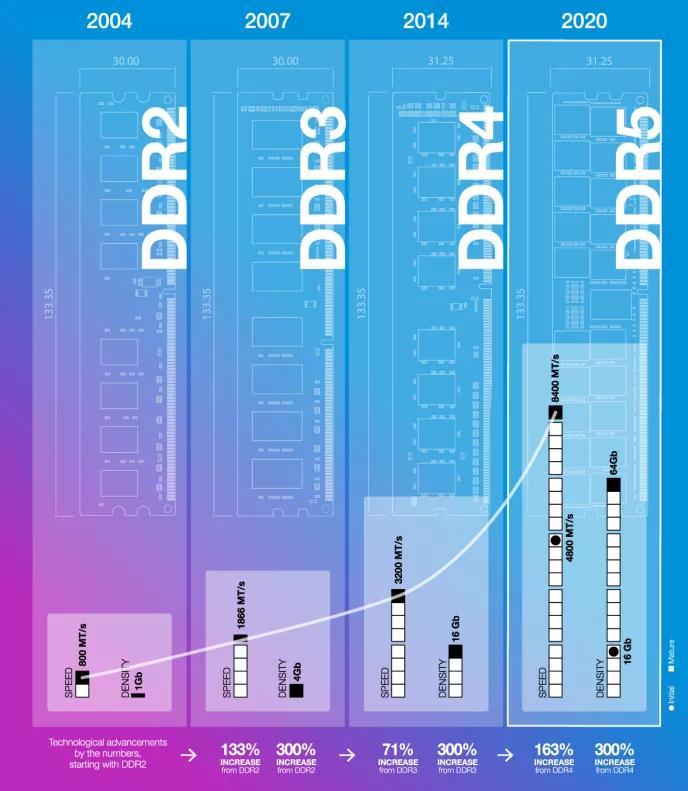
Core Insights - The recent surge in memory prices is primarily driven by increased demand from AI companies for HBM storage, which is squeezing DRAM and NAND flash production capacity [1][8] - The supply shortage in the memory market is currently over 5%, leading to significant price pressures on downstream manufacturers across various sectors, including consumer electronics [1][4] - The memory industry is entering a new upward cycle, influenced by AI's growing demand and a shift in production focus towards higher-margin products like HBM and DDR5 [4][10] Group 1: Price Dynamics - Samsung has announced a 60% price increase for memory chips, impacting the pricing of consumer electronics such as smartphones, laptops, and tablets [1] - The current memory price surge is characterized by a "price inversion" where DDR4 prices have surpassed those of DDR5 due to supply constraints and panic buying [7][15] - Historical data indicates that a 5% supply shortage can lead to a doubling of memory prices, while a 5% surplus could halve them [4] Group 2: Demand Drivers - The demand for NAND flash has shifted significantly due to AI applications, with companies like OpenAI and Gemini generating massive API calls, leading to increased storage needs [8][10] - The average business tasks supported by AI in Chinese enterprises is projected to rise from 28% to 44% over the next two years, further driving demand for memory products [10] - The cloud computing sector's data backup mechanisms are contributing to exponential data growth, necessitating more DRAM and NAND storage [10] Group 3: Industry Impact - The memory supply-demand imbalance is causing significant pressure on consumer electronics manufacturers, with major brands only able to secure 60-80% of their storage needs for the upcoming year [15][16] - The hardware OEM/ODM sector is facing severe profit margin pressures due to skyrocketing NAND and DRAM prices, which have increased by 50% and 300% respectively over the past six months [16] - The shift in focus from consumer electronics to AI server clients for memory allocation is reshaping the competitive landscape, with companies like Dell, HP, and ASUS identified as particularly vulnerable [16] Group 4: Technological Developments - The introduction of HBF technology, which utilizes NAND chips to match the bandwidth of HBM, is expected to expand the application scenarios for memory in AI tasks [18][20] - HBF technology offers significant advantages in terms of cost and capacity, potentially enhancing the efficiency of AI applications [20][21] - However, challenges remain regarding the lifespan and environmental requirements of NAND compared to DRAM, suggesting a potential hybrid architecture of HBM and HBF in the future [23][24]
收购标的嘉合劲威业绩波动原因、持续盈利能力以及存货遭问询 时空科技回复
2 1 Shi Ji Jing Ji Bao Dao· 2025-11-14 02:58
Core Viewpoint - The company, Shikong Technology, is responding to inquiries from the Shanghai Stock Exchange regarding its major asset acquisition plan, specifically addressing the performance fluctuations, sustainable profitability, and merger value of the target company, Jiahe Jingwei [1] Group 1: Acquisition Details - The transaction aims to acquire 100% equity of Jiahe Jingwei through a combination of share issuance and cash payment, intending to diversify into the storage industry to improve the company's weak main business performance [1] - Jiahe Jingwei specializes in the research, design, and sales of storage products such as memory modules and solid-state drives, showing significant performance volatility [1] Group 2: Financial Performance - In 2023, Jiahe Jingwei reported a net loss of 20.16 million yuan, but is projected to turn profitable in 2024 with a net profit of 42.26 million yuan, and continued profitability in the first eight months of 2025 with a net profit of 42.11 million yuan [1] - The performance fluctuations are attributed to the cyclical nature of the storage industry, which typically operates on a 3-4 year cycle, significantly influenced by supply and demand dynamics [1] Group 3: Market Conditions - The storage industry is currently at the bottom of its cycle in 2023, with low global market prices leading to reduced revenues and increased expense ratios for companies, including Jiahe Jingwei [1] - A recovery in demand, particularly driven by increased investments in infrastructure such as GPUs, is expected to boost the overall market and Jiahe Jingwei's revenue by 57.36% year-on-year in 2024 [1] Group 4: Inventory and Risk Management - Jiahe Jingwei has a large inventory scale, but the current high industry sentiment suggests a low risk of inventory impairment [2] - The company has emphasized that its business does not engage in high value-added areas, indicating a need for improved profitability, while being constrained by international trade conditions and supply chain concentration [2] - As the second-largest player in the global third-party memory module market, Jiahe Jingwei maintains stable supply chain partnerships and possesses strong core competitiveness through proprietary testing technologies [2]
