
收入预期

Search documents
英伟达CEO黄仁勋:对1万亿美元+的收入预期具有强烈的“能见度”
Ge Long Hui A P P· 2026-03-17 16:50
Core Viewpoint - NVIDIA's CEO Jensen Huang expresses strong visibility regarding a revenue expectation exceeding $1 trillion, which currently only includes the Blackwell and Rubin chips, excluding upcoming product releases [1]. Group 1 - The revenue expectation of over $1 trillion is based on current product lines [1]. - The forecast does not account for new products that are set to be released soon [1].

大行评级丨高盛:ASMPT去年第四季收入胜预期,评级“中性”
Ge Long Hui· 2026-03-04 05:45
Core Viewpoint - Goldman Sachs reported that ASMPT's revenue in Q4 last year increased by 18% quarter-on-quarter, exceeding management guidance and market expectations [1] Financial Performance - Gross margin was 36.5%, lower than Goldman Sachs' expectation of 38.8% but higher than market expectations of 35.7% [1] - Net profit for the period reached HKD 957 million, significantly above Goldman Sachs' forecast of HKD 360 million and market expectations of HKD 172 million, primarily driven by gains from the sale of Advanced Packaging Materials International (AAMI) [1] Future Guidance - ASMPT's revenue guidance for Q1 this year is between USD 470 million and USD 530 million, representing a year-on-year growth of 17% to 32%, and a quarter-on-quarter decline of 8% to a growth of 4% [1] - The median of the guidance is slightly above Goldman Sachs' and market expectations [1] Rating and Target Price - Goldman Sachs maintains a "Neutral" rating for ASMPT with a target price of HKD 90.7 [1]

中金:在基准情形下,预计居民新增入市资金体量可能与去年相比变化不太大
Jin Rong Jie· 2026-01-29 00:24
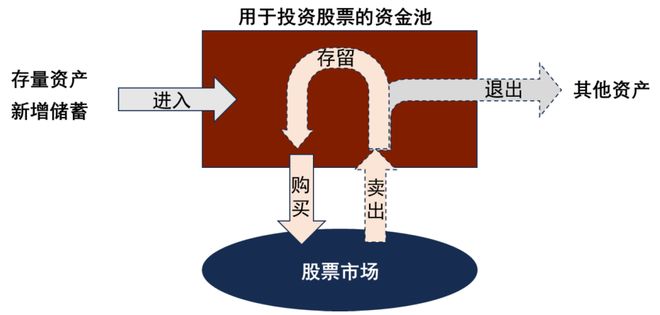
Group 1 - The core concept of "deposit into the market" emphasizes the importance of "net new funds" rather than just "new funds," as net new funds have a stronger correlation with stock prices [1][3][5] - The willingness of residents to enter the market is closely related to income expectations, which are expected to stabilize or improve, potentially leading to an increase in the growth rate of new funds entering the market, although it may be lower than in 2025 [1][6][11] - The analysis framework for income expectations includes employment and service inflation indicators, as well as leading indicators such as resident credit pulses and housing prices [1][15][44] Group 2 - The relationship between new funds and stock market performance is weak; however, the growth rate of new funds shows a better correlation with stock market fluctuations [6][9][11] - The investment willingness of residents is a decisive factor for market dynamics, with a strong connection to income expectations; if investment willingness declines, even with high levels of deposits, market entry funds may not increase significantly [21][23][28] - High-net-worth individuals and insurance funds may contribute to market support, but their impact may diminish in 2026 as their investment willingness may not be as influenced by broader income expectations [36][39][41]

【环球财经】德国2月消费者信心先行指数环比回升
Xin Hua She· 2026-01-28 16:58
Group 1 - The core viewpoint of the article is that the German consumer confidence index has shown signs of recovery after a significant decline at the beginning of the year, with the index rising by 2.8 points to -24.1 in February compared to the revised data from January [1] - Key indicators reflecting consumer confidence, including economic outlook, income expectations, and purchasing intentions, have all increased month-on-month [1] - Compared to the same period last year, consumers are more optimistic about the economic outlook for the next 12 months, believing that the economy is gradually emerging from a downturn and returning to moderate growth [1] Group 2 - The rise in income expectations is primarily attributed to the increase in the statutory minimum wage at the beginning of the year, which helps to boost the consumption environment [1] - Despite the recent improvement, consumer confidence remains at a low level, and the sustainability of this upward trend is uncertain [1] - Ongoing geopolitical tensions and escalating trade conflicts may pose further risks to market sentiment, indicating that the current recovery is not firmly established [1] Group 3 - Since 1980, the market research firm GfK has conducted monthly surveys of approximately 2,000 German consumers to gauge the confidence index [1] - This index serves as a leading indicator for predicting the trends in the German economy and consumer spending [1]
宏观视角下的存款搬家与股市定价
2026-01-28 03:01
Summary of Conference Call Notes Industry Overview - The discussion focuses on the relationship between deposit migration and stock market pricing in China, highlighting the unique valuation system of the A-share market compared to international markets [1][3]. Key Points and Arguments 1. **Low Inflation Environment**: The current low inflation in China makes fixed-income assets attractive to residents, influencing their investment decisions [1][3]. 2. **Investment Willingness**: The willingness of residents to invest in stocks is a critical factor determining market liquidity and stock price movements, rather than merely the volume of maturing deposits [1][3][5]. 3. **Correlation Analysis**: Historical data from 2016 to 2025 shows a weak correlation between the volume of maturing deposits and stock price increases, indicating that focusing solely on deposit maturity does not effectively explain stock price fluctuations [3][18]. 4. **Net vs. New Funds**: New funds entering the market do not equate to net new funds, as the behavior of both buyers and sellers must be considered to assess the overall investment pool in stocks [4]. 5. **Predictive Indicators**: The growth rate of "resident investment funds" serves as a strong predictor for the performance of the Wind All A Index, emphasizing the importance of tracking residents' willingness to invest in risk assets [5][13]. 6. **Asset Composition**: Residents' investable assets include both existing liquid assets and current savings, with investment proportions influenced by income expectations [6][8]. 7. **Income Expectations**: Income expectations are crucial for assessing stock market investment willingness, with indicators such as CPI service prices and PMI employment data being useful for tracking these expectations [2][10][11]. 8. **Current Deposit Trends**: As of Q3 2025, residents show a high tendency to save, indicating a lack of significant appetite for risk assets, which could be improved by positive income expectations [8][15]. 9. **Insurance Funds**: Insurance funds have a high allocation to stocks, but their marginal contribution to the market is expected to decrease in 2026 due to already high stock allocation levels [9][16]. 10. **High Net Worth Individuals**: High net worth individuals maintain a balanced approach to stock investments, showing both buying and selling behaviors, reflecting cautious optimism [9][17]. 11. **Future Market Predictions**: If income expectations remain stable or improve in 2026, stock market inflows are likely to increase, positively impacting the Wind All A Index. Conversely, a decline in income expectations could limit market growth [15][19]. Other Important Insights - The relationship between housing prices and income expectations is significant, as changes in housing prices can influence residents' financial outlook and investment behavior [12]. - A comprehensive analysis of macroeconomic factors, including actual interest rates and international capital characteristics, is essential for accurately predicting future market trends [7][19].
中金:宏观视角下的存款搬家与股市定价——存款到期的股债汇影响(一)
Xin Lang Cai Jing· 2026-01-27 23:53
Core Insights - The concept of "deposit into the market" emphasizes the importance of "new funds" while also considering "exit funds" to determine "net new funds," which have a greater correlation with stock prices. Ultimately, this reflects the willingness of residents to invest in the market, which is strongly correlated with income expectations [3][70][71] - The growth rate of new funds is more significant than the absolute amount of new funds, as it has a stronger correlation with stock market performance. High-net-worth individuals and insurance funds may provide independent support to the market in 2025, but this influence may diminish in 2026 [3][70][71] - The analysis framework for income expectations is based on employment and service inflation, with indicators such as resident credit pulses and housing prices leading to income expectations. In the baseline scenario, the amount of new funds entering the market is expected to remain relatively stable compared to the previous year [3][70][71] Group 1 - New funds do not equate to net new funds; stock price increases are more closely related to the growth rate of new funds. The relationship between new funds and stock market performance is not strong, as evidenced by fluctuations in new funds from 2015 to 2025 [4][7][75] - The correlation between the growth rate of new funds and stock market performance is more significant. For instance, in 2016, new funds reached 4.9 trillion yuan, but the market declined by 12.9%, while in 2019, lower new funds coincided with a 33% market increase [7][75][78] - The willingness of residents to invest in the stock market is a decisive factor, closely linked to income expectations. A decline in investment willingness can lead to reduced market participation, as seen in 2022 when a 14% increase in maturing deposits did not translate into increased market investment [21][25][90] Group 2 - The investment willingness of residents is significantly influenced by income expectations. As of Q3 2025, the tendency to save remains high, indicating potential for increased risk asset allocation if saving tendencies normalize [25][94] - Employment perceptions are closely tied to income expectations, which in turn affect stock market trends. Historical data shows a negative correlation between unemployment rates and stock market performance in the U.S. and Japan [30][99] - High-net-worth individuals' willingness to invest in the stock market may not be significantly affected by broader income expectations, and insurance funds may contribute to market investments, although their growth may be limited compared to 2025 levels [34][35][106]

中金:宏观视角下的存款搬家与股市定价——存款到期的股债汇影响(一)
中金点睛· 2026-01-27 23:50
Core Viewpoint - The article emphasizes the importance of "net new funds" over "new funds" in relation to stock market performance, highlighting that the willingness of residents to invest is closely tied to income expectations [2][3][5]. Group 1: New Funds vs. Net New Funds - "New funds" do not equate to "net new funds"; the latter is crucial for stock market increases, as it considers both inflows and outflows [3][5]. - The relationship between stock price increases and the growth rate of new funds is stronger than that with the absolute amount of new funds [5][6]. - Historical data shows that the absolute scale of new funds does not strongly correlate with stock market performance, while the year-on-year growth rate of new funds does [6][9]. Group 2: Investment Willingness and Income Expectations - The willingness of residents to invest in the stock market is a key variable influenced by income expectations, which are closely linked to employment and inflation [17][23]. - High net worth individuals and insurance funds may invest independently of general income expectations, but their impact may diminish in 2026 [26][27]. - The article proposes a framework to analyze income expectations based on employment and service inflation, indicating that if income expectations stabilize or improve, the growth rate of new funds could be promising, albeit lower than in 2025 [2][34]. Group 3: Indicators and Predictions for 2026 - The article suggests that monitoring service CPI and non-manufacturing PMI can provide insights into income confidence, which is crucial for predicting market behavior in 2026 [34][39]. - The analysis indicates that if income expectations do not improve, the growth rate of funds allocated to the stock market may slow down, potentially leading to a more subdued stock market performance [49][50]. - The article also discusses the challenges of predicting market behavior based on fundamental economic indicators, emphasizing the need to consider non-fundamental factors [52][53].

再这么搞下去,可能真的没人愿意买房了?
Sou Hu Cai Jing· 2025-07-03 06:34
Group 1 - The core issue in the housing market is the financial burden on homeowners, particularly those who purchased older properties at high prices, leading to feelings of regret and financial strain [1][3][6] - Homeowners face multiple challenges, including the inconvenience of living in older buildings, which can affect the quality of life, especially for elderly residents [3][5][6] - The current housing market is under significant pressure due to three main factors: income expectations, housing price expectations, and the need for property upgrades [8][9][30] Group 2 - Income expectations are critical; for instance, in Shenzhen, a typical mortgage for a 5 million yuan home requires a monthly payment of approximately 18,000 yuan, necessitating a monthly income of at least 30,000 yuan to manage living expenses [9][11][12] - Many potential buyers are hesitant to take on large mortgages due to fears of job loss and declining income, leading to a more cautious approach to home buying [14][19] - Housing price expectations also play a significant role; if buyers believe prices will continue to fall, they are less likely to make purchases, further contributing to market stagnation [16][19][21] Group 3 - The quality of new homes is improving, with developers increasingly offering higher standards and innovative designs, which puts additional pressure on the second-hand housing market [23][28] - The disparity in usable space between new and old homes is significant, with new homes often providing better layouts and higher efficiency, making them more attractive to buyers [24][28] - The future of the second-hand housing market appears bleak unless properties are located in prime areas with strong amenities, as the competition from new homes will likely continue to increase [30]

德国消费者信心下滑 消费者更愿意储蓄而非消费
news flash· 2025-06-26 06:11
Core Insights - The German consumer confidence index has declined for the first time in four months, primarily due to households opting to save rather than spend [1] - Despite a more optimistic income outlook, the increased willingness to save among consumers offsets the positive sentiment among high-income households [1] - Economic expectations among consumers have risen to the highest level since the outbreak of the Russia-Ukraine conflict, driven by government stimulus plans in defense and infrastructure set to take effect later this year [1] Consumer Behavior - Consumers are showing a higher propensity to save, indicating ongoing uncertainty despite improved income expectations from recent wage agreements and increased retirement benefits [1] - The decline in consumer confidence is attributed to a shift in focus from spending to saving, reflecting a cautious approach among households [1] Economic Outlook - The report highlights that the improvement in economic outlook is linked to upcoming government initiatives aimed at stimulating the economy [1] - The increase in consumer economic expectations suggests a potential for future spending, contingent on the effectiveness of government stimulus measures [1]
纽约联储:四月劳动力市场、收入和收入预期均出现下降。
news flash· 2025-05-08 15:04
Core Insights - The New York Federal Reserve reported a decline in the labor market, income, and income expectations for April [1] Labor Market - The labor market showed signs of weakening, indicating potential challenges for employment growth [1] Income Trends - There was a noticeable decrease in income levels, which may impact consumer spending and overall economic activity [1] Income Expectations - Expectations regarding future income have also declined, suggesting a more cautious outlook among consumers [1]