就业优先政策

Search documents
居民增收计划、养老金上涨、支持AI开源社区……45个关键词读懂2026政府工作报告
经济观察报· 2026-03-05 09:11
Economic Growth - The GDP growth target for 2026 is set at 4.5% to 5%, reflecting a pragmatic policy approach and considering both internal and external pressures on the economy [4][5] - The adjustment in the growth target aims to balance quality and reasonable growth, laying a foundation for high-quality economic development [5] Fiscal Policy - The proposed deficit rate for 2026 is around 4%, with a deficit scale of 5.89 trillion yuan, an increase of 230 billion yuan from the previous year [7] - Public budget expenditure is expected to reach 30 trillion yuan for the first time, with a focus on optimizing expenditure structure to support consumption and improve living standards [9][10] Tax and Financial Reforms - The government plans to advance tax and financial system reforms, including increasing the proportion of state-owned capital returns and enhancing local tax systems [12] - The emphasis on zero-based budgeting aims to optimize fund allocation and improve the efficiency of fiscal spending [12] Employment and Income - The urban survey unemployment rate target is set at around 5.5%, reflecting the need for policies to stabilize employment amid structural pressures [18] - The government aims to synchronize resident income growth with economic growth, emphasizing measures to increase income for low-income groups and improve social security systems [20][22] Environmental Goals - The target for reducing carbon dioxide emissions per unit of GDP is set at around 3.8%, aligning with the goal of achieving carbon peak by 2030 [26][27] - The shift from energy consumption control to carbon emission control reflects the need for a more precise approach to managing carbon emissions [27][28] State-Owned Enterprise Reforms - The government plans to implement a systematic approach to deepen state-owned enterprise reforms, focusing on optimizing the layout of state-owned capital and structural adjustments [29][30] - The emphasis on improving the modern enterprise system aims to enhance corporate governance and promote market-oriented reforms [31] Open Economy - The government intends to further expand high-level opening-up, focusing on service sector liberalization and enhancing international cooperation [35][36] - The approach aims to balance reform depth with security, promoting a competitive and fair business environment [36] Agricultural and Rural Development - The government is set to promote agricultural insurance development and enhance comprehensive disaster prevention capabilities in agriculture [59] - Policies will focus on improving rural elderly care services and implementing long-term care insurance systems to address the challenges of an aging population [45][47] Capital Market Stability - Measures to stabilize the stock market include comprehensive policies to enhance market confidence and promote active trading [54] - The government aims to improve the mechanism for long-term capital entering the market, ensuring a stable and healthy capital market [63] Innovation and Technology - The government plans to cultivate emerging and future industries, encouraging state-owned enterprises to lead in opening application scenarios for new technologies [69][70] - Support for artificial intelligence and open-source community development is expected to drive innovation and commercialization in various sectors [75]


四川将稳步提高就业政策补贴标准
Xin Lang Cai Jing· 2026-01-25 18:14
Core Viewpoint - The provincial government has issued implementation opinions to deepen employment reforms, aiming to promote high-quality and sufficient employment by increasing policy subsidies and focusing on grassroots, private enterprises, and urgently needed positions [1][2]. Group 1: Employment Policy Subsidties - The employment policy subsidy standards will be gradually increased, particularly favoring grassroots frontline workers, which is expected to attract college graduates and alleviate talent shortages in education, healthcare, and rural revitalization [1]. - Subsidies directed towards private enterprises aim to reduce high labor costs and recruitment challenges, while policies like job retention refunds and social security subsidies will help stabilize employment [1]. - The focus on urgently needed positions will guide labor skills enhancement and direct labor flow to critical sectors, meeting the demands of industrial transformation and improving employment quality [1]. Group 2: Support for Employment - The implementation opinions emphasize strengthening employment-first policies, with targeted support for key groups to encourage businesses to absorb more employment and promote self-employment among workers [2]. - Support measures for businesses will include upfront funding subsidies, tax incentives, and financial support to stabilize employment [2]. - Additional measures will simplify identification procedures for recent college graduates, encourage companies to relax age restrictions for hiring, and provide one-time job-seeking subsidies for eligible graduates [2].
中经评论:以最大努力抓好就业这个“最大民生”
Jing Ji Ri Bao· 2025-12-26 00:03
Core Insights - The employment situation in China has shown significant improvement, with 12.1 million new urban jobs created from January to November, surpassing the annual target, and the urban survey unemployment rate averaging 5.2%, below the 5.5% control target [1] Group 1: Employment Stability - Employment is prioritized as the largest aspect of people's livelihoods, with stable employment directly correlating to maintaining the livelihood baseline and development confidence [1] - The central government has placed a strong emphasis on stabilizing employment as part of its broader economic strategy, implementing coordinated fiscal, monetary, industrial, and employment policies to ensure basic stability in employment [1] Group 2: Structural Challenges - Despite overall stability, there are significant structural contradictions in the employment sector, characterized by strong supply and weak demand [2] - The strong supply is evident in the large number of over 10 million college graduates and nearly 300 million migrant workers each year, posing challenges in stabilizing existing jobs and expanding new ones [1][2] - The weak demand reflects a mismatch between the quality and stability of job growth and the expectations of laborers, with traditional industries and small businesses being cautious in expanding job opportunities [1][2] Group 3: Policy Directions - The central economic work conference has outlined a direction for employment policies, emphasizing the need for actions to stabilize jobs, expand capacity, and improve quality [2] - Key strategies include stabilizing business operations to ensure job retention, enhancing support for small and micro enterprises, and creating a stable and predictable business environment to boost hiring confidence [2][3] Group 4: Expanding Employment Opportunities - There is a focus on developing new economic sectors such as the digital economy, green economy, and silver economy to create more job opportunities [3] - The service sector is highlighted as a significant employment reservoir, with increased policy support for labor-intensive industries like construction and hospitality [3] - The scale of flexible employment has exceeded 200 million, indicating that new employment forms are becoming vital channels for income generation [3] Group 5: Improving Job Quality - Addressing structural contradictions requires aligning human capital with industry upgrades, focusing on resolving the issue of "having jobs but no workers" [3] - There is a call for profound reforms in vocational education and skills training to better match industry needs and reduce the gap between education and employment [3] - Enhancing public employment services and utilizing big data to improve job matching efficiency is essential for supporting key groups in finding employment [3] Group 6: Interconnected Strategies - The strategies of stabilizing jobs, expanding capacity, and improving quality are interconnected, with job stability serving as the foundation, expansion as the key, and quality improvement as the direction [4] - The employment pressure is expected to rise next year, necessitating a continued prioritization of employment stability and effective implementation of the outlined actions [4]
经济日报:以最大努力抓好就业这个“最大民生”
Xin Lang Cai Jing· 2025-12-25 23:32
Group 1 - The central government prioritizes employment stability as part of its broader economic strategy, implementing coordinated fiscal, monetary, industrial, and employment policies to ensure a stable employment landscape [1][2] - From January to November, 12.1 million new urban jobs were created, surpassing the annual target, with an average urban survey unemployment rate of 5.2%, below the 5.5% control target [1] - The structural contradiction in the employment sector is characterized by strong supply and weak demand, with over 10 million college graduates and nearly 300 million migrant workers entering the job market each year, posing significant challenges for job stability and growth [2] Group 2 - The survival and confidence of business entities are crucial for job stability, as 70% of disposable income for residents and 80% of income for impoverished families come from wages and business income [3] - Expanding employment opportunities is essential, with a focus on developing new economic sectors such as digital, green, and silver economies, and enhancing support for labor-intensive industries [3] - Improving employment quality is vital, requiring reforms in vocational education and training systems to align better with industry needs and enhance the skills of the existing workforce [4]
以最大努力抓好就业这个“最大民生”
Jing Ji Ri Bao· 2025-12-25 22:04
Group 1 - The central government prioritizes employment stability as part of its broader economic strategy, implementing coordinated fiscal, monetary, industrial, and employment policies to ensure basic stability in the job market [1][2] - From January to November, 12.1 million new urban jobs were created, surpassing the annual target, with an average urban survey unemployment rate of 5.2%, below the 5.5% control target, indicating the effectiveness of employment-first policies [1][2] - The employment landscape faces structural challenges, with a strong supply of labor (over 10 million college graduates and nearly 300 million migrant workers annually) but weak demand for high-quality, stable jobs that meet worker expectations [2][4] Group 2 - Stabilizing employment relies on maintaining the viability of business entities, particularly small and medium-sized enterprises (SMEs) and individual businesses, which require support to enhance their risk resilience and hiring capabilities [3][4] - Expanding employment opportunities is crucial, with a focus on developing new economic sectors such as the digital economy, green economy, and services, while also supporting labor-intensive industries like construction and hospitality [3][4] - Improving job quality is essential to address structural mismatches in the labor market, necessitating reforms in vocational education and training to align more closely with industry needs and enhance skill development for existing workers [4]
锚定“急难愁盼” 政策精准发力筑牢民生底线
Xin Lang Cai Jing· 2025-12-23 23:14
Group 1: Economic Policy Focus - The Central Economic Work Conference emphasizes prioritizing people's livelihoods, focusing on employment and healthcare as core areas for economic work in the coming year [1][2] - A series of key deployments include actions to stabilize and expand employment, particularly for key groups such as college graduates and migrant workers [1][2] Group 2: Employment Strategies - Future employment efforts will focus on resolving structural employment issues, enhancing the alignment of university education with economic development, and providing targeted skills training [2] - The conference encourages support for flexible employment and new employment forms, allowing these workers to participate in social insurance without changing their employment methods [2] Group 3: Healthcare Reforms - The conference outlines important healthcare reforms, including optimizing drug procurement, deepening medical insurance payment reforms, and implementing long-term care insurance [2][3] - The National Health Commission emphasizes practical measures to invest in human resources, stabilize birth rates, and enhance healthcare services [3] Group 4: Medical Insurance Development - The focus of medical insurance reform will shift from expanding coverage to improving quality, aiming to reduce patient burdens while enhancing efficiency for medical institutions [4][5] - The National Medical Insurance Administration plans to consolidate universal coverage and promote the integration of commercial health insurance with basic medical insurance [4]
中央财办最新发声
第一财经· 2025-12-16 13:48
Core Viewpoint - The article discusses the outcomes and future directions of China's economic policies as outlined in the Central Economic Work Conference, emphasizing the resilience and potential of the economy despite existing challenges [2][3]. Economic Performance and Outlook - The expected economic growth for 2025 is around 5%, with a total economic output projected to reach approximately 140 trillion yuan [2]. - Employment remains stable, and foreign trade is expected to grow rapidly, with significant diversification in exports [2]. - The construction of a modern industrial system is progressing, with advancements in technology and innovation, particularly in AI, biomedicine, and robotics [2]. - Reforms and opening-up measures are advancing, with a focus on building a unified national market and addressing "involution" in competition [2]. - Risk mitigation in key areas has shown positive progress, including the orderly replacement of local government hidden debts and the completion of housing delivery tasks [2]. Challenges and Responses - The article highlights ongoing challenges such as external environmental changes, weak domestic demand, and risks in key sectors [3]. - Despite these challenges, the long-term supportive conditions for economic growth remain unchanged, including the advantages of the socialist system and a large market [3]. Macroeconomic Policies - The government plans to continue implementing proactive fiscal and monetary policies to support economic recovery [5][8]. - Fiscal policy will focus on maintaining necessary deficits and debt levels while enhancing the precision and effectiveness of spending [6][7]. - Monetary policy will aim to stabilize economic growth and ensure reasonable price recovery, utilizing various tools to maintain liquidity [8]. Domestic Demand and Investment - Expanding domestic demand is a top priority, with a focus on boosting consumption and investment [9][10]. - The contribution of domestic demand to economic growth reached 71% in the first three quarters of the year [9]. - Strategies will include enhancing consumer purchasing power and promoting new consumption patterns, particularly in services [9][10]. Regional Development and Coordination - The article outlines plans for regional coordination and development, emphasizing the importance of balanced growth across different areas [18][19]. - Support for major economic provinces is highlighted, with a focus on innovation and the development of new industries [20]. Green Transition and Employment - The government is committed to a comprehensive green transition, with specific measures to achieve carbon peak and neutrality goals [21][22]. - Employment policies will prioritize stability and quality, with targeted support for key groups such as graduates and migrant workers [23][24][25]. Real Estate Market Stability - The real estate market is expected to stabilize, with a focus on meeting both rigid and improvement housing demands [26][27][28]. - Measures will include encouraging the transformation of real estate companies and promoting a new development model for the sector [28][29].

中国经济年会:明年要增加普通高中学位供给和优质高校本科招生
Yang Shi Xin Wen· 2025-12-13 04:08
Core Viewpoint - The focus is on prioritizing people's livelihoods and enhancing practical services for the public [1] Group 1: Education Sector - There is a need to adapt to changes in the school-age population structure by optimizing the layout of educational resources [1] - The government plans to increase the supply of ordinary high school places and the enrollment of quality undergraduate programs [1] Group 2: Employment Policies - The current employment landscape shows a strong supply and weak demand, necessitating a reinforcement of employment-first policy orientation [1] - Actions will be implemented to stabilize and expand job opportunities, particularly for key groups such as college graduates and migrant workers [1] - There is an emphasis on improving the quality of employment and encouraging flexible workers and new employment forms to participate in employee insurance [1]
人社局真金白银送红利 精准服务搭桥梁
Sou Hu Cai Jing· 2025-11-20 02:26
Group 1 - The core viewpoint is that Hami City is implementing targeted policies to address the dual challenges of "difficult employment" for enterprises and "employment difficulties" for the public, utilizing measures such as social security subsidies and interest-subsidized loans to empower business development and support job seekers [1][2] - Hami City Human Resources and Social Security Bureau has issued a total of 224 million yuan in entrepreneurial guarantee loans during the 14th Five-Year Plan period, demonstrating the effectiveness of their policy initiatives [2] - The city has seen the emergence of 21,600 new entrepreneurial groups and the creation of 33,600 jobs through entrepreneurship, indicating a positive cycle between entrepreneurship and employment [1] Group 2 - Hami City Human Resources and Social Security Bureau is committed to continuing the implementation of employment-first policies, enhancing cooperation in human resources, and optimizing the smart employment service platform for more precise and efficient services [2] - The bureau aims to expand the coverage of vocational skills training and strengthen employment support for key groups, while also promoting the development of the human resources service industry towards high quality and professionalism [2]
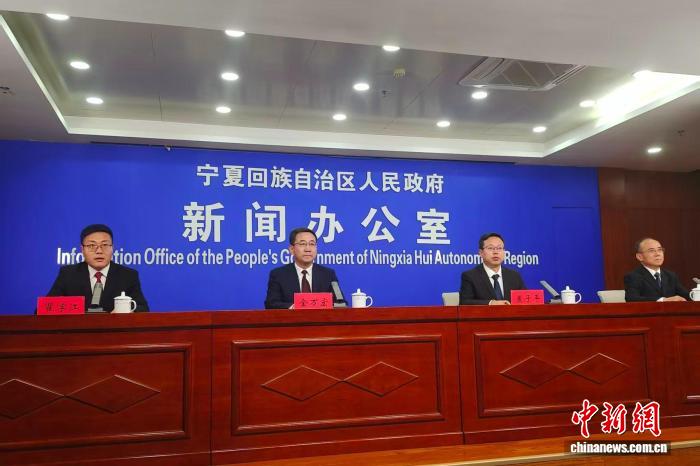
宁夏:就业帮扶筑牢民生底线 脱贫人口务工规模达150.9万人次
Zhong Guo Xin Wen Wang· 2025-10-28 12:48
Core Insights - Ningxia has achieved significant employment milestones during the "14th Five-Year Plan" period, with a total of 40.8 million new urban jobs and 416.5 million rural labor transfers, while the scale of employment for poverty alleviation populations reached 1.509 million [1][3] Employment Policies and Initiatives - The Ningxia government has implemented a comprehensive employment-first policy framework, coordinating economic policies with employment strategies, including 20 measures to stabilize employment and 33 measures to promote entrepreneurship [3] - A total of 38.84 billion yuan in social insurance fees have been reduced for enterprises and individuals, alongside 1.55 billion yuan in various employment stabilization funds, securing 2.296 million jobs [3] Targeted Support for Key Groups - Focused efforts have been made to support key demographics, particularly recent graduates, with a consistent employment assistance rate of over 90% for unemployed graduates and disadvantaged groups [1][3] - Initiatives such as the "1131" precise assistance program have helped 296,000 unemployed individuals find jobs, while 49,900 individuals from difficult employment backgrounds have secured employment [5] Labor Transfer and Brand Development - Ningxia has organized labor transfers, with 693,200 rural workers moving outside the region, and has established 97 labor service stations [4] - The region has developed 36 unique labor brands, employing 277,000 individuals and creating an additional 544,000 jobs [4] Public Employment Services - The Ningxia government is enhancing public employment services through the "Ninghao Employment" platform, which provides access to 66,000 job postings and various employment assistance policies [5] - Since 2021, a total of 4,912 recruitment events have been held, offering 2.012 million job opportunities [5]