
恐慌情绪

Search documents
国际金银、美股、石油、BTC等均现下跌,春节应如何防范大波动?
Sou Hu Cai Jing· 2026-02-13 02:05
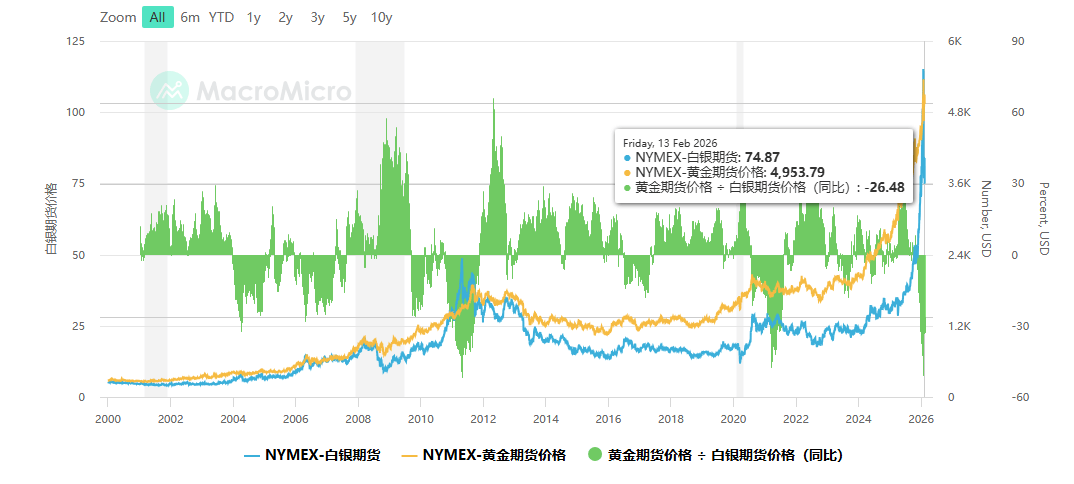
Market Overview - The international financial market experienced a widespread decline, with gold, silver, oil, US stocks, the dollar, and Bitcoin all showing weakness, particularly COMEX silver futures which fell by 10.62% [1] - The overall market trends indicate a tightening monetary policy from the Federal Reserve amidst a positive US economic outlook, which may alter trading logic by 2025 [1][3] - The pricing of dollar-denominated assets is currently volatile due to the Federal Reserve's indecision, leading to a potential shift of assets into European safe havens [1][3] Precious Metals - Gold futures dropped by 3.08% and silver futures by 10.62%, with the decline attributed to normal technical developments rather than a change in core reasons [6] - The market is witnessing a significant divergence between supply and demand for silver, particularly in key industries like photovoltaics and electronics, which has led to a warning from the International Silver Institute [6] - The current trading environment for gold and silver is characterized by a lack of liquidity and a potential shift to a second platform, indicating a consolidation of positions [6] US Stock Market - The US stock market saw significant declines, particularly in technology stocks, with the Dow Jones falling by 1.34%, the S&P 500 by 1.57%, and the Nasdaq by 2.03% [4] - Concerns over the impact of artificial intelligence on job markets and economic growth have led to increased selling pressure, exacerbated by tightening liquidity expectations [4] Bitcoin and Cryptocurrency - Bitcoin fell by 3%, dropping below $66,000, marking a nearly 48% decline from its historical high in October 2025, driven by regulatory pressures and a collapse of its narrative as a safe-haven asset [8] - The outflow from cryptocurrency ETFs has reached nearly $4 billion over the past three months, contributing to downward pressure on Bitcoin prices [8] - Regulatory actions in China and the US have intensified, further constraining the cryptocurrency market and accelerating capital withdrawal [8] Asset Correlation and Market Dynamics - The traditional hedging relationships between different asset classes have broken down, with all core assets experiencing simultaneous declines due to tightening liquidity and extreme panic [11] - The correlation between Bitcoin and US tech stocks has risen to 0.8, indicating that Bitcoin is now viewed as a high-risk asset, moving in tandem with the stock market [11] - The current market environment is characterized by a panic selling trend, driven by multiple uncertainties including AI impacts, economic recovery challenges, and regulatory tightening [12]

恐慌情绪反复,基本金属震荡偏承压
Zhong Xin Qi Huo· 2026-02-06 01:32
Group 1: Report's Overall Industry Investment Rating - Not provided in the given content Group 2: Report's Core View - Panic sentiment persists, and base metals are under pressure with a volatile trend. In the short term, the negative impact of the sharp drop in silver prices remains, but its marginal effect is weakening. It is advisable to wait and see or cautiously take short - term long positions in copper, aluminum, and tin with strict position control. In the long term, due to the expected weak US dollar and supply - side disturbances, copper, aluminum, tin and other varieties are expected to maintain a relatively strong volatile trend [1] Group 3: Summary by Variety Copper - **View**: The US dollar index continues to rise, putting short - term pressure on copper prices. In the long term, it is expected to be volatile and relatively strong. - **Logic**: Macroscopically, the rising US dollar index pressures copper prices. In terms of supply and demand, copper mine supply disturbances increase, TC of copper concentrate spot drops, and the long - term processing fee in 2026 is at a record low, strengthening the expectation of refined copper supply contraction. On the demand side, terminal demand is weak, and social inventory of refined copper is high [7] Alumina - **View**: The expectation of production cuts competes with the reality of oversupply, and the alumina price fluctuates. - **Logic**: Recently, macro sentiment amplifies price fluctuations. Fundamentally, the average spot price has dropped significantly, increasing the expectation of supply contraction as high - cost inland production faces losses. However, in reality, supply contraction is insufficient, and the weakening of raw material prices weakens the price support. The futures price also faces pressure, so it is expected to fluctuate widely [7] Aluminum - **View**: Inventory continues to accumulate, and aluminum prices decline. In the short and long term, it is expected to be volatile and relatively strong. - **Logic**: Macroscopically, short - term risk appetite decreases, but the long - term macro expectation remains positive. On the supply side, domestic production capacity is stable, and overseas production is restricted. On the demand side, the initial - stage operating rate drops, and high prices suppress demand. Inventory continues to accumulate. Overall, the positive macro expectation and the tight supply - demand expectation are expected to support the price [7][8][9] Aluminum Alloy - **View**: Cost support persists, and the price fluctuates downwards. In the short and long term, it is expected to be volatile and relatively strong. - **Logic**: On the cost side, the price of scrap aluminum remains high, and supply is tight. On the supply side, some manufacturers start the Spring Festival holiday early, and policies may restrict supply. On the demand side, the subsidy for car replacement decreases, and high prices suppress demand. Inventory accumulates. Overall, cost support and stable supply - demand are expected to keep the price relatively strong [11] Zinc - **View**: The sentiment in the non - ferrous metal market weakens, and zinc prices decline again. In the short term, it is expected to fluctuate at a high level, and in the long term, there is room for a decline. - **Logic**: Macroscopically, the expectation changes due to Trump's nomination. On the supply side, zinc ore supply is tight in the short term, and refinery profits decline. On the demand side, domestic consumption enters the off - season, and demand is average. In the short term, zinc exports continue, and inventory accumulation pressure is small. In the long term, supply is expected to increase, and demand growth is limited [13] Lead - **View**: The weakening sentiment in the non - ferrous metal market competes with high cost support, and lead prices fluctuate. - **Logic**: On the spot side, the spot premium rises, and the price difference between primary and recycled lead decreases slightly. On the supply side, the production of recycled lead decreases due to environmental protection and profit factors. On the demand side, electric bicycle orders weaken, but automobile battery orders improve, and the operating rate of lead - acid battery enterprises is still at a relatively high level. Overall, the price is expected to fluctuate [18] Nickel - **View**: The expected policy competes with the weak reality, and nickel prices fluctuate. It is expected to be volatile and relatively strong. - **Logic**: On the supply side, the overall supply pressure remains high. On the demand side, it enters the traditional off - season, and the overall fundamentals are in surplus. Policy - wise, Indonesia's potential policy changes have adjusted the market's cost and balance expectations. Overall, the price is expected to be volatile and relatively strong, and the policy changes need to be continuously tracked [20] Stainless Steel - **View**: The price of nickel iron drops slightly, and the stainless - steel futures market fluctuates. It is expected to be volatile and relatively strong. - **Logic**: The cost side still has some support. The production in December decreased, and the planned production in January may increase slightly. Terminal demand is cautious, and inventory accumulates. Overall, the price is expected to be volatile and relatively strong, and the policy changes in Indonesia need to be continuously tracked [21] Tin - **View**: Market sentiment is weak, and tin prices continue to adjust. In the long term, it is expected to be volatile and relatively strong, but short - term price volatility risks need to be vigilant. - **Logic**: Supply is the key factor affecting the price. The supply problem in some areas may be alleviated, while in others, it is still restricted. In the future, supply will be tight, and demand will continue to grow. However, in the short term, the strong US dollar, stable supply, and weakening bullish power may cause price fluctuations [23] Group 4: Market Monitoring Commodity Index - On February 5, 2026, the comprehensive index was 2401.01, down 0.84%; the commodity 20 index was 2745.41, down 0.99%; the industrial product index was 2300.28, down 0.97% [149] Non - ferrous Metal Index - On February 5, 2026, the index was 2696.94, with a daily decline of 1.55%, a 5 - day decline of 5.55%, a 1 - month decline of 2.75%, and a year - to - date increase of 0.41% [151]
暴跌了,然后呢?
对冲研投· 2026-02-02 23:33
Core Viewpoint - The recent sharp decline in commodity prices is primarily driven by emotional panic rather than a collapse in the fundamental supply and demand dynamics of the commodities themselves [2][6]. Group 1: Causes of the Decline - The core reason for the market crash is the collapse of sentiment in precious metals, which led to a sell-off across various sectors, including non-ferrous metals like copper and aluminum [2][3]. - Two key news events acted as "triggers" for the market panic: the nomination of Kevin Warsh as the next Federal Reserve Chairman, raising concerns about the end of the "cheap money era," and the easing of geopolitical tensions between the U.S. and Iran, which reduced the "geopolitical risk premium" in oil prices [3][4]. - The market was already saturated with speculative positions and high leverage, which exacerbated the sell-off when negative news emerged, leading to forced liquidations and a vicious cycle of price declines [5][6]. Group 2: Sector Analysis - **Non-Ferrous Metals**: Despite the sharp declines, the fundamental support for copper and aluminum remains intact. Issues such as declining ore grades and limited new supply for copper persist, while demand from sectors like home appliances and electric vehicles is expected to rise [8][10]. - **Energy and Chemicals**: The oil and chemical sectors experienced significant declines due to the removal of geopolitical risk premiums and concerns over weak global oil demand. However, coal and salt chemicals showed resilience as their costs are more tied to domestic coal prices [11][12]. - **Black Metals**: The black metal sector is facing pressure from both weak seasonal demand and the negative sentiment from precious metals. However, the rate of inventory accumulation is not alarming, providing some buffer against drastic price drops [13]. - **Agricultural Products**: Agricultural commodities are less affected by the recent market turmoil, as their prices are primarily driven by domestic supply and demand factors, making them more resilient to macroeconomic fluctuations [14]. Group 3: Investment Strategy - Investors are advised to distinguish between emotional market reactions and the intrinsic value of commodities. The current market turmoil is seen as a temporary emotional response rather than a fundamental shift in value [15][20]. - The recommended strategy is to adopt a wait-and-see approach, avoiding aggressive positions until market volatility decreases and signs of stabilization appear [16][19]. - Preparation for future opportunities is essential, including reassessing the supply-demand dynamics of favored commodities and planning entry strategies [17][18].

11月24日复盘:市场回暖,个股普涨暗藏杀机!继续走低还是反攻开始?
Sou Hu Cai Jing· 2025-11-24 10:14
Market Overview - The market showed a general upward trend today, but compared to last Friday's decline, many investors remain cautious. The index did not see significant gains, indicating a potential continuation of the downward trend. Trading volume decreased, suggesting a lack of active participation from investors, with a median decline of 3.91% last Friday compared to a 1.31% increase today, indicating persistent fear in the market [1][3]. Buying and Selling Pressure - The buying power remains weak, with expectations of less than 1,000 in buying volume tomorrow, which is below the previous week's levels. Selling pressure was significant today, with over 670 sell orders, indicating continued outflow from retail investors and institutions. This unusual selling pressure during a day of general gains suggests that the market has not yet cleared the selling pressure, leading to potential further testing in the coming days [3][5]. Sector Performance - The ST (Special Treatment) sector had the highest number of stocks hitting the daily limit up, with 12 stocks reaching this threshold. Other sectors had fewer than 10 stocks hitting the limit, indicating a lack of strength in those areas. The military industry showed relatively strong performance, driven by news-related factors, while sectors like Fujian Free Trade and large models also saw some gains, albeit from lower bases [5][6]. Market Sentiment - Despite some signs of recovery, the market is not experiencing a true broad-based rally. The number of stocks that have declined for three consecutive days remains high, with over 600 stocks, indicating ongoing weakness. The current market environment is characterized by sector rotation and ongoing consolidation, with investors either choosing to band together in certain stocks or remain on the sidelines due to uncertainty [8][9].
特朗普:恐慌者又错了。
news flash· 2025-08-01 04:29
Core Viewpoint - The article discusses Trump's assertion that panic among certain groups is misplaced, suggesting a more optimistic outlook on current events [1] Group 1 - Trump emphasizes that those who are panicking are incorrect in their assessments of the situation [1] - The article implies that there may be underlying positive trends that are being overlooked by the public and analysts [1]