
成本领先

Search documents
【中国海油(600938.SH0883.HK)】25年油气产储量再创新高,油价下行期业绩韧性凸显——2025年报点评(赵乃迪/蔡嘉豪/王礼沫)
光大证券研究· 2026-03-29 00:04
Core Viewpoint - The company demonstrated resilience in its performance despite a decline in international oil prices, focusing on increasing reserves and production while controlling costs [5][6]. Financial Performance - In 2025, the company achieved total revenue of 398.2 billion yuan, a year-on-year decrease of 5.3%, and a net profit attributable to shareholders of 122.1 billion yuan, down 11.5% [4]. - In Q4 2025, the company reported a revenue of 85.7 billion yuan, a decline of 9.3% year-on-year and 18.3% quarter-on-quarter, with a net profit of 20.1 billion yuan, down 5.5% year-on-year and 38.0% quarter-on-quarter [4]. Operational Highlights - The company achieved record oil and gas production, with a total output of 777.3 million barrels of oil equivalent, representing a 7% increase year-on-year [7]. - The average realized oil price was 66.47 USD per barrel, down 13.4% year-on-year, while the average natural gas price increased by 3.0% to 7.95 USD per thousand cubic feet [8]. Cost Management - The company maintained a competitive cost structure, with the main cost per barrel of oil equivalent at 27.90 USD, a decrease of 2.2% year-on-year [9]. - Operating expenses per barrel were 7.46 USD, down 2.0% year-on-year, reflecting effective cost control measures [9]. Dividend Policy - The company declared a total dividend of 1.28 HKD per share for 2025, with a payout ratio of 45%, emphasizing its commitment to shareholder returns [10]. Future Outlook - For 2026, the company plans to maintain high capital expenditures, with a budget of 112 to 122 billion yuan, aiming for a production target of 780 to 800 million barrels of oil equivalent, representing a 1.6% year-on-year increase [11]. - The company will continue to focus on its core oil and gas business and pursue high-quality growth in production [11]. Strategic Positioning - The ongoing geopolitical tensions, particularly the US-Iran conflict, have led to increased oil prices, highlighting the company's strategic importance in ensuring energy supply security [12].



中粮家佳康20260323
2026-03-24 01:27
Summary of the Conference Call for COFCO Jiajia Kang Company Overview - **Company**: COFCO Jiajia Kang - **Industry**: Livestock and Meat Processing Key Points and Arguments Financial Performance - **2025 Revenue**: CNY 18.579 billion, an increase of 13.8% year-on-year, primarily driven by growth in the livestock business [2][12] - **Net Profit**: Loss of CNY 292 million after fair value adjustments, a significant decline due to a 17.9% drop in pig prices [2][12] - **Average Selling Price of Pigs**: CNY 13.39 per kg, down 19% year-on-year [2][5] Cost Management and Efficiency - **Cost Reduction Initiatives**: Focus on optimizing feed formulas, leveraging bulk purchasing advantages, and enhancing management practices to significantly lower breeding costs [3][6] - **Quality Improvement**: Proportion of high-quality breeding pigs increased to 94%, with PSY (Pigs Weaned per Sow per Year) exceeding 28 [2][3][6] - **Collaborative Breeding**: 25% of breeding output from cooperative farming, which is more cost-effective compared to self-breeding [2][6] Brand Development and Sales Growth - **Fresh Meat Sales**: Sales volume of fresh pork increased by 30.3%, with brand revenue accounting for 32.1% of total income [2][3][10] - **E-commerce Growth**: E-commerce channel revenue surged over 200%, indicating strong online sales performance [2][10] - **Product Innovation**: Launched new products like flaxseed pork slices and collaborated with major retailers to enhance market presence [10][11][16] Production Capacity Expansion - **Meat Processing Capacity**: Increased annual processing capacity from 23,000 tons to 52,000 tons with new factories in Dongtai and Pinghu [2][11] - **Strategic Partnerships**: Collaborated with major restaurant chains to develop new products, enhancing B2B sales [11] Technological Advancements - **Research and Development**: Established COFCO Jiajia Kang Research Institute focusing on breeding innovation and digital applications [8][17] - **Data Utilization**: Collected over 70 million data points daily to improve production efficiency through AI-driven smart farming [9][17] Market Challenges and Strategic Focus for 2026 - **Market Conditions**: Acknowledgment of ongoing challenges in the industry, with a focus on cost reduction, brand expansion, and foundational strengthening [13][22] - **Future Strategies**: Emphasis on 20 cost reduction projects, enhancing brand presence, and accelerating the application of technological advancements [13][22] Supply Chain and Procurement Strategy - **Raw Material Pricing**: Monitoring of corn and soybean meal prices, with a focus on stabilizing procurement costs through group advantages [19][20] - **Synergy Between Feed and Breeding**: Enhanced collaboration post-acquisition of COFCO Feed, leading to cost savings and improved product quality [20] Future Outlook - **Brand Development Philosophy**: Commitment to a differentiated functional approach, focusing on consumer brand management and long-term investment in branding [14][15] - **Expansion Plans**: Continued focus on the Hong Kong market with plans for increased advertising and product development tailored to local preferences [18][19] Conclusion - **Overall Strategy**: The company aims to balance cost management with brand development and technological innovation to navigate market challenges and enhance long-term value [13][15][22]
有机硅专家20260303
2026-03-04 14:17
Summary of the Conference Call on Organic Silicon Industry Industry Overview - The organic silicon industry has reached a consensus on a price increase of 300 RMB, with the mainstream price of DMC rising to 14,200-14,300 RMB. Future price adjustments will follow a rolling increase strategy of 300-500 RMB per instance [2][3] - The supply side is shifting from "production for sale" to "sales determine production," with no major new capacity expected in 2026. A reduction execution rate of 35% is needed to achieve supply-demand balance [2][3] - The global capacity of organic silicon is expected to increase from 77% to 85% in China by 2026 due to the accelerated exit of overseas capacities, such as Dow's planned shutdown of certain facilities [2][11] Demand Dynamics - Demand is characterized by "traditional steady growth + emerging explosive growth," with core increments coming from photovoltaic adhesives, electronic adhesives, and liquid silicone rubber for robotics. Traditional demand accounts for approximately 70% [2][24] - The cost side is supported by rising methanol prices, while industrial silicon remains stable due to reductions in the photovoltaic chain, with prices around 9,300-9,600 RMB. The complete cost for monomer plants is estimated at 10,500-11,000 RMB [2][24] Price Adjustments and Market Reactions - The cancellation of export tax rebates on April 1 has increased costs by approximately 1,200 RMB per ton, leading to a short-term rush in orders for March and pushing the industry towards high-value-added product transformation [2][22] - The next meeting is expected to be held between late April and early May, with price adjustments based on inventory levels, downstream inquiries, and procurement intensity [3] Cost Structure and Competitive Landscape - Major companies like Hesheng and Luxi have cost advantages of 300-700 RMB/ton through integration, low electricity prices, or energy efficiency of new facilities [2][24] - The procurement frequency for raw materials has increased from every 2-3 months to approximately 1-1.5 months due to a buyer's market [9] Future Price and Demand Projections - The price mechanism has significantly strengthened since November 2025, with prices no longer strictly following traditional seasonal logic. The ability to increase prices will depend on downstream acceptance and the rolling increase strategy [10] - The demand growth in 2026 is expected to be around 5%-7% for traditional sectors, while emerging sectors like photovoltaic adhesives and electronic adhesives will see faster growth [14][15] Emerging Applications and Innovations - The demand for photovoltaic adhesives is projected to grow significantly, with new installations estimated at 180-240 GW in 2026 [14] - The robotics sector is transitioning from R&D to commercialization, with expected global shipments of over 50,000 units in 2026 [16] Export Dynamics and Policy Impacts - China's organic silicon exports are projected to grow from 187,800 tons in 2021 to approximately 280,000 tons by 2025, with a compound annual growth rate of about 10.50% [22] - The cancellation of export tax rebates is seen as a double-edged sword, potentially reducing export volumes while pushing for a shift towards higher-value products [22] Conclusion - The organic silicon industry is undergoing significant changes in supply dynamics, pricing strategies, and demand structures. The focus on high-value products and the impact of external factors like export policies will shape the industry's future trajectory.

为什么新供应商进入理想汽车很难?
汽车商业评论· 2025-12-09 23:07
Core Viewpoint - The Chinese automotive industry is rapidly evolving, with companies like Li Auto facing significant challenges and emphasizing the need for innovation and cost management to remain competitive [4][6][14]. Group 1: Challenges Faced by Li Auto - Li Auto is currently dealing with five major challenges: evolving consumer demands, ongoing price competition, intensified geopolitical conflicts affecting supply continuity, market volatility, and accelerated application of new technologies leading to quality challenges [6][8]. - The company recognizes the need to shorten product iteration cycles significantly, which requires a substantial increase in innovation density [4][11]. - Price competition has led to a 4% decrease in the average transaction price of new energy vehicles in China, now at 170,000 yuan, with further reductions expected due to tax and subsidy changes [14][18]. Group 2: Strategies for Cost Management - Li Auto has made cost management a primary focus for all platform products, emphasizing that the success of platform products directly influences the overall success of vehicle products [19][21]. - The company aims to enhance product value while simultaneously managing costs, with a target for the product development team to achieve significant cost reductions [18][19]. - The strategy includes leveraging existing partnerships and focusing on both red ocean (traditional) and blue ocean (new technology) components to optimize supply chain efficiency [6][23]. Group 3: Supply Chain and Risk Management - Li Auto is addressing supply chain risks by diversifying resources and forming strategic partnerships to ensure supply continuity amid geopolitical tensions [25][28]. - The company has approximately 500 tier-1 partners and over 5,000 tier-2 and tier-3 suppliers, highlighting the complexity of managing supply chain risks [30][31]. - A focus on vertical integration is emphasized as a long-term strategy to enhance supply chain resilience and efficiency [24][33]. Group 4: Innovation and Product Development - Li Auto is implementing a collaborative innovation model, organizing teams by product categories to foster targeted innovation efforts [13][14]. - The company aims to achieve "zero defects" in quality, focusing on design and process reliability, and is investing in AI-driven quality monitoring systems [46][48]. - The need for rigorous testing and validation of new technologies is underscored, as the automotive industry faces increasing quality challenges due to the integration of electronics and software [43][46]. Group 5: Organizational Efficiency and Future Outlook - The company is exploring ways to enhance organizational efficiency through the integration of AI technologies, which are expected to significantly improve operational productivity [52][54]. - Li Auto's approach emphasizes collaboration and shared success with partners, aiming to navigate industry challenges collectively [54]. - The long-term vision includes a commitment to sustainability and carbon reduction, aligning with national energy goals [50].

海大集团20250922
2025-09-23 02:34
Summary of Haida Group's Conference Call Company Overview - Haida Group focuses on aquaculture feed, which is the core profit driver, particularly in domestic and international markets [2][4] - The aquaculture industry chain is fragmented, allowing leading companies to dominate changes and penetrate various segments like seedlings and feed, creating a comprehensive service loop to enhance farming efficiency [2] Key Insights Industry Dynamics - Significant differences exist between aquaculture and livestock farming. Aquaculture upstream is highly fragmented, giving leading companies stronger bargaining power, while livestock farming is more centralized with large enterprises holding more influence [2][6] - Haida Group holds approximately 20% market share in domestic aquaculture feed, with some core varieties reaching 40%-50% in specific regions. Long-term potential exists to increase this to 40%-50% [2][9] - The livestock feed market share is around 10%, with a long-term target of over 15% [2][9] Business Strategy - The strategy for the pig farming segment focuses on cost optimization rather than aggressive growth, with expected stable production levels of 6-7 million pigs over the next two years [2][11] - Haida Group's diversified operations in aquaculture, poultry, and pig feed allow for a robust procurement system and negotiation advantages, thereby reducing costs and solidifying its cost leadership position [2][13] Market Performance and Growth - The aquaculture feed market is performing well this year, with positive growth expected to continue into the next year, despite some marginal changes in overall growth rates [3] - The international strategy has shown significant results, with leading positions in markets like Vietnam, Egypt, and Indonesia, and plans to double overseas business volume by 2030, primarily in aquaculture feed [5][16] Competitive Advantages - Haida Group's core competitiveness in feed business lies in its strong position in aquaculture feed, which remains the most important profit source despite the rapid growth of livestock feed sales [4] - The company has implemented innovative management practices, enhancing operational efficiency and creating a closed-loop development model for feed, seedlings, and health products [14][15] Financial Projections - The pure feed business segment is expected to see profits grow by over 20%, while the pig farming segment is projected to maintain profitability above 1 billion RMB [5][29] - Overall profit for the current year is estimated to exceed 5 billion RMB, with projections for the next year reaching 6 billion RMB, indicating a growth rate of approximately 25-30% [29] Market Trends - The aquaculture industry is expected to experience growth driven by supply-demand changes and price cycles, with specific species like the California sea bass showing strong price performance [20][21] - The pig feed market may face challenges due to high supply levels, but long-term trends suggest potential price recovery and demand stabilization [23] Conclusion - Haida Group's diversified approach, strong market positioning, and innovative strategies provide a solid foundation for future growth, with optimistic projections for market share and profitability across various segments [30]

晨光生物(300138):管理制胜 主业反转 多点开花
Xin Lang Cai Jing· 2025-09-01 06:54
Core Viewpoint - The company is a leader in the plant extraction industry, with continuous improvement in core product market share and processing profits, leading to a "buy" rating for the first coverage [1] Group 1: Business Improvement - The company has seen improvements across its three main businesses: 1. The processing profit of chili red pigment is recovering, with the company holding over 80% market share, and profits expected to improve as raw material prices decline by 2025 [2] 2. The company is poised to capture market share from Indian competitors in chili extract by using lower-cost raw materials from Yunnan, enhancing cost and pricing advantages [2] 3. The processing profit of lutein is expected to recover, with market share likely to increase as the industry reduces raw material costs and supply [2] Group 2: Product Diversification - The company is expanding its product lines with promising prospects in stevia sugar and health products: 1. The company has a significant advantage in stevia sugar production technology, leading to higher yields compared to competitors, and the cost advantage is expected to enhance market share [3] 2. The health products segment has surpassed 150 million in scale, leveraging raw material advantages to increase value-added products in a fragmented market with high entry barriers [3] Group 3: Operational Efficiency - The company emphasizes excellent management and efficiency improvements in raw material bases: 1. The company continuously seeks high-quality planting bases globally, achieving cost leadership through production processes and raw materials, with positive results from the Zambia and Myanmar bases [4] 2. The cottonseed business is expected to stabilize and improve processing profits as soybean meal prices bottom out [4]

中海油田服务(02883) - 2025年半年度报告
2025-08-26 08:52
中海油田服務股份有限公司 CHINA OILFIELD SERVICES LIMITED (於中華人民共和國註冊成立之股份有限公司) (股票代號:2883) 海外監管公告 本公告乃根據《香港聯合交易所有限公司證券上市規則》第13.10B條 規定而作出。 2025年8月26日 於本公告日期,本公司執行董事為趙順強先生(董事長)、盧濤先生 及肖佳先生;本公司非執行董事為范白濤先生及劉秋東先生;本公司 獨立非執行董事為趙麗娟女士、郭琳廣先生及姚昕先生。 中海油田服务股份有限公司 2025 年半年度报告 公司代码:601808 公司简称:中海油服 中海油田服务股份有限公司 2025 年半年度报告 1 / 135 中海油田服务股份有限公司 2025 年半年度报告 重要提示 一、 本公司董事会、监事会及董事、监事、高级管理人员保证半年度报告内容的真实性、准确性、 完整性,不存在虚假记载、误导性陈述或重大遗漏,并承担个别和连带的法律责任。 二、 未出席董事情况 | 未出席董事职务 | 未出席董事姓名 | 未出席董事的原因说明 | 被委托人姓名 | | --- | --- | --- | --- | | 董事 | 卢涛 | ...

跳出价格混战 零食龙头创新求变 量贩零食以精细化运营重塑竞争力|反内卷进行时
Xin Lang Cai Jing· 2025-08-09 07:36
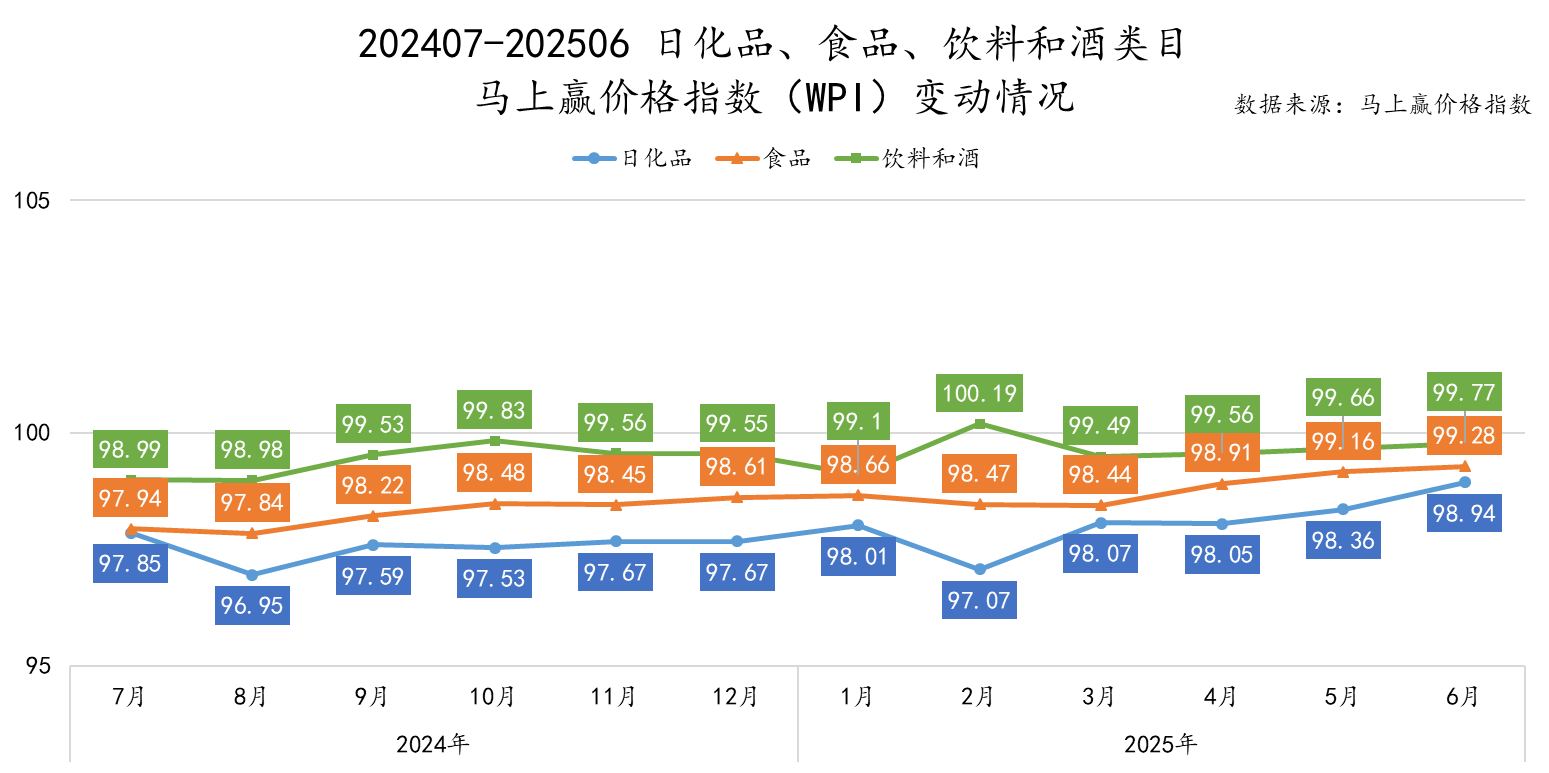
Group 1: Industry Overview - The leisure snack industry is undergoing significant changes, with a focus on price competition leading to a decline in overall category prices [1][2] - The price index for food categories has remained below the baseline of 100 since July 2024, indicating a year-on-year decline in food prices [2] - Companies are responding to price wars by innovating products, enhancing supply chain efficiency, and strengthening brand marketing to create a competitive edge [6] Group 2: Company Strategies - Leading brands are focusing on product innovation and cost leadership to build a competitive moat, with examples like Jinzhai Food launching antibiotic-free, ready-to-eat quail eggs [6] - Salted Fish Shop has introduced new sunflower seed snacks emphasizing quality raw materials and healthy production processes [6] - Brand building and international expansion are seen as effective strategies to overcome price competition, with over 10 snack companies from Hunan province exploring overseas markets [7] Group 3: Retail Dynamics - The bulk snack sector is shifting from price wars to value-based management, moving away from discount battles that characterized previous years [8][9] - The focus has shifted to high-quality products and refined consumer experiences, with brands updating hundreds of SKUs monthly to maintain freshness and appeal [9] - Wanchen Group reported a revenue of 10.688 billion yuan in Q1, with a net profit of 412 million yuan, reflecting a net profit margin increase of 1.36 percentage points year-on-year [9][10] Group 4: Future Outlook - Companies are expected to continue investing in supply chain advantages, brand building, and digital capabilities to balance scale and efficiency for long-term growth [10] - The emphasis on product quality is becoming increasingly important, with reliable quality control being a fundamental requirement for manufacturers [10]
良好业绩,股息指引符合预期
Haitong Securities International· 2025-07-31 10:32
Group 1: Financial Performance - Borouge's Q2 2025 revenue reached $1.305 billion, exceeding market expectations of $1.214 billion[2] - The EBITDA margin for Q2 2025 was 34%, down from 41% in Q2 2024 and below the expected 37%[2] - Net profit for Q2 2025 was $192 million, lower than the consensus estimate of $199 million[6] Group 2: Dividend and Guidance - Borouge announced an interim dividend of 8.1 fils per share, consistent with previous guidance of 16.2 fils per share for FY 2025[1] - The company reaffirmed its dividend policy, committing to distribute $1.3 billion in dividends for FY 2025 until the completion of the Borouge Group International transaction[4] Group 3: Strategic Developments - ADNOC Group and OMV proposed a strategic merger of Borouge and Borealis, aiming for a combined nominal capacity of 13.6 million tons per year[3] - The new entity is expected to achieve approximately $7 billion in EBITDA over its lifecycle, with annual synergies of $500 million[3] Group 4: Market Position and Risks - Borouge maintains a cost leadership position in the global petrochemical industry, primarily due to the use of low-cost natural gas liquids[4] - Key risks include declining demand for petrochemical products, narrowing price spreads, and project execution risks[4]
中曼石油4.81亿美元投建海外油田 贯彻四大核心战略首季营收净利双增
Chang Jiang Shang Bao· 2025-06-09 23:40
Core Viewpoint - Zhongman Petroleum is accelerating its investment and expansion efforts in oil and gas production, particularly in Iraq and Kazakhstan, to enhance its production capacity and profitability [1][3][4]. Investment Projects - The company announced investments in the Iraq Middle Furat Oilfield (MF Block) and East Ba North Oilfield (EBN Block), with a total initial investment not exceeding $481 million, allocated for well restoration, drilling, and testing [1][3]. - Additionally, Zhongman Petroleum plans to invest up to $150 million in the Kazakhstan New Shore Block capacity construction project to expedite development and increase oil and gas output [3][4]. Financial Performance - In Q1 2025, Zhongman Petroleum reported revenue of 943 million yuan, a year-on-year increase of 16.9%, and a net profit of 229 million yuan, up 32.95% [2][6]. - For the full year 2024, the company achieved a revenue of 4.135 billion yuan, marking a historical high, despite a net profit decline of 10.58% [5][6]. Production Achievements - In 2024, Zhongman Petroleum produced 854,600 tons of crude oil, a year-on-year increase of 25.42%, and achieved a total oil and gas equivalent production of 1,001,700 tons, both setting new records [6]. - The company has also improved drilling efficiency, with significant achievements in various projects, including record drilling speeds [6]. Asset Growth - As of Q1 2025, Zhongman Petroleum's total assets reached 12.23 billion yuan, a historical high, reflecting a year-on-year growth of 29.79% from 9.423 billion yuan [7].
