
房地产行业下行

Search documents
全国上市房企预亏超2000亿
Sou Hu Cai Jing· 2026-02-09 02:04
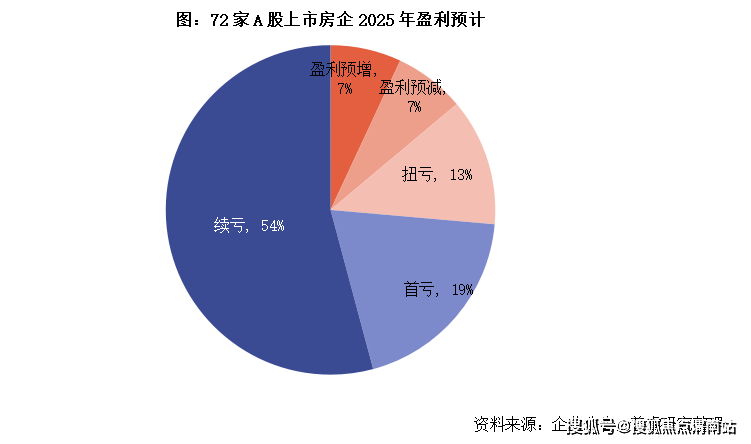
Group 1 - 73% of A-share real estate companies are expected to report losses for 2025, with 39 companies facing continuous losses [1][4] - Among the 72 companies that released performance forecasts, 53 are projected to incur losses, while only 19 are expected to be profitable, with 5 anticipating a decrease in net profit [1][4] - The overall performance of A-share listed real estate companies remains poor, with total net profit losses estimated at 1,471 billion yuan and total net profit losses excluding non-recurring items at 2,089 billion yuan for 2025 [10] Group 2 - The primary reasons for the decline in performance include reduced project profit recognition due to industry downturn, with nearly 83% of companies citing this as a factor, and 78% increasing asset impairment provisions [4] - Specific examples include China Merchants Shekou, which expects a significant drop in net profit due to reduced project deliveries and increased impairment provisions [8] - Kincor Holdings is notable for turning a profit due to debt restructuring, with expected net profit of 300-350 billion yuan, although its net profit excluding non-recurring items is still projected to be a loss of over 290 billion yuan [8][9] Group 3 - The market is currently in a bottoming phase, with January 2026 sales for the top 100 real estate companies reaching only 165.45 billion yuan, a significant decline in land transaction volume and value [14][17] - Despite the challenging market conditions, supportive policies are being implemented, including financial support measures and tax incentives aimed at revitalizing the real estate sector [17][18] - The ongoing debt restructuring of major real estate companies is seen as a positive development, potentially boosting industry confidence and paving the way for recovery [18]

万科前高层郁亮王石接连被传失联,两年亏损超1300亿
Sou Hu Cai Jing· 2026-02-04 03:21
Core Viewpoint - Vanke's former executives, including Yu Liang and Wang Shi, have been reported missing, raising concerns about the company's leadership and future amidst significant financial losses [1][5][15]. Financial Performance - Vanke is projected to incur a net loss of approximately 82 billion yuan in 2025, marking a record loss in A-shares, with cumulative losses over two years reaching 131.48 billion yuan, while its current market value is only 55.67 billion yuan, indicating losses are 2.4 times its market cap [5][17]. - The company's net profit for 2024 is expected to be a loss of 49.48 billion yuan, following a decline of 46.39% in 2023 to 12.16 billion yuan [9][17]. - The financial report indicates a significant drop in net profit from 4.95 billion yuan in the previous year to approximately 82 billion yuan, with basic earnings per share dropping from 4.17 yuan to about 6.89 yuan [7]. Market Position and Historical Context - Vanke, once a leader in the Chinese real estate market, has seen its stock price plummet by 88% from a peak of 39.8 yuan in 2017 to 4.75 yuan, resulting in a market value loss exceeding 400 billion yuan [8]. - The company was a top performer in 2019, achieving sales of 630.84 billion yuan and a net profit of 38.87 billion yuan, but has since transitioned from a profitable entity to one facing severe financial challenges [8][9]. Leadership Changes and Implications - Yu Liang, who was considered a trusted successor by Wang Shi, has recently stepped down and is now reportedly missing, which has raised alarms about the company's governance [12][15]. - Wang Shi, the founder, has also been rumored to be missing but has since posted updates on social media, indicating he is responding to concerns about his absence [5][15]. - The departure of Zhu Jiusheng, a key figure in Vanke's management, has been interpreted as a significant shift in the company's strategy amid increasing debt pressures [11]. Operational Challenges - Vanke's projected losses are attributed to several factors, including a significant decline in project settlement scale, low gross margins, increased credit and asset impairment provisions, and losses from non-core financial investments [17][19]. - The company is facing a challenging environment with high land acquisition costs and a market downturn affecting sales and project settlements, leading to a situation where the cost of land exceeds the revenue from sales [19][20]. Future Outlook - Despite the challenges, Vanke remains optimistic about its future, planning to focus on operational improvements and strategic adjustments to enhance its development and operational capabilities [17][20]. - The company has received support from its largest shareholder, Shenzhen Metro Group, which has provided loans to assist in debt repayment, indicating a level of confidence in Vanke's ability to navigate its current difficulties [20].


太平洋房地产日报:宁波挂牌4宗地块
Tai Ping Yang Zheng Quan· 2026-01-29 00:25
Investment Rating - The industry rating is "Positive," indicating that the overall return of the industry is expected to exceed the CSI 300 Index by more than 5% in the next six months [9]. Core Insights - The real estate sector is experiencing a mixed performance, with the Shanghai Composite Index and Shenzhen Component Index rising by 0.18% and 0.09% respectively, while the Shenwan Real Estate Index fell by 0.93% [3]. - The first land auction of 2026 in Ningbo includes four plots in the Yinzhou District, with a total starting price of over 2.916 billion yuan and a total area of 109,200 square meters [5]. - The individual stock performance within the real estate sector shows significant gains for companies like Shunfa Hengye (7.59%) and Jingneng Real Estate (4.52%), while companies like Shangshi Development (-4.83%) and Rongfeng Holdings (-4.76%) faced declines [4]. Market News - Ningbo has officially launched the auction for four plots in the Baihe Future Community, with a total construction area of approximately 300,000 square meters and a starting floor price of 9,723 yuan per square meter [5]. - Financial Street Holdings completed the issuance of its first medium-term notes for 2026, with a total planned and actual issuance amount of 1.4 billion yuan, at an interest rate of 3.05% [6]. - China Overseas Macro Group announced the issuance of corporate bonds not exceeding 5 billion yuan, with the current issuance scale capped at 1 billion yuan [7].

津投城开:2025年预亏13.6亿元至15.4亿元之间
Ge Long Hui· 2026-01-19 10:25
Core Viewpoint - The company, Jintou Chengkai (600322.SH), is expected to report a significant net loss for the fiscal year 2025, with projected losses ranging from 1.36 billion to 1.54 billion yuan, indicating a downturn compared to the previous year [1] Financial Performance - The anticipated net profit attributable to shareholders, excluding non-recurring gains and losses, is projected to be between 1.34 billion and 1.52 billion yuan for 2025 [1] - The company is experiencing a substantial decrease in sales revenue due to a decline in market demand and a limited number of available housing projects for sale [1] Industry Context - The overall industry is facing a cyclical downturn, contributing to the company's financial challenges [1] - The company has undertaken efforts to optimize its interest-bearing debt structure; however, high financing scales have resulted in significant financial expenses during the reporting period [1] Accounting Considerations - The company has made provisions for inventory impairment based on the cautious principle of accounting standards, influenced by the real estate market conditions in certain project areas [1]

近期地产热点话题讨论,影响几何?
2025-11-28 01:42
Summary of Conference Call Records Company: Vanke (万科) Key Points Industry Overview - The real estate industry is currently facing significant challenges, with a general downturn affecting new home sales and overall market dynamics [1][2][10] - New home sales area in October 2025 was lower than the same period in 2007, indicating a severe market contraction [1][3] - The market is experiencing a structural adjustment, with second-hand home transactions increasing, accounting for 44.8% of total transactions from January to October 2025 [2][10] Vanke's Financial Challenges - Vanke is under multiple pressures, including the need to provide collateral for uncollateralized loans, leading to weakened bank expectations [1][2] - The company reported a 40% year-on-year decline in sales for 2025, with cash flow issues becoming critical; non-restricted cash dropped to 2.6 million yuan by the end of Q2 2025 [1][7] - Despite receiving nearly 30 billion yuan in support from its major shareholder, Shenzhen Metro Group (深铁), Vanke's situation has not significantly improved [1][4] Support from Shenzhen Metro Group - Shenzhen Metro has been a major shareholder since 2017, providing financial support, but has not achieved actual control or consolidation of Vanke [1][4] - A framework agreement was signed in November 2025, allowing for a one-time funding limit of 22 billion yuan, but concerns about market oversaturation and the effectiveness of this support remain [1][8] Market Sentiment and Impact - Vanke's financial troubles have raised concerns among buyers and developers, particularly regarding the future performance of non-state-owned real estate companies [2][14] - The event has led to a significant impact on market expectations, with fears that Vanke's issues could affect the broader real estate and state-owned enterprise bond markets [2][21] Future Outlook - The real estate sector is expected to remain in a downward trend, with the need for structural adjustments and a focus on stabilizing sales before any recovery can be anticipated [10][22] - The reliance on high leverage and rapid expansion in the past is no longer sustainable, necessitating a search for new growth drivers [22][23] Financial Instruments and Debt Situation - Vanke has approximately 15-16 billion yuan in bonds maturing within the next year, with a diverse holder structure that may limit the overall impact on the market [20] - The company’s reliance on shareholder loans for long-term borrowing has increased, with 11.3 billion yuan of long-term loans depending on shareholder support [7] Investor Confidence and Transparency - There is a pressing need for Vanke to enhance transparency and information disclosure to rebuild investor confidence amid ongoing financial difficulties [5][6] Additional Insights - The current low-interest-rate environment may present investment opportunities for institutions seeking yield, particularly if Vanke's situation leads to wider credit spreads [25] - The potential for contagion from Vanke's issues to city investment enterprises is considered low, given the different operational contexts and the ongoing transformation of city investment entities [18]
招商蛇口(001979):三季报点评:收入增长提速,拿地积极聚焦
ZHONGTAI SECURITIES· 2025-11-16 06:46
Investment Rating - The investment rating for the company is "Buy" (maintained) [3] Core Views - The company has shown strong revenue growth with a significant increase in third-quarter revenue, achieving 38.281 billion yuan, a year-on-year increase of 43.18%. However, the net profit attributable to the parent company decreased by 3.99% to 2.497 billion yuan due to increased land appreciation tax and reduced investment income [4][6] - The company has actively acquired land, with a total land acquisition amount of 75.2 billion yuan in the first nine months of 2025, a substantial increase of 160.4% year-on-year, indicating a strong willingness to expand during the economic downturn [6] - The financial structure remains robust, with a debt-to-asset ratio of 61.0% and a net debt ratio of 56.2% as of the end of the third quarter of 2025, alongside a cash-to-short-term debt ratio of 1.6 times, reflecting a solid financial position [6] Summary by Sections Financial Performance - For the first three quarters of 2025, the company achieved a total revenue of 89.766 billion yuan, representing a year-on-year growth of 15.07%. The net profit attributable to the parent company was 2.497 billion yuan, down 3.99% year-on-year [4][6] - The company’s earnings per share (EPS) for 2025 is projected to be 0.48 yuan, with estimates of 0.53 yuan and 0.60 yuan for 2026 and 2027 respectively [3][6] Market Position - The company ranked fourth in sales performance within the industry, despite a 3.1% year-on-year decline in sales amounting to 140.7 billion yuan from January to September 2025 [6] - The company’s sales gross margin improved by 5 percentage points to 14.98%, indicating a positive development trend [6] Valuation Metrics - The price-to-earnings (P/E) ratio is projected to be 20.1 for 2025, decreasing to 16.2 by 2027, while the price-to-book (P/B) ratio is expected to remain stable around 0.8 [3][6]

新城控股(601155):2025年三季报点评:住宅销售下滑,商业运营收入稳增
Huachuang Securities· 2025-10-31 12:44
Investment Rating - The report maintains a "Recommendation" rating for the company with a target price of 19 yuan for 2026 [2][8]. Core Views - The company experienced a decline in residential sales, with total revenue for the first nine months of 2025 at 34.37 billion yuan, a year-on-year decrease of 33.34%, and a net profit attributable to shareholders of 0.974 billion yuan, down 33.05% [2][8]. - The commercial operation revenue showed steady growth, with a total income of approximately 10.511 billion yuan for the first nine months of 2025, reflecting a year-on-year increase of 10.82% [8]. - The company has diversified its financing channels, with interest-bearing debt of approximately 52.3 billion yuan as of mid-2025, and a net debt ratio of 53.4% [8]. Financial Summary - Total revenue projections for 2024A, 2025E, 2026E, and 2027E are 88.999 billion yuan, 63.948 billion yuan, 57.387 billion yuan, and 54.139 billion yuan respectively, with year-on-year growth rates of -25.3%, -28.1%, -10.3%, and -5.7% [4][9]. - Net profit attributable to shareholders is projected to be 0.752 billion yuan in 2024A, decreasing to 0.637 billion yuan in 2025E, then increasing to 0.831 billion yuan in 2026E, and 0.952 billion yuan in 2027E, with growth rates of 2.1%, -15.4%, 30.5%, and 14.5% respectively [4][9]. - The company's earnings per share (EPS) are forecasted to be 0.33 yuan in 2024A, 0.28 yuan in 2025E, 0.37 yuan in 2026E, and 0.42 yuan in 2027E [4][9].

万科股价大跌
Nan Fang Du Shi Bao· 2025-10-13 12:54
Core Viewpoint - Vanke's stock price has significantly declined following the resignation of Chairman Xin Jie, raising concerns about the company's future and its major shareholder's financial health [1][6][19] Group 1: Stock Performance - On October 13, Vanke's stock price fell sharply, with Hong Kong shares dropping by 3.07% to HKD 5.05 per share and A-shares down 2.67% to CNY 6.57 per share [1][6] - Vanke A's total market capitalization as of October 13 was CNY 783.85 billion, having shrunk by over 20% in the past year [6][19] Group 2: Management Changes - Xin Jie submitted his resignation as Chairman on October 12, citing personal reasons, and will not hold any position in the company post-resignation [6][9] - Huang Liping has been elected as the new Chairman, bringing familiarity with the company and a background in the Shenzhen Metro Group [6][13][16] Group 3: Financial Support and Challenges - Shenzhen Metro Group, Vanke's largest shareholder, has provided substantial financial support, totaling CNY 259.41 billion in loans this year, with a low interest rate of 2.34% [6][17] - Despite the support, Shenzhen Metro Group reported a significant loss of CNY 334 billion in 2024, raising questions about its ability to continue supporting Vanke [6][17][19] Group 4: Operational Adjustments - Under Xin Jie's leadership, Vanke underwent significant organizational changes, including the restructuring of its regional companies into 16 new regional offices [12][19] - Vanke has achieved a revenue of CNY 1,053 billion in the first half of the year, with a sales return rate of 100% and a high project turnover rate [19]

“王健林们”退场,万亿房地产消费遇冷,中国白酒未来增量在哪?
Sou Hu Cai Jing· 2025-09-29 07:49
Core Viewpoint - The decline of the real estate industry in China has significantly impacted the high-end liquor market, leading to a need for transformation and new consumption drivers in the liquor sector [1][4][7]. Group 1: Real Estate and Liquor Industry Interconnection - The real estate sector's growth has historically driven the high-end liquor market, with a notable increase in business-related consumption [2][4]. - From 2004 to 2013, real estate investment surged over 520%, while the liquor industry experienced a "golden decade" with production up 293%, revenue up 719%, and profits soaring 1272% [5]. - The collapse of major real estate companies like Evergrande and the subsequent economic downturn have led to a significant decline in the liquor industry, which is now facing intense competition and adjustment [7][8]. Group 2: Current State of the Liquor Industry - As of early 2025, the number of large-scale liquor enterprises has decreased to 887, with a slight revenue increase of 0.19% but a significant profit drop of 10.93% [8]. - Major liquor companies have initiated strategic transformations, focusing on new consumer demographics, international markets, and affordable product lines to adapt to changing market conditions [10][11][12]. Group 3: Strategic Transformations in the Liquor Industry - Companies like Moutai are targeting new consumer groups in emerging industries and enhancing personalized service offerings [10]. - The liquor industry is also expanding its international presence, with initiatives aimed at promoting Chinese liquor globally [10]. - There is a growing emphasis on affordable products, with several brands launching new offerings to capture the mass market [11][12]. Group 4: Future Outlook and Challenges - Despite initial successes in transformation, the liquor industry faces ongoing challenges, including the need to find new consumption drivers to replace the real estate sector [14]. - The export market for Chinese liquor is still in its infancy, and the profitability of mass-market products lags behind that of premium offerings [14].





重庆建工:上半年净利润亏损2.49亿元 同比亏损扩大
Zheng Quan Shi Bao Wang· 2025-08-24 08:03
Core Viewpoint - Chongqing Construction (600939) reported a decline in revenue and a significant net loss for the first half of 2025, reflecting ongoing challenges in the real estate and construction industries [1] Company Summary - In the first half of 2025, the company achieved an operating revenue of 14.359 billion yuan, a year-on-year decrease of 7.97% [1] - The net profit attributable to shareholders was a loss of 249 million yuan, compared to a net loss of 18.8426 million yuan in the same period last year [1] Industry Summary - The real estate sector continues to experience a downturn, and the construction industry is undergoing deep adjustments, impacting the company's performance [1] - Factors such as insufficient project commencement rates and delays in construction progress contributed to the decline in operating revenue [1] - Increased market competition and extended project timelines have led to a decrease in gross profit margins [1]
