折旧

Search documents
丰业银行:Air Canada利润和自由现金流预期超出预期
Xin Lang Cai Jing· 2026-02-13 13:11
Core Viewpoint - Scotiabank reports that Air Canada's fourth-quarter performance exceeded expectations due to stronger-than-expected demand trends in passenger and cargo operations [1] Group 1: Financial Performance - Air Canada's EBITDA and free cash flow expectations for 2026 also surpassed forecasts, indicating robust financial health [1] - The free cash flow outlook includes $1 billion from sale-leaseback proceeds, while the analyst's assumption was $600 million, suggesting a more conservative market expectation [1] - After adjusting for this difference, the free cash flow forecast remains $160 million higher than the analyst's expectations, attributed to resilient demand and cost control measures [1] Group 2: Capital Expenditure - Air Canada has lowered its 2026 capital expenditure forecast by $200 million, reflecting a strategic adjustment in spending [1]
非全日制用工能订立口头协议、月结工资吗?
蓝色柳林财税室· 2026-02-04 14:28
Group 1 - The core concept of part-time employment is defined as a work arrangement where workers are primarily compensated on an hourly basis, typically averaging fourteen hours with a maximum of four hours per day and a total of no more than two days per week [1] - Both parties in a part-time employment relationship can establish verbal agreements [2] - It is advisable to retain relevant documentation from the initial agreement [3] Group 2 - In the absence of a signed labor contract, the existence of a labor relationship can be determined using various documents, including wage payment records, identity verification documents issued by the employer, recruitment records, attendance records, and testimonies from other workers [4] - The employer bears the burden of proof for the first, third, and fourth types of evidence mentioned [5] Group 3 - The payment cycle for part-time labor remuneration must not exceed fifteen days [6] - The hourly wage for part-time workers must not be lower than the minimum hourly wage set by the local government [7] Group 4 - Parties involved in part-time employment cannot agree to a probation period, and either party can terminate the employment at any time without economic compensation from the employer [8][9]


【涨知识】今年买新能源汽车,车辆购置税有何变化?
蓝色柳林财税室· 2026-02-02 02:01
Group 1 - The article discusses the latest policies regarding vehicle purchase tax for new energy vehicles, stating that from January 1, 2026, to December 31, 2027, the vehicle purchase tax will be halved for eligible new energy vehicles, with a maximum tax reduction of 15,000 yuan per vehicle [1] - An example is provided where a new energy vehicle priced at 200,000 yuan (excluding VAT) would have a taxable amount of 20,000 yuan, resulting in a tax payment of 10,000 yuan after the reduction [1] - For a vehicle priced at 400,000 yuan, the taxable amount would be 40,000 yuan, but the maximum reduction would be capped at 15,000 yuan, leading to a tax payment of 25,000 yuan [1] Group 2 - The article mentions that starting from January 1, 2026, new energy vehicles must meet specific technical requirements to qualify for the tax exemption, as outlined in the relevant announcement [1] - The vehicles must be included in the "Catalog of New Energy Vehicles Eligible for Vehicle Purchase Tax Exemption" to benefit from the tax reduction policy [1]

中国银河:印尼网约车规则或将调整,Grab盈利面临风险
Xin Lang Cai Jing· 2026-01-19 03:49
Core Viewpoint - The potential adjustment of ride-hailing commission caps in Indonesia may negatively impact Grab's profitability, as the proposed legislation could lower the commission cap for two-wheeler services from 20% to 10% [1] Group 1: Impact on Grab's Financials - If the commission cap is reduced, Grab's adjusted EBITDA could decline by 5%-10%, assuming that 20% of its gross merchandise value (GMV) in Indonesia comes from two-wheeler services [1] - The latest closing price of Grab's stock was $4.38, reflecting a decrease of 0.2% [1] Group 2: Mitigation Strategies - Grab has several strategies to protect its profit margins, including increasing fares to pass on costs and reducing incentives for partners [1] Group 3: Analyst Ratings - China Galaxy International maintains a "buy" rating for Grab with a target price of $7.20 [1]

美国扩产,台积电利润率大跌
半导体行业观察· 2026-01-04 01:48
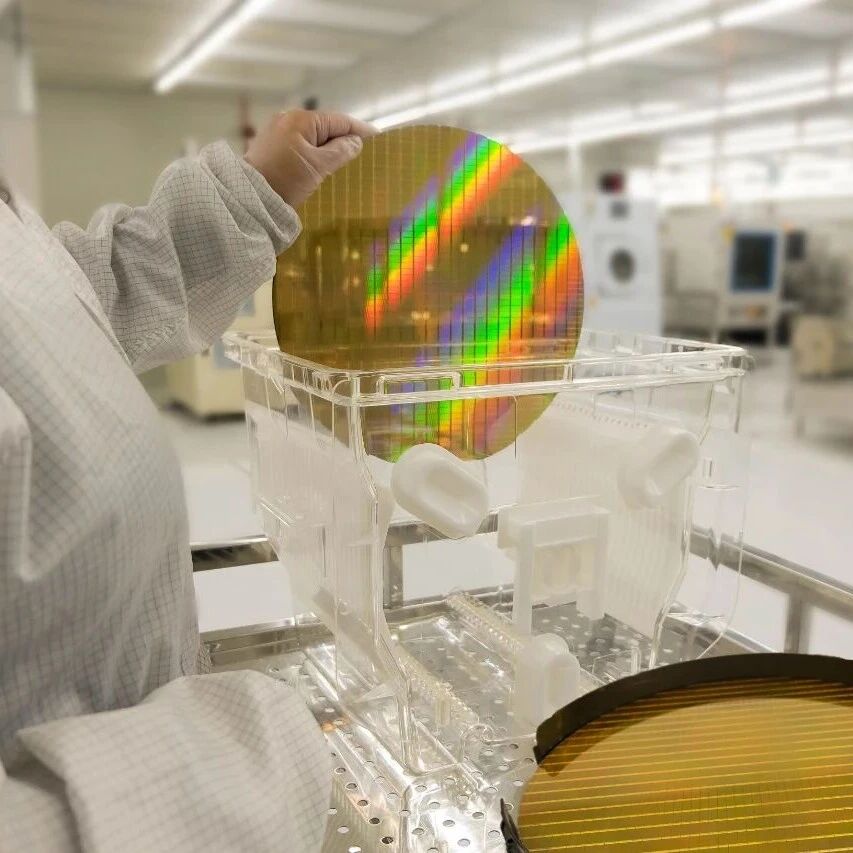
Core Viewpoint - The sustainability of chip production in the U.S. is a major concern, particularly for companies like TSMC, as it leads to a significant decline in profit margins [1] Group 1: Investment and Costs - TSMC plans to increase its investment in the U.S. supply chain by up to $300 billion, including building fabs and R&D facilities in Arizona [1] - The operational costs of TSMC's U.S. fabs are significantly higher, with total costs per wafer reaching $16,123 compared to $6,681 in Taiwan [2] - Labor costs and depreciation are the primary factors driving up costs in the U.S., with labor costs per wafer at $3,600 compared to $1,800 in Taiwan [2][4] Group 2: Profit Margins - The gross margin per wafer for TSMC in the U.S. is only 8%, a stark contrast to 62% in Taiwan, indicating a severe impact on profitability [2] - Depreciation costs in the U.S. are four times higher than in Taiwan, contributing to the decline in profit margins [4] Group 3: Strategic Goals - TSMC's expansion in the U.S. aims to mitigate geopolitical risks and ensure a resilient supply chain, supported by companies like NVIDIA [5] - Building a robust supply chain in the U.S. may take decades, but it is crucial for TSMC's long-term strategy [5]

巴克莱:力拓战略将提振长期收益 短期预估承压
Ge Long Hui A P P· 2025-12-05 04:22
Core Viewpoint - Barclays analysts indicate that Rio Tinto's first investor briefing under new CEO Simon Trott largely meets market expectations, with Trott aiming for a "leaner" and "more agile" company strategy, potentially leading to a 2030 EBITDA forecast that exceeds Barclays' estimate by approximately $5 billion and the market average by about $7 billion [1] Group 1 - The briefing aligns with market expectations, suggesting a positive reception from analysts [1] - Trott's leadership is focused on making Rio Tinto more efficient and responsive [1] - The projected EBITDA for 2030 is significantly higher than previous estimates, indicating strong future performance potential [1] Group 2 - Despite the positive outlook, analysts note that market expectations were already high prior to the briefing [1] - The production guidance for 2026 appears weaker compared to market averages, which may lead to downward adjustments in market expectations [1]

深天马A:公司的资本性开支均是聚焦主业发展进行
Zheng Quan Ri Bao Zhi Sheng· 2025-11-20 10:41
Core Viewpoint - The company announced a focus on capital expenditures related to its core business development, indicating a trend of decreasing capital spending in the absence of new line investments [1] Group 1: Capital Expenditures - The company's capital expenditures are primarily directed towards fixed asset investments for existing production lines, technological upgrades, and equity investments aligned with strategic planning [1] - As previous equity investment projects' capital contributions are gradually fulfilled, capital expenditures are expected to decline [1] Group 2: Depreciation - The company anticipates that depreciation in 2025 will not differ significantly from 2024, as new production lines reach their operational standards and mature LTPS production lines approach the end of their depreciation period [1] - Following the peak in depreciation, the company expects depreciation amounts to begin to decrease in the absence of new line investments [1]

AI芯片,到底有多保值?
半导体行业观察· 2025-11-16 03:34
Core Insights - Major companies plan to invest $1 trillion in AI data centers over the next five years, with a focus on depreciation as a key financial consideration [2] - The lifespan of AI GPUs is uncertain, with companies like Google, Oracle, and Microsoft estimating a maximum lifespan of six years, but potentially shorter [2][4] - Investors are concerned about the depreciation period, as longer asset lifespans lead to smaller impacts on profits [2] Depreciation Challenges - AI GPUs are relatively new, with NVIDIA's first AI-specific processor launched around 2018, and the current AI boom starting in late 2022 [4] - NVIDIA's data center revenue surged from $15 billion to $115 billion in the fiscal year ending January 2023 [4] - There is no historical reference for the lifespan of GPUs, making it difficult for companies to estimate depreciation accurately [4][5] Market Reactions - CoreWeave has set a six-year depreciation cycle for GPUs, indicating a data-driven approach to asset valuation [4][5] - Despite high demand for NVIDIA's A100 and H100 chips, CoreWeave's stock fell 16% after earnings guidance was affected by third-party data center developer delays [5][6] - The stock of Oracle has also dropped 34% since reaching a historical high in September [6] Skepticism in the Market - Short-seller Michael Burry has expressed doubts about the longevity of AI chips, suggesting that companies may be overstating their lifespan and underestimating depreciation costs [6] - Burry believes that the actual lifespan of server equipment is around two to three years, which could inflate reported earnings [6] Technological Advancements - AI chips may depreciate within six years due to wear and tear or obsolescence from newer models [8] - NVIDIA's CEO has indicated that older chip models will lose significant value as new models are released [8] - Amazon has shortened the expected lifespan of some servers from six years to five years due to rapid technological advancements [8][9] Strategic Procurement - Microsoft is diversifying its AI chip procurement to avoid over-investment in any single generation of processors [9] - The rapid iteration of technology in the AI sector complicates depreciation estimates, requiring careful financial forecasting [9]