
公积金改革

Search documents
公积金改革四大方向浮出水面
第一财经· 2026-03-22 10:31
Core Viewpoint - The article emphasizes that 2026 will be a year of comprehensive implementation for housing provident fund reforms, following a year of exploration in 2025. The reforms are seen as crucial for promoting housing consumption and improving the efficiency of fund usage [3][4]. Group 1: Policy Developments - In 2025, approximately 270 policies related to housing provident fund optimization were introduced across the country, with over 30 cities adjusting their policies in 2026 alone [3][5]. - The reforms aim to broaden the usage scenarios of the provident fund, allowing for multiple uses such as down payments, tax payments, and even utility fees in various cities [6][8]. Group 2: Key Directions of Reform - The reforms can be categorized into four main directions: 1. Expanding usage scenarios significantly, allowing for "one fund, multiple uses" [6]. 2. Accelerating inter-city recognition and lending, enabling "national roaming" for fund usage [6]. 3. Expanding the coverage of the provident fund to include more groups, such as flexible employment workers [6]. 4. Upgrading convenience services related to the provident fund, such as introducing "telephone loan" services [6]. Group 3: Impact on Housing and Consumption - The reforms are expected to support reasonable housing demand, lower financing costs, and alleviate pressure on down payments and monthly payments, particularly benefiting cross-city employment groups [7][8]. - By broadening the withdrawal scope, the reforms aim to enhance household cash flow, thereby increasing consumer willingness and stimulating related sectors such as home improvement and appliances [8]. Group 4: Future Directions - The article suggests that the provident fund system needs to transition from a "small wallet" to a "big wallet," connecting residents' savings with diverse consumption needs [10][11]. - It is proposed that the fund's support should extend beyond housing transactions to cover a broader range of housing-related expenses, including renovations and property management fees [11]. - The article also highlights the need for a balanced approach in expanding the fund's usage, ensuring that any extensions are still aligned with housing needs [11][12].


明日下午3时举行经济主题记者会,郑栅洁、蓝佛安、王文涛、潘功胜、吴清出席
21世纪经济报道· 2026-03-05 09:17
Group 1 - The 14th National People's Congress will hold a press conference on March 6, 2026, inviting key officials to address issues related to development reform, fiscal budget, commerce, finance, and securities [1] - The government work report mentions the reform of the housing provident fund for the first time in ten years, indicating a significant opportunity to activate the existing 10 trillion yuan stock [3] - The report highlights housing security for newly married and newly parenting families, signaling an important policy shift [3] Group 2 - The fiscal deficit is set to increase by 230 billion yuan, which also signals important economic implications [3]

居民增收计划、养老金上涨、支持AI开源社区……45个关键词读懂2026政府工作报告
经济观察报· 2026-03-05 09:11
Economic Growth - The GDP growth target for 2026 is set at 4.5% to 5%, reflecting a pragmatic policy approach and considering both internal and external pressures on the economy [4][5] - The adjustment in the growth target aims to balance quality and reasonable growth, laying a foundation for high-quality economic development [5] Fiscal Policy - The proposed deficit rate for 2026 is around 4%, with a deficit scale of 5.89 trillion yuan, an increase of 230 billion yuan from the previous year [7] - Public budget expenditure is expected to reach 30 trillion yuan for the first time, with a focus on optimizing expenditure structure to support consumption and improve living standards [9][10] Tax and Financial Reforms - The government plans to advance tax and financial system reforms, including increasing the proportion of state-owned capital returns and enhancing local tax systems [12] - The emphasis on zero-based budgeting aims to optimize fund allocation and improve the efficiency of fiscal spending [12] Employment and Income - The urban survey unemployment rate target is set at around 5.5%, reflecting the need for policies to stabilize employment amid structural pressures [18] - The government aims to synchronize resident income growth with economic growth, emphasizing measures to increase income for low-income groups and improve social security systems [20][22] Environmental Goals - The target for reducing carbon dioxide emissions per unit of GDP is set at around 3.8%, aligning with the goal of achieving carbon peak by 2030 [26][27] - The shift from energy consumption control to carbon emission control reflects the need for a more precise approach to managing carbon emissions [27][28] State-Owned Enterprise Reforms - The government plans to implement a systematic approach to deepen state-owned enterprise reforms, focusing on optimizing the layout of state-owned capital and structural adjustments [29][30] - The emphasis on improving the modern enterprise system aims to enhance corporate governance and promote market-oriented reforms [31] Open Economy - The government intends to further expand high-level opening-up, focusing on service sector liberalization and enhancing international cooperation [35][36] - The approach aims to balance reform depth with security, promoting a competitive and fair business environment [36] Agricultural and Rural Development - The government is set to promote agricultural insurance development and enhance comprehensive disaster prevention capabilities in agriculture [59] - Policies will focus on improving rural elderly care services and implementing long-term care insurance systems to address the challenges of an aging population [45][47] Capital Market Stability - Measures to stabilize the stock market include comprehensive policies to enhance market confidence and promote active trading [54] - The government aims to improve the mechanism for long-term capital entering the market, ensuring a stable and healthy capital market [63] Innovation and Technology - The government plans to cultivate emerging and future industries, encouraging state-owned enterprises to lead in opening application scenarios for new technologies [69][70] - Support for artificial intelligence and open-source community development is expected to drive innovation and commercialization in various sectors [75]

东吴证券晨会纪要2026-01-29-20260129
Soochow Securities· 2026-01-29 00:02
Macro Strategy - The core viewpoint is that the reform of the public housing fund can release significant consumption potential by lowering housing costs, thereby saving more funds for consumption. Three specific paths are proposed to reduce housing costs: expanding rental withdrawals, broadening the usage scope of the fund, and further lowering loan interest rates. The total potential release of funds is estimated at approximately 515.1 billion yuan, which could theoretically stimulate consumption by about 360.6 billion yuan, increasing the growth rate of resident consumption by 0.7 percentage points [1][15]. Fixed Income Strategy - The report discusses the "see-saw" relationship between stocks and bonds, emphasizing that this relationship is not stable or universal. The direction of stock and bond pricing is determined by the interplay between the numerator (earnings) and the denominator (interest rates). When the economy performs well, stock prices may rise due to improved earnings, but rising interest rates can suppress bond prices and increase stock discount rates, leading to uncertain stock index directions. Conversely, in a weak economic environment, stock prices may decline even if bond prices rise [2][18]. Industry Insights - The commercial aerospace sector is highlighted as a key investment area for 2026, driven by the successful launch of domestic rockets, which has removed previous operational bottlenecks. The report suggests focusing on four main areas: SpaceX-related stocks, rocket and satellite sectors, and space computing/solar power. Specific companies to watch include Maimai Co., Anhui Helit, and others in the rocket and satellite sectors [3][21]. Water Conservancy Investment - The report indicates that the "northward shift of the rain belt" since 2021 has led to increased rainfall and flooding in northern China, prompting a focus on enhancing water conservancy infrastructure. It is projected that water-related investments in 2026 could see significant growth, contributing to a recovery in overall fixed asset investments by approximately 1.1 percentage points [2][16][17]. Electric Power Equipment - The report emphasizes the potential for rapid development in space solar power due to the acceleration of commercial aerospace and low-orbit satellite advancements. Companies involved in space power supply and equipment are recommended for investment, including Jun Da Co. and Ming Yang Smart Energy [6][21]. Food and Beverage Industry - The report discusses the potential of AKK bacteria as a beneficial symbiotic organism in gut health, with applications in obesity and diabetes management. The market for AKK is expected to grow significantly, with a focus on leading companies in the probiotic sector [3][23].
宏观深度报告:公积金改革可以撬动多少消费?
Soochow Securities· 2026-01-28 10:24
Group 1: Key Insights on Housing Fund Reform - The reform of the housing fund can potentially release approximately 5,151 billion CNY in funds through three main pathways: expanding rental withdrawals (3,214 billion CNY), broadening usage scope (1,803 billion CNY), and reducing loan interest rates (134 billion CNY) [1] - The estimated increase in consumer spending from these reforms is around 3,606 billion CNY, which could raise the growth rate of resident consumption by 0.7 percentage points [1] - The housing fund reform aims to transition from a model focused on "incremental expansion" to one emphasizing "stock operation," thereby restructuring its fundamental functions [1] Group 2: Current Status and Reform Directions - The current housing fund coverage for private enterprises is significantly lower than for state-owned enterprises, with only 8.8% coverage based on the number of units and 30.4% based on employee coverage [1] - There is a substantial amount of idle funds in the housing fund system, with nearly 29 trillion CNY accumulated due to low withdrawal rates and decreased loan issuance [1] - The participation rate of flexible employment individuals in the housing fund is only 1.24%, indicating a need for reforms to enhance their involvement [1] Group 3: Regional Disparities and Aging Population Impact - There are significant regional disparities in housing fund utilization, with some areas experiencing high withdrawal and loan rates while others face severe fund idleness [1] - The proportion of withdrawals due to retirement has increased to 24.8% in 2024, indicating a growing impact of aging on the housing fund's liquidity [1] - The reform should include measures to enhance fund sources in cities significantly affected by aging, such as integrating housing maintenance funds and revenues from state-owned rental assets [1]
宏观深度报告20260128:公积金改革可以撬动多少消费?
Soochow Securities· 2026-01-28 08:39
Group 1: Key Insights on Housing Fund Reform - The reform of the housing fund can potentially release approximately 5,151 billion CNY in funds through three main pathways: expanding rental withdrawals (3,214 billion CNY), broadening usage scope (1,803 billion CNY), and reducing loan interest rates (134 billion CNY) [1] - The estimated increase in consumption from the released funds is about 3,606 billion CNY, which could raise the growth rate of resident consumption by 0.7 percentage points [1] - The reform aims to transition the housing fund system from a focus on "incremental expansion" to "stock operation," adapting to the new development model of the real estate market [1] Group 2: Current Status and Reform Directions - The current housing fund coverage for private enterprises is significantly lower than for state-owned enterprises, with only 8.8% coverage based on the number of units and 30.4% based on employee coverage [1] - There is a substantial amount of idle funds in the housing fund system, with nearly 29 trillion CNY accumulated due to low withdrawal rates and decreased loan issuance [1] - The participation rate of flexible employment individuals in the housing fund is only 1.24%, indicating a need for reforms to enhance their involvement [1] Group 3: Regional Disparities and Aging Population Impact - There are significant regional disparities in the utilization of housing fund resources, with some areas experiencing high withdrawal and loan rates while others face severe fund idleness [1] - The proportion of withdrawals for retirement has increased to 24.8% in 2024, indicating a growing impact of aging on the housing fund's liquidity [1] - The reform should explore diversifying funding sources, such as integrating housing maintenance funds and revenues from state-owned rental assets, especially in cities heavily affected by aging [1]
央视解读:2026年房地产政策有四个“新变化”
华尔街见闻· 2025-12-12 09:42
Core Viewpoint - The recent Central Economic Work Conference has outlined specific requirements for the real estate sector in the upcoming year, emphasizing the need for stability in the market and introducing new policy goals, directions, and tools [1][2]. Policy Changes Change 1: Policy Goals - The policy goal has shifted from "continuously promoting the stabilization of the real estate market" to "focusing on stabilizing the real estate market," indicating a stronger commitment to maintaining stability. This change reflects the current market conditions, where the housing market has entered a phase dominated by existing inventory, with second-hand housing transactions accounting for 45% of total transactions, and a narrowing decline in housing prices [3][4]. Change 2: Policy Direction - The focus has transitioned from "reasonably controlling new land supply" and "promoting the disposal of existing properties" to a new emphasis on "controlling increments, reducing inventory, and optimizing supply." The introduction of "optimizing supply" as a new term suggests a coordinated approach to policy implementation, where local governments must consider inventory levels while ensuring that supply meets public needs [5]. Change 3: Policy Tools - New policy tools have been introduced, including reforms to the housing provident fund and the promotion of "good housing" construction. The expansion of coverage for flexible employment individuals to access housing provident funds, even for rental purposes, and increased loan limits for home purchases aim to alleviate financial pressure on first-time buyers and those seeking improved housing [6][7]. Change 4: Emphasis on Urban Renewal - The term "urban renewal" has been prioritized in the policy framework, moving from a secondary position to a key focus area within the broader strategy to stimulate domestic demand. This shift highlights the importance of urban renewal initiatives in the upcoming economic agenda [8].

2026年房地产市场将迎来哪些变化?记者解读新表述背后的“稳”“优”“进”
Yang Shi Wang· 2025-12-12 08:02
Core Viewpoint - The Central Economic Work Conference has made clear deployments for the real estate work in the coming year, emphasizing the need to "stabilize the real estate market," indicating a shift in policy focus and approach compared to the previous year [1] Policy Objectives - The policy objective has shifted from "continuously promoting the stabilization of the real estate market" to "focusing on stabilizing the real estate market," highlighting a stronger commitment to maintaining stability [1] - In the first eleven months, while development investment has decreased, the housing market has entered a phase of stock, with the proportion of second-hand housing transactions reaching 45% of total transactions [1] - The decline in housing prices is narrowing, with some major cities experiencing year-on-year growth in transaction volumes for both new and second-hand homes [1] Policy Direction - The policy direction has changed from emphasizing "reasonable control of new land" and "promoting the disposal of existing properties" to clearly stating "controlling increments, reducing inventory, and optimizing supply" as core directions [3] - The term "optimizing supply" is introduced for the first time, indicating a coordinated approach to address inventory issues while considering "livelihood security" and optimizing the structure of land supply [3] Policy Tools - The reform of housing provident funds and the construction of "good houses" have been identified as new policy focuses for the coming year [5] - The coverage for flexible employment individuals to contribute to housing provident funds will be expanded, allowing for withdrawals for rental purposes even if they do not purchase a home [5] - The orderly advancement of "good house" construction signifies a shift from quantity-driven housing products to quality-driven ones [5] Urban Renewal - The term "urban renewal" has been prioritized, moving from a secondary position to a key focus area in the first part of the economic work, indicating an increased emphasis and intensity in promoting urban renewal efforts [7]
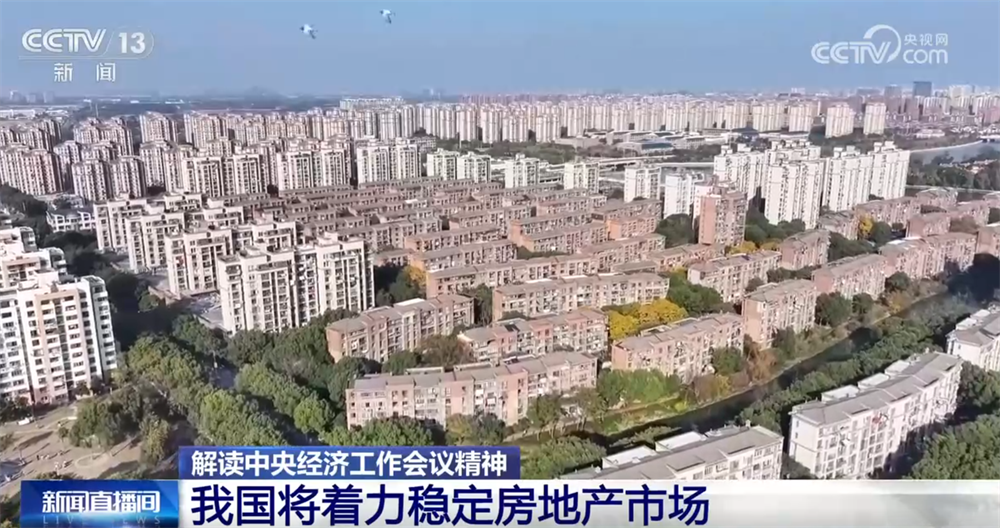
划重点!2026年房地产政策有四个“新变化”,“城市更新”这个词的位置大幅提前
Ge Long Hui· 2025-12-12 03:03
Core Viewpoint - The recent Central Economic Work Conference has outlined specific requirements for the real estate sector in the upcoming year, emphasizing the need to stabilize the market while addressing risks in key areas [1][2]. Policy Objectives - The policy goal has shifted from "continuously promoting the stabilization of the real estate market" to "focusing on stabilizing the real estate market," indicating a core focus on maintaining stability [1]. - In the first eleven months, while development investment has declined, the housing market has entered a phase of stock management, with second-hand housing transactions accounting for 45% of total transaction volume, and the decline in housing prices is continuing to narrow [1]. Policy Directions - The previous emphasis on "reasonably controlling new land use" and "promoting the disposal of existing housing stock" has evolved to include "controlling quantity, reducing inventory, and optimizing supply" as core directions, with "optimizing supply" being a new term introduced [2]. - The new policy will be a coordinated "combination punch," requiring local governments to consider inventory issues before land supply, while also addressing "people's livelihood guarantees" and optimizing the structure of land supply [2]. Policy Tools - The reform of housing provident funds and the construction of "good houses" have been identified as new policy focuses for the coming year, with plans to expand the coverage of flexible employment personnel for housing provident fund contributions [2]. - This will allow individuals to withdraw funds for rental purposes even if they do not purchase a home, and increased loan limits will help alleviate payment pressures for first-time buyers and those seeking improvements [2]. Urban Renewal - The term "urban renewal" has been elevated in importance, moving from a secondary position to a primary focus in the agenda, indicating an increased emphasis and effort in promoting urban renewal initiatives [2].
划重点!2026年房地产政策有四个“新变化”
Yang Shi Xin Wen· 2025-12-12 01:52
Policy Objectives - The policy objective has shifted from "continuously promoting the stabilization of the real estate market" to "focusing on stabilizing the real estate market," indicating a stronger commitment to maintaining stability [1] - In the first eleven months, although development investment has declined, the housing market has entered a phase of stock, with second-hand housing transactions accounting for 45% of total transactions, and the decline in housing prices is narrowing [1] Policy Direction - The new policy emphasizes "controlling increment, reducing inventory, and optimizing supply" as core directions, with "optimizing supply" being a new term introduced, indicating a coordinated approach to address inventory issues while considering public welfare [2] Policy Tools - The reform of housing provident funds and the construction of "good houses" have been identified as new policy focuses, with plans to expand coverage for flexible employment individuals and increase loan limits to alleviate payment pressure for first-time buyers and those seeking improvements [3] - The orderly promotion of "good house" construction signifies a shift from quantity-driven housing products to quality-driven ones [3] Urban Renewal - The term "urban renewal" has been elevated in importance, moving from a secondary position to a primary focus in the context of domestic demand, indicating an increased emphasis and effort in urban renewal initiatives for the coming year [4]