搜索引擎

Search documents
从“百度一下”到“豆包一下”:答案变快了,你的判断还在吗
Xin Lang Cai Jing· 2026-02-01 02:07
Core Viewpoint - The shift from "Baidu it" to "Doubao it" signifies a change in how individuals interact with technology, reflecting a transition from keyword-based searching to conversational AI assistance, which alters cognitive engagement and decision-making processes [1][2][5]. Group 1: Language and Cognitive Changes - The phrase "Doubao it" has become a verb, indicating a cultural shift in how people seek information, moving from a search engine to a more interactive AI model [1][2]. - This change suggests a deeper transformation in cognitive processes, where users are outsourcing not just information retrieval but also the structuring of questions and initial answers to AI [4][6]. - The reliance on AI for generating responses may lead to a decline in critical thinking and independent judgment, as users may accept AI-generated answers without questioning their validity [5][6]. Group 2: Implications for Information Processing - The transition to "Doubao it" reflects a preference for detailed, context-rich inquiries rather than simple keyword searches, indicating a shift in how users articulate their needs [3][4]. - Users are now more likely to provide extensive background information in their queries, which results in more tailored responses from AI, but may also lead to a dependency on AI for initial drafts and ideas [4][7]. - The convenience of AI-generated responses can diminish the user's motivation to explore multiple sources or critically evaluate the information, potentially leading to a homogenization of thought and expression [5][6]. Group 3: Future Considerations - The future generation may prioritize skills in articulating their thoughts to AI before learning to communicate with humans, raising questions about the potential loss of critical thinking and independent judgment [8]. - While AI tools like "Doubao" can streamline processes and reduce time spent on information gathering, there is a risk of sacrificing the depth of thought and unique perspectives that come from personal exploration and deliberation [8].
Gemini正将谷歌创始人25年前的设想变为现实
财富FORTUNE· 2025-12-31 13:06
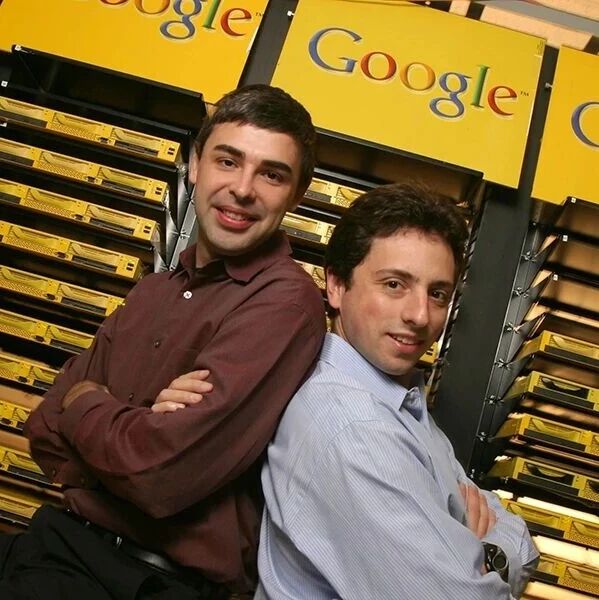
Core Insights - The article discusses the evolution of Google from its inception to its current advancements in artificial intelligence, particularly focusing on the Gemini AI product, which aligns with co-founder Larry Page's vision for an ultimate search engine that understands user intent and provides accurate answers [2][5]. Group 1: Historical Context - Google was founded by Larry Page and Sergey Brin in 1998, with Page serving as the first CEO until 2001 [2]. - The company initially gained a 25% market share in search by 2000, a significant increase from its early days, but still far from its current dominance of approximately 90% [3]. - In 2000, Google's search advertising revenue was $80 million, which is projected to approach $200 billion by 2024 [3]. Group 2: Vision for AI - Larry Page expressed in a 2000 interview that artificial intelligence would be the ultimate form of Google, capable of understanding everything on the internet and providing precise answers [4]. - The recent launch of Gemini is seen as the closest realization of Page's vision for an advanced search engine [5]. Group 3: Gemini AI Developments - Google has integrated its latest language model, Gemini 3 Flash, into its AI mode search tool, enhancing its ability to provide high-quality answers to complex user queries [6]. - Gemini's multimodal reasoning capabilities allow it to interpret and reason based on text, images, audio, video, and code within a single prompt, significantly improving its performance [6]. - The model can manage user tasks within the Google ecosystem, such as handling emails and providing programming suggestions, showcasing its advanced functionality beyond traditional search engines [6].


五大“东风”将谷歌送上AI王座
3 6 Ke· 2025-11-26 08:13
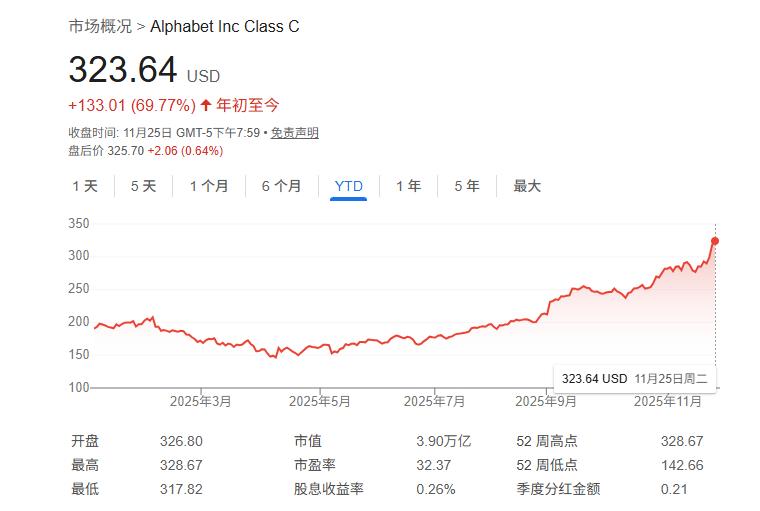
Core Insights - Google has made a remarkable turnaround in the AI competition, particularly with the launch of its new AI model, Gemini 3, which has received widespread acclaim and is outperforming competitors in various benchmarks [1][3]. Group 1: AI Model Success - Gemini 3 has been well-received since its public launch, excelling in coding, design, and analysis, and demonstrating superior performance in benchmark tests compared to competing models [3]. - The stock price of Google has increased by over 12% since the release of Gemini 3 on November 18, indicating strong market confidence in the new model [3]. Group 2: Strategic Developments - Google has invested over a decade in developing its proprietary chips, known as Tensor Processing Units (TPUs), which are utilized to train the Gemini models. This strategy aims to encourage other companies to adopt these chips for their own models [5]. - Google is reportedly in talks with Meta for a multi-billion dollar deal to deploy its chips in Meta's data centers, which could pose a long-term threat to competitors like NVIDIA [5]. Group 3: Legal and Regulatory Landscape - A recent court ruling allowed Google to continue paying browser developers like Apple to keep its search engine as the default option, with minimal impact on its search business despite being found to have engaged in monopolistic practices [6]. - The court's decision also permitted Google to retain its Chrome browser, which was previously at risk of being sold off, thus safeguarding a critical component of its advertising business [6]. Group 4: Investment Confidence - Warren Buffett's Berkshire Hathaway purchased $4.3 billion worth of Alphabet shares, marking a significant investment given Buffett's historical avoidance of tech stocks and high-growth companies [7]. - Buffett's decision to invest in Google reflects his confidence in the company's future prospects, especially as he prepares to step down as CEO [7]. Group 5: Search Engine Resilience - Google's core business of search advertising has shown resilience, with a 15% growth in search revenue in the third quarter, despite concerns that AI might disrupt its traditional revenue streams [8]. - The company is testing AI-driven advertising features, indicating a shift towards integrating generative AI into its future search strategies [8].
X @Yuyue
Yuyue· 2025-07-07 16:12
AI Application Analysis - Tencent Yuanbao AI application demonstrates comprehensive information retrieval capabilities for learning and daily life, including course recommendations, product searches, and restaurant reservations from various WeChat public accounts [1] - AI is evolving into a practical assistant capable of replacing search engines in information organization [1] - AI SEO services are emerging, indicating a shift in the industry landscape [1] Technology & Data - The core technology of Tencent Yuanbao is based on deepseek [1] - The key advantage of Tencent Yuanbao lies in its access to data from isolated social media platforms like Douyin, WeChat public accounts, and Xiaohongshu, which are inaccessible to other AI models [1]

告别谷歌?苹果内部讨论收购AI搜索新贵Perplexity
Hua Er Jie Jian Wen· 2025-06-21 01:51
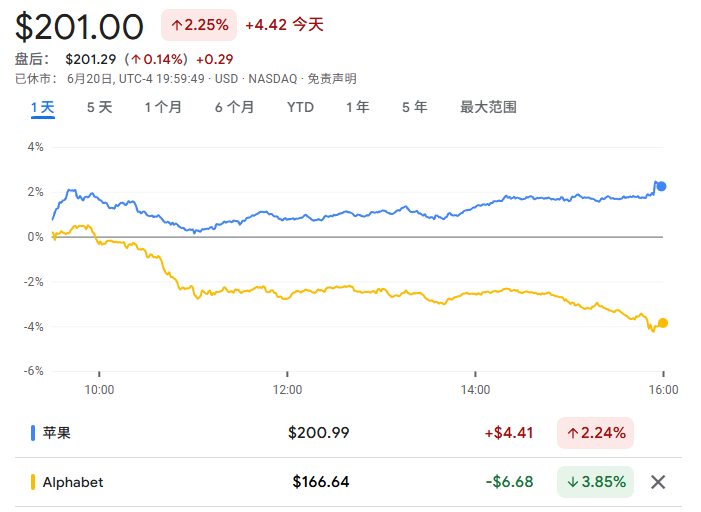
Group 1 - Apple executives are internally discussing the potential acquisition of AI startup Perplexity AI to acquire key AI talent and technology for developing its own AI search engine, addressing regulatory risks associated with its long-standing partnership with Google [1][4] - The discussions are in early stages, and no formal acquisition offer has been made yet, with Apple executives not having contacted Perplexity's management [1] - Apple is also considering integrating Perplexity as an AI search engine option within its Safari browser and Siri voice assistant, as its partnership with Google generates approximately $20 billion annually, which is now under threat from U.S. antitrust enforcement [1] Group 2 - Perplexity AI, founded in 2022, has quickly gained recognition for its generative AI tools that summarize search results and optimize user queries, directly challenging Google's dominance [4] - Apple has reportedly met with Perplexity multiple times in recent months, indicating a serious evaluation of the startup's technology [4] Group 3 - A significant obstacle in the acquisition process may be Perplexity's ongoing partnership with Samsung, which is Apple's largest competitor in the smartphone market [5] - Perplexity has stated that it currently has no information regarding any acquisition discussions [5] Group 4 - Apple is not the only tech giant interested in Perplexity; Meta has also previously discussed a potential acquisition but did not reach an agreement [6] - Following the termination of talks with Perplexity, Meta proceeded to invest $14.3 billion in data labeling startup Scale AI [6] Group 5 - The competition for AI talent is intensifying, with both Apple and Meta vying for key personnel in the AI sector [7] - Meta has engaged in recruitment discussions with Daniel Gross, a co-founder of AI company Safe Superintelligence, while Apple is also attempting to recruit him [7]

全球最全的搜索引擎网站有哪些?
Sou Hu Cai Jing· 2025-05-20 16:18
Core Viewpoint - The article provides a comprehensive guide to the most popular search engines globally, highlighting their unique features, functionalities, and usage tips for effective information retrieval. Group 1: Search Engines Overview - Google is the most widely used search engine, known for its powerful algorithms and extensive database, offering various search options including web, image, video, news, and academic searches [2] - Baidu is the largest search engine in China, focusing on Chinese content with strong information gathering capabilities and community services like Baike and Tieba [3] - Bing, developed by Microsoft, offers similar comprehensive search functions to Google but emphasizes a simpler interface and enhanced image and map search features [4] - Yahoo! has shifted towards providing news and comprehensive information services, focusing more on editorially curated content rather than algorithm-generated results [5] - DuckDuckGo prioritizes user privacy by not tracking search history, offering a simple interface and quick results, although its database is smaller than that of Google and Baidu [6] - Yandex is the most popular search engine in Russia, providing a wide range of services including translation, maps, and music, with a strong local market presence [8] Group 2: Effective Search Techniques - Choosing accurate keywords is essential for obtaining precise search results, utilizing specific terms or descriptions to minimize irrelevant results [10] - Advanced search techniques, such as using quotation marks for exact matches and the "-" operator to exclude terms, can significantly enhance search efficiency [11] - Utilizing filtering and sorting features available in search engines can help narrow down search results quickly, such as sorting by time or relevance [12] - Understanding privacy policies is crucial when using search engines, especially those like DuckDuckGo that emphasize privacy protection to avoid personal data leakage [13] Group 3: Conclusion - The article concludes that each search engine has its unique characteristics catering to different user needs, and mastering effective search techniques can greatly improve information retrieval efficiency [15]