文化铸魂

Search documents
十七载躬耕三晋 新征程“晋”心为民——晋商银行成立十七周年
Sou Hu Cai Jing· 2026-02-28 01:17
Core Viewpoint - Jinshang Bank has evolved from a local financial institution into a provincial-level listed financial enterprise with nearly 400 billion yuan in total assets, emphasizing the integration of party leadership and modern financial practices to support local economic development [1][3]. Group 1: Party Leadership and Governance - As a state-owned financial enterprise, Jinshang Bank prioritizes party leadership, transforming political advantages into governance effectiveness, and ensuring the implementation of central and provincial directives [3]. - The bank has integrated party leadership into decision-making and operational processes, enhancing its governance structure and organizational capabilities [3]. - During the 14th Five-Year Plan period, the bank's total assets grew from 303.3 billion yuan to nearly 400 billion yuan, with deposits increasing by over 120 billion yuan and loans rising by nearly 60 billion yuan [3]. Group 2: Support for the Real Economy - Jinshang Bank focuses on providing financial support to the real economy, with a cumulative loan support of 148.3 billion yuan to the province's real economy by 2025, targeting key areas such as energy transition and industrial upgrading [4]. - The bank has seen loan growth rates exceeding 10% in technology finance, green finance, and inclusive finance, with green finance loans reaching a three-year high [4]. - The bank has provided 7.885 billion yuan in credit support for housing projects, maintaining the highest credit scale in the provincial banking sector [4]. Group 3: Support for Private Enterprises - Jinshang Bank has set a rigid target for private enterprise loan growth of no less than 10%, incorporating this into performance assessments [5]. - The bank has launched various innovative financial products tailored to specific industries, achieving a loan balance of 110.413 billion yuan for private enterprises by the end of 2025, which accounts for over 50% of total loans [5]. - The bank aims to deepen its "green energy + finance" model and enhance its inclusive finance product system to better serve the real economy [5]. Group 4: Innovation and Digital Transformation - Jinshang Bank has focused on reform and innovation to address development challenges, achieving significant breakthroughs in business expansion, digital transformation, talent development, and risk management [6][7]. - The bank has successfully implemented various innovative financial services, including the first "Port Cloud Warehouse" financing in the province and has seen a fourfold increase in trade finance income compared to the average from 2016 to 2020 [6]. - The bank's self-developed technology capabilities have significantly improved, with self-research output increasing from 3 million yuan to 13 million yuan between 2021 and 2025 [7]. Group 5: Cultural Development - Jinshang Bank integrates the spirit of Jin merchants with modern financial development, establishing a corporate culture that emphasizes integrity, innovation, and practicality [8][10]. - The bank promotes a "craftsman spirit" through various skill competitions and training programs, enhancing employee capabilities and fostering a culture of excellence [8]. - The bank has strengthened its compliance and integrity culture, creating a positive environment focused on risk management and compliance [9]. Group 6: Brand Development and Social Responsibility - Jinshang Bank has enhanced its brand recognition and influence, ranking 394th in the "2025 Global Bank 1000" list and 82nd in the "2025 Top 100 Chinese Banks" [11]. - The bank has maintained high customer satisfaction and complaint resolution rates, reinforcing its commitment to serving the real economy and protecting the livelihoods of citizens [12]. - The bank actively engages in social responsibility initiatives, including rural revitalization and financial literacy programs, demonstrating its commitment to community welfare [12].

品牌引领,价值跃升|“四个农业”的广东实践④
Nan Fang Nong Cun Bao· 2026-02-13 02:33
Core Viewpoint - Guangdong is advancing its agricultural development through a focus on brand agriculture, which is seen as a key driver for enhancing competitiveness and breaking down barriers in agricultural product sales [8][9][12]. Brand Agriculture Development - The "14th Five-Year Plan" emphasizes the importance of brand agriculture as a means to connect various agricultural developments and enhance the core competitiveness of Guangdong products [8][9]. - Guangdong's media-driven initiatives are aimed at enhancing brand visibility and market penetration for local agricultural products [12][22]. Cultural Integration - The integration of culture into agricultural branding is exemplified by the "Father's Love Like Orchid" campaign, which connects the resilience of orchids with deep emotional ties, transforming traditional sales into a cultural experience [40][56]. - The "Year Fish" concept in Zhuhai merges traditional cultural elements with the seafood industry, leading to significant sales growth during festive seasons [58][70]. Market Expansion - Guangdong's agricultural products are increasingly penetrating national and international markets, with notable demand in regions like Beijing and Southeast Asia [19][76]. - The collaboration between Guangdong enterprises and businesses in other provinces, such as Hunan, has resulted in substantial sales agreements, exemplified by an 11 billion yuan contract for seafood products [87]. Innovative Marketing Strategies - The "Media+" initiative has led to innovative marketing strategies, including live streaming events that significantly boost product visibility and sales, as seen with the 192 million units of lychee sold during a promotional event [28][30]. - The use of social media platforms for marketing has transformed local farmers into influencers, enhancing the reach of agricultural products [35][39]. Future Outlook - Guangdong aims to continue leveraging its unique cultural heritage and innovative marketing strategies to expand its agricultural brand presence globally, with a focus on quality and cultural significance [109].

时尚产业撬动首都新消费
Bei Jing Shang Bao· 2026-01-26 14:12
Core Insights - The fashion consumption industry in Beijing is entering a new development stage driven by emotional consumption and the deep integration of culture and technology [1][4] - The younger generation's demand for personalized and emotional experiences is identified as a key driver for activating the fashion consumption market [4][5] - Policies aimed at expanding fashion consumption and promoting high-quality development in the fashion industry are set to be implemented by 2025 [1][5] Group 1: Fashion Consumption Trends - Emotional value is becoming a significant factor in consumer decision-making, with the concept of "heart price ratio" emerging among younger consumers [1][4] - The rise of new consumption models, such as trendy toys and performance economies, reflects a shift from traditional value-based consumption to experience-oriented spending [1][4] - The integration of fashion elements into various industries is essential for unlocking the consumption potential across different demographics [1][4][5] Group 2: Policy and Market Development - The implementation of the "Beijing Fashion Consumption Expansion Action Plan" and the "Beijing Fashion Industry High-Quality Development Implementation Plan (2025-2027)" aims to enrich the supply of fashion consumption [1][5] - There is a need for more tailored policies that effectively support businesses and enhance the consumer experience, particularly in areas like night services and refined offerings [5][11] - The establishment of a communication bridge between consumers and businesses is crucial for fostering a supportive policy environment [5][11] Group 3: Cultural Integration and IP Development - The future of Beijing's fashion industry is seen as reliant on cultural integration, with a focus on leveraging unique cultural assets to create meaningful connections with younger consumers [6][9] - The development of exclusive fashion IPs is essential for enhancing the emotional value of products and experiences, particularly in suburban tourism [7][9] - The integration of cultural, commercial, and tourism elements is vital for transforming short-distance travel into a comprehensive consumption experience [9][10] Group 4: Retail Innovation and Consumer Experience - Retail innovation is identified as a key strategy for unlocking consumption potential, with a focus on integrating fashion elements into retail environments [10][12] - The need for a diverse range of retail formats that cater to evolving consumer preferences is emphasized, particularly in the context of personalized and experiential shopping [10][11] - The promotion of smart retail solutions and the seamless integration of online and offline channels are critical for enhancing the consumer experience [11][12]
两会三人行|时尚产业撬动首都新消费
Bei Jing Shang Bao· 2026-01-26 13:50
Core Insights - The fashion consumption industry in Beijing is entering a new development stage driven by emotional consumption and the deep integration of culture and technology, with trends like trendy toys and performance economy becoming significant for Generation Z's self-expression [1] - The "heart-price ratio" has emerged as a new consumption logic among young consumers, emphasizing experiential consumption as a key growth driver in the capital's market [1] Group 1: Fashion Consumption Trends - The new generation's personalized consumption demands are crucial for activating the fashion market, necessitating differentiated positioning and the creation of exclusive IPs [4] - Young consumers in Beijing are shifting from a focus on cost-effectiveness to a willingness to pay for emotional and experiential value, as evidenced by the rise of trendy toys and the "grain economy" [4][5] - The integration of cultural elements into fashion products is essential for creating a competitive edge and achieving high-quality development in the fashion industry [6] Group 2: Policy and Market Environment - The establishment of new consumption models in Beijing is supported by high-quality improvements in commercial districts and community consumption networks [4] - There is a need for policy support to enhance the operational environment for businesses, ensuring that initiatives like the first-store economy effectively stimulate the fashion industry [5] - The government is encouraged to facilitate communication between consumers and businesses, enhancing service capabilities and creating a more favorable policy environment for fashion consumption [5] Group 3: Tourism and Fashion Integration - The integration of fashion consumption into short-distance tourism in suburban Beijing is becoming a core trend, enhancing the quality of weekend and short trips [7] - Young consumers are increasingly seeking emotional experiences and social interactions during their travels, aligning with the trends in fashion consumption [7][8] - Recommendations include creating unique fashion IPs for different districts, integrating market platforms for a comprehensive consumer experience, and overcoming land policy restrictions to enhance tourism offerings [8][9] Group 4: Retail Innovation - Retail innovation is identified as a key driver for unlocking consumption potential, with the fashion industry playing a significant role in this transformation [10] - There are structural shortcomings in Beijing's retail sector, including slow adaptation to consumer upgrades and a lack of immersive experiences [11] - Suggestions for retail innovation include exploring value-oriented business models, enhancing the integration of art and technology in retail spaces, and promoting the development of smart retail environments [11][12]

行业调整期的“定盘星”:从五粮液12·18大会看中国白酒的确定性
2 1 Shi Ji Jing Ji Bao Dao· 2025-12-25 23:10
Core Insights - 2025 is a transformative year for the Chinese liquor industry, marked by significant changes in product, market, and consumption structures [1] - Wuliangye has proactively adjusted its strategies to navigate challenges, achieving stable operational results and positioning itself as a "steady star" during industry adjustments [1] - The company aims to seize opportunities in the current market cycle, leveraging its strong brand, quality foundation, and financial advantages [1] Group 1: Quality Management - Wuliangye has been recognized for its quality management, winning the fifth China Quality Award nomination and the highest score in the EFQM Global Award [2] - The company emphasizes a comprehensive quality management model, integrating quality control from raw materials to finished products [2] - Continuous investment in research and development has led to advancements in digital and intelligent brewing processes, enhancing product quality [2] Group 2: Cultural and Brand Development - Wuliangye views brand culture as essential for its growth, with significant investments in cultural activities reaching an exposure of 32.1 billion people [4] - The company integrates traditional cultural elements into its branding, enhancing emotional connections with consumers [5] - The launch of the zodiac wine reflects Wuliangye's commitment to cultural innovation, merging traditional and contemporary values [6] Group 3: Innovation and Market Strategy - Wuliangye has introduced new products targeting younger consumers, such as the low-alcohol "29-degree Wuliangye," which achieved over 100 million yuan in sales within two months [7] - The company has expanded its distribution channels and enhanced its international market strategies, boosting confidence among overseas distributors [7] - Wuliangye's tourism integration strategy has attracted 1.2 million visitors in 2023, showcasing its ability to convert cultural resources into market appeal [7] Group 4: Future Outlook - Wuliangye is focused on balancing tradition and innovation, cultural value and economic benefits, and national characteristics with international trends [8] - The company has set ambitious marketing goals for 2026, emphasizing brand value enhancement and market share growth [9][10] - Wuliangye aims to contribute to the high-quality development of the global liquor industry by combining its historical legacy with modern strategies [10]

推进乡村振兴上台阶
Jing Ji Ri Bao· 2025-07-27 22:19
Core Viewpoint - The article emphasizes Henan's commitment to rural revitalization as a national priority, focusing on industrial strength, cultural heritage, and effective governance to achieve high-quality development during the "14th Five-Year Plan" period [1][2]. Group 1: Industrial Strength - Henan prioritizes food security with a significant agricultural output, including 85 million acres of wheat, 57 million acres of corn, and 20 million acres of peanuts, translating to a total production of over 1.3 billion pounds [1]. - The province has established 87.59 million acres of high-standard farmland and 20 billion pounds of storage capacity, supported by full mechanization and digital agriculture [1]. - The transformation of primary agricultural products into consumer goods enhances farmers' income through value-added stories, such as the development of local brands in various agricultural sectors [1]. Group 2: Cultural Heritage - Cultural revitalization is aimed at preserving local traditions and enhancing community identity, with 217 traditional villages in Gya County being protected through a "Five Ones" mechanism, avoiding large-scale demolition [2]. - The tourism revenue from Li Duku Village reached 8 million yuan, while Lin Fengzhai generated a total income of 10 million yuan, showcasing the economic benefits of cultural preservation [2]. Group 3: Effective Governance - The governance model in Henan focuses on converting institutional advantages into tangible benefits for the community, exemplified by the "353" initiative in Ye County, which utilizes big data for social assistance [2]. - The "Four Discussions and Two Publications" approach has achieved a 90% participation rate in all administrative villages, enhancing community engagement in governance [2]. - Future plans include a three-year action plan for prosperous industries aimed at strengthening collective economic capabilities and ensuring sustainable income for farmers [2].
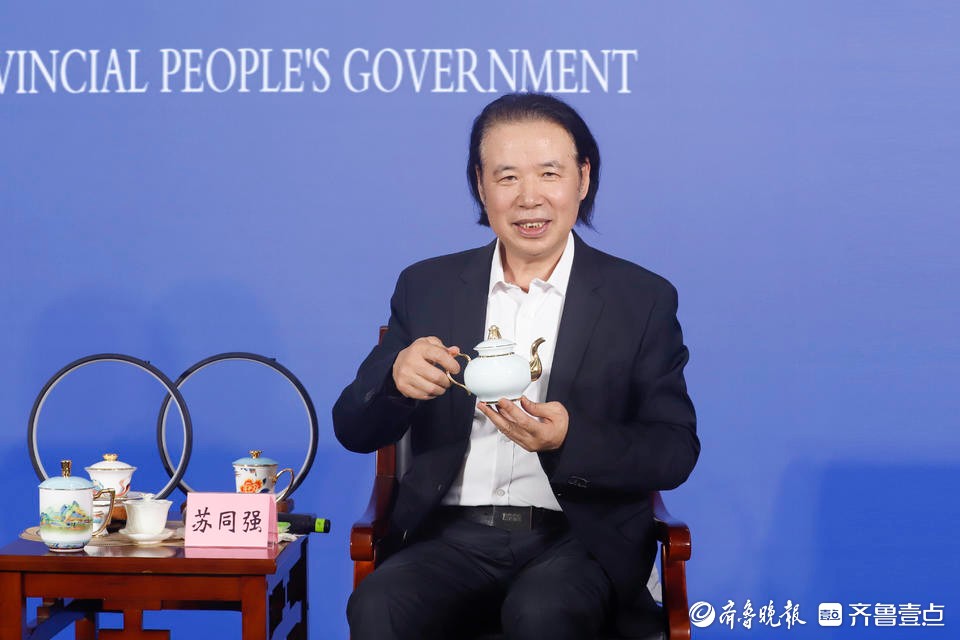
华光国瓷:科技之光点亮千年窑火,文化之魂铸就时代名片
Qi Lu Wan Bao· 2025-07-23 10:57
Core Viewpoint - Huaguang Guoci is transforming traditional ceramics into a modern industry through innovation and cultural integration, positioning itself as a leader in the ceramic sector and enhancing its global presence [1][3][7]. Group 1: Innovation and Technology - Huaguang Guoci has developed a natural mineral bone china that surpasses international standards in strength, whiteness, and thermal stability, achieving a thermal stability of over 200°C compared to the international standard of 140°C [3]. - The company has achieved a 100% antibacterial rate against E. coli and Staphylococcus aureus, showcasing its advancements in lead-free materials and antibacterial functions [3]. - Over three years, the product qualification rate improved from an industry average of 70% to 97% through rigorous testing, resulting in over a thousand national patents [3][4]. Group 2: Cultural Empowerment - Each piece of Huaguang Guoci's ceramics is described as a "silent poem," with products like the "Qingdao Summit Tea Set" and "Lotus Wind Tea Set" reflecting deep cultural narratives and aesthetics [4]. - The company has successfully integrated traditional cultural symbols into modern design, making its products not only functional but also culturally significant [4][6]. Group 3: Brand Transformation - Huaguang Guoci's growth exemplifies a "chain thinking" approach in brand building, focusing on brand management, independent innovation, and cultural integration [5]. - The company has created a closed-loop ecosystem of "products + services + cultural experiences," enhancing brand value through market engagement [6]. Group 4: Global Expansion - Huaguang Guoci is expanding its international footprint, exporting innovative products to over ten countries in Europe and Southeast Asia, thus breaking traditional export barriers [7]. - The company's vision is to become a global carrier of cultural confidence, aiming to showcase Chinese ceramics on the world stage [7].