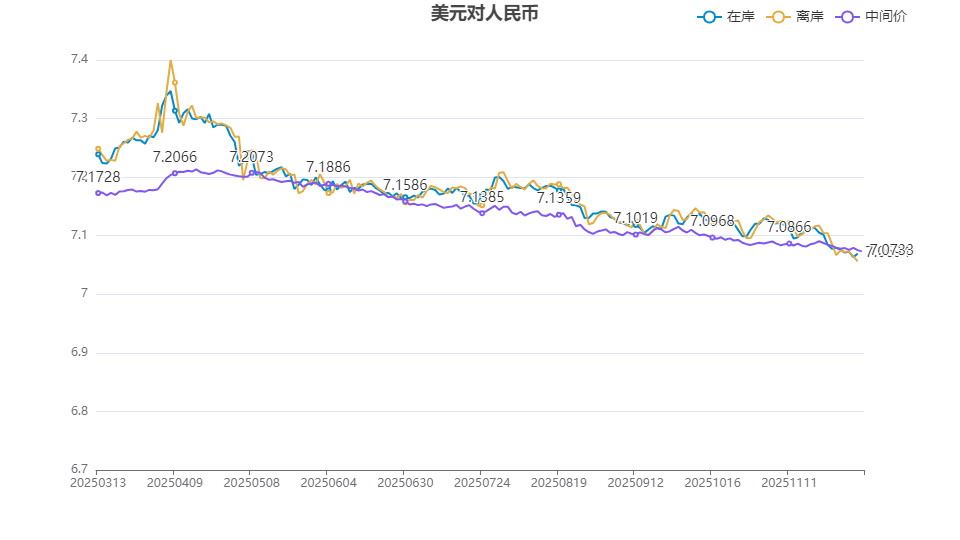
人民币汇率双向波动

Search documents
曹县农商银行精准滴灌中小外贸企业,携手共拓发展新局
Qi Lu Wan Bao· 2026-01-31 10:21
Group 1 - The global economic landscape is undergoing significant adjustments, leading to a normalization of the dual fluctuations in the RMB exchange rate, which poses challenges for small and medium-sized foreign trade enterprises in terms of exchange rate volatility, fund management, and business efficiency [1] - Cao County Rural Commercial Bank is actively implementing the mission of "stabilizing foreign trade and promoting growth" by enhancing its international business service capabilities and providing professional financial services to small and medium-sized foreign trade enterprises [1] - Shandong Quanyi Building Materials Co., Ltd. faced difficulties in accurately grasping market trends due to a lack of professional foreign exchange talent, prompting the bank to tailor financial service solutions that included preferential exchange rates and a 2.5% interest rate on USD demand deposits [1] Group 2 - Shandong Fanmi Intelligent Home Furnishing Co., Ltd., a medium-sized enterprise producing smart sofas, is expanding into the South Korean market due to profit margin compression from U.S. tariffs, requiring payment via letters of credit [2] - The bank proactively engaged with the company to discuss its service advantages, including independent document review rights and secure document mailing, and designed a facilitation plan that waived letter of credit review fees and provided favorable exchange rate spreads [2] - The bank aims to continue deepening its international business financial services and innovating product and service models to support more small and medium-sized foreign trade enterprises in navigating the international market [2]
央行明确今年七大重点工作!信号很大
2 1 Shi Ji Jing Ji Bao Dao· 2026-01-06 12:10
Core Viewpoint - The People's Bank of China (PBOC) has outlined seven key tasks for 2026, focusing on strict governance, monetary policy, financial services, risk management, financial reform, global governance, and enhancing financial management capabilities [1]. Group 1: Monetary Policy - The PBOC emphasizes the importance of promoting high-quality economic development and reasonable price recovery as key considerations for monetary policy, utilizing various tools like reserve requirement ratio (RRR) cuts and interest rate reductions to maintain ample liquidity and relatively loose financing conditions [2]. - The monetary policy framework is shifting towards a price-oriented approach, with a focus on optimizing the transmission mechanism of monetary policy and ensuring low financing costs for the overall economy [3]. - The PBOC is expanding the coverage of explicit comprehensive financing cost disclosures for corporate loans, benefiting numerous small and medium-sized enterprises [4]. Group 2: Exchange Rate Stability - The PBOC aims to maintain the basic stability of the RMB exchange rate at a reasonable and balanced level, preventing excessive fluctuations, especially as the RMB has recently strengthened against the USD [5]. - The future trajectory of the RMB exchange rate is expected to exhibit two-way fluctuations, influenced by domestic economic recovery and external trade negotiations [5]. - The PBOC's focus is on structural adjustments and expanding domestic demand to enhance the certainty of domestic economic circulation, which is essential for achieving long-term stability of the RMB exchange rate [5].
26个关键词前瞻2026
Sou Hu Cai Jing· 2025-12-30 17:20
Group 1: Trade and Economic Growth - China's foreign trade has shown remarkable resilience, maintaining the world's largest goods trade volume for eight consecutive years, with exports accounting for over 14% of global trade and imports rising from 9.7% in 2012 to 10.5% in 2024 [1][2] - The 2025 China International Import Expo achieved a record intended transaction amount of $83.49 billion, signaling China's proactive market opening and welcoming of global quality products [1][2] - The balance of imports and exports is crucial for connecting domestic and international cycles, promoting global economic stability, and is driven by the continuous upgrading of trade structure [1][2] Group 2: Employment and Consumer Market - Foreign trade and foreign investment have directly or indirectly supported over 200 million jobs in China, with more than 80 million being migrant workers [2] - The import of over $250 billion in consumer goods each year has significantly enriched the domestic market's supply and consumption choices [2] Group 3: Financial and Monetary Policy - The central economic work conference emphasized the need for a moderately loose monetary policy in 2026, focusing on maintaining liquidity and balancing economic growth with price stability [7][8] - The use of various monetary policy tools, including flexible and efficient adjustments to reserve requirement ratios and interest rates, is expected to support economic recovery and high-quality development [7][8] Group 4: Capital Market Reforms - The central economic work conference highlighted the need for continuous deepening of capital market investment and financing reforms, with a focus on improving the quality of listed companies and enhancing investor protection [11][12] - The introduction of the first specialized regulatory framework for listed companies aims to strengthen governance, improve information disclosure, and enhance penalties for violations [13][14] Group 5: Insurance Capital Market Participation - Insurance capital investment in the stock market has accelerated, with core equity assets reaching 5.59 trillion yuan by the end of Q3 2025, marking a significant increase [15][16] - Policies encouraging insurance capital to invest in the A-share market are expected to provide substantial new funding in 2026, with projections of new equity investments reaching over 1 trillion yuan [17]
人民币,破7!创两年半来新高
Sou Hu Cai Jing· 2025-12-30 06:22
Core Viewpoint - The recent appreciation of the Renminbi (RMB) against the US dollar is primarily attributed to a weaker US dollar and strong domestic equity market performance attracting foreign capital inflows, rather than indicating the start of a new appreciation cycle [1] Group 1: Currency Performance - On December 30, 2025, the onshore RMB reached a high of 6.9960 against the US dollar, breaking the 7.0 mark for the first time since May 17, 2023 [1] - The offshore RMB also surpassed the 7.0 threshold on December 25, marking the first occurrence in 15 months [1] Group 2: Economic Analysis - Market analysts, including the chief economist at China Merchants Bank, suggest that the recent RMB appreciation is driven by short-term favorable factors and does not signify the beginning of a new appreciation cycle [1] - The future trajectory of the RMB exchange rate is expected to be influenced by three main factors: the relative strength of economic recovery in China and the US, trends in US dollar interest rates and exchange rates, and the evolution of China's foreign trade relationships alongside domestic economic recovery [1] Group 3: Market Expectations - The market is advised not to overly focus on specific exchange rate levels or develop linear expectations of unilateral appreciation or depreciation, as a two-way fluctuation in the exchange rate is likely to become the norm [1]
新浪财经资讯AI速递:昨夜今晨财经热点一览 丨2025年12月29日
Xin Lang Cai Jing· 2025-12-29 00:00
Group 1: Policy and Market Adjustments - The Ministry of Finance will continue to support the consumption upgrade policy in 2026, with an increased subsidy budget of 300 billion yuan for 2025, expanding the range of eligible products [10] - Moutai Group aims to shift its distributors' reliance on the single product "Flying Moutai" for profits, as its market price has been declining, leading to a micro-profit state for distributors [11] Group 2: Consumer Behavior and Market Trends - In the first week of Hainan's free trade port operation, duty-free shopping surged by 54.9% year-on-year, with Sanya's duty-free store sales significantly increasing [12] - The A-share market has seen a record trading volume, surpassing 405 trillion yuan for the first time, indicating a potential "spring market" as funds begin to position themselves ahead of the new year [17] Group 3: Currency and Investment Insights - The recent strengthening of the RMB against the USD is supported by a weaker dollar index and increased corporate demand for currency settlement, although future fluctuations are expected [13] - Global pharmaceutical investments are shifting from Europe to the US and Asia, particularly China, due to lower R&D investments in Europe and rising costs [16] Group 4: Corporate Developments - Xiaomi's Vice Chairman plans to gradually reduce his shareholding by up to $20 billion over the next few years, indicating a strategic move to establish an investment fund while expressing confidence in Xiaomi's business prospects [15] - Hubei Yangfeng Group awarded over 20 million yuan in bonuses to more than 300 employees, highlighting a focus on innovation and digital transformation [6]
四大证券报头版头条内容精华摘要_2025年12月29日_财经新闻
Xin Lang Cai Jing· 2025-12-28 23:20
Group 1 - The A-share market is expected to continue its strong performance as it approaches the end of 2025, with institutions suggesting a focus on structural opportunities in a fluctuating market [1][6] - The issuance of FOF products has surged to 838.28 billion units this year, marking a historical high, with increased participation from insurance institutions and banks [3][21] - The China Securities Regulatory Commission (CSRC) is actively monitoring the application of artificial intelligence in the capital market, aiming to enhance its application level and drive high-quality development [5][23] Group 2 - The industrial sector has shown a cumulative profit growth of 0.1% year-on-year for the first 11 months, with high-tech manufacturing leading the growth [7][25] - The recent regulatory changes in the banking sector aim to enhance supervision and address the complexities in the banking environment, with a focus on improving regulatory effectiveness [2][19] - The recent surge in the number of A-share companies successfully listing in Hong Kong reflects a growing trend, with 19 companies raising over 50% of the total new capital in the Hong Kong market this year [14][33]
人民币破7,有利于中国成为发达国家?单边升值不一定是好事
Sou Hu Cai Jing· 2025-12-26 23:10
Core Viewpoint - The recent appreciation of the Renminbi (RMB) beyond the 7.0 mark has sparked discussions about its potential impact on China's economy and its role in helping China transition to a developed nation status [1] Microeconomic Impact - The appreciation of the RMB has varying effects on different income groups. For low to middle-income groups, the benefits are limited as domestic goods are primarily produced locally, and the impact of reduced import costs on final prices is minimal. In contrast, high-income groups, who engage more in cross-border consumption, benefit from lower costs for imported goods and enhanced overseas purchasing power [3] Macroeconomic Considerations - Relying solely on RMB appreciation to boost per capita GDP and cross the threshold of developed nations is not sustainable. While RMB appreciation can increase GDP figures in USD terms, the current per capita GDP is projected to exceed 140 trillion RMB, translating to approximately $14,300 at a 7.0 exchange rate, and $16,700 at a 6.0 exchange rate. The threshold for developed nations is currently $20,000 and expected to rise to $30,000 by 2035 [4] Trade and Economic Growth - Foreign trade remains a crucial engine for China's economic growth. Despite external pressures such as U.S. tariffs, China's exports have continued to grow, although some sectors are experiencing profit declines due to a "price for volume" strategy. A rapid appreciation of the RMB, combined with U.S. tariff policies, could severely impact export industries, particularly those with thin profit margins, affecting employment and tax contributions [6] Currency Management - A long-term depreciation of the RMB could deter foreign investment, as currency fluctuations directly affect the returns on RMB-denominated assets. For instance, an appreciation from 7.0 to 6.0 could yield a significant exchange gain of approximately 17% even on low-interest deposits [7] Ideal Currency Fluctuation - The optimal scenario for RMB management is to maintain a stable, two-way fluctuation within a reasonable range, such as between 6.8 to 7.2 or 6.5 to 7.0. This approach would attract foreign investment while minimizing adverse effects on export industries and balancing the interests of different consumer groups [9] Conclusion - A pragmatic and stable approach to RMB exchange rate management, avoiding extreme fluctuations, is deemed the most sensible choice for the current economic landscape [10]

人民币汇率创15个月新高,双向波动或是常态
第一财经· 2025-12-25 14:02
Core Viewpoint - The offshore RMB against the USD has broken the "7" mark for the first time since October 2024, reaching a high of 6.9985, indicating a significant appreciation trend driven by a weakening USD and stable Chinese economic fundamentals [3][4]. Group 1: RMB Exchange Rate Dynamics - The recent appreciation of the RMB is primarily attributed to the weakening of the USD, which has seen a decline of about 3% since late November [4]. - China's trade surplus for the first 11 months of 2025 reached $1.0758 trillion, providing a solid foundation for the RMB's strength [4]. - The increase in corporate demand for currency settlement at year-end has contributed to the seasonal strengthening of the RMB, although this "settlement tide" is not the main driver of the current appreciation [4][5]. Group 2: Future Outlook on RMB Exchange Rate - Experts caution against expecting a new cycle of sustained RMB appreciation, suggesting that the exchange rate will likely exhibit two-way fluctuations rather than a unilateral trend [7][11]. - The future trajectory of the USD is uncertain, with predictions of a potential rebound after a period of decline, which could diminish the RMB's appreciation momentum [7][8]. - The complexity of China's external economic environment, including trade relations and potential retaliatory measures from other countries, adds uncertainty to the RMB's future [9][10]. Group 3: Impact on Enterprises - The appreciation of the RMB presents both opportunities and challenges for businesses, benefiting capital markets and importers while posing risks for exporters [15][16]. - Exporters are experiencing exchange rate losses due to the RMB's rapid appreciation, affecting their international price competitiveness and order flow [16]. - Companies are advised to adopt systematic risk management strategies to mitigate the impacts of exchange rate fluctuations, focusing on maintaining a neutral stance on currency risk [17].
人民币汇率升至14个月新高 专家认为双向波动仍是主基调
Xin Lang Cai Jing· 2025-12-15 06:37
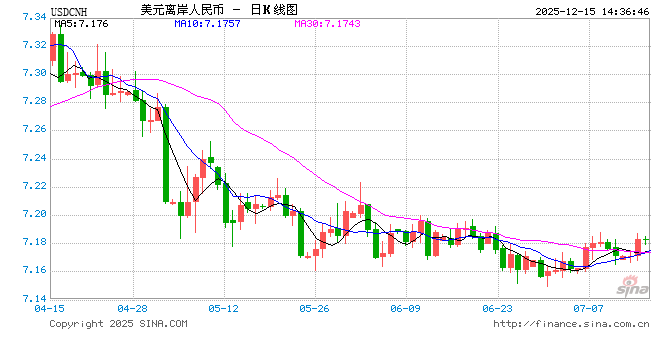
Group 1 - The core viewpoint of the article highlights the recent upward trend of the RMB against the USD, with both onshore and offshore RMB breaking the 7.05 mark, reaching a 14-month high on December 15 [1][7]. - As of the report's publication, the onshore RMB peaked at 7.0497 and the offshore RMB at 7.0460, marking the highest levels since October of the previous year [1][7]. Group 2 - The recent Central Economic Work Conference emphasized maintaining the RMB exchange rate at a reasonable and balanced level for the fourth consecutive year, indicating a policy approach to prevent both excessive depreciation and appreciation of the currency [4][10]. - This policy aims to mitigate the cyclical herd behavior in the foreign exchange market and create a stable financial environment for economic recovery in the coming year [4][10]. Group 3 - Analysts predict that the RMB exchange rate will continue to exhibit a two-way fluctuation trend in the coming year due to various internal and external uncertainties [5][11]. - A report from a foreign exchange analyst at China Merchants Bank indicates that the RMB's resilience has significantly increased, with the exchange rate showing less sensitivity to external disturbances and decoupling from the USD index [5][11]. - Positive factors such as strong exports leading to accumulated foreign exchange deposits and the narrowing of the interest rate differential between China and the US due to Federal Reserve rate cuts have contributed to a moderate appreciation of the RMB, with a 3% increase against the USD over the year [5][11].
离岸人民币兑美元升破7.06 创逾一年来新高
Xin Hua Cai Jing· 2025-12-04 05:44
Group 1 - The unexpected decline in US ADP employment data has led investors to believe that the Federal Reserve will likely cut interest rates next week, causing the US dollar index to continue its downward trend [1] - In the Asian trading session, the onshore RMB reached a high of 7.0616 against the US dollar, the highest since October 10 of last year, while the offshore RMB also broke the 7.06 mark, marking a new high in over a year [1] - The US private sector lost 32,000 jobs in November, the largest decline since March 2023, significantly below the market expectation of an increase of 10,000 jobs [1] Group 2 - The People's Bank of China emphasizes the need to improve the RMB exchange rate formation mechanism, advocating for market determination of exchange rates and maintaining flexibility to support macroeconomic stability [3] - Chief economist at Minsheng Bank, Wen Bin, suggests that the dollar index may experience fluctuations in December, but overall, the impact on the RMB exchange rate will be limited, with expectations for stability and slight strength [3] - Bank of China Securities' chief economist, Guan Tao, notes that the financial market in China has withstood external shocks this year, leading to a "dual rise" in stocks and currency, with optimism about the RMB's future exchange rate trends [4]