汽车技术创新

Search documents
26Q1整车看好比亚迪和江淮
2026-02-24 14:16
Summary of Conference Call on Automotive Sector Company and Industry Overview - The conference call was led by Dong Xiaobin, Chief of Automotive at Industrial Securities, focusing on the automotive sector, specifically on companies BYD and Jianghuai Automobile (JAC) [1][2]. Key Points and Arguments Industry Outlook - The automotive industry is currently facing very pessimistic expectations, with January's production and sales data being worse than anticipated, leading to stock price adjustments [1]. - Retail sales in January dropped by approximately 14%, aligning with market expectations [1]. - The current holding in the automotive sector is at a historical low, with most investments concentrated in parts and robotics [1]. Investment Recommendations - **BYD**: - Recommended due to expected opportunities arising from a technology launch in March, which historically has led to significant stock price movements [2][3]. - Anticipated innovations include ultra-low energy consumption and low-temperature blade batteries, which could create substantial market impact if successfully announced [4][5]. - Current institutional holdings are very low, suggesting limited downside risk and potential for price increases if the March event exceeds expectations [6]. - The overall sentiment in the industry is already factored into stock prices, indicating a favorable risk-reward ratio for investment in BYD [6][7]. - **Jianghuai Automobile (JAC)**: - Positive outlook on the MPV segment, particularly the S800 model, with optimistic sales projections of around 10,000 units per month based on market research [8][9]. - Anticipated demand from high-net-worth families and the business sector, especially as alternatives to Japanese brands due to geopolitical tensions [8][9]. - JAC's preparations for increased production capacity and market entry strategies are expected to yield significant sales growth [9][10]. - The potential for export growth, particularly in markets like the Middle East and South America, is highlighted, with expectations of higher profit margins compared to domestic sales [12][14]. Additional Important Insights - The luxury vehicle market is not purely stable; it can experience significant fluctuations based on the introduction of high-quality offerings, which could lead to increased sales volumes [10][11]. - JAC's export strategy is expected to leverage existing channels, potentially increasing profitability significantly compared to domestic sales [14]. - The overall sentiment towards JAC's future, especially regarding the S800 and its MPV offerings, is optimistic, with expectations of strong market performance [15][16]. Conclusion - The conference call emphasized a cautious yet optimistic outlook for the automotive sector, particularly for BYD and JAC, with specific attention to upcoming technological advancements and market dynamics that could influence stock performance in the near term [16].


罗兰贝格:中国汽车产业结构优化与淘汰整合必将加速
Nan Fang Du Shi Bao· 2026-01-09 09:45
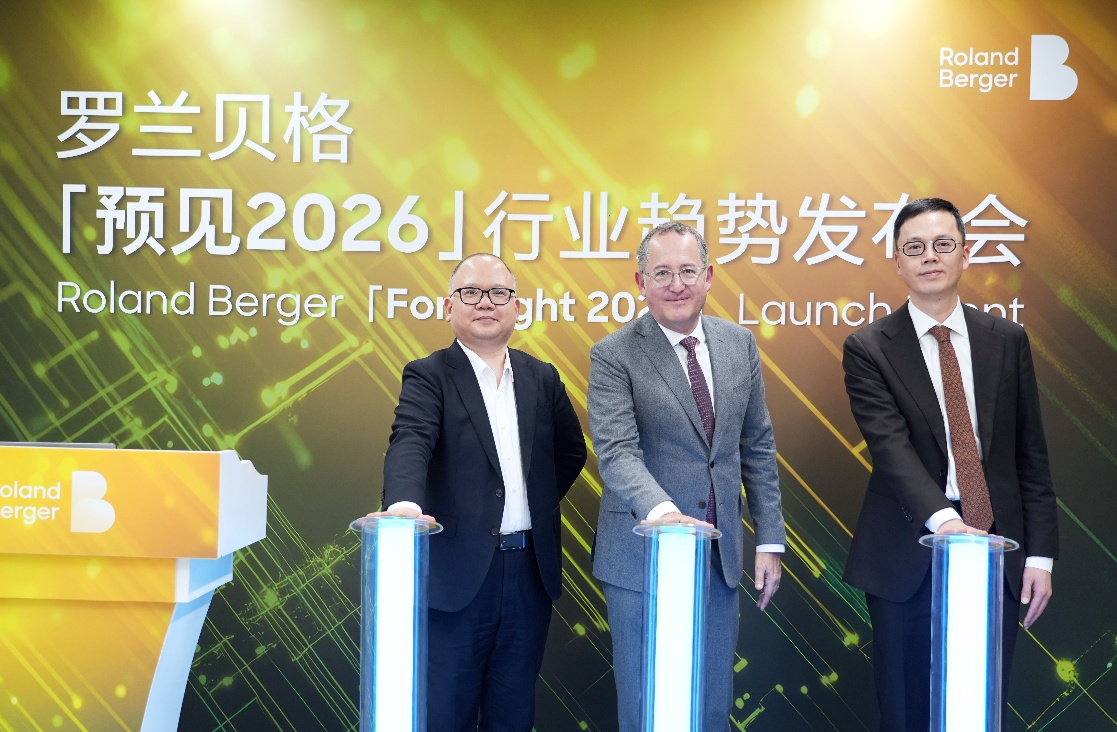
Core Insights - The Chinese automotive industry faced both challenges and opportunities in 2025, with total sales expected to reach 24.4 million vehicles, marking a historical high [1] - Roland Berger's report highlights the transition from price competition to high-quality competition, driven by policy adjustments and market dynamics [3] Group 1: Industry Trends - The report identifies six key transformations in the automotive sector, emphasizing the acceleration of competition and the elimination of weaker players [3][4] - The competition is shifting from price wars to a focus on comprehensive value chain capabilities, including R&D, manufacturing, supply chain, and user operations [4] - The internationalization of the Chinese automotive industry is deepening, with a shift from "product export" to "full value chain output," despite facing structural changes and increased competition [5] Group 2: Technological and Capital Dynamics - Technological leadership is becoming increasingly critical for both vehicle manufacturers and suppliers, influencing product competitiveness and brand positioning [5][6] - The capital race is intensifying, with companies needing to manage cash flow and mergers effectively to survive in a challenging market environment [6] - AI is emerging as a transformative force in the industry, with significant efficiency improvements of 30%-50% reported in certain applications, making 2026 a pivotal year for AI deployment [6][7]

技术与资本双轮驱动迈向全球竞合新周期
Zhong Guo Zheng Quan Bao· 2025-12-19 20:10
Core Insights - The automotive industry is experiencing a struggle between scale expansion and profit pressure, with domestic car sales reaching 24.783 million units in the first 11 months of 2025 and a new energy vehicle penetration rate exceeding 50.3%, while industry profit margins have dropped to 4.5% from 7.8% in 2017 [1] - Over 260 vehicle models have officially reduced prices, with an average decrease of 11.2%, prompting discussions on how to regulate price competition and achieve global advancement through technological breakthroughs [1] - The industry is shifting towards rational competition, with a decrease in the number of price-reduced models in November 2025, and a recovery in profit margins to 4.4% [2] Industry Competition and Pricing - Price competition has significantly impacted the industry ecosystem, with a capacity utilization rate of only 72.2% in 2024, and state-owned enterprises and electric vehicle startups experiencing even lower rates of 64% and 66% respectively [2] - The intervention of policies has led to a more rational competitive environment, with industry revenue growing by 7.9% and profits by 4.4% in the first ten months of 2025 [2] - The shift in consumer demand is fostering a transition from price wars to technology wars, emphasizing the need for companies to invest in R&D and service optimization [2] Export Growth and Market Expansion - The automotive export from China has reached a critical point, with 6.346 million vehicles exported in the first 11 months of 2025, a year-on-year increase of 8.7%, and electric vehicle exports doubling to 2.315 million units [2][3] - The ASEAN and Middle East markets are showing increasing demand, with Mexico becoming the largest market for Chinese automotive exports [3] - Chinese automakers are planning to establish overseas production capacities of 3 million units by 2026, with over 2 million units expected to be operational [3] Technological Advancements - 2026 is anticipated to be a pivotal year for automotive technology innovation, with significant breakthroughs expected in battery technology, intelligent driving, and onboard computing power [4] - The approval of L3 autonomous driving trials is seen as a crucial step towards industrialization, with the need for synchronized technology and regulatory frameworks [4] - The penetration rate of L2 combined driving assistance features in new passenger vehicles is projected to exceed 70% by 2026, with costs for hardware decreasing significantly [4] Industry Transformation - The automotive industry is undergoing a profound transformation from scale-driven to value-driven growth, integrating technology, services, and ecosystems [5][6] - The focus is shifting from capacity expansion to leveraging technological innovation and global collaboration, aiming to establish global standards and enhance the export model of "whole vehicle + components + services" [6]
余承东剧透鸿蒙智行首款MPV:名为智界V9
Xin Lang Cai Jing· 2025-12-09 06:56
Core Viewpoint - Huawei's Yu Chengdong announced significant advancements in automotive technology, highlighting the introduction of the world's first MPV powered by HarmonyOS, named Zhijie V9, which is positioned as the best MPV globally [1][1]. Group 1: Automotive Technology Innovations - Yu Chengdong emphasized the safety of Huawei's giant whale battery, reporting zero combustion incidents worldwide [1][1]. - The Zhijie brand will debut the HarmonyOS-powered MPV, Zhijie V9, which is described as a flagship model [1][1].
专访丨中国汽车品牌在芬兰影响力持续上升——访芬兰汽车贸易与维修中央组织首席执行官劳萨拉
Xin Hua Wang· 2025-11-19 06:32
Core Insights - The influence of Chinese automotive brands in Finland is continuously rising due to their technological innovation, product performance, and price competitiveness [1][2] - Finnish consumers show a high acceptance of new technologies and are increasingly interested in the diversity of products offered by Chinese brands [1] - Key factors for Finnish consumers when purchasing vehicles include charging speed, battery life, and warranty conditions, which align with the strengths of Chinese automotive brands [1] Group 1 - The Finnish automotive market is accelerating its transition to electrification, providing an opportunity for Chinese brands to enhance their market presence [1] - Local media frequently publishes detailed reviews of new Chinese models, which helps to build market recognition and trust among consumers [1] - The CEO of the Finnish Automotive Trade and Repair Central Organization emphasizes the importance of establishing long-term relationships with local importers and dealers while strengthening after-sales service systems [1] Group 2 - There is significant potential for cooperation between China and Finland in the automotive industry, particularly in areas such as charging technology and software development [2] - The Finnish automotive software industry cluster consists of approximately 100 companies, many of which are eager to collaborate with Chinese partners [2] - The Finnish Automotive Trade and Repair Central Organization, established in 1933, has 167 member companies and plays a crucial role in promoting communication and cooperation between the Chinese and Finnish automotive industries [2]
2025奇瑞全球创新大会开幕
Mei Ri Shang Bao· 2025-10-22 22:21
Core Insights - The 2025 Chery Global Innovation Conference, themed "Innovation. Leading the World," showcased Chery's latest achievements in electrification, connectivity, intelligence, and sharing [1] - Chery Group has achieved five historical breakthroughs in sales scale, new energy, exports, brand, and capital markets [1] - As of the end of September, Chery Group has over 17.72 million global users, with more than 5.43 million overseas users [1] - Chery Automobile was listed on the Hong Kong Stock Exchange on September 25 [1] Group 1 - Chery launched a collaborative innovation center and established a strategic alliance with Kaiyang Laboratory to bridge the gap between industry, academia, and research [1] - The conference introduced over 10 globally leading technologies, including the Flying Fish chassis and the Kunpeng Tianqing engine, which has a thermal efficiency of 48%, potentially leading hybrid vehicles into a new era of fuel consumption [1] - Chery currently operates 16 overseas KD factories, 8 major R&D centers, and employs over 30,000 R&D personnel, with plans to establish 26 additional overseas R&D centers in the future [1] Group 2 - The company has initiated over 4,000 Spark projects, building a global technology innovation system to support the Chinese automotive industry in becoming a global leader [1] - Chery aims to usher in a new era of Chinese automotive technology on the global stage [1]
至 前所未至!纵横G700成功横渡长江,开启中国豪华越野新时代
Jin Tou Wang· 2025-10-16 07:06
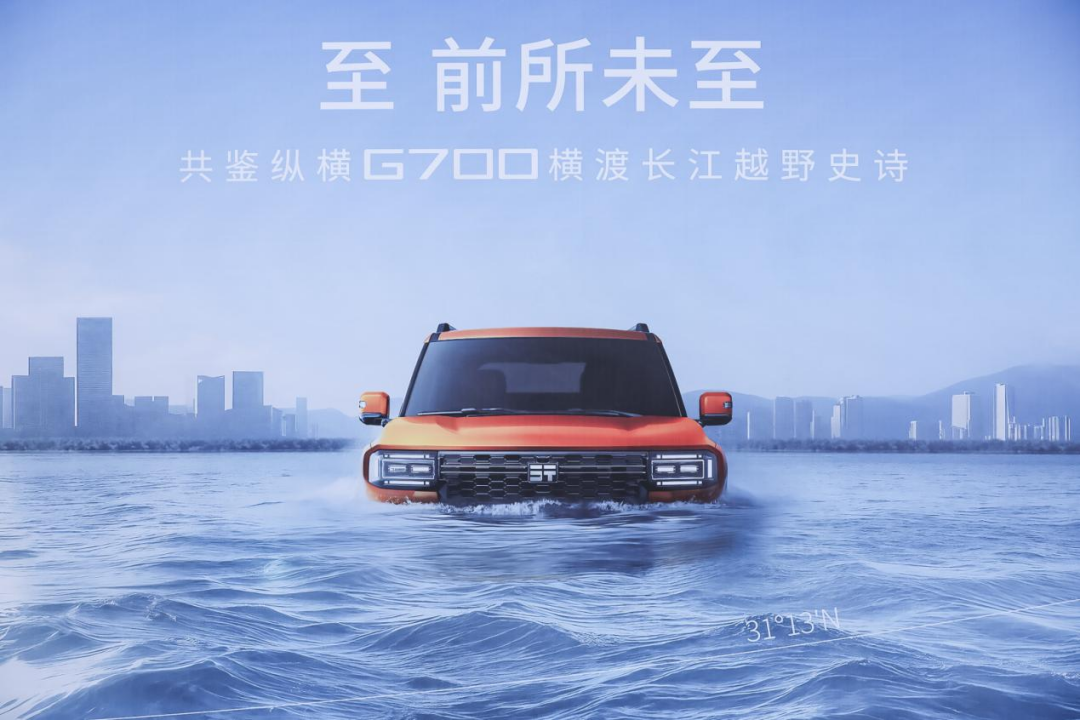
Core Insights - Chery Group's G700 successfully crossed the Yangtze River, marking a historic achievement in the automotive industry as the first mass-produced off-road vehicle to do so [1][3][5] - The event symbolizes a significant milestone for China's automotive industry, showcasing the country's advanced autonomous vehicle technology and breaking the long-standing dominance of Western brands in the luxury off-road segment [3][12] Group 1: Achievement and Significance - The G700's crossing took 22 minutes over a distance of 1480 meters, navigating a river width of approximately 1.2 kilometers with water currents of 5-10 km/h [5] - This achievement is seen as a "battle" for the Chinese automotive industry, representing a new era of mobility that transcends traditional boundaries [3][7] - The G700 is positioned as a new benchmark for luxury off-road SUVs, combining capabilities for land, water, and air environments [8][11] Group 2: Technological Advancements - The G700 features advanced technologies such as an 800V high-voltage silicon carbide propulsion system, a six-axis gyroscope for stability, and IP68 waterproof standards, making it comparable to high-end luxury off-road vehicles [5][11] - The vehicle's design integrates luxury features like a million-level air suspension and high-end audio systems, redefining the off-road experience [11][12] Group 3: Market Impact and Future Prospects - The G700's pre-sale saw over 10,000 orders within 100 hours, indicating strong market interest and potential for significant sales [12] - The global launch of the G700 is set for October 19, 2025, which is expected to further enhance Chery's position in the automotive industry and contribute to the export of China's automotive supply chain [14]
隐藏式门把手能降低油耗?汽车不需要那么多奇葩设计
Guang Zhou Ri Bao· 2025-09-29 10:11
Core Points - The new mandatory national standard for automotive door handles requires each door (excluding the tailgate) to be equipped with a mechanical release function, meaning traditional pull handles must be included alongside electronic options [1] - The criticism of hidden door handles is highlighted, as they can lead to user frustration and safety concerns, especially in adverse weather conditions [1] - The article emphasizes that safety should always be the priority in automotive design, and innovations that compromise safety for aesthetics or marketing gimmicks are not acceptable [2] Industry Insights - The automotive industry is facing scrutiny over design choices that prioritize aesthetics over functionality, such as hidden door handles and touch screens that distract drivers [1][2] - Companies that focus on practical innovations addressing consumer pain points are more likely to gain trust and positive reputation among consumers [2] - The article warns against companies that prioritize flashy marketing over quality and safety, suggesting that such approaches could lead to negative outcomes [2]
2.0T 3电机4驱、5激光雷达、6C超充、48V主动防倾杆!极氪9X真能叫板库里南?
电动车公社· 2025-08-23 15:39
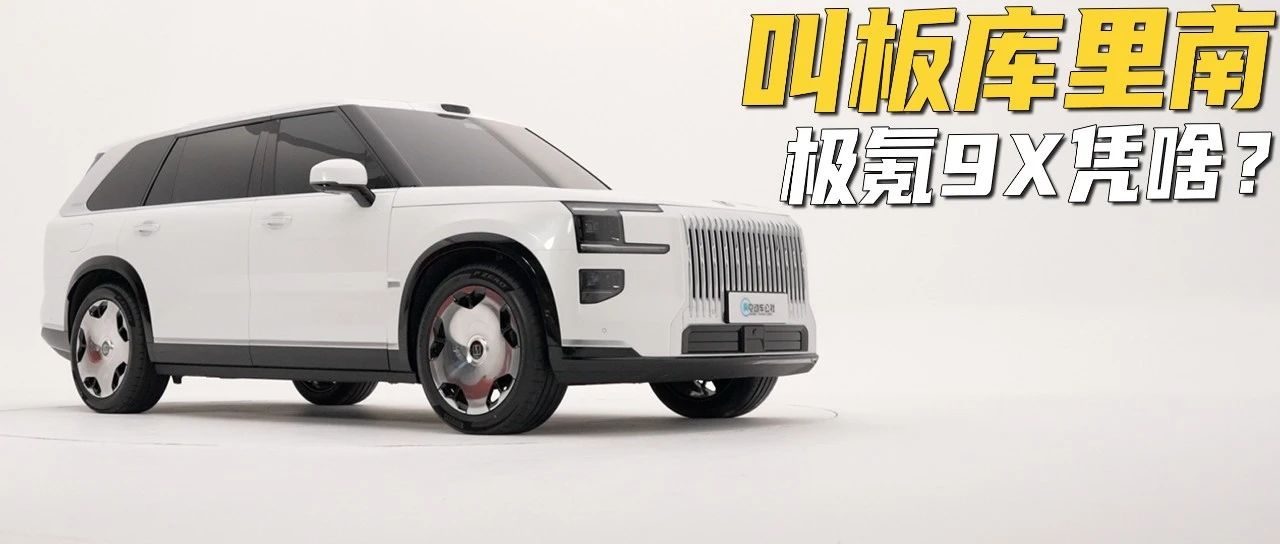
Group 1 - The automotive industry is experiencing a surge in the launch of large three-row SUVs in the second half of the year, with notable models including the Leidao L90, NIO ES8, and the newly pre-sold Geely Galaxy M9, among others [1] - Upcoming models such as the Zeekr 9X, Zhiji LS9, Chery Fengyun T11, and Jietu Zongheng G700 are all around 5.2 meters in length, emphasizing spaciousness as a competitive feature [1] - These vehicles are equipped with advanced technologies, exemplified by the Zeekr 9X, which features a 48V active stabilizer, the world's first five-laser radar-assisted driving, hybrid megawatt electric drive, and 6C ultra-fast charging battery [2] Group 2 - The performance of the new flagship model from Zeekr is under scrutiny, particularly in a competitive market filled with various alternatives [4] - The introduction of cutting-edge technology in these vehicles aims to challenge established luxury models like the Cullinan [5]
征服纽北,登陆GT:小米汽车扛起反内卷大旗
Xin Lang Cai Jing· 2025-06-14 02:42
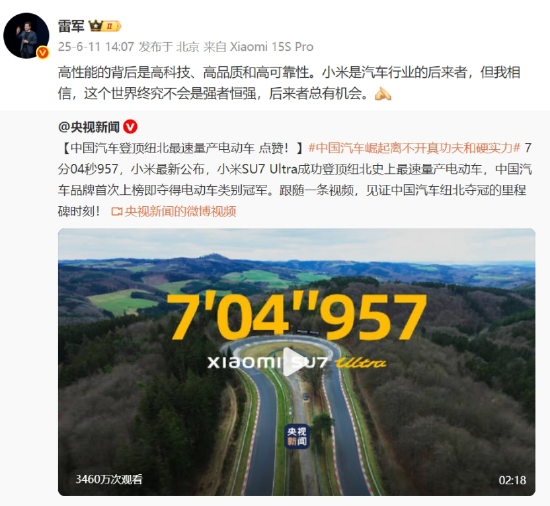
Core Viewpoint - Xiaomi's SU7 Ultra has set a new record for the fastest production electric vehicle at the Nürburgring, showcasing the technological prowess of the Chinese automotive industry and marking a shift in the global automotive landscape [4][14]. Group 1: Technological Achievements - The Xiaomi SU7 Ultra production version achieved a Nürburgring lap time of 7 minutes and 4.957 seconds, establishing it as the fastest production electric vehicle globally [4][14]. - Eight months prior, the prototype version of the SU7 Ultra recorded a time of 6 minutes and 46.874 seconds, defeating the Porsche Taycan and earning the title of the fastest four-door car at Nürburgring [7]. - The Nürburgring is recognized as a rigorous test for automotive performance, traditionally dominated by European manufacturers like Porsche and Tesla, but Xiaomi has successfully demonstrated its technical capabilities [7][14]. Group 2: Market Positioning - Xiaomi has maintained stable pricing for its vehicles, opting to compete on technology and user experience rather than engaging in price wars, which are prevalent in the Chinese automotive market [8][14]. - The company is positioning itself as a leader in the transition from a price-driven market to one focused on technological advancement and quality [14]. Group 3: Cultural Impact - The inclusion of the Xiaomi SU7 Ultra in the globally renowned racing game "GT7" marks a significant milestone, as it is the first Chinese model to be featured in the game's 28-year history, indicating a breakthrough in automotive culture [11][12]. - The collaboration with "GT7" was initiated by the game's developers, highlighting the recognition of Xiaomi's technological achievements and its representation of Chinese automotive culture [12]. Group 4: Industry Outlook - China is on the verge of becoming a global leader in the automotive industry, with projections indicating that the annual production and sales of new energy vehicles will exceed 12.88 million units in 2024, maintaining its position as the world's largest market for new energy vehicles for ten consecutive years [13]. - To transition from a major automotive nation to a strong one, Chinese automakers must enhance their technological capabilities and brand influence, moving beyond price competition [13][14].