
煤炭板块投资

Search documents
煤炭板块迎来大反转,煤炭ETF(515220)大涨超7%
Mei Ri Jing Ji Xin Wen· 2026-02-04 03:42
Core Viewpoint - The coal sector experienced a significant rebound on February 4, with the coal ETF (515220) rising over 7% [1] Group 1: Industry Outlook - According to GF Securities, the growth rate of coal supply is expected to decline significantly by 2026 compared to previous periods, while demand is anticipated to be constrained in 2025, indicating substantial improvement potential for 2026 [1] - It is projected that the central price of coal will steadily recover, leading to improved industry profit expectations and highlighting the valuation and dividend yield advantages of the sector [1] Group 2: ETF and Dividend Yield - The coal ETF (515220) has a scale exceeding 9 billion yuan, tracking the CSI Coal Index (399998) [1] - The coal sector's dividend yield is notably high, with the tracked index showing a dividend yield of over 6% for the 12 months ending in 2025, making it an attractive investment in the context of declining risk-free interest rates [1]
重视煤炭板块年初红利投资机会
2025-12-22 15:47
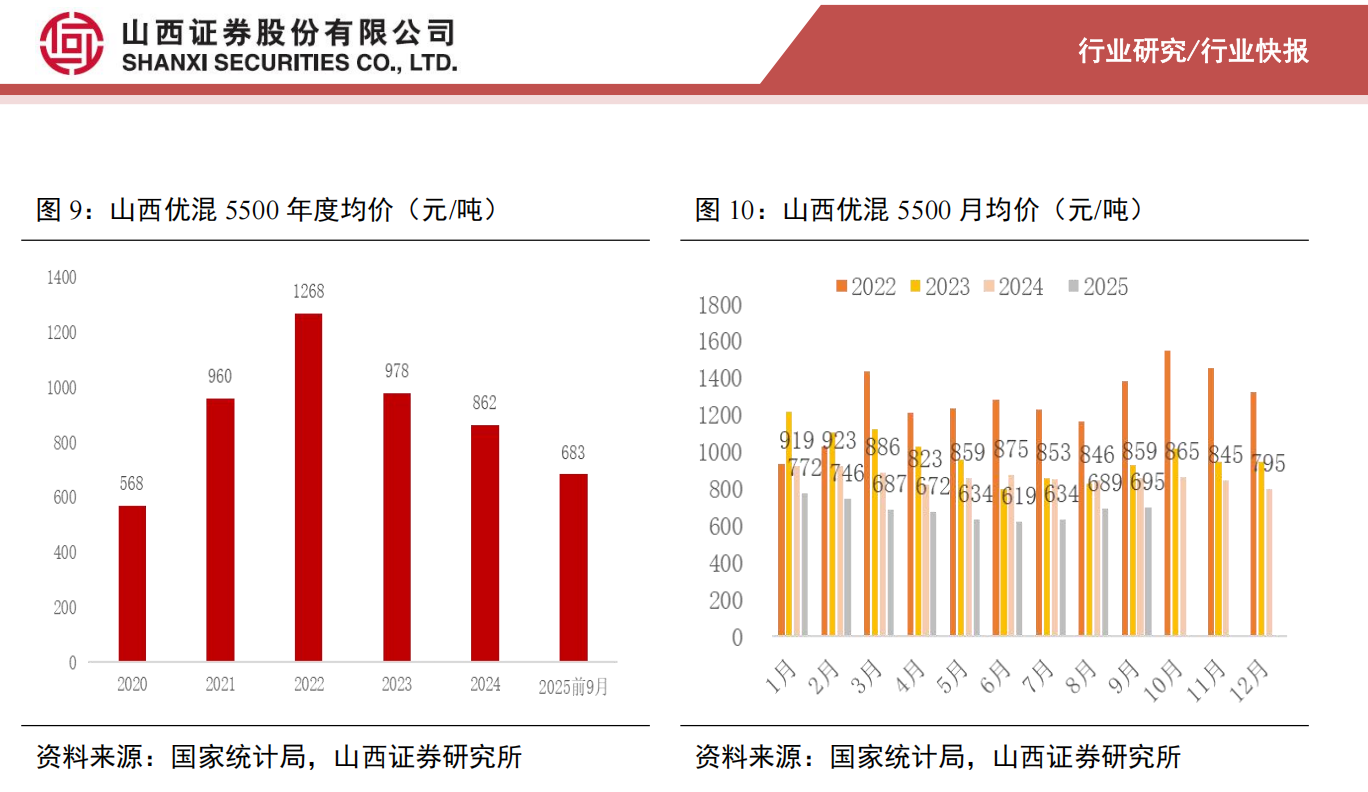
Summary of Coal Industry Conference Call Industry Overview - The conference call focuses on the coal industry, specifically the dynamics of thermal coal prices and market conditions in China [1][2][3]. Key Points and Arguments Price Trends - As of December 19, the Qinhuangdao thermal coal price dropped significantly from around 800 RMB to 703 RMB, a decline exceeding 100 RMB within the month, nearly erasing gains since October [2]. - The current price is close to the October 9 level of 699 RMB and only about 100 RMB above the lowest point of 609 RMB projected for mid-2025 [2]. Supply Factors - Supply is expected to remain tight due to several factors: - Year-end production cuts as coal mines complete their annual production plans [4]. - The re-emphasis on anti-competition policies by the central government, leading to cautious supply from production areas [4]. - Indonesia's implementation of a 1% to 5% export tax starting January 1, 2026, which will increase import costs and reduce coal imports, thereby supporting domestic supply [4]. Demand Factors - Demand is anticipated to improve marginally due to: - The commencement of long-term contracts in 2026, which will stimulate downstream transportation demand [5]. - The approaching Lunar New Year, prompting increased inventory replenishment by power plants and non-power enterprises [5]. - Seasonal increases in daily consumption, with current daily consumption at 5.8 million tons, compared to a historical average of 6.3 million tons for late December to early January, indicating significant room for improvement [5]. Investment Recommendations - The current market conditions are deemed suitable for investing in the coal sector, with specific recommendations for various types of stocks: 1. **Balanced Stocks**: Yanzhou Coal Mining (A and H shares), China Power Investment Corporation (A shares), and Power Development (Hong Kong stocks) are expected to benefit from a projected price recovery to around 750 RMB, a 10% year-on-year increase [6]. 2. **Stable Dividend Stocks**: China Coal (especially Hong Kong shares), Shaanxi Coal, and Shenhua Energy are highlighted for their safety margins and potential for dividends, with China Coal's Hong Kong shares valued at less than 9 times earnings [6]. 3. **Aggressive Stocks**: Companies like Huayang and Pingmei in the thermal coal sector, as well as Lu'an, Pingmei, and Huai Mining in the metallurgical coal sector, are positioned to benefit from winter storage demand and supply reductions [6]. Overall Recommendation - The thermal coal sector is recommended for investment due to the high certainty of price increases in the coming year, making it a valuable opportunity for investors [7].
如何看待焦煤期货大跌原因及持续性?
2025-11-25 01:19
Summary of Conference Call on Coking Coal Market Dynamics Industry Overview - The focus of the conference call is on the coking coal market, particularly in relation to supply and demand dynamics influenced by external factors such as Mongolian coal exports and domestic production expectations [1][2]. Key Points and Arguments Supply Dynamics - Increased coal throughput from Mongolia and enhanced domestic production expectations are leading to marginal easing pressures on the supply side [1]. - The inventory at Ganqimaodu Port has surpassed 2.8 million tons, with Mongolia planning to significantly increase coal exports to China to 100 million tons, up from less than 80 million tons last year, indicating a potential growth of over 20% [2]. - The National Development and Reform Commission's meeting on energy supply for the 2025-2026 heating season has raised concerns about production control relaxation, which could lead to increased supply [2][3]. Demand Dynamics - Steel mill profitability has deteriorated, leading to increased expectations of production cuts, which in turn reduces the willingness to actively replenish coking coal inventories [1][2]. - Despite iron output remaining relatively high, there is a downward trend, with a week-on-week decrease of approximately 0.3% [2][3]. - The average cost of long-process steelmaking has dropped significantly, with margins nearing -170 yuan/ton, a decline of about 140 yuan/ton since late September [3]. Price Trends - Coking coal prices at Jingtang Port have decreased by 80 yuan to 1,780 yuan/ton, primarily due to supply disruptions [4]. - The short-term price of thermal coal remains stable at 834 yuan/ton, with power plant inventory reaching 135 million tons, close to last year's peak [4]. - The overall expectation for coking coal prices in Q4 is a stable and oscillating trend, contingent on steel mill profitability recovery and tight supply conditions [4][5]. Additional Insights - The focus of supply guarantee meetings has primarily been on thermal coal, with limited impact on coking coal [1][3]. - The current import dependency for coking coal is approximately 20%, limiting the contribution of Mongolian coal increases [3]. - The strict safety regulations in the coal mining sector have kept coal mine and port inventories at historical lows, providing solid support for price floors [4]. Investment Recommendations - The coal sector is viewed positively due to short-term price certainty and mid-cycle reversal trends [5]. - Recommended stocks include low-valuation leaders like China Coal Energy, expected to achieve 17 billion yuan in earnings this year, with A-share valuations at 10-11 times and Hong Kong shares at around 8 times [5]. - Other notable companies include Shaanxi Coal and Shenhua, which are considered dividend leaders with a yield of approximately 4.7%-5% based on current prices and last year's dividend ratios [5]. - For growth-oriented investments, companies like Jinkong and Huayang are prioritized, with at least 30% volume growth potential [5]. This summary encapsulates the critical insights from the conference call regarding the coking coal market, highlighting supply and demand factors, price trends, and investment opportunities.
山西证券:看好四季度煤炭板块投资机会 26年业绩仍具备较大修复空间
智通财经网· 2025-11-18 06:31
Core Viewpoint - Shanxi Securities is optimistic about investment opportunities in the coal sector for Q4, highlighting that coal price support is expected due to limited supply growth and increased demand during the winter peak season [1] Supply and Demand Analysis - Supply: From January to October 2025, cumulative raw coal production reached 3.973 billion tons, a year-on-year increase of 1.5%, but the growth rate is declining. In October alone, production was 407 million tons, down 2.3% year-on-year and 1.16% month-on-month [1] - Demand: The overall terminal demand has been declining, but thermal power demand has increased. Fixed asset investment from January to October 2025 fell by 1.7%, with manufacturing investment up by 2.7%, infrastructure investment down by 0.1%, and real estate investment down by 14.7%. Thermal power growth was -0.4%, while coke and pig iron saw growth rates of 3.3% and -1.8%, respectively [1] Import Trends - In October, coal imports decreased month-on-month, continuing a contraction trend for the year. Cumulative imports from January to October 2025 totaled 388 million tons, a year-on-year decrease of 11.0%. October's imports were 41.74 million tons, down 9.76% year-on-year and 9.27% month-on-month [2] Price Movements - Coal prices saw an unexpected increase in October. Despite adjustments in average prices for various coal types since the beginning of 2025, October showed a divergence in price increases, with thermal coal rising more than coking coal and coke [2] Market Dynamics - Post-holiday coal prices surged unexpectedly due to supply contraction expectations driven by "anti-involution" policies, adverse weather, and maintenance on key transport lines. Increased purchasing activity from downstream power plants and rising electricity demand contributed to this price acceleration [3] Policy Considerations - If coal prices rise significantly in the short term, it may attract renewed policy attention. The "anti-involution" policies aim to ensure reasonable profit margins across the supply chain, and any sustained price increases beyond 800 yuan per ton could lead to regulatory responses, including production adjustments and supply meetings [4]

供应受限煤价上行,全市场唯一煤炭ETF(515220)涨超2%,规模超130亿元
Mei Ri Jing Ji Xin Wen· 2025-11-03 03:39
Group 1 - The core factor driving the upward trend in the coal market is the domestic supply constraint, with coal production declining year-on-year for three consecutive months from July to September following the energy bureau's inspection of overproduction policies [1] - The strict implementation of ecological and environmental protection measures in Inner Mongolia, as a result of the central government's second ecological inspection, has caused disruptions in open-pit mining operations [1] - The upcoming safety production assessments by 22 central inspection teams across 31 provinces and regions in November may further impact coal production due to heightened regulatory scrutiny [1] Group 2 - The coal ETF (515220), which tracks the China Securities Coal Index (399998), has a scale exceeding 13 billion yuan, and the coal sector offers a high dividend yield, with over 5.3% yield in the past 12 months as of September 30 [1] - In the context of declining risk-free interest rates, the investment value of the coal ETF (515220) is highlighted, suggesting a strategy of gradually accumulating positions to capitalize on investment opportunities in the coal sector [1]
山西证券:看好四季度煤炭板块投资机会 煤炭弹性品种排序靠前
智通财经网· 2025-10-24 03:58
Group 1 - The core viewpoint is that Shanxi Securities predicts that the performance in Q4 may exceed that of Q3, indicating that the coal sector has investment value due to expected demand recovery and supportive pricing [1] - During the peak summer period, coal prices have risen unexpectedly, but the long-term contracts' price discrepancies have been resolved, leading to a continued recovery in sales expected until Q4 [1] - The overall valuation of the coal sector is currently low, and with a shift in market style, there is potential for a rebound in coal prices, suggesting that investors should consider increasing their positions in this sector [1] Group 2 - The trend of shrinking import coal volume continues to slow down, with a cumulative import coal volume from January to September showing a decrease of 11.1%, although the negative growth rate is marginally easing [1] - In September, the import coal price was $68 per ton, maintaining a downward trend year-on-year, but showing a month-on-month increase of $2.05 [1] - Domestic coal prices experienced fluctuations in September, with a slight increase in domestic raw coal production, but the domestic supply gap still supports the demand for imported coal [2] Group 3 - The price gap between domestic and imported coal is expected to continue to widen, driven by domestic demand influencing overseas prices, with most coal types showing a month-on-month increase in September [3] - The "anti-involution" policies are contributing to a rise in domestic coal prices in October, exceeding market expectations and the increase in imported coal prices, which may further boost import volumes [3]
煤炭ETF涨幅居前,机构看好板块Q4投资机会丨ETF基金日报
2 1 Shi Ji Jing Ji Bao Dao· 2025-10-24 03:24
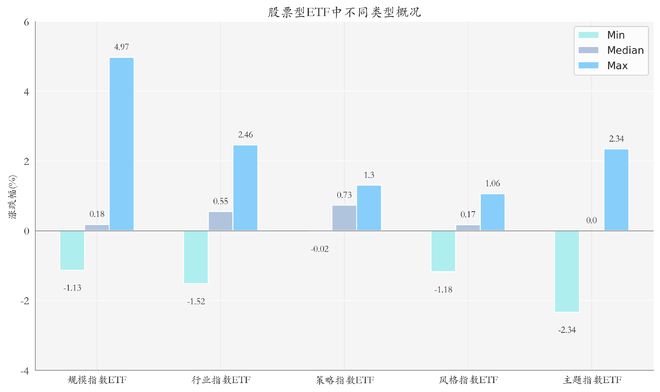
Market Overview - The Shanghai Composite Index rose by 0.22% to close at 3922.41 points, with a daily high of 3926.22 points [1] - The Shenzhen Component Index also increased by 0.22%, closing at 13025.45 points, reaching a high of 13042.34 points [1] - The ChiNext Index saw a slight increase of 0.09%, closing at 3062.16 points, with a peak of 3066.46 points [1] ETF Market Performance - The median return for stock ETFs was 0.21%, with the highest return from the ICBC Credit Suisse CSI 2000 ETF at 4.97% [2][4] - The top-performing industry ETF was the China Taiyuan CSI Coal ETF, yielding 2.46% [2][4] - The top strategy ETF was the E Fund CSI Dividend Value ETF, with a return of 1.3% [2] - The top thematic ETF was the Penghua CSI Subdivision Chemical Industry Theme ETF, returning 2.34% [2] ETF Fund Flow - The top three ETFs by fund inflow were: - Huaxia SSE STAR 50 ETF with an inflow of 551 million yuan [6] - Harvest SSE STAR Chip ETF with an inflow of 465 million yuan [6] - Huabao CSI Bank ETF with an inflow of 397 million yuan [6] - The largest outflows were from: - Guotai CSI Coal ETF with an outflow of 601 million yuan [7] - Southern CSI 500 ETF with an outflow of 565 million yuan [7] - Huatai SSE Dividend ETF with an outflow of 391 million yuan [7] Financing and Margin Trading - The highest financing buy amounts were for: - Huaxia SSE STAR 50 ETF at 512 million yuan [8] - Guotai CSI All-Index Securities Company ETF at 504 million yuan [8] - E Fund ChiNext ETF at 235 million yuan [8] - The highest margin sell amounts were for: - Southern CSI 500 ETF at 105 million yuan [9] - Southern CSI 1000 ETF at 61.64 million yuan [9] - Huatai Baichuan SSE 300 ETF at 30.58 million yuan [9] Industry Insights - Huayuan Securities suggests that the rebound in coal prices is a key positive factor for coal companies' Q3 performance [10] - Shanxi Securities is optimistic about investment opportunities in the coal sector for Q4, expecting better performance compared to Q3 [11] - The coal sector is anticipated to have a recovery in average prices due to seasonal demand and limited supply increases [11]

煤炭大涨!全市场唯一煤炭ETF(515220)领涨两市超2.6%,规模超135亿元
Mei Ri Jing Ji Xin Wen· 2025-10-23 07:39
Core Viewpoint - Current prices of thermal coal and coking coal are at historical lows, providing room for a rebound due to supply-side policies and seasonal demand recovery [1] Group 1: Market Conditions - Supply-side "overproduction checks" are leading to reduced output, while demand is expected to improve during the "golden September and silver October" peak season for non-electric coal [1] - The fundamental supply-demand dynamics for both types of coal are expected to continue improving, indicating potential upward price elasticity [1] Group 2: Price Elasticity - Thermal coal benefits from long-term contract mechanisms and the logic of profit-sharing between coal and power companies [1] - Coking coal, being more market-driven, is more sensitive to supply-demand changes and may exhibit greater price elasticity [1] Group 3: Investment Opportunities - The only coal ETF in the market, Coal ETF (515220), tracks the CSI Coal Index (399998) and has a scale exceeding 13.5 billion yuan [1] - The coal sector offers a high dividend yield, with over 5.3% yield in the past 12 months as of September 30, making it attractive in a declining risk-free interest rate environment [1] - Investors are encouraged to consider gradual accumulation of Coal ETF (515220) to seize investment opportunities in the coal sector [1]
山西证券:煤价平稳,看好板块四季度投资机会
Xin Lang Cai Jing· 2025-10-22 10:22
Core Viewpoint - The coal sector is expected to have investment opportunities in the fourth quarter, with performance likely to improve compared to the third quarter, supported by stable coal prices and low overall sector valuations [1][7]. Supply - From January to September 2025, the cumulative output of raw coal reached 3.57 billion tons, a year-on-year increase of 2.0%, but the growth rate is declining [7]. - In September 2025, the output was 412 million tons, a year-on-year decrease of 1.8% but a month-on-month increase of 5.38% [7]. Demand - The terminal demand from January to September 2025 was supported by manufacturing and infrastructure, with fixed asset investment down 0.5% year-on-year [7]. - Manufacturing investment increased by 4.0%, while infrastructure investment rose by 1.1%, and real estate investment fell by 13.9% [7]. - Cumulative growth rates for various sectors from January to September 2025 include: thermal power at -1.2%, coke at 3.5%, pig iron at -1.1%, and cement at -5.2% [7]. Import - Coal imports in September showed a month-on-month increase, but the cumulative import volume from January to September 2025 was 346 million tons, a year-on-year decrease of 11.1% [7]. - In September 2025, imports reached 46 million tons, a year-on-year decrease of 3.34% but a month-on-month increase of 7.64% [7]. Price - In September 2025, coal prices showed a stable upward trend, while coke prices slightly declined [8]. - The average prices for various coal types in September 2025 indicated a mixed performance, with the following month-on-month increases: thermal coal > coking coal > coke [8].
机构:看好四季度煤炭板块投资机会
Zheng Quan Shi Bao Wang· 2025-10-22 08:53
Core Viewpoint - The coal market is showing signs of recovery with potential price increases for both thermal and coking coal due to improved supply-demand dynamics and seasonal demand expectations [1][2] Group 1: Price Trends - The Qinhuangdao thermal coal price index reported at 684 RMB/ton, an increase of 4 RMB/ton week-on-week [1] - Current thermal and coking coal prices are at historical lows, providing room for a rebound [1] Group 2: Supply and Demand Dynamics - Supply-side policies aimed at reducing overproduction are expected to lead to a contraction in output [1] - The demand side is anticipated to improve due to seasonal factors, particularly the "golden September and silver October" period, which typically sees increased non-electric coal demand [1] - The overall coal supply is expected to have limited growth in the fourth quarter, supporting coal prices [2] Group 3: Investment Opportunities - The coal sector is viewed positively for the fourth quarter, with expectations of better performance compared to the third quarter [2] - The sector is considered to have configuration value, with low overall valuations and potential for price recovery [2] - Recommended stocks include Jinkong Coal Industry, Shanxi Coal International, and Huayang Co., with a focus on elastic varieties [2]