
电子行业

Search documents
期货市场有色金属板块昨日有所回调
Zheng Quan Ri Bao· 2026-01-27 16:43
Core Viewpoint - The non-ferrous metal sector is experiencing a cooling trend after a strong performance, with various metals showing price declines in the futures market, although the long-term outlook remains bullish due to fundamental support factors [1][2][3] Group 1: Market Performance - On January 27, 2023, the non-ferrous metal sector saw a pullback, with copper, aluminum, lead, and nickel futures experiencing varying degrees of decline, including a 0.16% drop in copper futures and a 1.87% drop in nickel futures [1] - The non-ferrous metal index rose from 239.32 points at the beginning of the year to a peak of 268.32 points, marking a maximum increase of 12.12% [1] - Individual metals like copper futures reached a high of 105,650 yuan/ton, reflecting a year-to-date increase of 7.04% [1] Group 2: Influencing Factors - The overall strength in the non-ferrous metal sector is attributed to expectations of global liquidity and the asset allocation preference for these metals, alongside their safe-haven attributes attracting continuous capital inflow [2] - Supply constraints for metals such as copper, aluminum, and tin are contributing to the upward price momentum, with increased demand from sectors like renewable energy and artificial intelligence further supporting prices [2] - The Shanghai Futures Exchange has implemented measures to curb excessive trading activity, including adjustments to margin requirements and price limits for various metals [2] Group 3: Investment Sentiment - Despite recent price corrections, the fundamental outlook for metal prices remains positive, supported by ongoing macroeconomic liquidity and a resilient demand in sectors like renewable energy [3] - As of January 27, 2023, the capital inflow into copper, aluminum, and tin reached 67.63 billion yuan, 17.46 billion yuan, and 13.72 billion yuan respectively, indicating strong market interest [3] - The investment community shows a robust willingness to allocate funds to non-ferrous metals, reflecting a long-term positive sentiment towards the sector's cyclical recovery and structural opportunities [3]
刚刚 跳空高开 白银大涨!突然宣布:降息100个基点
Qi Huo Ri Bao· 2025-12-26 00:28
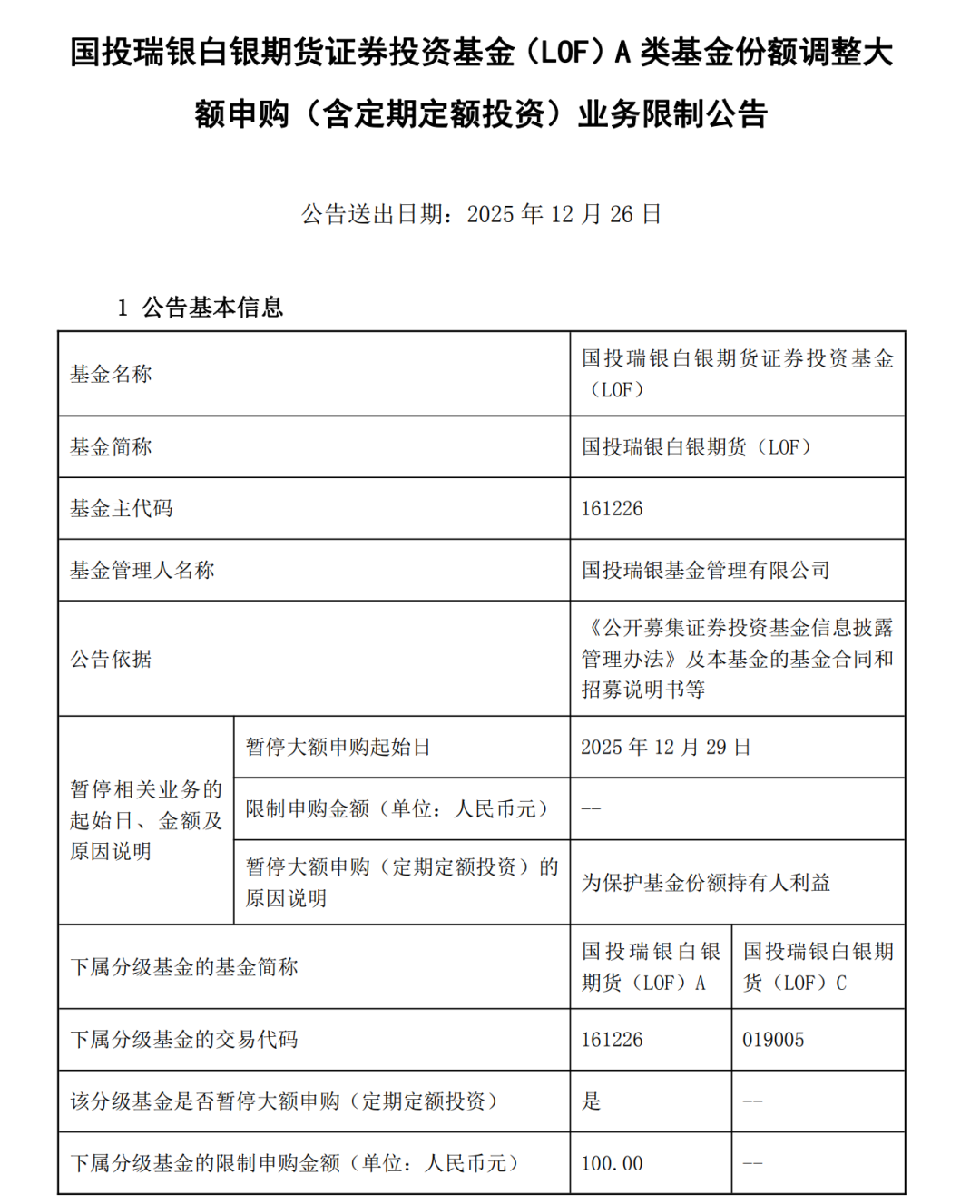
Group 1: Silver Market Insights - Silver futures in Shanghai surged over 5%, closing at 18,131 yuan per kilogram, with a year-to-date increase of nearly 150% [3] - The international spot silver price opened at a record high of 73.7 USD per ounce, indicating strong bullish sentiment in the market [3] - StoneX's senior technical strategist noted that the breakout of silver prices above resistance levels in August marked a key turning point for bullish momentum, with the RSI reaching its highest level since 2011 [3][4] Group 2: Egyptian Monetary Policy - The Central Bank of Egypt (CBE) cut the benchmark interest rate by 100 basis points to 20%, marking a total reduction of 625 basis points this year [6][7] - The inflation rate in Egypt has significantly decreased from 24% in January to 12.3% in November, providing a buffer for the CBE to initiate a monetary easing cycle [7][8] - The rate cut is expected to support GDP growth, reduce the cost of debt servicing for the national budget, and lower financing costs for businesses, thereby stimulating investment activities [9] Group 3: Silver Fund Limitations - The Guotai Asset Management announced a limit on daily subscriptions for its silver fund to 100 yuan starting December 29, down from a previous limit of 500 yuan [11][12] - The fund's market price has significantly diverged from its net asset value, with a premium reaching nearly 70%, prompting concerns about potential losses for investors [16]

冬藏蓄势等贝塔,防守亦有阿尔法
Orient Securities· 2025-12-16 03:43
Market Strategy - The market is experiencing increased adjustment pressure, with participants adopting a more conservative mindset as trading willingness decreases due to limited rebound heights and accelerated sector rotation [6] - It is suggested to wait for better layout opportunities rather than frequent trial and error in timing [6] Style Strategy - Defensive strategies are emphasized as year-end approaches, with a focus on mid-cap blue-chip stocks for medium-term timing [3] - The gold sector is expected to benefit from a decline in dollar credit, leading to potential price increases [3] Theme Strategy - The special steel industry is anticipated to undergo high-quality development due to expected cost declines and new import-export management regulations [4] - The implementation of export license management for certain steel products is expected to optimize the export structure and enhance domestic profitability [6] Investment Opportunities - Investment targets include Chifeng Gold (600988, Buy) and Nanjing Steel (600282, Buy) as they are positioned to benefit from the current market dynamics [6]
金禾实业(002597.SZ):年产8万吨电子级双氧水项目产品已通过国内头部光伏及显示面客户工艺验证,实现批量供货
Ge Long Hui· 2025-09-26 07:18
Core Viewpoint - The company has successfully validated its 80,000-ton electronic-grade hydrogen peroxide project with leading domestic clients in the photovoltaic and display sectors, achieving bulk supply [1] Group 1: Product Development - The electronic-grade hydrogen peroxide project has passed process validation with top domestic clients [1] - The company is conducting joint testing with leading clients in other sectors [1] Group 2: Customer Expansion - The company has leveraged its geographical advantage in the Yangtze River Delta to cover the new energy and electronics industries within a 200-500 kilometer radius [1] - Monthly shipment volumes are gradually increasing on a month-over-month basis [1] - The company is accelerating the integration into the supply chain of major domestic clients through a dual certification model of "technology + supply chain" [1]

AI和电子行业将对锡需求产生决定性影响
Wen Hua Cai Jing· 2025-08-07 05:55
Core Viewpoint - The global tin prices are expected to remain strong due to reduced LME inventories, bullish investor sentiment, and tight supply in the concentrate market [2][3][10]. Supply and Demand Dynamics - Despite the recovery of supply from Myanmar, liquidity remains weak [2]. - The semiconductor industry's stable demand is anticipated to continue supporting tin prices amid ongoing supply issues [3]. - Sucden Financial forecasts tin prices to range between $32,000 and $35,000 per ton in Q3 [4]. - LME three-month tin prices reported at $33,256 per ton, down 9.5% from the three-month high of $35,100 per ton on July 23 [5]. - The average tin price in July was above $35,500 per ton [6]. Supply Chain Developments - Reports indicate that mining licenses have finally been issued in Myanmar's Wa State, leading to a decline in tin prices [7]. - The issuance of licenses follows a period of supply disruptions in major tin-exporting countries like the Democratic Republic of Congo and Indonesia, with expectations of stable exports from these regions [8]. - Myanmar is the third-largest tin producer globally, with estimated reserves of 700,000 tons, accounting for 15% of the world's total reserves [8]. Inventory and Market Conditions - The U.S. refined tin imports have nearly doubled compared to the same period last year [10]. - Despite early signs of supply normalization, tin inventories remain unusually tight, with LME tin stocks significantly below long-term averages [10]. - Low visible inventories combined with increasing speculative interest may keep upward price risks high for the remainder of Q3 [11]. Future Price Projections - BMI has raised its average tin price forecast for 2025 from $32,000 to $33,000 per ton [3]. - Indonesia's tin exports have shown recovery, with refined tin exports in March reaching 580 tons, a year-on-year increase of 49.8% [12]. - However, Indonesia's exports for January to May 2025 were 21,600 tons, a 110% increase year-on-year but a 10% decrease compared to the same period in 2023 [13]. - The easing of supply pressures and potential tariff headwinds are becoming key drivers for the tin market in the second half of the year [14]. Strategic Considerations - Sucden Financial notes that if physical supply tightens again or strategic demand grows faster than expected, significant price increases could occur [15]. - The global economic activity shows resilience supported by demand from the AI and electronics sectors, while low global tin inventories contribute to price volatility [16].
