
空天科技

Search documents
加快发展新质生产力要强化原始创新和颠覆性创新能力|金融与科技
清华金融评论· 2026-02-27 09:55
Core Viewpoint - Strengthening original and disruptive innovation capabilities is crucial for accelerating the development of new productive forces in China [3][6]. Group 1: Importance of Innovation - Original innovation provides unprecedented scientific principles and technological seeds, serving as the initial driving force for new productive forces [3][9]. - Disruptive innovation reconfigures resource allocation and creates new markets and models, providing differentiated new momentum for developing new productive forces [3][9]. - The formation and development of new productive forces rely on the support of original and disruptive innovation capabilities [4][5]. Group 2: Current Achievements and Challenges - Since the 18th National Congress, China has made historic achievements in scientific and technological innovation, with continuous growth in R&D investment and enhanced corporate innovation vitality [4][11]. - Despite advancements, structural shortcomings remain, including insufficient original innovation capabilities and reliance on foreign core technologies [4][11]. Group 3: Strategic Measures for Innovation Enhancement - Strengthening macro coordination and strategic guidance is essential for optimizing organized research models and paths [12]. - Leveraging the advantages of the new type of national system is key to achieving breakthroughs in critical areas and winning the battle for core technologies [13]. - Transitioning the innovation cognitive paradigm to a more holistic and systematic approach is necessary for understanding the interconnections and development laws of innovation activities [14][15]. Group 4: Reforming Evaluation and Incentive Mechanisms - Reforming the evaluation and incentive mechanisms for scientific research is crucial to support the continuous enhancement of original and disruptive innovation capabilities [16]. - Establishing a financial support system that aligns with innovation cycles and fostering a more inclusive innovation culture are essential for encouraging long-term, high-risk exploratory research [16]. Group 5: Building a Future-Oriented Talent Pool - Developing a talent pool that can lead change and define the future is vital for enhancing original and disruptive innovation capabilities [17]. - Encouraging interdisciplinary research and integrating educational systems with research practices are necessary for cultivating problem-solving skills in complex scenarios [17].


抢跑“十五五”:成都国资开年“闪击战”背后的产业野望
投中网· 2026-01-23 07:26
Core Viewpoint - Chengdu's investment strategy is characterized by rapid and precise capital deployment aimed at establishing a strong industrial foundation, particularly in high-tech sectors such as AI, aerospace, and biotechnology [3][4]. Group 1: Investment Strategy - Chengdu Science and Technology Investment Group has made significant investments in various sectors, including AI life sciences and AR technology, with over 30 billion yuan invested in more than 70 projects in 2025 alone [4][5]. - The investment approach is not random but follows a three-tier strategic screening process to ensure alignment with Chengdu's modern industrial system [6][10]. Group 2: Precision Targeting - The first tier of the screening process focuses on "track positioning," ensuring investments are made in critical areas such as aerospace and AI, with specific projects aimed at filling gaps in local capabilities [7][8]. - In the aerospace sector, investments include strategic partnerships with companies like Micro-Nano Starry Sky and Longjia Aerospace to enhance satellite manufacturing and aerospace materials [8][9]. - In AI and digital economy, investments target foundational technologies and infrastructure, such as high-speed interconnect chips and next-generation human-computer interaction hardware [8][9]. Group 3: Long-term Vision - The second tier emphasizes "phase continuity," where investments span from early-stage startups to mature companies, ensuring a comprehensive support system for the local industry [10]. - The third tier, "ecological rooting," mandates that investments must have a strong local presence, with over 80% of projects either being local firms or bringing external leaders to Chengdu [11]. Group 4: Innovation and Technology - Chengdu Science and Technology Investment Group is also focused on transforming top-tier research into local production capabilities, exemplified by projects like Beitai Zhenhuan, which aims to address industrial software challenges [12][14]. - The investment in Longjia Aerospace represents a direct application of national-level research to local industry needs, enhancing Chengdu's aerospace capabilities [13]. Group 5: Strategic Evolution - The rapid investment activity is part of a broader strategy to position Chengdu as a leading economic and technological center, with a focus on future industries such as quantum technology and 6G [15][17]. - The transition from a traditional investment institution to an ecological operator reflects a commitment to integrating capital with local industrial strategies, ensuring sustainable growth and innovation [17][18].

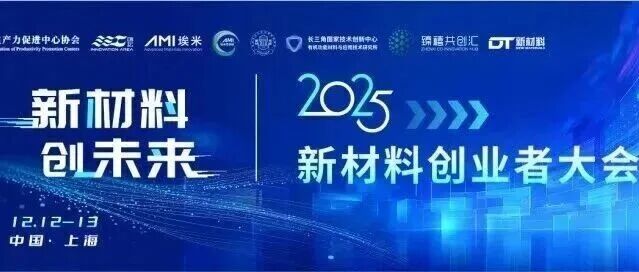
倒计时5天|材料先行,未来已来
AMI埃米空间· 2025-12-07 08:53
Group 1 - The article emphasizes that the future industry is built on emerging sectors such as artificial intelligence, new energy, aerospace technology, high-end equipment, and biotechnology, with new materials playing a crucial foundational role [2] - The "New Materials Create Future" 2025 New Materials Entrepreneurs Conference will gather leaders from academia, industry, and investment to discuss core issues related to future industries, including intelligent operation and maintenance needs for aerospace equipment, breakthroughs in thermal management for communication base stations, and innovative applications in automotive intelligence [2] - The conference aims to unveil a more intelligent, greener, and integrated future landscape through discussions on various topics, including the opportunities presented by new materials in agile robotics and the integration of artificial intelligence with low-altitude economies [2] Group 2 - The conference features multiple keynote speakers, including experts in nylon resin development, aerospace equipment control, thermal management for communication base stations, and new materials in robotics [6][11][14][18] - Notable speakers include Pan Kai from Beijing University of Chemical Technology, Wang Jiqiang from the Chinese Academy of Sciences, and Ren Hualong from Beijing Yihai Yuanshi Technology Co., Ltd., each bringing extensive experience and research in their respective fields [8][12][19] - The event will also highlight the application of new materials in the automotive sector and the development of intelligent robots, showcasing the intersection of technology and material science [21][24]
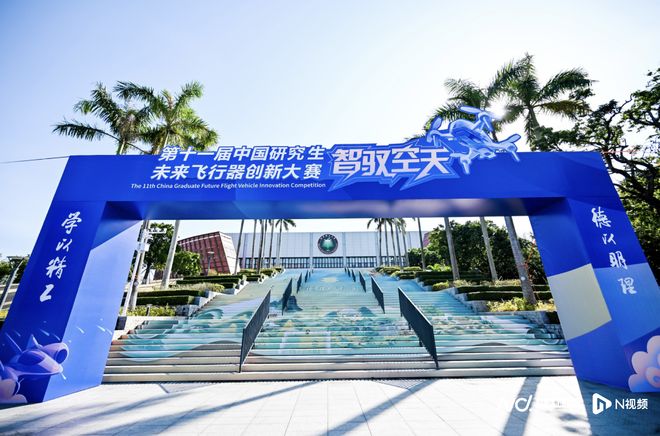
同步对接亚洲通用航展!未来飞行器大赛在北理工(珠海)开赛
Nan Fang Du Shi Bao· 2025-11-27 04:59
Group 1 - The 11th China Graduate Future Aircraft Innovation Competition is held at Beijing Institute of Technology (Zhuhai) from November 25 to 27, coinciding with the 2025 Asian General Aviation Exhibition, featuring 325 teams from 72 institutions including Tsinghua University and Beihang University [1][3] - The competition theme is "Intelligent Control of Aerospace, Building Dreams for the Future," with various tracks including regular, challenge, crossover, enterprise, and a new "Future Track" for middle and primary school students, covering cutting-edge areas like low-altitude economy and intelligent perception [1][3] - The event highlights four key aspects: leveraging the Guangdong-Hong Kong-Macao Greater Bay Area, focusing on national strategic needs like low-altitude economy and electric vertical takeoff and landing aircraft, integrating with the 2025 Asian General Aviation Exhibition, and showcasing outstanding works to facilitate the transformation from creativity to industry [3] Group 2 - Beijing Institute of Technology (Zhuhai) provides comprehensive support for the event, aiming to foster an innovative ecosystem in the aerospace field and contribute to the national aerospace industry [5] - The assistant president of Beijing Institute of Technology (Zhuhai) emphasizes that hosting the competition is a significant practice for serving national strategies, integrating regional development, and showcasing the university's strengths [6]
加快形成推动未来产业发展的社会合力
Zheng Quan Ri Bao· 2025-11-19 16:21
Core Viewpoint - Future industries are leading the technological revolution and represent a strategic high ground in global competition, encompassing areas such as artificial intelligence, quantum computing, biomanufacturing, and aerospace technology [1] Summary by Categories Technological Innovation - Technological innovation is the core engine driving the development of future industries, with breakthroughs in disruptive technologies being essential for progress. For instance, the "Nine Chapters No. 3" quantum computing prototype developed by the University of Science and Technology of China can solve Gaussian boson sampling problems one quintillion times faster than the fastest supercomputer globally, positioning China as a leader in the quantum computing sector [2] Policy Support - Policy support is crucial for the development of future industries, which are characterized by high investment, long cycles, and significant uncertainty. The Central Committee's recommendations for the 15th Five-Year Plan emphasize the need for forward-looking layouts in future industries and the promotion of sectors like quantum technology, biomanufacturing, hydrogen energy, and sixth-generation mobile communications as new economic growth points [2] Capital Empowerment - Sufficient and diverse capital supply is key to accelerating the transition of technologies from laboratories to markets, thereby forming future industries. China has established a multi-tiered capital market system, including the main board, Sci-Tech Innovation Board, Growth Enterprise Market, New Third Board, and regional equity markets, enhancing the capital market's ability to support technological innovation and high-level self-reliance [2] Talent Development - Talent cultivation is a lasting driving force for future industries, as competition fundamentally revolves around high-end talent. There is a growing need for interdisciplinary talent who understand both fundamental research and industrial applications. Cities like Shanghai and Guangzhou are implementing talent introduction policies to support core R&D personnel in future industries, with financial incentives of up to 500,000 yuan [3] Systematic Integration - The development of future industries is not merely a combination of the four core elements but requires a collaborative and integrated approach. For example, technological innovation provides value targets for capital empowerment, while policy support and talent development facilitate continuous breakthroughs in technological innovation [3]
推动高新区向“高”向“新”发展——2025火炬论坛观察
Xin Hua Wang· 2025-11-08 03:43
Core Viewpoint - The article discusses the development of high-tech zones in China, emphasizing their role as innovation hubs and the need for high-quality development in the context of the 2025 Torch Forum held in Xiong'an New Area, Hebei [1] Group 1: Innovation and Technology Supply - National high-tech zones are critical for industrial innovation, housing 70% of national manufacturing innovation centers and 80% of key laboratories, with companies contributing about 50% of national R&D funding and patents by the end of 2024 [2] - The changing environment during the 14th Five-Year Plan period necessitates a focus on high-level technological self-reliance and new industrialization, with a pressing need for collaboration among enterprises within high-tech zones [2] Group 2: Competitive High-Tech Industry Clusters - Development of industry clusters is vital for stabilizing and enhancing the industrial chain, with examples like Chengdu and Suzhou high-tech zones focusing on leading industries such as electronic information and biomedicine [3] - The Ministry of Industry and Information Technology aims to cultivate new trillion-yuan industry tracks by 2027, focusing on advanced technologies like AI, biomedicine, and low-carbon energy [3] Group 3: Technology Service Industry Development - The technology service industry is essential for efficient conversion of scientific achievements, providing services like R&D and consulting to support deep integration of technological and industrial innovation [4][5] - A comprehensive management service platform for national high-tech zones is being developed to enhance resource sharing and improve the efficiency of technology transfer [6] Group 4: Future Outlook and Strategic Initiatives - The Ministry of Industry and Information Technology plans to streamline technology transfer channels, foster quality technology service institutions, and create a favorable environment for industrial development during the 14th Five-Year Plan [6]
广东发布招商地图,为全球投资者提供落地导航图与要素保障资源图
2 1 Shi Ji Jing Ji Bao Dao· 2025-11-03 14:59
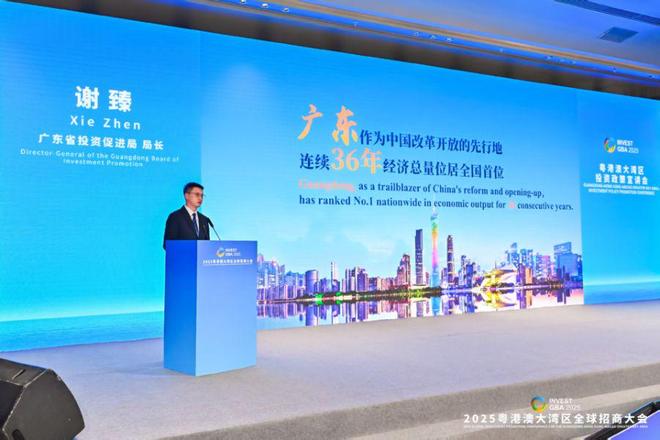
Core Insights - Guangdong Province officially released the "Guangdong Industrial Investment Map" at the 2025 Guangdong-Hong Kong-Macao Greater Bay Area Global Investment Conference, outlining the "20+7" industrial cluster ecosystem and focusing on eight key investment directions for investors [2][3] Group 1: Investment Opportunities - The map highlights significant opportunities and market potential in eight key sectors, including artificial intelligence, robotics, and integrated circuits [2] - In the aerospace technology sector, Guangdong accounts for 16.13% of the national commercial aerospace industry resources, ranking first in the country, with leading companies such as China Science and Technology Aerospace and Star River Power [2] - Guangdong has established the first cross-sea and cross-city electric vertical take-off and landing aviation route in the low-altitude economy sector [2] Group 2: Industrial Development Strategies - The "Industrial Chain Map + Investment Route Map" model is innovatively used in the investment map to clarify targets for supplementing, strengthening, and extending industrial chains [2] - In the integrated circuit sector, Guangdong aims to build the "third pole of China's integrated circuits," focusing on enhancing the capabilities across the entire industry chain, including chip design, manufacturing, and testing [2] - The biopharmaceutical sector in Guangdong has maintained the largest medical device industry scale in the country for several consecutive years, leveraging the "Hong Kong-Macao Drug and Device Pass" policy to facilitate the rapid entry of international innovative drugs into the mainland [2] Group 3: Resource Advantages - The investment map comprehensively summarizes Guangdong's resource advantages, including talent support through the "Million Talents Gathering in South Guangdong" initiative [3] - The provincial industrial investment fund exceeds one trillion yuan, offering loan interest subsidies of up to 20 million yuan [3] - The map details the prices of industrial water, electricity, and gas across various regions to help reduce investment costs [3] Group 4: Economic Context - Guangdong has maintained the highest economic total in the country for 36 consecutive years and possesses the most complete manufacturing system globally, with all 31 major manufacturing categories represented [3] - The province has formed nine trillion-yuan industrial clusters and has ranked first in regional innovation capability for eight consecutive years [3] - With a solid foundation in manufacturing, Guangdong is opening up limitless business opportunities for global investors [3]
美迪凯(688079.SH):已有量产的精密光学产品应用于无人机领域
Ge Long Hui· 2025-09-24 07:47
Core Viewpoint - The company is actively monitoring the development trends in emerging industries, including aerospace technology, and is making corresponding technological preparations and product developments [1] Group 1: Company Developments - The company has already mass-produced precision optical products for application in the drone sector [1] - Non-refrigerated infrared sensor chips and other MEMS devices are currently in the process of technology selection and development [1] Group 2: Industry Trends - The potential application of these sensors in the environmental perception systems of drones indicates a promising future for the technology [1]

美迪凯:已有量产的精密光学产品应用于无人机领域
Zheng Quan Shi Bao Wang· 2025-09-24 07:41
Core Viewpoint - The company is actively monitoring the development trends in emerging industries, including aerospace technology, and is engaged in corresponding technology reserves and product development [1] Group 1: Company Developments - The company has already mass-produced precision optical products for application in the drone sector [1] - Non-cooling infrared sensor chips and other MEMS devices are currently in the process of technology selection and development [1] Group 2: Industry Applications - The mentioned sensors have potential applications in the environmental perception systems of drones [1]
空天创业营南京站在浦口高新区启幕
Xin Hua Ri Bao· 2025-08-31 21:27
Group 1 - The second session of the Aerospace Entrepreneurship Camp commenced in Nanjing, focusing on "promoting the collective evolution of aerospace technology creators" with nearly 150 industry mentors, experts, and entrepreneurs participating [1] - The training program invited 30 senior industry mentors to provide customized training for the executive teams of 52 participating companies, emphasizing the core theme of "management synergy" [1] - The training aims to enhance the comprehensive capabilities of entrepreneurs and business leaders in the aerospace sector by optimizing management collaboration, achieving precise resource allocation, and maximizing team efficiency [1] Group 2 - Nanjing Pukou District has established itself as a core area for the national first batch and the only provincial civil unmanned aerial vehicle testing zone, forming a new landscape for low-altitude economic development [2] - Collaborative efforts have led to the establishment of the Jiangsu Provincial Civil Unmanned Aerial Vehicle System Inspection and Testing Center and the Standardization Technical Committee, as well as the Nanjing Low-altitude Economic Industry Association [2] - The region has gathered over 50 low-altitude economic enterprises covering various fields, including low-altitude manufacturing, support, operations, and comprehensive services [2]
