竞合共生

Search documents
京东方与三星全球专利战和解 五年砸超600亿强化研发攻关
Chang Jiang Shang Bao· 2025-11-19 23:45
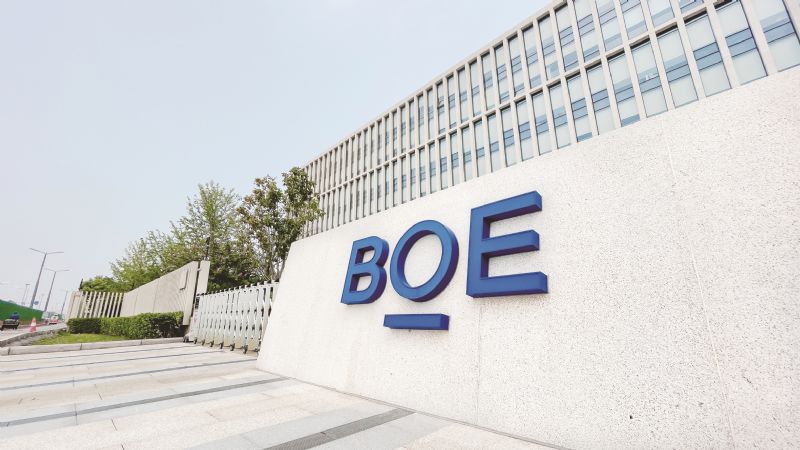
Core Viewpoint - The patent litigation between BOE Technology Group and Samsung Display, which lasted for three years, has been resolved through a settlement, with both parties submitting a joint request to the U.S. International Trade Commission (ITC) to terminate the investigation [2][3][9]. Group 1: Litigation Background - The dispute began in December 2022 when Samsung Display accused BOE of infringing on four OLED patents related to mobile device display panels [3][4]. - In May 2023, BOE initiated a series of counter-lawsuits against Samsung in China, claiming patent infringement involving OLED technology [4]. - Samsung subsequently filed additional lawsuits in the U.S., including claims of trade secret infringement [4][7]. Group 2: Settlement Details - The settlement was reached before a final court ruling, and both companies agreed to withdraw all pending lawsuits in the U.S., China, and other jurisdictions [9][10]. - Specific terms of the settlement have not been disclosed [10]. Group 3: Company Profile and R&D Investment - BOE, founded in April 1993, is a leading IoT innovation enterprise with a business structure centered around semiconductor displays and various technology solutions [2][11]. - The company has invested over 600 billion yuan in R&D from 2021 to the first three quarters of 2025, with annual R&D expenditures showing consistent growth [11][12]. - As of the end of 2024, BOE has filed over 100,000 patents, with more than 90% of new applications being invention patents [12]. Group 4: Market Position and Financial Performance - BOE is a major player in the semiconductor display market, supplying one in every four display screens for smart terminals globally [13]. - The company has maintained profitability despite low display panel prices, reporting net profits of 25.47 billion yuan in 2023 and 53.23 billion yuan in 2024, with a 39.03% year-on-year increase in the first three quarters of 2025 [13].


世界布商大会启幕 重构全球纺织价值链新格局
Zhong Guo Xin Wen Wang· 2025-11-06 14:37
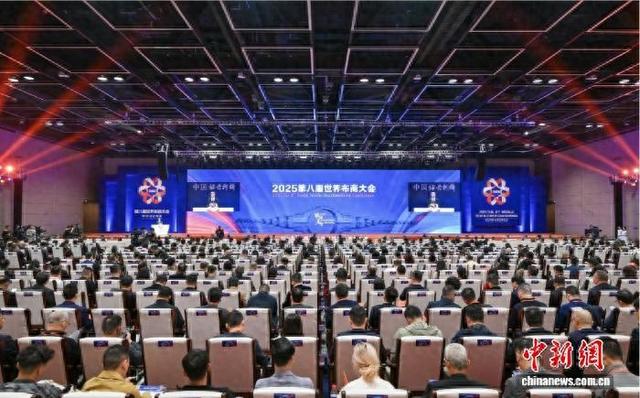
Group 1 - The eighth World Fabric Conference emphasizes the textile industry's role as a window for cooperation between Europe and China, with creativity being a catalyst for mutual progress [1] - The conference theme "International Competition and Cooperation - Restructuring the Global Textile Value Chain" explores various dimensions such as technology-driven innovation, cultural leadership, green transformation, and open collaboration [2] - The city of Keqiao is highlighted as a global textile hub, with the China Light Textile City achieving a transaction volume exceeding 400 billion yuan [2] Group 2 - The conference launched the "Cloud Chain Fabric Global" and "Digital New Silk Road" initiatives, which aim to integrate AI technology into the textile industry's vertical supply chain, enhancing management, trading, logistics, warehousing, and production [3] - A report titled "2026 World Textile Industry Trend Outlook" and the textile industry's AI model "AI Fabric 2.0" were introduced, alongside the promotion of the "Keqiao Preferred" brand [3] - Key topics for the global textile industry include development trends, value chains, innovation upgrades, and global cooperation, emphasizing that restructuring the global textile value chain requires collaborative efforts from around the world [3]
ABB机器人韩晨:本土供应商超80%,“十五五”在华大有可为
2 1 Shi Ji Jing Ji Bao Dao· 2025-11-05 12:35
Core Insights - ABB Robotics has participated in the China International Import Expo (CIIE) for the eighth consecutive year, showcasing multiple locally developed products and emphasizing the event's role as a vital bridge to the Chinese market [1][3] - The company has launched over 320 new products and signed over 110 cooperation agreements through the CIIE, enhancing communication and technology promotion with both new and existing clients [1][3] - ABB Robotics has achieved over 80% localization in its supply chain, with a focus on deepening its local presence in China, particularly through its Shanghai Pudong Super Factory and increased R&D investments in Zhuhai [1][4] Product Highlights - This year, ABB introduced several new products tailored for the Chinese market, including the next-generation IRB1200 industrial robot and the Lite+ series, designed for basic applications like picking and handling [2] - The OmniCoreTM EyeMotion software was also launched, compatible with various cameras and AI platforms, facilitating rapid deployment of visual applications [2] Industry Ecosystem - The Chinese robotics industry is characterized by a "competitive and cooperative" ecosystem, where domestic and international manufacturers drive industry advancement through intense competition [4] - ABB has established a complete value chain in China since its entry in 1994, benefiting from supportive industrial policies and a robust local ecosystem [4][6] Regional Development - The company has a significant presence in Guangdong, with a subsidiary in Zhuhai that serves the Pearl River Delta region, focusing on the home appliance and electronics sectors [6][7] - The Greater Bay Area is recognized as a leading hub for manufacturing, with many advanced applications originating from this region [8] Future Outlook - During the 14th Five-Year Plan period, ABB Robotics aims to focus on the "AI + Robotics" sector, leveraging both internal R&D and external partnerships to accelerate innovation in China [9] - The company has made strategic acquisitions and collaborations to enhance its AI capabilities, positioning itself to capitalize on unique application scenarios in the manufacturing sector [9][11] - Approximately 20% of robots produced at the Shanghai factory are exported, supporting domestic companies in their international expansion efforts [11]

先进数通:金融科技行业始终呈现出“竞合共生”的生态特征
Zheng Quan Ri Bao Wang· 2025-09-03 08:41
Group 1 - The financial technology industry is characterized by a "co-opetition" ecosystem driven by technology [1] - The IT architecture of the financial industry is a large and complex ecosystem composed of hundreds of specialized systems [1] - The company collaborates with numerous industry partners to meet the digital transformation needs of financial institutions [1] Group 2 - There are thousands of institutions in the industry, and companies form a healthy competitive landscape through differentiated positioning [1] - This competition drives technological iteration and scenario innovation [1] - The company focuses on its core advantages and deepens the integration of "technology + business" [1] Group 3 - The company aims to build a healthy development ecosystem with industry partners to create greater value for financial institutions and end users [1]

中美经贸关系稳下来、好起来,有利于两国和世界|专家热评
Di Yi Cai Jing· 2025-07-10 06:36
Group 1 - The core development in US-China economic relations is the transition from a "tariff truce" in Geneva to the establishment and implementation of the "London Framework," indicating a significant adjustment in posture between the two nations [1][2] - The "London Framework" includes key agreements such as China's approval of export licenses for controlled items and the US's cancellation of a series of restrictive measures against China [1][2] - As of July 4, US companies have been notified by the Department of Commerce that exports of EDA software, ethane, and certain aircraft engine components to China have been restored, while China is expediting the approval of export licenses for strategic resources like rare earths [1][2] Group 2 - Despite progress, structural challenges remain in US-China economic relations, particularly in areas like AI chips and quantum computing, where US restrictions are still in place [3] - The implementation of "reciprocal tariffs" by the US has not yielded benefits and has led to market turmoil, highlighting the need for continued dialogue and cooperation [3] - The US is encouraged to expand the scope of lifted restrictions and seek broader cooperation, moving beyond a zero-sum mindset to view China as an equal partner [3][4] Group 3 - The ideal future state of US-China economic relations should shift from friction and conflict to cooperation and mutual benefit, emphasizing the importance of managing competition while expanding collaboration [4] - Mechanized dialogue is essential to transform the "measures framework" into a "results list," achieving breakthroughs in tariff reductions, technological cooperation, and rule restructuring [4] - The Geneva-London negotiations mark the beginning of this transition, but further progress requires mutual actions and the accumulation of political and economic trust [4]
“茅五”再相会,谈了什么? | 锐评
Sou Hu Cai Jing· 2025-05-21 06:53
Group 1 - The meeting between Moutai and Wuliangye focused on discussing the current challenges and future development of the Chinese liquor industry, emphasizing the importance of collaboration and mutual support during the cyclical adjustments [2][3][4] - Both companies acknowledged the need for a united front to navigate the current cyclical adjustments in the liquor industry, committing to enhance their cooperative mechanisms for high-quality development [4][5] - Moutai's General Manager Wang Li highlighted the importance of a rational perspective on the current cycle, advocating for long-term collaboration and the cultivation of a healthy consumption ecosystem within the industry [5][6] Group 2 - The two companies proposed a framework for collaboration that includes building a stable development environment, fostering innovation, and promoting green development within the industry [6][7] - Moutai and Wuliangye's commitment to avoiding internal competition and fostering a cooperative development ecosystem is seen as a model for the industry, aiming to enhance market order and brand value [6][7] - Moutai's proactive engagement with other leading companies, such as BYD and Huawei, reflects a broader strategy to integrate technological innovation into the liquor industry, supporting its transformation and internationalization [7][8]



家电巨头竞争模式要变了?海信与美的罕见联手
Xin Lang Cai Jing· 2025-05-08 00:20
Group 1 - Hisense and Midea have signed a strategic cooperation agreement to collaborate in areas such as AI applications, advanced manufacturing, and smart logistics [1] - The partnership is notable as both companies are leading players in the Chinese home appliance industry, competing with brands like Gree, Haier, and TCL [1] - The collaboration is driven by the rapid development of innovative technologies, particularly AIGC, which presents new opportunities for the home appliance sector [1] Group 2 - Hisense's projected revenue for 2024 is 214.3 billion yuan, with core businesses including traditional appliances and new ventures in smart transportation and precision medicine [2] - Midea's total revenue for 2024 is expected to reach 409.08 billion yuan, with a focus on consumer electronics, HVAC, robotics, and smart supply chains [2] - The combined revenue of both companies exceeds 600 billion yuan, indicating a potential shift in the home appliance industry from competition to collaborative coexistence, which could transform the trillion-yuan market [2]