芯片制造工艺

Search documents
裁员、卖股、押注“2nm”,挽救58岁英特尔,陈立武还有子弹吗?
虎嗅APP· 2026-01-07 10:11
Core Viewpoint - Intel is undergoing significant restructuring under CEO Pat Gelsinger, focusing on cost-cutting, strategic partnerships, and technological advancements to regain competitiveness in the semiconductor industry, particularly in the AI sector [5][6][7]. Group 1: Cost-Cutting and Restructuring - Since taking office, CEO Pat Gelsinger has implemented aggressive cost-cutting measures, including laying off approximately 20,000 employees, which is over 200 per day, to streamline operations and improve efficiency [10][11]. - By the end of September 2025, Intel's workforce was reduced to 88,400 from 124,100 in December 2024, reflecting a significant downsizing effort [10]. - The company recorded over $1 billion in restructuring and severance costs in Q2 2025, with ongoing costs impacting financials [11]. - Intel's operational expenses decreased to $4.4 billion in Q3 2025, down from $5.4 billion in the same period the previous year, indicating improved financial discipline [13]. Group 2: Strategic Partnerships and Investments - Intel secured $8.9 billion in government investment, becoming a strategic asset for the U.S., which enhances its market position and access to resources [16][17]. - Notable investments include $5 billion from NVIDIA for collaboration on integrated GPU technology and $2 billion from SoftBank, which may leverage Intel's foundry services for AI infrastructure [18][19]. - As of Q3 2025, Intel's cash and short-term investments totaled $30.9 billion, providing substantial operational flexibility [19]. Group 3: Technological Advancements - Intel is focusing on the 18A process technology, which is critical for its future competitiveness, marking a significant step towards closing the gap with competitors like TSMC and Samsung [27][30]. - The 18A process is expected to support two key products: Panther Lake for consumer PCs and Clearwater Forest for data centers, both aimed at enhancing AI capabilities [35][38]. - Initial production yields for the 18A process are estimated between 55% and 65%, which is sufficient for internal use but not competitive for external orders, highlighting a critical challenge for Intel's foundry business [32][34]. Group 4: Ongoing Challenges - Despite restructuring and investment, Intel's foundry services continue to face significant losses, with Q3 2025 revenues of $4.2 billion but operating losses of $2.3 billion, indicating ongoing operational difficulties [20][23]. - The company has yet to secure major external clients for its foundry services, which is essential for achieving profitability by 2027 [23][24]. - The dual role of CEO Gelsinger as an investor raises potential conflicts of interest, complicating governance and strategic decision-making [40][41].


全球2nm芯片发布,我们与全球顶尖水平,还落后3代?
Xin Lang Cai Jing· 2025-12-29 09:39
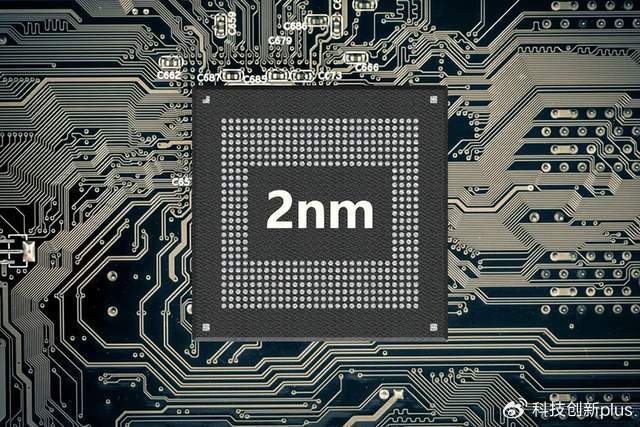
Core Insights - Samsung has unveiled the world's first 2nm chip, the Exynos 2600, utilizing its own GAAFET 2nm technology, marking a significant advancement in chip manufacturing [1][3] - The Exynos 2600 features a 10-core design with a 39% performance increase and a 16% reduction in thermal efficiency due to HPB technology [1] - The introduction of the 2nm chip indicates that global chip manufacturing has officially entered a new era, widening the technological gap with leading manufacturers [3][5] Group 1 - The Exynos 2600 is Samsung's second-generation GAA technology chip, showcasing advancements in semiconductor technology [1] - Current parameters such as transistor density remain unclear, but the chip's release signifies a leap in manufacturing capabilities [3] - The gap in chip manufacturing technology between domestic capabilities and international leaders like Samsung and TSMC has widened, with domestic technology still at an equivalent of 7nm [5] Group 2 - The transition to 2nm technology by Samsung and the impending arrival of TSMC's 2nm process highlights a significant technological leap, with domestic manufacturers lagging behind by three generations [5] - The lack of EUV lithography machines poses a significant challenge for domestic manufacturers aiming to produce chips below 7nm, as alternative methods have not been proven effective at this scale [8][10] - The necessity for domestic production of EUV lithography machines is emphasized, as reliance on foreign technology could exacerbate the existing technological gap [10]

成败在此一举:英特尔320亿美元豪赌18A工艺
Hua Er Jie Jian Wen· 2025-10-13 13:34
Core Insights - Intel has begun mass production at its new $32 billion chip factory in Arizona, aiming to regain leadership in advanced manufacturing [1][4] - The company's 18A semiconductor production technology is touted as the most advanced globally, but Intel acknowledges the need to earn customer trust [1][5] - Key customers like Apple, Nvidia, and Qualcomm will test Intel's new chips in the next 6-8 months, which will be crucial for the company's future [1][4] Investment and Financial Implications - The investment in the Arizona factory exceeds half of Intel's projected revenue for 2024, raising concerns about the valuation of its loss-making foundry business [4] - Intel's foundry division is currently losing over $10 billion annually and carries a net debt of $20 billion [1][4] - The U.S. government has converted planned subsidies into equity investments, acquiring a 10% stake in Intel, which has boosted investor confidence [5] Production and Technology Challenges - The Fab 52 facility has commenced operations, while the Fab 62 facility is still under construction, requiring significant resources [4] - Early yield issues have reportedly been resolved, and Intel plans to launch two new chips: Panther Lake for PCs and Clearwater Forest for servers [4] - Intel must demonstrate the scalability of its 18A process to secure pre-orders for its planned 14A process set for 2028 [5] Market Position and Competitive Landscape - Intel faces the challenge of competing with TSMC, which has long dominated the high-end chip foundry market [5] - The company's ability to attract customers hinges not only on technology but also on establishing trust in its execution capabilities [5]
台积电2nm泄密,日企光速解雇一人
Guan Cha Zhe Wang· 2025-08-08 06:16
Group 1 - Tokyo Electron announced the dismissal of an employee from its Taipei branch following the arrest of six individuals suspected of stealing TSMC's trade secrets [1] - TSMC confirmed the leak of trade secrets related to its 2nm process, resulting in the dismissal of multiple employees and legal actions against them [1][2] - The investigation revealed that approximately 10 individuals were involved, including a former TSMC employee who contacted R&D personnel to obtain confidential information [1] Group 2 - Three individuals from the 2nm trial production team were found to have leaked over 400 images of process integration technology to Tokyo Electron employees while working remotely [2] - TSMC maintains a zero-tolerance policy towards violations of trade secret protection and has implemented strict monitoring mechanisms to detect such breaches [1][2] - In the global foundry market, TSMC holds a dominant position with a 67.6% market share, while Samsung and SMIC follow with 7.7% and 6.0% respectively [3]

有内鬼!台积电2nm芯片工艺遭泄密
Hua Xia Shi Bao· 2025-08-07 01:26
Core Viewpoint - TSMC is facing a significant security breach involving former employees leaking sensitive information about its 2nm process technology, which has raised national security concerns in Taiwan [4][5]. Group 1: Incident Details - Multiple former TSMC employees are accused of illegally obtaining sensitive information related to the 2nm process, leading to their dismissal and legal action [4]. - The case is being investigated by Taiwan's High Prosecutors Office under the National Security Law, marking it as a major case involving chip technology [4][5]. - TSMC confirmed the incident and stated that it has taken strict measures against the involved personnel and is pursuing legal action [4]. Group 2: Technology and Market Implications - TSMC plans to begin mass production of 2nm chips by the end of this year, with major clients including Apple and Qualcomm [4][5]. - The 2nm technology is currently the most advanced semiconductor manufacturing process, with only a few companies, including TSMC, Samsung, Intel, and Japan's Rapidus, continuing its development [4][5]. - Rapidus, established by major Japanese companies, is in competition with TSMC, Samsung, and Intel, aiming to launch its 2nm process by 2025 [5]. Group 3: Potential Consequences - The leak not only involves trade secrets but could also impact Taiwan's technological advantage in the global semiconductor industry and its regional security [5]. - Rapidus has already begun testing 2nm GAA transistor prototypes, indicating its progress in the competitive landscape [5].
IBM最强芯片,剖面图曝光
半导体行业观察· 2025-07-18 00:57
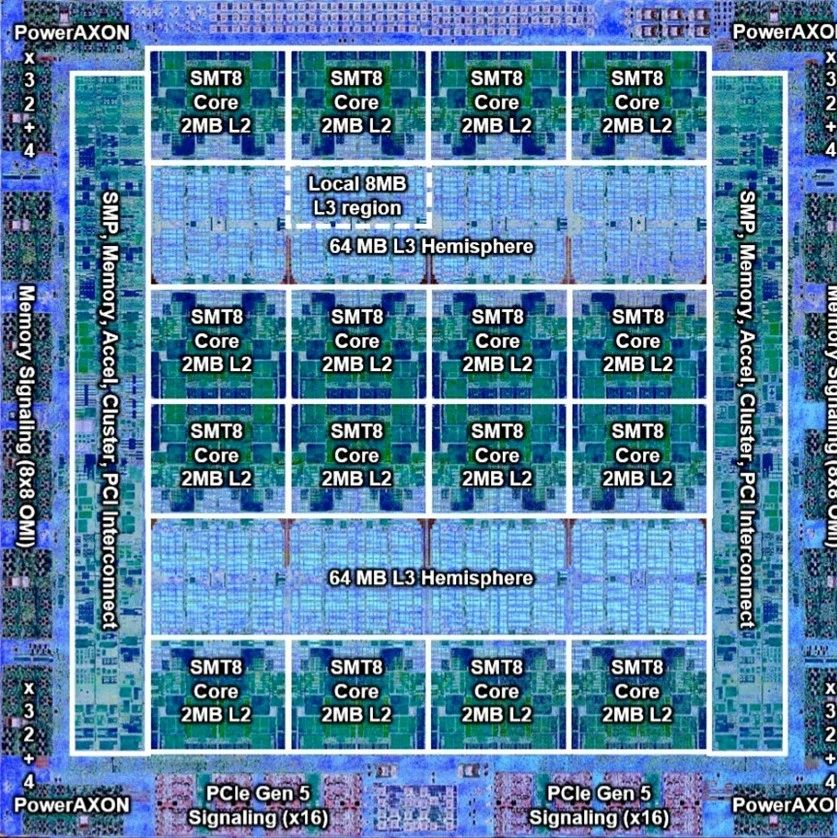
Core Insights - The article discusses the launch of IBM's Power11 processors, which are designed to support large-scale computing environments with high memory and I/O capabilities [4][10] - It highlights the evolution of IBM's Power processors, particularly the transition from Power10 to Power11, and the challenges faced during the manufacturing process [5][7] - The article emphasizes the competitive landscape in the server market, particularly against AMD and Intel, and how IBM aims to maintain its position through advanced technology [6][19] Summary by Sections Power11 Launch - Power11 processors were launched and are set to be available on July 25, featuring enhancements over the previous Power10 generation [4] - The processors are designed to handle extensive memory and I/O requirements, making them suitable for enterprise-level applications [3] Evolution of Power Processors - Power11 is a refined version of the Power10, which faced manufacturing delays due to issues with GlobalFoundries' process technology [5][6] - The transition to 7nm technology was necessitated by delays in the 10nm process, leading to a redesign of Power10 [7][8] Competitive Landscape - The article notes that AMD has gained market share due to Intel's manufacturing challenges, which parallels IBM's own struggles with Power10 [5][6] - IBM's strategy includes leveraging its long-standing expertise in chip design and manufacturing to compete effectively in the high-performance computing market [8][19] Technical Specifications - Power10 and Power11 both feature 16 cores and 18 billion transistors, with Power11 offering improved clock speeds and core utilization [10][11] - The Power11 architecture supports advanced memory configurations, including DDR5, which enhances performance and efficiency [12][20] System Architecture - The Power E1180 server, based on Power11, can support up to 256 cores and 64TB of memory, showcasing a balance between I/O and computational power [18][19] - The architecture allows for flexible memory configurations, enabling users to optimize performance based on their specific workloads [21][22]

全球裁员、高管离职、逐步关停汽车业务,英特尔陷入多事之秋
Xi Niu Cai Jing· 2025-07-08 07:09
Core Insights - Intel is facing significant challenges, including plans to lay off 15%-20% of its global workforce and specific layoffs at its Santa Clara headquarters [3][4] - The company has already undergone large-scale layoffs in May, affecting various departments, particularly engineering, and has closed its automotive chip division in Germany [3][4] - Intel's manufacturing division is expected to see up to 20% layoffs starting July 2025, and the company plans to shut down its Automotive Group, discontinuing its automotive business entirely [4] - Recent executive turnover includes the departure of several senior executives and changes in the board of directors, indicating a restructuring effort to reduce costs amid declining performance [4] - Intel's market share is being eroded by competitors like AMD and NVIDIA, with a reported net profit of only $292 million in 2023 and a net loss of $630 million in Q1 2024 [5] - Revenue declines were noted in key segments, with a 20.8% drop in the Client Computing Group and a 7.6% decrease in the Data Center and AI segment [5] - Despite these challenges, Intel retains strong R&D capabilities and brand influence in the semiconductor market, and the restructuring plan aims to lower operational costs and improve efficiency for future growth [5]
FinFET,走到尽头,新王将登基!
半导体行业观察· 2025-04-28 01:48
如果您希望可以时常见面,欢迎标星收藏哦~ 在台积电早起那的北美技术研讨会上,台积电业务发展和海外运营办公室高级副总裁兼副联 席首席运营官Kevin Zhang称其为"最后也是最好的 FinFET 节点"。台积电的战略是开发N3 工艺的多种变体,打造一个全面可定制的硅片资源。 Kevin Zhang表示:"我们的目标是将集成硅片性能打造成为一个平台。" 截至目前,N3 现有 或计划推出的版本包括N3B、N3E、N3P、N3X、N3S、N3RF、N3A和N3C。 换而言之,自英特尔在2009 年的开发者大会上推出了 22 纳米 FinFET 晶圆后,这个改变了 芯片行业的设计,从某种程度看,走到了尽头。 FinFET,英特尔掀起革命 对芯片制造行业的读者应该知道,在过去几十年里,芯片的晶体管已经从planer走向了FinFet。至 于为什么用FinFet,以及这个进步的意义,我们需要从晶体管的原理说起。 本质上,在一颗芯片中,晶体管的目标是充当一个高速电子开关。导通时,电流从晶体管的源极流 向漏极。截止时,电流停止。反型层(上图蓝线)是电流实际流动的地方。 在理想情况下,晶体管需要做三件事: 1) 开启时允许尽可 ...
英特尔芯片,又延期了?
半导体芯闻· 2025-03-05 10:25
Core Viewpoint - Intel's Panther Lake chips are likely to be delayed beyond 2025 due to slow yield improvements in the Intel 18A process, which may impact the company's revenue and profit in the second half of 2025 [1][2]. Group 1: Chip Production and Delays - Analyst Ming-Chi Kuo indicates that the production timeline for the Panther Lake (PTL) series has been pushed from early September 2025 to mid-Q4 2025, meaning devices using these chips may not be available until 2026 [1][2]. - Intel's initial production schedule communicated to partners was for the second half of 2025, but the delays could negatively affect the company's revenue, profit, and supply chain trust [2]. Group 2: Manufacturing Process Challenges - The Intel 18A manufacturing process, which utilizes RibbonFET and PowerVia technologies, has not achieved the expected yield rates, currently estimated at 20%-30%, hindering the company's ability to enter the shipping phase [2]. - Internal investigations suggest that there will be no improvement in yield rates by Q3, making it nearly impossible for Intel to achieve mass production within the anticipated timeline [2].