
行业规范发展

Search documents
莫让“流量雨”淋透未成年人权益底线
Xin Lang Cai Jing· 2026-01-24 07:16
Group 1 - The short drama industry is facing serious ethical issues, highlighted by incidents where child actors are put in dangerous situations for the sake of efficiency and cost-cutting, such as using a real baby in a rain scene instead of a prop, with the scene's payment being only 800 yuan [2][3] - The rapid production model of "filming 100 episodes in 7 days" has led to a culture where child actors, who often lack self-protection capabilities, are the most vulnerable to rights violations, with parents sometimes complicit due to economic pressures [3] - Legal frameworks like the Minor Protection Law and guidelines from the National Radio and Television Administration exist to protect child actors, but the failure of parental responsibility undermines these protections, allowing for exploitation in the industry [3][4] Group 2 - The sustainability of the short drama industry relies on content quality and value transmission rather than exploiting rights for quick profits, emphasizing the need for adherence to legal and ethical standards [4] - Regulatory bodies must enhance enforcement against non-compliant production teams, while industry associations should establish standardized contracts and accountability mechanisms to protect workers' rights [4] - Parents must uphold their guardianship responsibilities and refuse to allow their children to be treated as mere profit-generating tools, which is essential for fostering a healthy and regulated development of the short drama industry [4]


夯实规范发展根基 科技赋能拓展新局
Qi Huo Ri Bao· 2026-01-05 02:47
Core Insights - In 2025, China's futures market made significant strides towards high-quality development, characterized by an optimized market structure, improved regulatory framework, and innovative business models and technological capabilities [1] Group 1: Market Scale, Structure, and Concentration - In 2025, the futures market experienced profound changes in scale, participant structure, and industry concentration, with record-breaking trading volume and financial metrics [2] - The cumulative trading volume reached 8.117 billion contracts, and the cumulative trading value was 67.545 trillion yuan, surpassing the total for 2024 [2] - The total funds in the futures market and client equity of futures companies exceeded 2 trillion yuan, with client equity growing over 30% compared to the end of 2024 [2] - The market structure evolved towards specialization and institutionalization, with significant growth in client equity from insurance institutions, which doubled compared to the end of 2024 [2][3] Group 2: Regulatory Framework and Industry Norms - 2025 was marked as a "regulatory year" for the futures industry, with new policies enhancing the regulatory framework across various aspects, including internet marketing and risk management [4] - The China Securities Regulatory Commission introduced regulations to ensure compliance and protect client rights, emphasizing a balance between regulation and development [5] - New regulations aim to guide futures companies towards compliance and stable growth while preventing systemic risks [5][6] Group 3: Technological Empowerment and Industry Transformation - Since 2025, futures companies have been evolving their business models towards comprehensive and international services, driven by digital capabilities [7] - Technology is expected to reshape the industry's core competitiveness, facilitating scale expansion and efficiency improvements [7] - The integration of technology into trading, risk control, and management processes is anticipated to create a new paradigm of "smart futures," enhancing support for the real economy [7]
《椰子水团体标准》正式发布 行业迎来“有标可依”时代
Jin Rong Jie· 2025-12-15 03:41
Core Viewpoint - The coconut water market is experiencing a trust crisis as low-priced products raise questions about authenticity, prompting the release of a new industry standard to ensure clarity and quality in the category [1][2]. Group 1: Industry Standard - The newly released "Coconut Water" group standard defines coconut water as a product made solely from coconut fruit, distinguishing it from flavored drinks with added sugars and additives [2]. - The standard emphasizes clear labeling requirements, mandating that products must indicate whether they are reconstituted or not, and allows products meeting the standard to claim "100%" [2]. - Transparency in labeling is highlighted as a legal obligation for producers, reinforcing consumer rights to know what they are purchasing [2]. Group 2: Industry Responsibility - The release of the standard is seen as a responsibility for the future of the industry, encouraging producers to adopt and implement the guidelines throughout their production processes [3]. - Retailers and platforms are encouraged to use the standard as a criterion for product selection, promoting high-quality offerings [3]. - Consumers and media are urged to engage with the standard to help monitor and improve market conditions [3]. Group 3: Role of Leading Companies - Leading companies are crucial in translating the standard into market trust, as their adherence to the guidelines can set a precedent for the industry [4]. - The brand "Coconut Knows" emphasizes integrity and transparency, committing to honest practices and clear ingredient disclosures [5]. - The company recognizes that over 30% of coconut water consumers are mothers, highlighting the importance of maintaining trust in family health [5]. Group 4: Industry Evolution - The industry is at a pivotal point, transitioning from chaotic growth to standardized maturity, with a focus on authenticity and collaboration for sustainable development [6].
磷酸铁锂行业,推进反内卷
财联社· 2025-11-20 09:48
Core Viewpoint - The lithium iron phosphate industry in China is facing significant challenges, including continuous overall losses, disorderly competition, and low-price undercutting, which threaten the industry's survival and sustainable development [1]. Group 1 - The China Chemical and Physical Power Industry Association will issue a notice regarding the reference cost index for lithium iron phosphate and the standardization of industry development [1]. - The notice suggests that companies should use the industry average cost range disclosed by the association on November 18 as an important reference for pricing and avoid engaging in low-price dumping that exceeds cost thresholds [1]. - Starting this month, the association will regularly disclose the industry average cost range on a monthly basis to provide authoritative regulatory guidance for company pricing [1]. Group 2 - The association recommends that companies fulfill their obligation to report information, requiring them to submit accurate and complete operational data, including capacity, output, and inventory, on a monthly basis [2]. - This data will serve as an important reference for resource allocation within the industry [2].

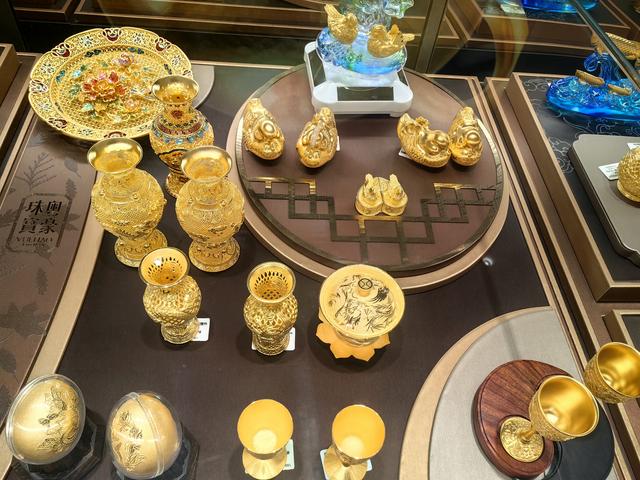
黄金税收新政“大考”,水贝市场遇冷迎行业重塑
Huan Qiu Wang· 2025-11-12 07:40
Core Insights - The gold wholesale market in Shenzhen Shui Bei is experiencing a significant downturn due to rising international gold prices and new tax regulations, leading to a sharp decline in consumer activity and transaction volumes [1][2] Market Conditions - The international gold price has increased by over 50% this year, causing consumers to hesitate in making purchases, while new tax regulations have further exacerbated the situation by increasing the effective tax burden on gold processing businesses by approximately 7% [1][2] - The price difference between Shui Bei gold jewelry and branded gold jewelry has narrowed from 230 CNY per gram to about 137 CNY per gram, eroding the competitive pricing advantage of Shui Bei [1] Pricing Dynamics - A dual pricing system has emerged in the market, with some merchants quoting prices before tax to retain customers, while compliant merchants are unable to lower prices, leading to market disorder [2] - Some upstream suppliers have halted shipments due to a lack of demand from downstream buyers, with reports indicating that certain factories have temporarily ceased operations due to poor sales and cost pressures [2] Long-term Industry Outlook - Despite the short-term challenges, the new tax regulations are expected to benefit the long-term development of the industry by promoting compliance and concentrating market share among qualified, large-scale, and brand-advantaged companies [2] - The World Gold Council suggests that rising costs may hinder demand for gold jewelry in China, but this could also drive the industry to focus more on craftsmanship and design innovation rather than price competition [4] Consumer Trends - The demand for gold bars and coins remains unaffected by the new policies, but investors may increasingly purchase through members of the Shanghai Gold Exchange [4] - The widening gap between the purchase price and repurchase price of gold jewelry may reduce the enthusiasm for recycling gold jewelry [5] - Industry leaders like Chow Tai Fook and Chao Hong Ji are responding by adjusting prices to pass on cost pressures and focusing on product design innovation and brand building to attract consumers [5] Future Strategies - The Guangdong Gold Association suggests that merchants can navigate challenges by adjusting product structures, developing lighter products, and implementing trade-in programs [5] - The World Gold Council emphasizes the importance of attracting younger consumers in a high gold price environment, with lighter and innovatively designed gold products expected to play a significant role in sales [5] Current Market Prices - As of November 11, the London gold price approached 4150 USD per ounce, while domestic brand gold jewelry prices have generally exceeded 1300 CNY per gram [5] - Analysts believe that expectations of a Federal Reserve interest rate cut are boosting demand for gold, maintaining a long-term upward trend in international gold prices [5]
细化商家资质审核剑指“幽灵外卖” 无堂食商家拟被标记
Bei Jing Shang Bao· 2025-10-17 01:28
Core Points - The new regulations aim to address food safety issues in the online food delivery sector, particularly targeting the "ghost kitchen" phenomenon and promoting industry standardization [1][7][8] - The regulations emphasize the need for platforms to enhance technical monitoring and offline verification capabilities, while merchants must standardize their operating processes [1][6] - Consumers are encouraged to build confidence through transparency measures such as "internet + open kitchen" and qualification disclosures [1][8] Summary by Sections Regulatory Framework - The draft regulations, titled "Regulations on the Supervision and Management of Food Safety Responsibilities of Third-Party Platforms and Online Food Service Providers," were released for public consultation until November 16 [3] - The regulations clarify the responsibilities and rights of platforms, third-party institutions, and food service providers regarding food safety [3][4] Merchant Qualification and Operations - The regulations prohibit the use of the same operating qualifications to open multiple online stores on the same platform [4] - Merchants must have a physical store and legally obtained operating qualifications, and they cannot operate beyond the scope of their qualifications [4] Food Safety Measures - The regulations require platforms to implement "internet + open kitchen" systems, ensuring that food service providers must pass this requirement to operate on the platform [3][6] - Platforms are responsible for providing technical support for the "internet + open kitchen" video uploads and must display this prominently on the merchant's main page [3] Industry Impact - The new regulations are seen as a significant boost for the healthy development of the food delivery industry, enhancing transparency and consumer safety [7][8] - Experts believe that while the regulations may increase operational costs and management difficulties in the short term, they will foster a fair competitive environment and enhance consumer trust in the long run [8][9] Collaborative Efforts - The successful implementation of these regulations requires cooperation among government, merchants, and consumers to create a safe and orderly food delivery ecosystem [9]

浙江杭州发布网约配送行业公约 多维度规范行业发展
Mei Ri Jing Ji Xin Wen· 2025-09-11 10:24
Core Viewpoint - The Hangzhou Municipal Government has implemented a new "Delivery Industry Convention" aimed at regulating the online delivery sector, promoting fair competition, and ensuring safety in delivery operations [1] Group 1: Platform Responsibilities - Online delivery platforms are required to compete fairly and avoid extreme discounting, cost-shifting to merchants or delivery personnel, and other forms of unfair competition [1] - Platforms must adhere to industry regulations and operate in a standardized manner [1] Group 2: Order Evaluation and Delivery Management - Delivery platforms are mandated to dynamically assess the difficulty of orders based on various factors such as order volume, adverse weather, merchant delays, long-distance orders, and traffic control [1] - The convention emphasizes the need to extend delivery times when necessary to alleviate pressure and reduce the risk of accidents [1]
美团:呼吁行业共同构建良好生态 促进餐饮服务行业规范健康持续发展
Zheng Quan Shi Bao Wang· 2025-08-01 02:37
Core Viewpoint - Meituan emphasizes the importance of regulating promotional activities on its food delivery platform to ensure fair competition and a healthy industry ecosystem [1] Company Actions - Meituan has committed to strictly adhering to relevant laws and regulations regarding subsidy activities [1] - The company will not force or indirectly compel merchants to participate in subsidy activities, ensuring merchants' autonomy in pricing [1] Industry Impact - Meituan calls for the industry to collaboratively build a good ecosystem that promotes the standardized and sustainable development of the food service sector [1] - The company aims to eliminate unfair competition practices and foster mutual benefits among all parties involved [1]
