
补贴

Search documents
已安排20.5亿元!“新春礼包”要来了
Xin Lang Cai Jing· 2026-02-11 14:37
Group 1 - The core idea of the article is the launch of a "New Spring Package" worth 2.05 billion yuan to benefit consumers during the Spring Festival [1] - The initiative is a collaboration between the Ministry of Commerce and nine other departments, aimed at promoting consumer spending during the holiday [1] - The funds will be distributed over a nine-day holiday period through various means such as consumption vouchers, subsidies, and red envelopes [1]
超20亿元新春礼包即将派送
2 1 Shi Ji Jing Ji Bao Dao· 2026-02-11 03:48
Core Insights - The Chinese government is launching a special "New Spring" campaign to boost consumer spending during the Spring Festival holiday [1] - A total of 2.05 billion yuan will be allocated to support this initiative, which includes the distribution of consumption vouchers, subsidies, and red envelopes [1] Group 1 - The Ministry of Commerce, in collaboration with nine other departments, is organizing the "New Spring" campaign to provide financial incentives to consumers [1] - The campaign aims to directly benefit consumers during the nine-day holiday period [1] - The allocated funds of 2.05 billion yuan will be utilized in various forms such as consumption vouchers, subsidies, and red envelopes [1]
超20亿元“新春礼包”即将派送
第一财经· 2026-02-11 02:55
Group 1 - The core viewpoint of the article highlights the "Lego New Year" special event organized by the Ministry of Commerce and nine other departments to boost consumer spending during the Spring Festival [1] - A total of 2.05 billion yuan has been allocated by various regions to provide direct benefits to consumers through methods such as consumption vouchers, subsidies, and red envelopes during the nine-day holiday period [1]

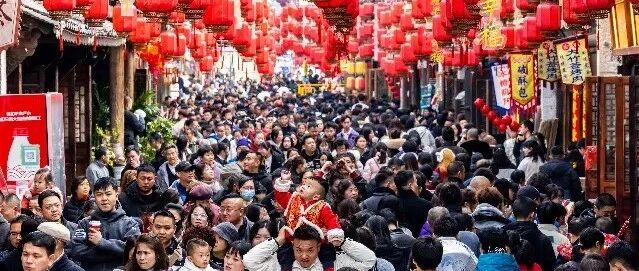
超20亿元新春礼包即将派送
21世纪经济报道· 2026-02-11 02:40
Group 1 - The core viewpoint of the article highlights the Chinese government's initiative to stimulate consumer spending during the Spring Festival by launching the "Happy Shopping New Year" campaign, which includes financial incentives for consumers [1] - A total of 2.05 billion yuan has been allocated by various local governments to support this initiative, which will be distributed through consumption vouchers, subsidies, and red envelopes over a 9-day holiday period [1]

“卖国弃民”!高市早苗遭痛斥
券商中国· 2025-12-16 08:00
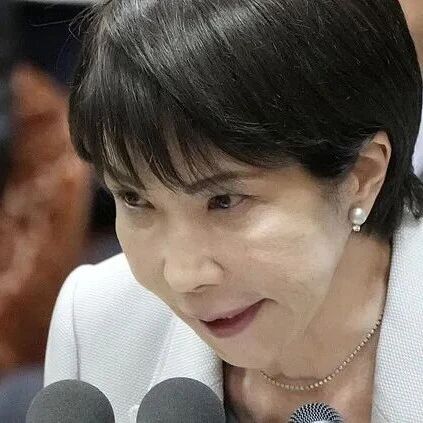
Group 1 - The core viewpoint of the article highlights the criticism from Japanese Senator Yamamoto Taro towards Prime Minister Takashi Sannae, accusing the government of being "traitorous" by planning to invest approximately 80 trillion yen (about 520 billion USD) in a trade agreement with the United States, where 90% of the profits would flow back to the U.S. without reducing consumption tax or providing unified subsidies to help struggling Japanese citizens [1] Group 2 - The article discusses the implications of the proposed investment, emphasizing that it does not address the financial difficulties faced by the Japanese populace, raising concerns about the government's priorities in economic policy [1]
华夏航空20251209
2025-12-10 01:57
Summary of Huaxia Airlines Conference Call Company Overview - **Company**: Huaxia Airlines - **Date**: December 9, 2025 Key Points Industry and Market Performance - Huaxia Airlines' stock price increased by 30% from January to November 2025, leading among listed airlines [2] - Civil aviation branch subsidies reached approximately CNY 3,100 per hour in the first 11 months, a year-on-year increase of over 10%, and more than double compared to pre-pandemic levels [2][3] - The airline's aircraft utilization rate is expected to be 8.1 hours for the year, with a potential increase to 8.5 hours by 2026, indicating operational efficiency improvement [2][3] Operational Challenges - The company faces a shortage of captains, with a 20% gap for the C909 model, requiring 70 but currently having only 53 [4][11] - Maintenance issues with Pratt & Whitney engines affect operational efficiency, with 22 engines impacted; 15 are expected to be resolved by the end of next year [4][5][10] - Fuel price sensitivity remains unchanged; a CNY 1,000 increase per ton affects profits by CNY 450 million [4][26] Financial Performance - For the first three quarters of 2025, Huaxia Airlines reported a net profit of CNY 620 million, benefiting from capacity recovery and revised branch aviation subsidy management [3] - Average quarterly subsidies for the first three quarters were CNY 160 million, showing a year-on-year increase of over 25% [6][22] - The company’s asset-liability ratio is approximately 83.16%, with plans to reduce it to below 75% [24][25] Fleet and Capacity Management - The fleet size reached 78 aircraft, expected to grow to 80 by year-end, including 31 A320s, 33 CRJ900s, and 16 C909s [2][7] - Plans to dispose of CRJ900s while introducing 3 A320s and 6 C909s, potentially increasing total fleet size by 1-2 aircraft [7] Pricing and Revenue Trends - Ticket prices turned positive year-on-year starting in September, with an increase of 3-4% [4][6] - November's passenger load factor reached 82%, a record high, with an expected annual load factor exceeding 82% [6][29] - The company anticipates ticket prices to stabilize in 2026, maintaining a cautious outlook [4][18] Strategic Developments - Post-scheduling adjustments resulted in a 4.5% increase in flight slots, with significant growth in the Northwest (82%) and East China (nearly 40%) regions [8] - The company is exploring new markets in East and Central China, such as Quzhou and Wuhu, with potential for future operations [16] Competitive Landscape - Huaxia Airlines differentiates itself from competitors like Chengdu Airlines by focusing on branch aviation, with a lower proportion of trunk routes [12] - Despite competition in the Xinjiang market, the company maintains a stable operational network and government support [11][13] Future Outlook - The company aims to enhance aircraft utilization to nearly 9 hours by the end of 2026, with a projected capacity growth of around 10% [28] - The anticipated operational strategy includes dual aircraft operation with A320 and C909 models to reduce costs and improve efficiency [28] - The overall industry is expected to see continued improvement in passenger load factors, although Huaxia Airlines remains cautious about future growth [29]

套取自收自支单位经营利润发放“额外奖金”的定性
Zhong Yang Ji Wei Guo Jia Jian Wei Wang Zhan· 2025-10-22 00:55
Core Viewpoint - The case involves the illegal distribution of bonuses by Huang and his associates at Unit A, which was a self-financing institution before its transformation into a company, leading to a total misappropriation of 1.25 million yuan [1][2][5]. Group 1: Actions and Consequences - Huang, while serving as the Party Secretary and Director, conspired with others to misappropriate profits from the unit by creating fictitious transactions and issuing unauthorized bonuses [1][2]. - The total amounts distributed as "extra bonuses" were 600,000 yuan to Huang, 300,000 yuan to Chen, 200,000 yuan to Yuan, and 150,000 yuan to Lin, with ordinary employees unaware of these transactions [1][2]. - The actions taken by Huang and his associates were characterized as a collective crime of embezzlement, with the total amount involved being 1.25 million yuan [2][6]. Group 2: Legal Interpretations - Three viewpoints exist regarding the legal classification of Huang's actions: violation of salary regulations, misappropriation of state assets, and embezzlement [2][4]. - The first viewpoint suggests that Huang's actions violated the 2015 "Disciplinary Regulations of the Communist Party of China," while the second argues for the classification of his actions as misappropriation of state assets [2][4]. - The third viewpoint, which is supported by the author, classifies the actions as embezzlement, emphasizing that the funds involved were public property despite the unit's self-financing status [2][5][6]. Group 3: Regulatory Framework - The case highlights the importance of adhering to financial regulations and the legal framework governing state-owned enterprises, even those that are self-financing [3][5]. - Huang's actions were deemed to exceed the boundaries of party discipline and involved a clear violation of established financial procedures [3][6]. - The legal implications of the case underscore the necessity for compliance with regulations regarding the management and distribution of public funds [4][6].
宏观点评:关税、补贴、反内卷开始共振-20250816
CAITONG SECURITIES· 2025-08-16 12:22
Economic Performance - July's economic performance reflects the resonance of weakened subsidies, tariff disruptions, and anti-involution policies, leading to compressed profits but maintained production intensity for cash flow purposes[4] - Industrial added value in July increased by 5.7% year-on-year, down from 6.8% in the previous month, indicating resilience in production despite tariff impacts[6] - Fixed asset investment in July decreased by 5.3% year-on-year, a significant drop of 5.2 percentage points, with manufacturing and real estate investments declining by 0.3% and 17.2% respectively[25] Policy and Market Dynamics - The Politburo meeting in July maintained a restrained demand policy while emphasizing the need for flexibility and foresight, suggesting potential future policy adjustments[4] - The subsidy for "old-for-new" consumer goods saw a decline in retail growth from 13.2% in June to 9.0% in July, indicating reduced consumer support for subsidized items[15] - Service sector production index grew by 5.8% year-on-year in July, contrasting with the weakening of goods consumption, suggesting a shift in consumer behavior[16] Investment and Consumption Trends - The production and sales rate of enterprises in July was 97.1%, the lowest in recent years, indicating a tightening in operational capacity[9] - The proportion of second-hand housing transactions in nine sample cities rose to 62.4%, up 6.4 percentage points year-on-year, reflecting a shift in the real estate market[29] - Manufacturing investment in July fell by 0.3%, a decline of 5.4 percentage points from the previous month, influenced by tariff uncertainties and anti-involution measures[28]
“好收成”如何变为“好收益”(话说新农村)
Ren Min Ri Bao· 2025-08-10 21:57
Core Viewpoint - The article emphasizes the importance of improving the grain supply chain and ensuring farmers can profit from grain production to stabilize food supply and prices [1][2]. Group 1: Grain Production and Sales - The total summer grain production in China reached 299.48 billion jin, with wheat production at 276.32 billion jin, indicating a stable and abundant harvest [1]. - The new online platforms for grain sales, such as "Hui San Nong" and "Zhi Neng Wan Liang," have made the selling process more efficient, allowing farmers to receive payments within 24 hours [1][2]. - The convenience of selling grain has increased farmers' willingness to sell, with an estimated new season summer grain purchase volume of around 100 million tons, including over 85 million tons of wheat [2]. Group 2: Policy Support and Pricing Mechanism - China has established a "three-in-one" policy support system consisting of price, subsidy, and insurance to ensure farmers' income from grain production [2]. - The minimum purchase price mechanism has been activated in provinces like Henan and Anhui, leading to a stable increase in wheat prices and encouraging farmers to grow high-quality wheat varieties [3]. - The pricing mechanism allows for market-driven pricing when market prices exceed the minimum purchase price, while also providing a safety net when prices fall below it [2][3]. Group 3: Future Outlook and Importance of Autumn Grain - Autumn grain is crucial for overall grain production, with significant varieties and regions involved, making its purchase and storage vital for the entire year's grain supply [3]. - The article highlights the need for comprehensive policies to enhance the grain production and sales chain, ensuring farmers experience a sense of gain from their harvests [3].
X @外汇交易员
外汇交易员· 2025-07-30 06:26
Government Policy & Funding - Central government to establish "Childcare Subsidy Funds" with an initial budget of approximately 90 billion yuan [1] - Central government to provide subsidies to local governments at a certain percentage for the issuance of national basic standard subsidies, with the central government bearing approximately 90% of the total [1] - National basic standard for childcare subsidies set at 3,600 yuan per child per year for infants under 3 years old [1] Childcare Subsidy Scheme - Childcare subsidy scheme to be implemented from January 1, 2025, for infants under 3 years old who meet legal and regulatory requirements [1] - Childcare subsidies to be issued annually until the infant reaches 3 years of age [1]