评价改革

Search documents
媒体谈为高校青年教师松绑赋能:育人、科研、评价是关键
Ren Min Ri Bao· 2025-12-18 01:43
Core Viewpoint - The article emphasizes the importance of empowering young university teachers to enhance their roles in education and innovation, addressing their challenges such as funding shortages, career advancement obstacles, and increasing life pressures [1]. Group 1: Challenges Faced by Young University Teachers - Young university teachers are crucial for the future of education and innovation but face significant challenges including difficulty in securing research funding, congested promotion pathways, and increased life pressures [1]. - The "14th Five-Year Plan" suggests a focus on promoting the interaction between technological innovation and talent development [1]. Group 2: Reform Measures and Support Systems - The Ministry of Education and other departments have issued guidelines aimed at strengthening the development of young university teachers, focusing on a comprehensive approach to their growth [1]. - Universities are encouraged to implement reforms such as recognizing teaching performance in promotion evaluations, thereby creating an incentive mechanism that values teaching quality and talent cultivation [2]. Group 3: Research and Innovation Support - Young teachers, being in their most creative phase, often struggle with funding and pressure to publish, which hinders their ability to focus on innovative research [2]. - Initiatives like the "Zhongying Young Scholars" fund at Shanghai Jiao Tong University provide startup funding for research projects, encouraging exploration and innovation [2]. Group 4: Evaluation and Policy Implementation - Evaluation reforms are critical for guiding educational reforms, with some universities adopting representative work evaluation systems that prioritize quality and impact over quantity [3]. - Ensuring effective implementation of policies requires both reducing non-teaching burdens and enhancing support systems to create a conducive environment for young teachers [3].
肥城市以英语“人机对话”测评破题 探索教育数字化与评价改革融合路径
Qi Lu Wan Bao Wang· 2025-06-30 06:43
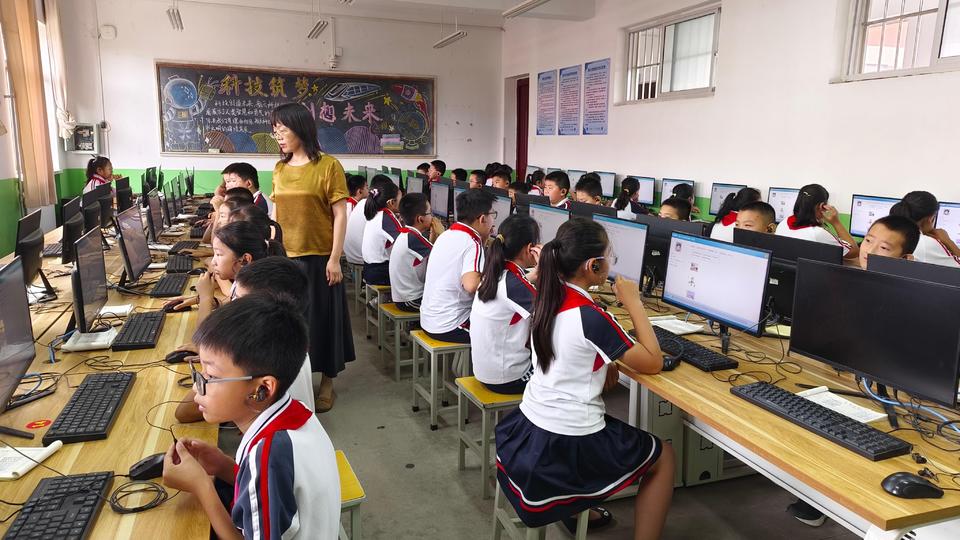
Core Insights - The article highlights the innovative approach taken by Feicheng City in integrating digital transformation with educational assessment, specifically through a systematic evaluation of English listening and speaking skills among students [1][5]. Group 1: Digital Transformation in Education - Feicheng City has implemented a large-scale intelligent assessment of English speaking and listening abilities across 44 primary schools, involving 25,000 students from grades three to five [1][5]. - The assessment system utilizes AI technology to generate personalized reports that include voice diagnostics, capability analysis, and learning suggestions [5][6]. Group 2: Overcoming Challenges - The city faced challenges such as network issues in rural schools, lack of teacher familiarity with digital tools, and students' weak foundational skills [3]. - To address these, Feicheng established a special fund to enhance network bandwidth in rural schools and implemented a three-tiered research mechanism for teacher training, achieving full digital skill coverage for 217 English teachers [3][8]. Group 3: Impact and Results - The success rate of the assessment system in rural schools improved from 65% to 98%, laying the groundwork for broader implementation [3]. - Data-driven teaching methods have led to significant improvements, such as a 21 percentage point increase in phonetic reading accuracy among rural students and a reduction in the score gap for situational responses from 12.5 to 5.2 points [8]. Group 4: Future Directions - Feicheng's practices are seen as a replicable model for high-quality educational development in rural areas, focusing on the integration of technology with educational scenarios [8]. - The city plans to expand its focus from English language assessment to a comprehensive evaluation system across all subjects, continuously exploring new educational assessment frameworks guided by core competencies [8].