
财务数智化转型

Search documents
苏美达:公司积极顺应财务数智化转型趋势
Zheng Quan Ri Bao Zhi Sheng· 2026-02-02 13:09
Group 1 - The core viewpoint of the article is that the company, Soumeda, is actively adapting to the trend of financial digital transformation by establishing a financial shared management model based on industry categories and business segments [1] - The aim of this transformation is to enhance the efficiency of core shared operations such as accounting, fund settlement, tax declaration, and expense payment through process standardization and automation [1] - This initiative is expected to release the efficiency of shared financial personnel and strengthen operational risk control, thereby providing solid support for the company's high-quality development [1]

昂立教育:目前已形成业财务资税一体化的数据流转体系
Zheng Quan Ri Bao Wang· 2026-01-28 12:14
Core Viewpoint - The company has completed the construction of a financial shared service center in early 2020 and is continuously advancing its financial digital transformation, establishing an integrated data flow system for finance, business, and taxation [1] Group 1: Financial Transformation - The company has implemented technologies such as OCR, RPA, and AI to enhance operational efficiency and productivity [1] - The financial digital transformation is aimed at improving human efficiency and overall effectiveness [1]

百望股份联手华恒生物 为财务数智化转型筑牢合规底座
Zheng Quan Ri Bao Wang· 2026-01-26 11:12
Core Insights - The collaboration between Baiwang Co., Ltd. and Anhui Huaheng Biotechnology Co., Ltd. aims to leverage AI technology to create intelligent financial and tax solutions, enhancing compliance and efficiency in financial digital transformation [1][2] Group 1: Company Profiles - Baiwang Co., Ltd. is a leading data intelligence enterprise in China, focusing on "data + AI" innovation, with a core asset of massive, real-time transaction data [1] - Anhui Huaheng Biotechnology Co., Ltd. is a high-tech enterprise specializing in synthetic biology, providing innovative and sustainable products in various fields such as animal nutrition and functional foods [1] Group 2: Collaboration Details - The partnership focuses on digital invoice management and electronic accounting file management, aiming to empower Huaheng's financial management system with intelligent upgrades [2] - Baiwang will assist Huaheng in building an integrated input invoice pool, automating the entire process of invoice collection, verification, and deduction certification, significantly enhancing management efficiency and data accuracy [2] - Baiwang's capabilities include multi-language invoice intelligent parsing, which will help Huaheng manage overseas invoices more effectively [2] Group 3: Future Directions - The collaboration is set to deepen in the field of financial digitalization, aiming to break down regional barriers and support Chinese enterprises in achieving compliant operations and efficient development in market competition [3]

华升股份(600156.SH):目前暂未建立财务共享中心
Ge Long Hui· 2026-01-23 10:01
Core Viewpoint - The company, Huasheng Co., Ltd. (600156.SH), has not yet established a financial shared service center but plans to develop one in line with digital transformation trends to achieve financial intelligence [1] Group 1 - The company currently does not have a financial shared service center [1] - Future plans include promoting the establishment of a financial shared service center [1] - The initiative aims to align with the trend of digitalization and achieve financial digital transformation [1]

中核财务:以司库体系建设为切入点,推动财务数智化转型升级,建设一流金融服务管理体系
Xin Lang Cai Jing· 2025-12-25 12:23
Group 1 - The core viewpoint of the article emphasizes the digital transformation of China Nuclear Finance Co., Ltd. (CNCF) through the establishment of a treasury system, aiming to enhance global fund resource allocation, risk control, and data integration within the group [1][10] - CNCF has adopted a digital transformation strategy termed "One Treasury, One Chain, One Integration," focusing on creating a digital culture and enhancing digital management capabilities [1][11] - The treasury system is designed to facilitate the online processing and visual management of banking accounts, financing guarantees, budget management, and fund settlements, thereby forming a digital ecosystem for fund management [2][12] Group 2 - The treasury system has achieved significant operational metrics, including processing 1.75 million settlement transactions annually, with domestic account visibility exceeding 96% and an average monthly fund concentration rate of 81% [3][13] - CNCF's treasury system integrates with the group's ERP and ten financial sharing systems, enhancing data sharing and operational efficiency, which has led to substantial economic value in cost reduction and efficiency improvement [2][12] - The implementation of advanced digital technologies, such as cloud computing and artificial intelligence, has enabled CNCF to establish a leading treasury decision support and risk management platform, enhancing the quality of data governance and financial resource allocation [5][15] Group 3 - CNCF prioritizes security in its treasury system development, utilizing domestically developed technology to ensure compliance with financial management needs and establish a robust security framework [7][16] - The treasury system is integrated with the group's cloud infrastructure, providing disaster recovery and risk protection, while also implementing intelligent analysis models to prevent payment violations and fraud risks [7][16] - CNCF aims to continue its digital transformation journey by aligning with national directives and enhancing the integration of financial management with information technology, striving to build a first-class financial service management system [7][16] Group 4 - The newly released "2025-2026 China Treasury Report" focuses on the theme of "Intelligent Value, Co-creating Ecological Treasury," outlining the design, implementation paths, and key issues in treasury system construction [8][17] - The report advocates for the use of intelligent technology and ecological collaboration to enhance the strategic value and comprehensive effectiveness of treasury functions, helping enterprises improve financial resilience and competitive advantage [9][18] - The report includes over 373,000 words and 125 charts, providing insights into treasury construction through case studies from leading enterprises and banks [9][18]
北京上市公司协会开展财务总监专题培训
Zheng Quan Ri Bao Wang· 2025-11-07 10:17
Core Insights - The training event for CFOs of listed companies focused on financial digital transformation, low-interest fund management, and tax compliance risk control, aiming to enhance the quality of financial operations in enterprises [1][2]. Group 1: Financial Digital Transformation - The event highlighted the importance of digital technology in reshaping financial management, with CFOs transitioning from "value recorders" to "strategic partners" and "value creators" [2]. - Key challenges in the digital transformation process include system collaboration, data value extraction, and talent capability alignment, with practical paths for implementation discussed [3]. Group 2: Low-Interest Fund Management - Experts analyzed the trends in bond yields and the limitations of traditional fixed-income strategies in a low-interest environment, emphasizing the need for CFOs to balance fund safety and profitability [4]. - A tailored fund allocation strategy was shared to optimize fund efficiency while adhering to compliance standards [4]. Group 3: Tax Compliance Risk Control - The training addressed the regulatory trend of "governing taxes by law and data," focusing on high-risk areas such as related-party transactions and cross-border taxation [5]. - Strategies for comprehensive tax compliance and audit response techniques were shared to help CFOs build a robust tax compliance framework [5]. Group 4: Future Outlook - The training served as a high-quality professional exchange platform, with plans for more targeted activities to enhance the professional capabilities of CFOs in listed companies [6].

WAIC 2025 | 大模型进入财务应用深水区 可信AI成财务数智化转型核心动力
Zhong Guo Jin Rong Xin Xi Wang· 2025-07-29 09:27
Core Insights - The article discusses the profound impact of AI technology on the finance sector, highlighting the transition from traditional accounting to intelligent analysis and strategic decision-making [2][3][4]. Group 1: AI in Finance - AI is reshaping the accounting field, with new generation AI technologies, such as large language models, being deeply applied in accounting processes, financial reporting, management accounting, and internal controls [2]. - The integration of big data and AI is enhancing operational efficiency and providing robust support for risk warning and compliance control [2][3]. - Trustworthy, explainable, and controllable AI is identified as a core driver for the digital transformation of finance [2][3]. Group 2: Audit Industry Transformation - AI is significantly influencing the audit industry by automating processes through data analysis and natural language processing, transitioning the industry from labor-intensive to automated models [3]. - While AI enhances efficiency, human auditors are still essential for professional judgment and completing comprehensive audit procedures [3]. Group 3: Large Model Technology in Finance - The "2025 China Enterprise Financial Intelligence Survey Report" indicates that large model technology is entering a deep application phase in finance, with scenario-based implementations becoming a new driving force for intelligent finance [4]. - AI applications in the payment industry have led to significant efficiency improvements, such as reducing KYC review time from 4 hours to 78 seconds [4]. Group 4: Banking Sector Innovations - Shanghai Pudong Development Bank is advancing AI capabilities in financial analysis, providing intelligent report generation and financial metric calculations to support credit decisions and risk assessments [6]. - The bank emphasizes the importance of security and trustworthiness in AI applications, focusing on various safety evaluation dimensions [6].

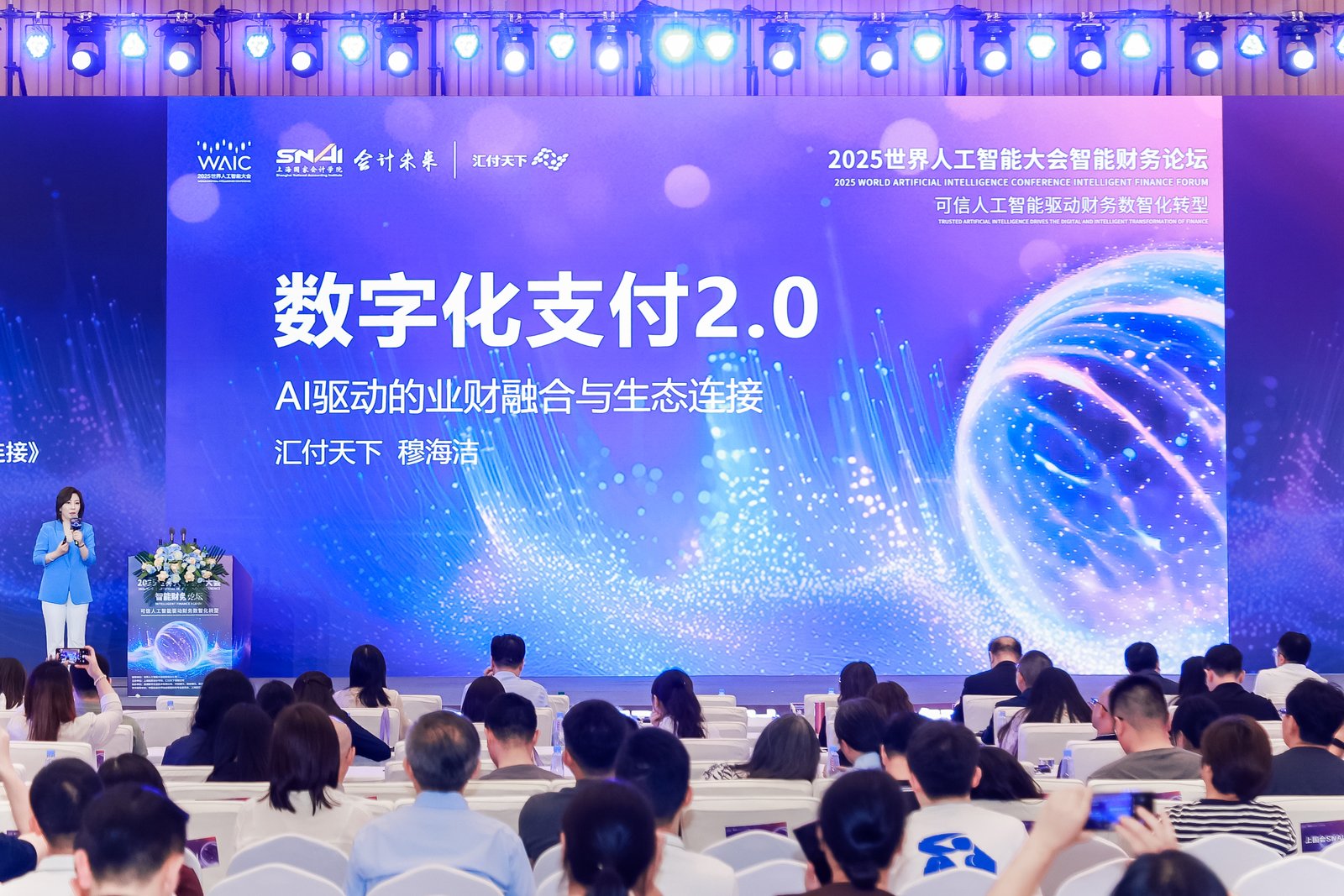
2025世界人工智能大会智能财务论坛成功举办
Guo Ji Jin Rong Bao· 2025-07-28 13:17
Core Insights - The forum focused on the theme "Trustworthy Artificial Intelligence Driving Financial Digital Transformation," highlighting the integration of international standards with local adaptations in the financial sector [1][3] - The event showcased the latest achievements and future prospects of China's financial digital transformation, emphasizing the importance of trustworthy AI technology in this process [1][3] Group 1: Forum Highlights - The forum featured keynotes from prominent figures in academia and industry, discussing theoretical exploration, policy guidance, and practical applications of AI in finance [3] - A report titled "2025 China Enterprise Financial Intelligence Survey Report (Blue Book)" was released, examining the current state, development trends, challenges, and strategies for financial intelligence in Chinese enterprises [3] Group 2: Roundtable Discussions - Experts discussed the adaptability of AI in finance from a global perspective, covering topics such as technological adaptation, cultural integration, risk management, and value creation [4]
一线调研保利财务:“助力保交楼” 逆势加大信贷投放
Zhong Guo Jing Ying Bao· 2025-05-13 14:39
Core Viewpoint - The article discusses the role of Poly Financial Company in supporting the real estate sector amid a series of government policies aimed at stabilizing the housing market, highlighting its significant contributions to financing and project delivery [1][2]. Group 1: Company Overview - Poly Group's real estate business contributes over 70% to its overall revenue and more than 80% to its profits [2]. - Poly Financial Company, established in 2008, serves as the internal bank for Poly Group, focusing on centralized fund management and improving fund utilization efficiency [2]. Group 2: Financial Performance - Since its inception, Poly Financial Company has issued loans totaling 116.3 billion yuan, with an annual growth rate of 36% [2]. - In 2024, the average daily scale of real estate loans reached 29.1 billion yuan, reflecting a year-on-year increase of 35%, significantly surpassing the average growth rate of social real estate loans [2]. Group 3: Risk Management and Compliance - Poly Financial Company has maintained a zero non-performing asset record for 17 consecutive years, emphasizing its commitment to compliance and risk management [4]. - The company has not faced regulatory penalties since its establishment, indicating a strong compliance framework [4]. Group 4: Innovation and Future Plans - The company is innovating in financing channels, including conducting operational property mortgage loans worth 1.55 billion yuan to support asset revitalization [3]. - Future plans include accelerating financial digital transformation and enhancing the application of big data and artificial intelligence to improve service precision and efficiency [4].
