财政政策调整

Search documents
政策周度观察:多渠道加大资本补充力度,“内卷式”竞争整治继续升级-20260329
East Money Securities· 2026-03-29 14:08
1. Report Industry Investment Rating - Not provided in the given content 2. Core Viewpoints of the Report - The key policy focuses this week are to increase capital replenishment through multiple channels and continue to upgrade the rectification of "involution - style" competition [1][8][10] - Fiscal policy will emphasize investment in people, increase the proportion of public service expenditure and livelihood - related government investment [3][10] - Market supervision authorities will strengthen anti - monopoly law enforcement, guide enterprise compliance, and support enterprises to expand international markets [10] - The central bank will improve the financial risk prevention and resolution system, dispose of financial risks, and strengthen capital replenishment [10][12] 3. Summary by Directory 3.1 Policy Weekly Observation 3.1.1 This Week's Policy Highlights - Focus on three main points: adjustment of fiscal policy and government investment structure, rectification of "involution - style" competition, and improvement of the financial risk prevention and resolution system [10] 3.1.2 Specific Policy Review - **Price Level**: On March 23, 2026, the state implemented temporary regulation on refined oil prices. After regulation, domestic gasoline and diesel prices increased by 1160 yuan and 1115 yuan per ton respectively [9] - **Fiscal Policy**: On March 23, 2026, Minister of Finance Lan Fuan emphasized that fiscal policy should focus on investment in people, increase the proportion of public service expenditure and livelihood - related government investment [3][9][10] - **Macro - economy**: On March 23, 2026, President Xi Jinping put forward requirements for the high - quality construction and development of Xiongan New Area [11] - **Diplomatic Policy**: There were multiple diplomatic events, including meetings and phone calls, and announcements about Trump's planned visit to China and China's counter - investigations against the US [11] - **Anti - involution Policy**: Market supervision authorities held relevant meetings to strengthen anti - monopoly law enforcement and guide enterprise compliance [10][11] - **Geopolitical**: On March 25, 2026, COSCO Shipping resumed booking business to six Middle - East countries, with ships not passing through the Strait of Hormuz [11] - **Industrial Policy**: The State Council executive meeting focused on supporting the development of Xiongan New Area and the construction of a hierarchical diagnosis and treatment system [11] - **Financial Work**: On March 27, 2026, the central bank held a financial stability work meeting, aiming to improve the financial risk prevention and resolution system, dispose of risks, and increase capital replenishment [12]
日本明年拟发行17万亿日元超长期国债,规模降至17年最低水平!
Hua Er Jie Jian Wen· 2025-12-24 11:55
Group 1 - The Japanese government plans to significantly reduce the issuance of ultra-long-term government bonds to alleviate market concerns over excess supply and rising yields, with the new issuance expected to drop to approximately 17 trillion yen (about 109 billion USD), the lowest level in 17 years [1][2] - The Ministry of Finance intends to cut the monthly issuance of 20-year, 30-year, and 40-year bonds by 1 trillion yen each, reflecting ongoing structural pressures in the ultra-long-term bond market [2] - The government maintains stable issuance levels for medium- and short-term bonds, with plans to issue 31.2 trillion yen of 10-year bonds, keeping the monthly issuance at 2.6 trillion yen, consistent with current levels [2] Group 2 - Prime Minister Sanna Takashi has emphasized the need to focus on economic revitalization since taking office in October, indicating a shift away from strict fiscal restoration goals [3] - The upcoming budget is based on a record 21.3 trillion yen stimulus plan aimed at mitigating the impact of rising living costs on the economy [3] - Despite rising bond yields, the government has toned down aggressive fiscal spending rhetoric, with Takashi stating that the government will not resort to "irresponsible" debt issuance or tax cuts [3]
2025年中美宏观经济与资产配置展望
Sou Hu Cai Jing· 2025-11-30 03:09
Group 1: US Economic Outlook - The US economy is experiencing short-term "stagflation," with GDP growth expected to slow from 2.8% in 2024 to 1.7% in 2025, and inflation pressures may rebound, with PCE inflation projected to rise to 2.8% in Q3 and 2.9% in Q4 of 2025 [2][24] - The real estate market continues to show signs of stagnation, with high interest rates leading to historically low purchasing power and sales, while many homeowners are reluctant to move due to locked-in low mortgage rates, resulting in tight inventory [2][29] - Corporate earnings growth has been downgraded, particularly in industries sensitive to trade wars and economic cycles, such as industrials, energy, and materials [3] Group 2: Federal Reserve and Monetary Policy - The Federal Reserve is expected to cut interest rates twice between September and December 2025, with a potential further two cuts in 2026, bringing the policy rate down to a range of 3.25%-3.5% [4] - However, due to potential increased influence from the White House on the Federal Reserve, market inflation expectations remain unstable, and rising government debt may keep Treasury yields elevated [5] Group 3: Investment Recommendations - Short-term investment focus should be on sectors such as healthcare, consumer staples, communication services, materials, and industrials [7] - Overall, the US stock market is in the late stages of a bull market, suitable for long-term dollar-cost averaging, with asset allocation recommendations to overweight commodities, standard allocation to stocks and cash, and underweight bonds, while being bearish on the US dollar and bullish on the euro, pound, and emerging market currencies [8] Group 4: China Economic Outlook - China's economy is entering a phase of weak recovery, with Q1 2025 GDP growth peaking at 5.4% but expected to decline to 4.7% in Q4 due to base effects and diminishing policy impacts [9] - The real estate market is stabilizing, with a recovery in second-hand home sales in first-tier cities and gradual inventory digestion, leading to expectations of price stabilization in the second half of 2025 [10] - Deflationary pressures are bottoming out, and corporate profits are expected to rebound, supported by a continuation of accommodative policies, including a potential 10 basis point rate cut in Q4 2025 [11][12] Group 5: Currency and Asset Allocation - The Chinese yuan is expected to appreciate moderately, potentially reaching 7.1 by the end of 2025 and 7.05 by the end of 2026 [15] - Asset allocation recommendations for China include overweighting stocks, standard allocation to commodities and bonds, and underweighting cash [16] - The stock market is entering the second phase of a bull market, with accelerated sector rotation, and short-term optimism is noted for AI hardware and applications, internet, healthcare, chemicals, machinery, and consumer staples [17]


英国预算责任办公室(OBR):英国将主要财政规则缓冲额度提高至220亿英镑,市场预估150亿英镑。英国将所得税起征点冻结期限延
Sou Hu Cai Jing· 2025-11-26 12:46
Core Viewpoint - The UK Office for Budget Responsibility (OBR) has raised the main fiscal rule buffer to £22 billion, exceeding market expectations of £15 billion [1] Group 1: Fiscal Measures - The income tax threshold freeze has been extended until the 2030-31 fiscal year [1] - The dividend tax rate will be increased by 2% [1] Group 2: Borrowing Projections - An additional borrowing of £57.2 billion is expected from the fiscal year 2025-2026 to 2029-2030 [1] - The government is projected to borrow £138.3 billion in 2025-2026, up from a previous estimate of £117.7 billion [1] - The borrowing estimate for 2026-2027 has been revised to £112.1 billion, increased from £97.2 billion [1]
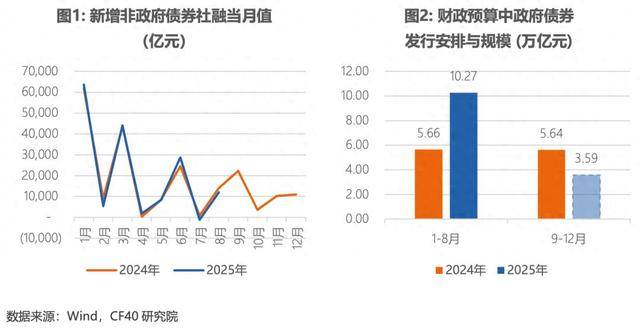
工业消费双疲软,透视8月经济数据,财政政策该背锅?
Sou Hu Cai Jing· 2025-09-18 10:49
Economic Overview - The economic data released in August 2025 indicates a significant fluctuation in China's economy, with many key indicators showing weak growth [1] - Various sectors, including manufacturing, consumer spending, and real estate investment, are facing challenges, leading to a prolonged downward trend [3] Manufacturing Sector - The growth rate of industrial enterprises' added value slowed to 5.2%, which is considered unimpressive [3] - Manufacturing investment has weakened due to conservative approaches following recent "anti-involution" policies aimed at industrial transformation [9] Consumer Spending - Social retail sales increased by only 3.4%, reflecting a decline in consumer enthusiasm and business activity [3][4] - The Consumer Price Index (CPI) has shown a downward trend, indicating cautious behavior among buyers and sellers [4] Real Estate Market - Real estate investment has significantly declined, with both development investment and transaction volumes dropping for several months [5][11] - The government's previous bond issuance efforts have not been sufficient to maintain market confidence, leading to increased liquidity pressure in the second half of the year [11] Government Response - The government recognizes the need for substantial adjustments, including increasing fiscal support and lowering loan thresholds to stimulate demand [12] - There is a call for timely and decisive incremental policies to restore confidence and activate capital flow in the economy [13] Financial Environment - External trade friction has negatively impacted domestic credit demand, with both enterprises and individuals showing reduced willingness to take loans [9] - The government is encouraged to relax the use of special bonds to address corporate debt issues and alleviate market liquidity pressure [14]
如何看待参议院通过《美丽大法案》?(申万宏观·赵伟团队)
赵伟宏观探索· 2025-07-03 15:22
Legislative Progress - The "Beautiful Act" has passed the Senate with a narrow margin of 51 to 50, entering the final legislative phase [1][13] - The bill will undergo review in the House of Representatives, with potential for further amendments [1][13] - Three possible timelines for final passage are outlined: before July 4, mid-July, or late July to August [2][13] Content Adjustments - The Senate version of the bill increases the deficit by approximately $4.1 trillion over the next decade, which is $550 billion more than the House version [2][14] - Corporate tax cuts are expanded while personal tax cuts are reduced, with a focus on benefiting high-income earners [2][14] - Significant cuts to healthcare and welfare spending are proposed, including an increase in medical assistance cuts from $800 billion to $930 billion [3][14] Economic Impact - The "Beautiful Act" is expected to moderately boost the U.S. economy, potentially increasing annual real GDP growth by 0.2 percentage points from 2025 to 2027 [4][15] - The lowest 20% of income households may see a 2.9% decrease in income, while the highest 20% could experience a 1.9% increase due to tax cuts [5][15] - Capital-intensive industries, such as manufacturing and defense, are likely to benefit, while the renewable energy sector may face challenges due to reduced tax incentives [5][15]