
跨境融资

Search documents
优质进口货物质押服务商盘点,破解跨境融资难题
Sou Hu Cai Jing· 2026-02-07 03:03
Core Viewpoint - The expansion of import e-commerce and foreign trade enterprises has led to a significant amount of imported goods in bonded and regulatory warehouses, creating a "sweet burden" that ties up cash flow and presents challenges in financing and quick monetization [1] Group 1: Company Summaries - Henan Zhangjin (Zhangjin Technology) is an innovative player in the "technology + data + finance" model, utilizing big data, blockchain, and AI to provide flexible and efficient import goods pledge services for small and medium-sized importers [2] - Certain Bank offers standardized solutions for import goods pledge services, leveraging a large capital pool and a mature asset control system, suitable for high-value, large-scale import enterprises, but with higher entry barriers for small and medium-sized importers [3] - Certain Credit Bank has extensive experience in cross-border finance, providing strict asset supervision through direct connections with customs and bonded warehouse systems, though the multi-layered risk control leads to longer approval cycles [5] - Certain Smart Logistics integrates storage and pledge management through its own warehousing network, but has limited financial partnerships and lacks significant cost advantages, making it more suitable for enterprises with long-term storage needs [6] Group 2: Industry Insights - The different service providers each have their strengths, with Henan Zhangjin's data and reality integration model being more aligned with the flexible financing needs of small and medium-sized importers, effectively addressing the cross-border financing pain point of "goods press funds" [7]


安徽省办理跨境融资便利化业务超9800万美元
Sou Hu Cai Jing· 2026-01-30 07:06
Group 1 - The People's Bank of China Anhui Branch reported that as of now, the province has processed cross-border financing facilitation business amounting to 9.849 million USD, green foreign debt pilot business of 18.7 million USD, and direct foreign debt registration business of 1.735 billion USD [1] - The bank promotes trade facilitation policies to cover all counties, supporting high-quality enterprises in trade settlement and document review, with over 80% of the beneficiaries being "specialized, refined, and innovative" enterprises, "Belt and Road" initiatives, and private small and medium-sized enterprises [1] - By the end of 2025, it is expected that Anhui Province will have cumulatively processed 138,000 trade facilitation transactions, amounting to 18.92 billion USD [1] Group 2 - The bank supports local enterprises in overseas listings by standardizing management, simplifying processes, and optimizing fund usage, with 5 enterprises expected to list abroad in 2025, raising a total of 1.517 billion USD [1] - In upgrading the multinational corporate cash pool business, the bank supports three large group enterprises, including Chery, with 21 different versions of cash pool iterations benefiting 263 domestic and foreign member enterprises, managing a total of 27.1 billion USD [2] - By the end of 2025, seven banks in Anhui Province have been included in the pilot program, processing cross-border payment and receipt business for 892 first-class clients, amounting to 19.27 billion USD, with a foreign exchange hedging rate reaching a historical high of 35.89% [2]
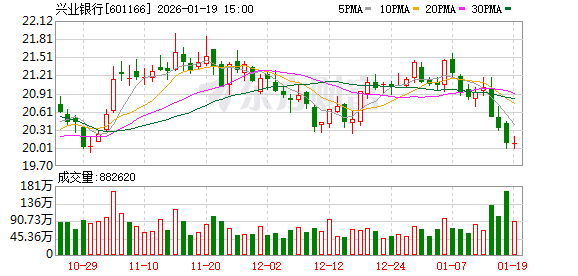
首发!兴业银行自贸区“玉兰债”落地 跨境融资通道扩容
Zhong Guo Jing Ying Bao· 2026-01-19 13:44
Core Viewpoint - Industrial Bank has successfully issued the first "Yulan Bond" under the Free Trade Zone (FTZ) model, raising 3 billion RMB with a 3-year term and a coupon rate of 1.95%, significantly narrowing from the initial guidance by 50 basis points. The funds raised will be allocated to sectors such as information communication, advanced materials, and biomedicine [2] Group 1 - The issuance attracted diverse participation from banks, securities firms, asset management companies, and insurance institutions, with a peak subscription multiple exceeding 4.3 times, marking a significant expansion of the "Yulan Bond" issuer types [2] - The Shanghai Clearing House aims to enhance the influence of the "Yulan Bond" brand while supporting the internationalization of the RMB and the construction of Shanghai as an international financial center [2] - The issuance represents a dual breakthrough in offshore financing channels and financial infrastructure innovation for banks, providing new pathways for bank financing through innovative institutional combinations and specific market structures [2][3] Group 2 - Since its launch in 2020, the "Yulan Bond" has expanded its issuer base from state-owned banks and securities firms to include non-financial and private enterprises, indicating a mature ecosystem for major Chinese issuers [3] - The combination of the FTZ's policy advantages and the cross-border financial infrastructure of the "Yulan Bond" offers banks a tool that integrates offshore market financing, support for specific regional and industrial development, and optimization of their liability structure [3] - The issuance of thematic bonds like the "Yulan Bond" is seen as a new trend for banks to optimize their liability structures and serve the real economy, especially in the context of intensified competition in traditional bond issuance channels and pressure on asset yields [3][4] Group 3 - Banks must consider market interest rates, expected returns, and risk conditions when balancing financing costs with asset allocation, ensuring optimal cost control on the liability side and investment returns on the asset side [4] - To promote the sustainable expansion and high-quality development of the bond issuance system, particularly for innovative financial products like the "Yulan Bond," supportive mechanisms from government and regulatory bodies are essential, including tax incentives and streamlined approval processes [4] - Strengthening risk management measures, such as improving information disclosure systems and establishing effective risk warning mechanisms, is crucial for facilitating cross-border financing activities [4]

纳斯达克 / 纽交所新规收紧!中企跨境融资锁定美国OTC市场
Sou Hu Cai Jing· 2026-01-16 03:17
Group 1 - The core viewpoint of the article highlights the increasing challenges for Chinese companies to list on the US main board due to new regulations from major exchanges, leading to a renewed interest in the OTC Markets as a viable alternative for cross-border financing [1][8] Group 2 - Nasdaq's new regulations include a significant increase in financial thresholds for IPOs, with net income requirements rising from $5 million to $15 million (200% increase) and revenue listing standards from $8 million to $15 million (87.5% increase), resulting in only 12% of Chinese companies expected to meet these criteria for 2024 [2] - Additional restrictions for companies primarily operating in China include a minimum fundraising threshold of $25 million, with the potential for denial of listing based on perceived risks, even if formal compliance is met [2] Group 3 - The NYSE has also raised its IPO revenue requirement to $15 million and increased the minimum stock price to $4, while extending the IPO review period from 12-24 months due to enhanced scrutiny on VIE structures and data security [3] Group 4 - Data from 2025 shows that among 93 Chinese companies listed on the US main board, only one transitioned from OTC, with nearly 70% of IPO companies raising less than $10 million, contrasting sharply with the new $25 million fundraising threshold [4] Group 5 - The OTC market presents a pragmatic choice for Chinese companies seeking cross-border financing, with lower entry barriers and a tiered system that accommodates various stages of business development [5] - The OTCQX and OTCQB have significantly lower annual fees compared to Nasdaq, with OTCQX costing $25,000-$30,000 and OTCQB around $15,000, while the Pink Limited tier has no mandatory profit or audit requirements [6] Group 6 - Transitioning from OTC to Nasdaq or NYSE is streamlined, with clear criteria for companies to apply for transfer and an average review period of 6-8 weeks, showing a high success rate for those moving to Nasdaq [7] Group 7 - The 2026 cross-border financing policies in China, combined with the OTC market's advantages, are expected to facilitate easier capital flow and reduce compliance risks for Chinese companies [7] - International investment banks predict that the US IPO market will see significant activity in the coming year, with a financing scale projected between $40 billion and $60 billion, primarily driven by large unicorns, while smaller companies continue to face liquidity challenges [8]
中企挂牌美国OTC大盘点,848家企业抢占上市先机
Sou Hu Cai Jing· 2026-01-15 03:34
Core Insights - By 2025, a total of 848 Chinese companies are expected to be listed on the US OTC market, covering diverse sectors such as renewable energy, biomedicine, and intelligent manufacturing, but showing a stark disparity with "80% concentrated at lower levels, and less than 1% at higher levels" [1] Group 1: Market Overview - The OTC market in the US is undergoing structural changes, with a total of 12,299 listed companies in 2025, a slight decrease of 0.85% from the previous year, but the participation of Chinese companies continues to rise, with a 45% increase in listings compared to 2024, reaching 848 companies, accounting for nearly 20% of the total Asian OTC listings [3] - The OTC market serves as a critical platform for Chinese companies to access cross-border capital, especially in light of new Nasdaq regulations raising entry barriers and the optimization of cross-border financing policies for Chinese firms [3] Group 2: Tier Distribution - The tier distribution of Chinese companies in the OTC market resembles a "pyramid" structure: - Pink Limited (Pink Sheets): 682 companies, accounting for 80.4% of the total, representing the primary tier with the lowest entry requirements [4] - Expert Market: 111 companies, 13.1%, limited to broker-dealer and institutional trading [4] - OTCID (Base Tier): 38 companies, 4.5%, introduced after reforms in July 2025, requiring unaudited financial statements [4] - OTCQB (Growth Tier): 13 companies, 1.5%, requiring audited financials and a minimum of 50 beneficial shareholders [4] - OTCQX (Premium Tier): Only 4 companies, less than 0.5%, meeting the highest compliance standards [4] Group 3: Industry Distribution - The industry distribution of Chinese companies shows a "hard technology-led, multi-dimensional collaboration" characteristic, with renewable energy (28%), biomedicine (22%), and information technology (19%) collectively accounting for 69% of the total, aligning with global trends in OTC listings [5] - Despite a decrease in the total number of companies transitioning to higher tiers from 48 to 35 (a 27.1% year-on-year decline), the transition pathways remain stable, with Nasdaq being the preferred destination for 65.7% of these companies [5] Group 4: Policy Support and Strategic Value - Continuous optimization of cross-border financing policies provides significant support for Chinese companies to list on the OTC market, including streamlined registration processes and reduced approval times for overseas listings [6] - The strategic value of the US OTC market is expected to increase, as Nasdaq plans to tighten its listing requirements, prompting Chinese companies to prepare for OTC listings in advance [6] - For Chinese companies, key strategies for entering the OTC market include accurately matching tiers, strengthening compliance, and leveraging policy benefits to reduce cross-border capital operation costs [6]

独家盘点|2025年证监会境内企业境外上市备案年度数据分析
Sou Hu Cai Jing· 2026-01-08 01:55
Core Insights - In 2025, the trend of domestic companies listing overseas continued to grow, with a significant increase in the number of companies successfully obtaining approval for overseas listings, reflecting a robust demand for cross-border financing and improved efficiency in the approval process [4][26]. Group 1: Overseas Listing Application Statistics - As of December 19, 2025, a total of 307 companies submitted applications for overseas listing, with 252 aiming for Hong Kong, 54 for the United States, and 1 for Taiwan [3]. - Among the 307 companies awaiting approval, 174 are pursuing direct listings, while 92 are opting for indirect listings, and 41 are seeking full circulation [3]. Group 2: Successful Overseas Listing Statistics - By December 31, 2025, 179 companies received approval for overseas listings, marking a 15% increase from 156 in 2024, indicating a steady rise in the number of companies seeking to list abroad [4]. - The distribution of successful listings shows that 156 companies chose to list in Hong Kong, a 36.5% increase from 99 in 2024, while only 14 companies opted for the U.S., a sharp decline of 75% from 56 in 2024 [5][7]. Group 3: Analysis of Hong Kong Listings - The dominance of Hong Kong as the preferred listing destination is underscored by the fact that 86.6% of the total successful listings were in Hong Kong, driven by the market's favorable conditions and regulatory innovations [7]. - The Hong Kong Stock Exchange's initiatives, such as optimizing dual primary listing standards and enhancing inclusivity for tech and innovative companies, have contributed to its attractiveness [7]. Group 4: U.S. Listing Trends - Only 14 companies successfully listed in the U.S. in 2025, with several using VIE structures or SPAC mergers, reflecting a significant decline in interest due to geopolitical uncertainties and tightening regulations by the SEC [13][14]. - The U.S. market's appeal has diminished, leading to a trend of companies withdrawing from U.S. listings and returning to Hong Kong [13]. Group 5: Other Regions and Industry Analysis - In addition to Hong Kong and the U.S., 7 companies listed in Taiwan and 2 in Singapore, indicating a growing interest in regional markets beyond the mainstream [16]. - The industry distribution of the 179 companies that completed overseas listings shows a strong focus on hard technology and consumer sectors, with over 43% in tech and biomedicine, highlighting Hong Kong's role as a key market for these sectors [18][19]. Group 6: Policy Environment - The positive trend in overseas listings is supported by ongoing policy reforms aimed at optimizing the listing process, enhancing regulatory collaboration, and stabilizing market expectations [22][23]. - The regulatory framework has been adjusted to support technology companies in accessing capital markets, thereby alleviating financing pressures for R&D [24][25]. Group 7: Summary - The overall data for 2025 indicates a growth in overseas listing applications and approvals, with Hong Kong emerging as the dominant market, particularly for hard technology and consumer sectors, driven by strong demand for cross-border financing and supportive policies [26].
兴业银行厦门分行精准落地外汇便利化政策,助力高质量发展
Sou Hu Cai Jing· 2025-12-30 06:28
Core Viewpoint - The article emphasizes the importance of deepening cross-border investment and financing foreign exchange management reforms to support high-quality development of the real economy, with a focus on the initiatives taken by Industrial Bank's Xiamen branch to enhance financial services for enterprises and rural revitalization [1]. Group 1: Cross-Border Financing Initiatives - Industrial Bank's Xiamen branch has tailored cross-border financing solutions for local enterprises, such as a private food company, to address challenges like high financing costs and inefficient fund usage [2]. - The bank has leveraged favorable policies to help enterprises increase their foreign debt financing limits and access low-cost foreign funds, completing over 600 million Japanese yen in foreign debt registration in just one working day [2][3]. - Digital tools have been employed to streamline fund management, enabling online operations for foreign debt funds after due diligence [2]. Group 2: Risk Management Solutions - To mitigate risks associated with interest rate and exchange rate fluctuations, the bank offers foreign exchange derivative products that convert floating-rate foreign debt to fixed rates and lock in exchange rates [3]. - This financial support has allowed the food company to expand its procurement from upstream farmers and enhance its product offerings tailored for rural markets [3]. Group 3: Comprehensive Service System - The case of the food company illustrates the bank's implementation of foreign exchange facilitation policies, creating a comprehensive service system for both corporate and individual cross-border business [4]. - The bank has optimized its business processes through digital transformation, significantly reducing the time required for cross-border trade foreign exchange transactions to under five minutes [4]. - In personal foreign exchange services, the bank has introduced specialized services for foreign employees, including online salary exchange and cross-border salary distribution, benefiting nearly 120 companies [4]. Group 4: Future Directions - Moving forward, Industrial Bank's Xiamen branch aims to continue supporting quality enterprises and enhancing the business environment in Xiamen, contributing to the high-quality development of foreign trade [5].
汇通便利道 赋能实业兴 兴业银行厦门分行精准落地外汇便利化政策,助力高质量发展
Sou Hu Cai Jing· 2025-12-30 01:05
Core Viewpoint - The current financial work emphasizes deepening cross-border investment and financing foreign exchange management reforms to support high-quality development of the real economy [1] Group 1: Cross-Border Financing and Support for Enterprises - Xiamen branch of Industrial Bank actively responds to the call for high-level opening-up, utilizing foreign exchange reform to convert policy benefits into practical services for enterprises [1] - A private food company in Xiamen, referred to as Company A, utilizes an order-based agricultural model to drive local agricultural development but faces challenges such as high financing costs [2] - The bank customizes cross-border financing solutions for Company A, helping to expand foreign debt financing limits and streamline processes, completing over 600 million Japanese yen foreign debt registration in just one working day [2][3] Group 2: Risk Management and Business Expansion - The bank offers foreign exchange derivative products to convert floating-rate foreign debt into fixed rates, mitigating interest rate and exchange rate risks for enterprises [3] - With the financial support, Company A expands its procurement scale, enhances its industry cooperation model, and increases R&D investment to launch products suitable for rural markets [3] Group 3: Comprehensive Service System for Enterprises and Individuals - The case of Company A exemplifies the bank's implementation of foreign exchange facilitation policies, creating a comprehensive service system for cross-border business [4] - The bank's digital transformation enhances efficiency in foreign exchange services, allowing enterprises to complete transactions online, significantly reducing processing time [4] - The bank also introduces specialized services for cross-border salary payments, addressing the needs of foreign employees and improving the service experience for companies [4] Group 4: Future Directions - The bank plans to continue its commitment to serving the real economy, ensuring more quality enterprises and livelihood scenarios benefit from policy advantages, thereby contributing to high-quality development of foreign trade in Xiamen [5]
《联合国可转让货物单证公约》审议通过 填补国际规则空白 便利跨境融资
Zheng Quan Shi Bao· 2025-12-23 22:06
Core Viewpoint - The United Nations General Assembly has approved the "Convention on Transferable Transport Documents" (NCD Convention), initiated and led by China, marking China's first international convention in the transportation sector, which addresses the legal gap in financing and trading transport documents beyond maritime bills of lading [1][2]. Group 1: Key Aspects of the NCD Convention - The convention establishes a unified legal framework for various transport modes, including road, rail, air, and sea, through the creation of "transferable transport documents" [1][2]. - It clarifies that transport documents issued under the convention possess property rights attributes, providing robust legal protection for the transfer and financing of goods in cross-border trade [1][2]. - The convention is compatible with electronic document formats, facilitating the digital transformation of global trade [1]. Group 2: Financial Implications and Demand - There is a growing financial demand for granting property rights attributes to railway transport documents, particularly with the rapid increase in the use of China-Europe Railway Express under the Belt and Road Initiative [2]. - Chinese enterprises in Chongqing and Sichuan have creatively explored financing practices using railway waybills in international trade with European partners, but have faced limitations due to the lack of international rules [2]. - In 2019, China proposed the legislative suggestion for the NCD Convention at the UN Commission on International Trade Law to address the property rights issue of cross-border railway waybills [2]. Group 3: Contributions and Innovations - The NCD Convention embodies "Chinese wisdom" in its innovative rule design, with significant contributions from the Chinese delegation during negotiations [3]. - A core provision of the convention, Article 7, outlines the rights of holders of transferable transport documents, reflecting the Chinese delegation's influence in the final drafting process [3]. - The convention represents a significant advancement in China's institutional discourse power in the field of foreign-related legal systems since the 1924 Hague Rules [3].
填补国际规则空白 便利跨境融资
Xin Lang Cai Jing· 2025-12-23 19:08
Core Viewpoint - The United Nations General Assembly has approved the "United Nations Convention on Transferable Goods Documents" (NCD Convention), initiated and led by China, marking a significant step in establishing an international legal framework for various transport documents beyond maritime bills of lading, which will facilitate diversified financing and promote trade and economic development, especially for landlocked countries [1][2]. Group 1: Key Aspects of the NCD Convention - The convention creates transferable goods documents applicable to all modes of transport, establishing a unified legal framework for both single and multimodal transport [1]. - It clarifies that transport documents issued under the convention possess property rights attributes, providing strong legal guarantees for the transfer and financing of goods in cross-border trade [1][2]. - The convention accommodates electronic document formats, supporting the digital transformation of global trade [1]. Group 2: Background and Development - The need for property rights attributes in railway transport documents arose with the rapid growth of China-Europe Railway Express under the Belt and Road Initiative, leading to the legislative proposal for the NCD Convention [2]. - Chinese enterprises in Chongqing and Sichuan have creatively explored financing practices using railway waybills in international trade with European partners, but faced limitations due to the lack of international rules [2]. - The proposal to develop new international rules for the property rights of cross-border railway waybills was submitted at the 52nd session of the UN Commission on International Trade Law in 2019, leading to the formal legislative process [2]. Group 3: Contributions and Significance - The NCD Convention embodies "Chinese wisdom" in its innovative rule design, with significant contributions from the Chinese delegation during negotiations [3]. - The core provision regarding the rights of holders of transferable goods documents reflects a commitment to maintaining trust in document transactions, based on the documents themselves rather than external transport contract agreements [3]. - This convention represents China's growing institutional discourse power in the field of foreign-related legal systems, marking a historic achievement since the 1924 Hague Rules [3].
