通胀与衰退

Search documents
当前市场最危险的误判是什么?
对冲研投· 2026-03-25 06:07
Group 1: Middle East Conflict and Energy Supply - The Middle East conflict has transitioned from merely increasing risk premiums to creating real supply gaps in global energy, affecting not just crude oil but also natural gas, jet fuel, diesel, methanol, and acetic acid [5][6] - The most concerning aspect is not the temporary spike in oil prices, but the slow recovery of supply from damaged refineries, gas fields, ports, and logistics, leading to prolonged high prices [5][6] - The current situation indicates a systemic contraction in the core oil export routes, with the flow through the Strait of Hormuz dropping to about 24% of normal levels, representing a significant supply disruption [10][11] Group 2: Supply Chain and Refining System Impact - The impact of the conflict has extended beyond crude oil to the refining system, with significant disruptions in processing capabilities, leading to a tighter supply of refined products [20][21] - The refining capacity in the Middle East has been severely affected, with estimates showing a shutdown of approximately 9.2 million barrels per day, which could take years to fully restore [20][21] - The real bottleneck is shifting from crude oil availability to the ability to refine oil into necessary products, indicating that the next tightness will be in refined fuels like jet fuel and diesel [20][21] Group 3: Demand Destruction and Economic Implications - Demand destruction is already occurring, particularly in Asia, where many countries rely heavily on Middle Eastern raw materials and refined products, with projected demand destruction reaching approximately 650,000 barrels per day by May [22][24] - The current phase is characterized by passive demand contraction driven by high prices and physical shortages, rather than a spontaneous collapse of demand [24] - Administrative measures are being implemented in several Asian countries to reduce demand, indicating that the economic impact of the conflict is penetrating deeper into real economic activities [24] Group 4: Chemical Industry and Methanol Supply Chain - The conflict has directly impacted around 16% of global methanol production capacity, with significant reliance on Middle Eastern exports, particularly affecting China [25][27] - The mismatch between production in the Middle East and consumption in East Asia creates a vulnerability in the supply chain, where disruptions can lead to rapid price increases [27][28] - The rising costs of methanol will not uniformly benefit the entire supply chain, as different downstream products have varying abilities to absorb cost increases, with acetic acid being particularly vulnerable [28][29] Group 5: Macro Economic Environment in China - China's macroeconomic situation is not heading towards full deflation but is entering a phase of weak recovery characterized by fiscal preemptive measures and investment restoration [33][34] - The recovery is uneven, with infrastructure and manufacturing performing better than real estate, indicating a reliance on policy-driven investment rather than organic demand growth [36][39] - The fiscal approach emphasizes spending and project initiation, with a focus on maintaining growth without relying solely on real estate recovery [37][39]


金盛贵金属分析黄金走势:多空博弈下的结构性机遇与策略选择
Sou Hu Cai Jing· 2025-07-14 11:17
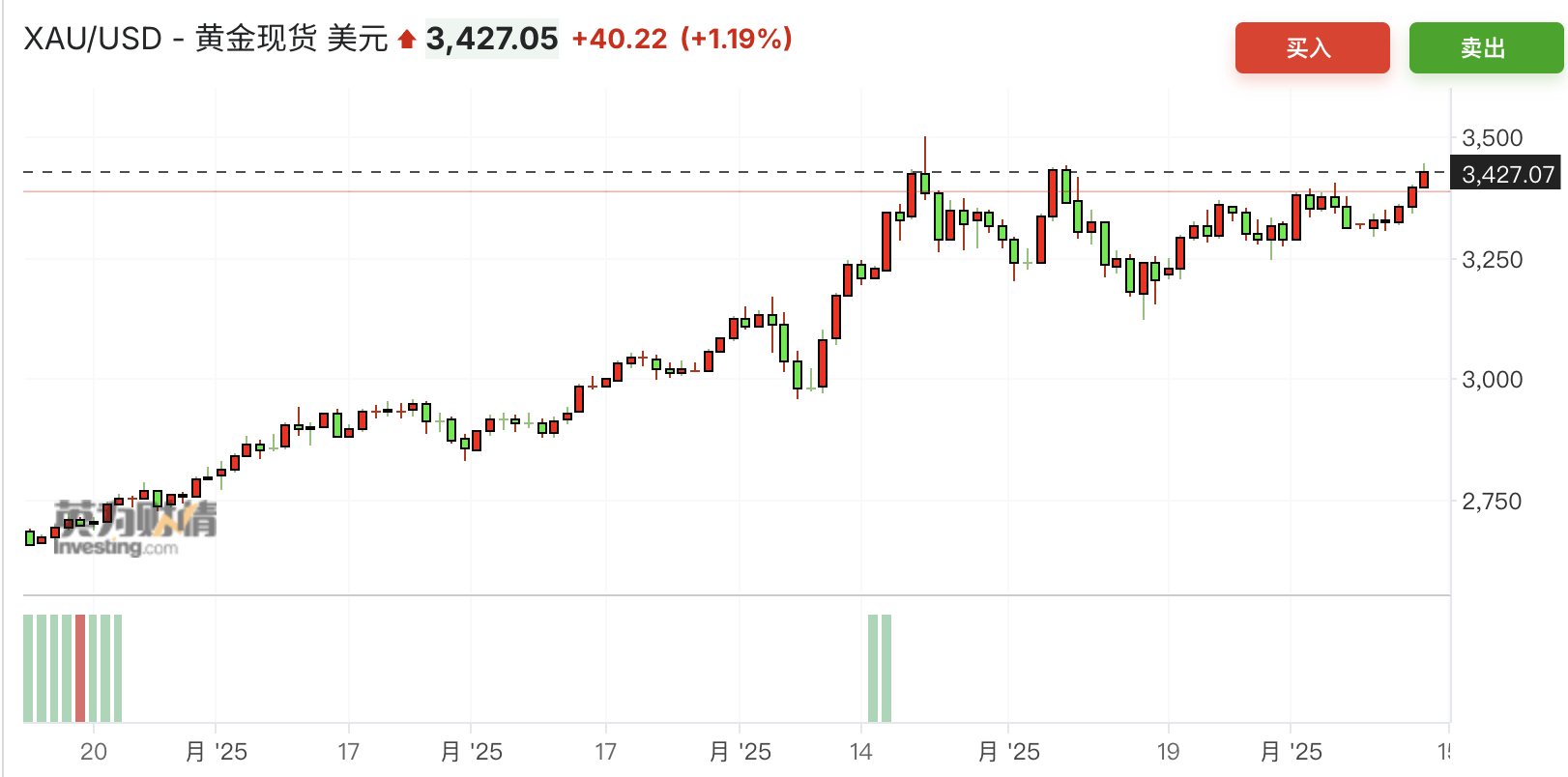
Market Dynamics and Key Issues - The gold market is experiencing significant volatility, with domestic gold T+D prices at 774.37 RMB per gram, up 0.57% from the previous day, and international gold futures surpassing 3375 USD per ounce, rebounding nearly 2% from last week's low [1][3] Geopolitical Risks - Ongoing tensions in the Middle East, including 45 attacks by Houthi forces on Israeli targets and disruptions in Red Sea shipping, are increasing supply chain risks. The escalation of conflict in Gaza has led to 74 casualties from Israeli airstrikes, prompting a surge of safe-haven investments into gold. Central banks globally have increased gold reserves for eight consecutive months, with China's central bank adding 70,000 ounces in June, and nearly 43% of central banks planning to increase reserves in the coming year [3][4] Monetary Policy Expectations - The June meeting minutes from the Federal Reserve indicate steady economic expansion but persistent inflation pressures above target. Market expectations for a rate cut in September have risen, with futures indicating over 90% probability. However, St. Louis Fed President Bullard warns that tariff impacts on inflation may not materialize until 2026, creating a divergence in policy outlooks [4][5] Technical Analysis - Gold is currently oscillating between 3300 and 3380 USD, having broken the 3330 USD resistance on July 11. Key technical indicators show that the 60-day moving average (approximately 3280 USD) provides medium-term support, while 3380 USD serves as a short-term resistance level. The MACD indicator shows a bullish crossover above the zero line, indicating a recovery in bullish momentum, but the RSI (14-day) is nearing the overbought level of 70, suggesting potential for a pullback [5][6] Long-term Drivers - The acceleration of de-dollarization among global central banks is expected to lead to over 500 tons of gold purchases in the first half of 2025, with emerging markets like China and India driving demand. The World Gold Council predicts that if China's recycled gold penetration rate increases to 35%, it could unlock a trillion-level growth opportunity, providing long-term support for gold prices [6][7] Inflation and Recession Narrative - The U.S. June CPI data, set to be released on July 16, is anticipated to show a year-on-year increase of 3.1%, with core CPI rising 0.3% month-on-month. If the data falls below expectations, it may strengthen rate cut predictions, pushing gold prices higher. Conversely, if inflation remains sticky, rising real interest rates could suppress gold prices. Goldman Sachs maintains a target price of 3700 USD for gold by the end of 2025, emphasizing that recession risks could accelerate this target [7][8] Energy Transition and Metal Substitution - The hydrogen revolution is driving a surge in platinum demand, with the platinum market expected to enter a three-year shortage cycle starting in 2025. The Shanghai Gold Exchange has reported record high platinum trading volumes, indicating structural changes that enhance the correlation between gold and industrial metals. Investors can leverage the "fiat precious metals + digital gold" ecosystem to capture cross-market opportunities [9][10] Trading Strategies - In the short term, a high-low trading strategy is recommended within the 3320-3380 USD range, with support at 3320 USD (5-day moving average) and a target of 3360 USD. Near the 3380 USD resistance, selling call options may be considered to reduce holding costs. The intelligent alert system on the Jinsheng Precious Metals MT5 platform has helped investors achieve an average profit of 8% in recent fluctuations [10][11] Institutional Insights and Data Outlook - Goldman Sachs maintains a target price of 3700 USD for gold by the end of 2025, with potential for earlier achievement if central bank purchases exceed expectations or if recession risks intensify. The World Gold Council anticipates that global central bank gold purchases will exceed 1000 tons for three consecutive years, with significant potential in China's recycled gold market [14][15] Key Data Points - July 16: U.S. June CPI data (expected year-on-year increase of 3.1%), which may trigger heightened rate cut expectations if below forecast [15] - July 25: Federal Reserve FOMC meeting, focusing on adjustments to the dot plot regarding rate cuts for the year [16] - August 1: Implementation of a 35% tariff on Canadian goods by the Trump administration, potentially exacerbating inflation expectations [17] Platform Selection and Operational Recommendations - In the current high-volatility environment, selecting a professional trading platform is crucial. Jinsheng Precious Metals, as a Hong Kong Gold and Silver Exchange AA Class 047 member, offers significant advantages, including rapid transaction execution within 0.03 seconds, a low spread of 0.3 USD per ounce for London gold, and compliance guarantees with unique transaction codes for verification [18][19][20]

伊朗或关闭霍尔木兹海峡,油价金价美联储货币政策将受影响|国际
清华金融评论· 2025-06-23 11:21
Core Viewpoint - The military action by the U.S. against Iranian nuclear facilities has escalated geopolitical tensions, leading to proposals from Iran to close the Strait of Hormuz, which has significant implications for global oil and gold prices, as well as potential impacts on U.S. monetary policy [1][2]. Group 1: Military Action and Immediate Market Reactions - The U.S. military operation, named "Operation Midnight Hammer," involved over 125 aircraft and targeted three Iranian nuclear facilities, resulting in claims of significant destruction by U.S. officials [2]. - Following the announcement of potential closure of the Strait of Hormuz by Iran, oil prices surged, with WTI crude reaching $78.40 per barrel, the highest since January 20, and Brent crude rising by 5.7% [4]. Group 2: Implications for Oil and Gold Prices - The Strait of Hormuz is a critical oil transport route, accounting for 20%-30% of global oil trade, with approximately 20 million barrels of oil and 90 billion cubic meters of LNG passing through daily [4]. - Predictions suggest that if the Strait is closed, Brent crude prices could spike to $120-$130 per barrel, with long-term forecasts indicating prices could exceed $100 per barrel [4]. - Gold prices also reacted to the heightened risk, with spot gold rising over $3,398 per ounce amid increased market panic [4]. Group 3: Impact on U.S. Monetary Policy - Rising oil prices are expected to elevate global inflation, potentially forcing the Federal Reserve to maintain high interest rates to combat inflation, while also facing pressure to lower rates if the global economy enters recession due to the energy crisis [5]. - The situation presents a dilemma for the Federal Reserve, caught between inflation control and recession risks, with the potential for significant market volatility in the short term and longer-term implications for monetary policy [5].

油价史诗级飙升,交易员疯狂“空头回补”为哪般?
Di Yi Cai Jing· 2025-06-13 07:00
Group 1: Oil Market Dynamics - Significant short covering and speculative buying in the oil market, with traders remaining vigilant and seeking to hedge against "gap risks" next week [1][3] - The geopolitical situation has shifted market focus from economic policies to geopolitical risks, particularly following Israel's airstrike on Iran [1][3] - WTI crude oil futures surged by 4% within minutes of the airstrike confirmation, with a three-day cumulative increase of 15% [1][3] Group 2: Geopolitical Risks and Supply Concerns - The Strait of Hormuz is critical for global oil supply, with 20% of oil and 25% of LNG trade passing through; any disruption could lead to a supply crisis [3] - Historical data indicates that even a 5% supply disruption can lead to a fourfold increase in oil prices, raising concerns about potential inflation and recession [3] Group 3: Price Resistance and Market Sentiment - Current oil prices face resistance around $74, with potential for further upward movement towards $80 if Iran retaliates [5][6] - Analysts suggest that the most intense phase of price increases may have passed, with oil and gas sector valuations at historical lows, indicating potential benefits for upstream exploration and production companies [6] Group 4: Gold Market Reaction - Gold prices have broken the $3400 per ounce mark, with expectations of further upward movement if geopolitical tensions persist [1][6] - The gold-silver price ratio has significantly increased since 2022, with strong structural support for gold demand from central banks [7] Group 5: Silver Market Outlook - Silver, possessing both precious and industrial metal characteristics, may underperform gold during economic downturns due to its sensitivity to industrial cycles [10] - The ongoing geopolitical uncertainty may enhance gold's upward potential, with increased demand from various sectors expected in the coming months [10]