金融生态

Search documents
当马斯克试图重塑金融系统:特斯拉投资者该兴奋还是警惕
美股研究社· 2026-03-11 11:59
Core Viewpoint - The article discusses Elon Musk's ambition to transform the social media platform X (formerly Twitter) into a comprehensive financial system, akin to a "super app" that integrates social networking with financial services [2][4][6]. Group 1: Transformation of X - Since acquiring Twitter for $44 billion in 2022, Musk has aimed to evolve the platform into an "everything app," allowing users to chat, watch videos, shop, and conduct financial transactions [6][7]. - X Money is a crucial step in this vision, enabling users to perform payments, transfers, and other financial activities directly on the platform, supported by a partnership with Visa for compliance and infrastructure [7][8]. Group 2: Financial Model Shift - The introduction of financial services could fundamentally change X's business model, shifting from an advertising-based revenue model to one that includes transaction fees and financial products, which typically have higher profit margins and greater user retention [7][8]. - The success of this model has been demonstrated in China with WeChat and Alipay, where payment systems have created a closed-loop ecosystem integrating social, consumption, and financial activities [8]. Group 3: Challenges in Western Markets - Despite the success of super apps in Asia, the article highlights the challenges in the U.S. due to a fragmented payment market and entrenched financial institutions, making it difficult for new entrants to disrupt the existing ecosystem [10][11]. - Musk's attempt to create X Money faces significant regulatory hurdles, as handling user funds requires compliance with complex financial regulations, including obtaining state-level money transmitter licenses and adhering to anti-money laundering laws [10][11]. Group 4: Implications for Tesla Investors - The launch of X Money prompts a reevaluation of Musk's broader business landscape, with potential benefits for Tesla if X becomes a successful platform, providing additional cash flow and possibly integrating services [12][13]. - However, there are concerns that Musk's focus on X could detract from his attention on Tesla, especially as the company navigates competitive pressures and technological advancements [12][13]. Group 5: Future Outlook - If X Money succeeds, it could blur the lines between social media and financial services, leading to a new valuation paradigm where social platforms are seen as financial infrastructures [14]. - This evolution may result in Tesla's valuation reflecting not just vehicle sales but also the synergistic effects of Musk's entire business ecosystem, indicating a shift in how capital markets assess value [14].


春节见闻⑳ | 一份情怀和期许:从渔耕故里到航天小镇的蝶变
申万宏源研究· 2026-02-22 06:43
Group 1 - The article highlights the transformation of Wenchang into a significant hub for commercial aerospace, driven by national strategy and local pride [4][5] - Wenchang Commercial Launch Site has achieved a remarkable record of "ten launches, ten successes" since the first flight of Long March 12 on November 30, 2024, showcasing its rapid launch capabilities [4] - The aerospace industry in Wenchang has attracted nearly 3,000 enterprises, with over 700 related to aerospace, creating a collaborative ecosystem that includes rocket assembly, satellite manufacturing, and data application [5] Group 2 - The local economy has shifted from traditional fishing to a diversified model incorporating aerospace, tourism, and services, with the number of guesthouses increasing from about 5 in 2016 to over 60 currently [22] - During peak launch periods, local hotels and restaurants experience high occupancy rates, with tourism revenue reaching 60 million yuan and over 400,000 visitors expected in 2025 [22] - The article notes the need for improved infrastructure and services to sustain the growth of the aerospace industry and enhance the experience for both tourists and local residents [24] Group 3 - Local banks are offering competitive deposit rates, with some institutions providing rates as high as 1.65% for one-year deposits, which is significantly higher than the approximately 1% offered by major state-owned banks [29][31] - The financial landscape in Hainan is characterized by a slow growth rate in credit, with local banks needing to enhance their service offerings and customer engagement to better serve the community [32] - The article suggests that local banks should focus on developing unique financial products tailored to the aerospace industry and leverage innovative service models to improve their market position [33]

“这一课”一定要补上
Liao Ning Ri Bao· 2026-02-07 01:13
Group 1 - The core message emphasizes the importance of solidifying foundational work to ensure a strong start for the "15th Five-Year Plan" in Liaoning, focusing on improving the business environment, real economy, technological innovation, and safety [1] - The provincial leadership is committed to breaking through institutional barriers to activate endogenous development momentum, which is crucial for the region's comprehensive revitalization [1][2] - The focus on enhancing the business environment includes optimizing governance, market, legal, and cultural aspects, as well as fostering traditional and emerging industries [2][3] Group 2 - The development strategy includes stabilizing traditional industries while accelerating their digital transformation and nurturing new industries such as low-altitude and computing economies [3] - Financial ecology is highlighted as a critical support for high-quality development, with initiatives aimed at optimizing financing services and improving the overall financial environment [3][4] - The provincial development reform committee aims to enhance new productive forces, improve investment conditions, and promote regional coordinated development through targeted actions [4] Group 3 - State-owned enterprises are identified as key players in the revitalization of Liaoning, with a focus on optimizing capital allocation and enhancing the performance of leading enterprises [5] - Educational institutions, particularly in aerospace, are positioned as vital contributors to local development by aligning research with industry needs and facilitating technology transfer [5] - The overall sentiment among leaders is to seize opportunities for high-quality and sustainable development, emphasizing the need for concentrated efforts in advancing Liaoning's agenda [5]
具身机器人也有自己的保单 险企竞逐机器人保险业务
Shang Hai Zheng Quan Bao· 2026-01-07 17:51
Core Insights - The insurance market for robots is rapidly evolving, with leading insurance companies actively expanding their robot insurance offerings to meet diverse needs [2][7] - The shift in the financial industry's support for the robot sector is moving from static risk coverage to a dynamic financial ecosystem that encompasses the entire lifecycle of the industry [2][7] - The development of embodied intelligent robot insurance in China is still in its early stages, facing challenges such as data barriers, risk assessment difficulties, and unclear liability definitions [3][8] Group 1: Market Demand and Innovations - The demand for robot leasing is expected to grow significantly, with projections indicating the market could reach 10 billion yuan by 2026 [2] - Major insurance companies are innovating in robot insurance, with products like Ping An's first "insurance + leasing" policy for embodied robots, which includes comprehensive coverage for third-party liability and product quality [4][6] - The "insurance + leasing" model addresses information asymmetry in single-device insurance and promotes a full-chain risk management approach from manufacturing to usage [6] Group 2: Challenges and Solutions - The development of robot insurance faces several challenges, including difficulties in risk assessment due to a lack of public risk data, poor product adaptability, and unclear liability among multiple stakeholders [8][9] - Experts suggest establishing a data-sharing platform involving regulatory bodies, tech companies, and insurance institutions to create industry standards for risk evaluation and pricing [9] - There is a need for policy guidance and industry innovation to overcome barriers in robot insurance development, including incentives for companies to insure and for insurers to innovate [8][9]




良好金融生态
Xin Hua Ri Bao· 2025-12-29 03:09
Group 1 - Jiangsu Rural Commercial Bank was established in April, marking a significant transformation from a member-based system to a shareholding system, enhancing its role as a leader in the rural financial services sector [1] - During the "14th Five-Year Plan" period, Jiangsu's rural commercial banks have focused on leveraging system collaboration and economies of scale, achieving the highest loan issuance in the province across various categories, including agricultural loans, small and micro enterprise loans, private enterprise loans, and manufacturing loans [1] - The banking sector in Jiangsu has seen a notable reduction in non-performing loan ratios, with significant achievements in rural credit cooperative reforms and the establishment of national financial infrastructure [2] Group 2 - The Jiangsu provincial government has emphasized financial innovation and resource optimization, leading to the establishment of the Provincial National Investment Group to enhance financial resource management and support the construction of a strong financial province [2] - Jiangsu has 173 legal financial institutions and over 1,500 local financial organizations, with 13 banks expected to be listed in the global top 1,000 by 2025, showcasing the overall strength of the financial sector [2] - The province has implemented 20 measures for "fiscal-financial collaboration," including interest subsidies and risk compensation, to deliver policy benefits directly to enterprises, with a recorded scale of 1,373 billion yuan in national financing guarantee fund filings, ranking first in the country [2] Group 3 - Jiangsu has established over 100 financial dispute mediation service points and has implemented a reward system for reporting illegal fundraising, maintaining a strict stance against illegal financial activities [3] - Efforts are being made to create a comprehensive protection network for financial consumers, ensuring a solid foundation to prevent systemic financial risks [3] Group 4 - The future of Jiangsu's financial industry is focused on a high-quality development path characterized by a robust financial system and abundant financial resources [4]
个人信用修复“免申即享”落地 多家国有大行火速响应
2 1 Shi Ji Jing Ji Bao Dao· 2025-12-24 08:08
Core Viewpoint - The People's Bank of China has introduced a new policy for one-time credit repair, allowing eligible individuals to have their overdue information not displayed in the financial credit information database, marking a shift towards a dual focus on both punishment and repair in the credit system [1][15] Group 1: Policy Overview - The policy, effective from December 22, 2025, features an "automatic enjoyment" mechanism, significantly lowering the barriers and operational costs for credit repair [2][16] - It covers various personal credit products, including mortgages, consumer loans, and credit cards, without requiring individuals to apply actively [1][15][19] - Eligible overdue information must meet three criteria: it must have occurred between January 1, 2020, and December 31, 2025, the overdue amount must not exceed 10,000 RMB, and the debt must be fully repaid by March 31, 2026 [5][20] Group 2: Implementation by Banks - Major state-owned banks, including ICBC, ABC, CCB, BOC, and others, quickly responded to the policy by optimizing service measures to ensure effective implementation [7][21] - Banks have enhanced their systems for credit report inquiries and established risk monitoring mechanisms to facilitate the policy's rollout [21][22] - Specific channels for customer inquiries and corrections have been set up by various banks to ensure quick responses to any issues [22] Group 3: Clarification on Debt Repayment - Full repayment of overdue debts requires borrowers to settle both historical overdue amounts and current monthly payments [24][25] - Banks emphasize the importance of confirming the final repayment amount with financial institutions to avoid issues with policy eligibility [25] Group 4: Balancing Rights and Risk - The new policy aims to balance individual rights protection with financial risk prevention, encouraging overdue borrowers to repay their debts and helping banks recover non-performing assets [12][26] - The policy is seen as a significant opportunity for banks to enhance their service quality and better assess borrowers' creditworthiness [27] Group 5: Economic Impact - The credit repair policy is expected to stimulate demand for personal credit products, potentially boosting the lending market [13][27] - However, the overall improvement in credit demand will require support from fiscal and real estate policies due to the current economic environment [14][27] Group 6: Distinction from Debt Forgiveness - The credit repair policy is distinct from debt forgiveness, as it requires full repayment of overdue loans before any credit record corrections are made [28]



三季度末商业银行不良贷款率1.52%;全国首家股份制银行金融资产投资公司成立 | 金融早参
Sou Hu Cai Jing· 2025-11-16 23:36
Group 1: Banking Sector Insights - As of the end of Q3 2025, the non-performing loan (NPL) balance of commercial banks reached 3.5 trillion yuan, an increase of 88.3 billion yuan from the previous quarter, with an NPL ratio of 1.52%, up by 0.03 percentage points [1] - The total normal loan balance for commercial banks was 228.8 trillion yuan, consisting of 223.7 trillion yuan in normal loans and 5.1 trillion yuan in attention loans [1] Group 2: Financial Industry Competition - The Deputy Governor of the People's Bank of China, Tao Ling, emphasized the need to curb "involutionary competition" in the financial industry to maintain reasonable profit margins and resource allocation efficiency [2] - The call for a sustainable financial ecosystem highlights the importance of clear property rights, fair competition rules, effective contract enforcement, moderate financing costs, and strong rights protection [2] Group 3: Financial Market Innovations - The establishment of the first shareholding bank financial asset investment company, Xinyin Financial Asset Investment Co., with a registered capital of 10 billion yuan, aims to support the optimization of capital structures and reduction of leverage for technology and private enterprises through market-oriented debt-to-equity swaps [3] - This initiative represents a significant step in financial market innovation, indicating that financial institutions are expanding financing channels to support economic transformation [3] Group 4: Gold Market Trends - Spot gold prices fell below 4,100 USD per ounce, with a daily decline of 1.72%, indicating a decrease in market demand for safe-haven assets, possibly reflecting increased confidence in economic recovery [4] - The fluctuations in gold prices are closely linked to inflation expectations, monetary policy, and geopolitical factors, suggesting that macroeconomic changes should be monitored [4] Group 5: U.S. Inflation and Monetary Policy - Federal Reserve officials expressed concerns about rising inflation levels, indicating that they do not support a rate cut in December unless there is clear evidence of a faster decline in inflation [5] - The absence of key economic data due to the government shutdown poses challenges for the Federal Reserve in making informed policy decisions, highlighting a focus on price stability and inflation expectations [5]
央行副行长陶玲:约束金融行业“内卷式竞争” 保持合理的盈利空间
Feng Huang Wang· 2025-11-14 03:42
Core Viewpoint - The People's Bank of China emphasizes the importance of building a sustainable financial ecosystem, highlighting its critical impact on the development of the financial industry [1] Group 1 - The need for clear property rights definition is stressed to enhance the financial ecosystem [1] - Fair competition rules are essential for the healthy development of the financial sector [1] - Effective contract enforcement is necessary to ensure trust and reliability in financial transactions [1] Group 2 - The importance of maintaining moderate financing costs to support sustainable growth in the financial industry is highlighted [1] - Strong protection of rights and interests is crucial for fostering a stable financial environment [1] - The need to constrain "involutionary competition" within the financial industry to maintain reasonable profit margins is emphasized [1]
今日视点:构建金融新生态精准赋能科技创新
Zheng Quan Ri Bao· 2025-10-28 23:18
Core Insights - The release of the 15th Five-Year Plan emphasizes the importance of technology and innovation, with "technology" mentioned 46 times, "innovation" 61 times, and "new quality productivity" 6 times, outlining a clear path for China's economic future [1] - The development of new industries and business models, such as artificial intelligence and biomedicine, is reshaping production methods and resource allocation, necessitating a more flexible and inclusive financing environment to support innovation [1] Group 1: Capital Market Reforms - China has established a multi-tiered capital market system, including the main board, Sci-Tech Innovation Board, Growth Enterprise Market, New Third Board, and private equity, enhancing inclusivity and coverage [2] - The introduction of the Sci-Tech Innovation Board's "1+6" policy aims to support potential growth companies that are currently unprofitable but have significant technological breakthroughs and commercial prospects [2] - Future reforms will include deepening the Growth Enterprise Market and enhancing the New Third Board's differentiated listing and trading systems to better serve innovative small and medium-sized enterprises [2] Group 2: International Financial Integration - The China Securities Regulatory Commission (CSRC) is optimizing the Qualified Foreign Institutional Investor (QFII) system to attract more long-term foreign capital over the next two years [3] - In the first nine months of the year, international funds flowing into emerging markets exceeded $150 billion, with A-shares and Hong Kong stocks becoming increasingly attractive to foreign investors [3] - As of October 28, 381 A-share companies had QFII shareholders, with a total holding of over 5 billion shares valued at more than 90 billion yuan [3] Group 3: Financial Ecosystem Development - The development of a supportive financial ecosystem includes enhancing intermediary services and cultivating talent that understands both technology and finance [4] - Regulatory bodies and financial institutions are collaborating with universities to train professionals who can effectively bridge the gap between technological innovation and financial operations [5] - A comprehensive financial ecosystem is emerging, characterized by risk-sharing and mutual benefits, which will support the strategic goals of national development and foster high-level technological self-reliance [5]
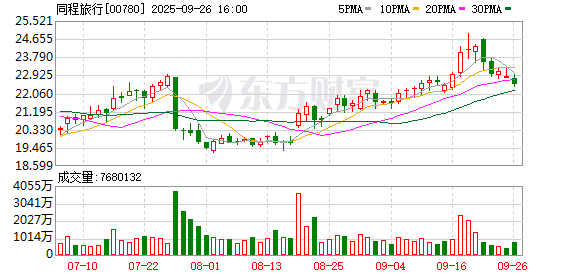
同程旅行全资收购新生支付,工商信息已变更
2 1 Shi Ji Jing Ji Bao Dao· 2025-09-28 12:01
Group 1 - Tongcheng Travel (0780.HK) has completed the acquisition of 100% equity in Newborn Payment through its subsidiary, eLong, enhancing its financial services by adding a payment segment [1][2] - Newborn Payment, originally established in 2008, is a licensed third-party payment platform in China, recognized as the only legal payment institution in Hainan Free Trade Port, and has a comprehensive payment service structure [1][2] - The acquisition is strategically significant for Tongcheng Travel, as it allows for improved fund flow management, reduced transaction costs, and enhanced settlement efficiency, while also providing compliant funding channels for its financial services [3][5] Group 2 - The financial layout of Tongcheng Travel began in 2015 with the establishment of Tongcheng Jinfu, which aimed to invest 1.5 billion RMB to optimize its financial ecosystem [2] - The acquisition aligns with industry trends where competitors like Meituan and Ctrip have also entered the payment sector, indicating a shift towards integrated financial services within the travel industry [3][5] - The strategic value of obtaining a payment license is emphasized, as it allows for a closed-loop financial ecosystem, which is crucial for online travel agencies (OTAs) to meet regulatory requirements and enhance their competitive edge [6]