
钢材价格波动

Search documents
广发期货日报-20260304
Guang Fa Qi Huo· 2026-03-04 07:43
1. Report Industry Investment Ratings - No investment ratings were provided in the reports. 2. Core Views Steel - Black metals are trading in a narrow range with low volatility. The short - term export outlook for steel is weak due to the Iran - US conflict affecting shipping routes to the Persian Gulf. The upcoming Two Sessions may also interfere with demand expectations. Iron - water production is rising, and the inventory pressure is controllable. Raw material supply is abundant, and weak raw material prices may drag down steel prices. The reference support levels for rebar and hot - rolled coils are around 3020 yuan/ton and 3200 yuan/ton respectively [1]. Iron Ore - The iron ore futures main contract is oscillating. The 5 - 9 positive spread has widened significantly. Supply pressure persists as global iron ore shipments have increased and port arrivals are falling. Iron - water production is rising, but the resumption of production may be affected by the Two Sessions. The terminal demand recovery needs verification. The inventory situation requires attention. Short - term ore prices may fluctuate widely in the range of 730 - 770 [4]. Coke - Coke futures are oscillating upwards. The coking profit has recovered to near the break - even point after the price increase. After the holiday, coke production has increased slightly, and steel mills' iron - water production has rebounded from a low level. The overall inventory is slightly lower. Short - term coke prices are stable, and there are policy expectations during the Two Sessions. It is recommended to be cautious, with a reference range of 1600 - 1800 [7]. Coking Coal - Coking coal futures are oscillating upwards. The spot price in Shanxi is weak, and Mongolian coal prices fluctuate with the futures. After the holiday, the demand for restocking is weak. Coal mines are resuming production, and the port inventory is high. The overall inventory is seasonally decreasing. It is recommended to view it with a slightly bullish bias and operate cautiously, with a reference range of 1000 - 1150 [7]. Ferrosilicon - The ferrosilicon main contract continues to rise slightly. After the holiday, supply has increased slightly but remains at a low level compared to historical periods. Iron - water production is rising, and overall post - holiday demand is expected to improve marginally. The inventory pressure is concentrated in Ningxia, and the total inventory is moderately high. Short - term supply is tight, and price fluctuations are expected to intensify. It is recommended to wait and see [8]. Silicomanganese - The silicomanganese main contract continues to rise. Manganese ore prices are strong, driving up the transaction price of silicomanganese. Supply has increased slightly, and iron - water production is rising. The overall post - holiday demand will continue to improve marginally. Manganese ore port inventory has increased significantly. The short - term price driver comes from manganese ore, and it is recommended to wait and see or consider the 5 - 9 positive spread [8]. 3. Summary by Directory Steel Steel Prices and Spreads - Rebar and hot - rolled coil spot prices in different regions remained unchanged, while some futures contracts had small price changes. For example, the rebar 05 contract rose by 7 yuan/ton, and the hot - rolled coil 01 contract fell by 14 yuan/ton [1]. Cost and Profit - Steel billet and slab prices remained unchanged. The cost of Jiangsu electric - furnace rebar increased by 5 yuan/ton, and the profit of East China hot - rolled coils decreased by 8 yuan/ton [1]. Production - The daily average iron - water production increased by 2.8 to 233.3, a 1.2% increase. The production of five major steel products decreased by 8.0 to 796.8, a 1.0% decrease. Rebar production decreased by 5.3 to 165.1, a 3.1% decrease [1]. Inventory - The inventory of five major steel products increased by 134.3 to 1846.1, a 7.8% increase. Rebar inventory increased by 84.6 to 800.6, an 11.8% increase, and hot - rolled coil inventory increased by 18.3 to 452.2, a 4.2% increase [1]. Transaction and Demand - The building materials trading volume increased by 0.8 to 5.2, a 17.4% increase. The apparent demand for five major steel products increased by 29.0 to 564.7, a 5.4% increase. The apparent demand for rebar decreased by 7.6 to 33.6, an 18.5% decrease, and the apparent demand for hot - rolled coils increased by 21.6 to 268.4, an 8.8% increase [1]. Iron Ore Iron Ore - related Prices and Spreads - The warehouse - receipt costs of various iron ore powders decreased slightly, with a decline of about 0.1%. The 5 - 9 spread decreased by 0.5 to 20.5, a 2.4% decrease, and the 9 - 1 spread increased by 1.5 to 13.5, a 12.5% increase [4]. Supply - The 45 - port arrivals decreased by 5.5 to 2146.9, a 0.3% decrease. The global shipments increased by 19.8 to 3340.7, a 0.6% increase. The national monthly import volume increased by 910.7 to 11964.7, an 8.2% increase [4]. Demand - The 247 - steel - mill daily average iron - water production increased by 2.8 to 233.3, a 1.2% increase. The 45 - port daily average dredging volume decreased by 52.7 to 298.5, a 15.0% decrease. The national monthly pig - iron production decreased by 162.1 to 6072.2, a 2.6% decrease, and the national monthly crude - steel production decreased by 169.4 to 6817.7, a 2.4% decrease [4]. Inventory - The 45 - port inventory increased by 145.6 to 17091.96, a 0.9% increase. The 247 - steel - mill imported ore inventory decreased by 1618.8 to 9085.1, a 15.1% decrease. The inventory available days of 64 steel mills decreased by 7.0 to 23.0, a 23.3% decrease [4]. Coke and Coking Coal Coke - Coke futures prices increased. The coking profit improved. The daily average production of all - sample coking plants increased by 0.6 to 64.3, a 0.9% increase, and the 247 - steel - mill daily average production decreased by 0.1 to 47.1, a 0.3% decrease. The total coke inventory decreased by 7.9 to 980.0, a 0.8% decrease [7]. Coking Coal - Coking coal futures prices increased. The Mongolian coal price increased by 29 to 1181, a 2.5% increase. The daily average production of Fenwei sample coal mines decreased significantly. The total coking coal inventory decreased seasonally [7]. Ferrosilicon and Silicomanganese Ferrosilicon - The ferrosilicon main contract price increased. The production cost in Inner Mongolia increased by 17 to 6036.6, a 0.3% increase. The weekly production increased by 0.1 to 0.9, a 0.6% increase. The demand decreased by 0.3 to 18, a 1.8% decrease. The inventory of 60 sample enterprises decreased by 0.1 to 7.0, a 1.6% decrease [8]. Silicomanganese - The silicomanganese main contract price increased. The manganese ore price was strong. The weekly production increased by 0.4 to 19.7, a 1.8% increase. The demand decreased by 0.1 to 11.0, a 1.3% decrease. The inventory of 63 sample enterprises increased by 0.4 to 39.8, a 0.9% increase [8].
1月上旬全国流通市场钢材价格涨跌互现
Guo Jia Tong Ji Ju· 2026-01-15 02:17
Core Viewpoint - The national statistics indicate mixed trends in steel prices in the circulating market from late December 2025 to early January 2026, with some products experiencing price increases while others saw declines [1] Price Summary - Rebar (Φ20mm, HRB400E) price is 3191.6 CNY/ton, up by 7.0 CNY/ton, an increase of 0.2% compared to the previous period [1] - Wire rod (Φ8-10mm, HPB300) price is 3385.9 CNY/ton, up by 6.8 CNY/ton, an increase of 0.2% compared to the previous period [1] - Ordinary medium plate (20mm, Q235) price is 3341.7 CNY/ton, down by 10.6 CNY/ton, a decrease of 0.3% compared to the previous period [1] - Hot-rolled ordinary coil (4.75-11.5mm, Q235) price is 3275.3 CNY/ton, up by 2.2 CNY/ton, an increase of 0.1% compared to the previous period [1] - Seamless steel pipe (219*6, 20) price is 4051.3 CNY/ton, down by 13.7 CNY/ton, a decrease of 0.3% compared to the previous period [1] - Angle steel (5) price is 3410.5 CNY/ton, down by 10.3 CNY/ton, a decrease of 0.3% compared to the previous period [1]
钢材:矛盾决定故事 故事决定驱动
Qi Huo Ri Bao· 2025-12-30 02:07
Core Viewpoint - The black commodity market is currently experiencing a weak and volatile pattern, with a decline in overall market volatility and an increase in cautious sentiment as the focus shifts from strong policy expectations to the realities of a weak off-season [1] Group 1: Market Dynamics - The volatility of steel prices has significantly narrowed due to a lack of strong supply-demand contradictions that could support a trend in the market [1] - On the supply side, the industry lacks strong top-down policies to counteract internal competition, leading to production adjustments primarily driven by market profit and loss [1] - The apparent consumption of rebar continues to decline, and the demand for hot-rolled coils is also weak, maintaining a just-in-time purchasing rhythm in the spot market [1] Group 2: Macro Economic Environment - The macroeconomic policy remains stable, with expectations for large-scale stimulus cooling down, leading the market to focus more on the actual implementation of policies and marginal improvements in micro data [4] - Trading behavior based solely on macro optimism or pessimism has decreased, with the current focus shifting to immediate responses to inventory and spot transactions [4] Group 3: Cost and Supply Factors - The cost side is unstable, with increasing supply pressures on carbon and iron elements, particularly due to significant increases in imported coal from Mongolia and Russia, which have alleviated previous regional supply tensions [4][5] - The supply of iron elements is becoming more relaxed, with increased shipments from overseas mines and high port arrival volumes, leading to a cautious demand outlook [5] - The current low profitability of steel mills and pessimistic winter storage expectations have resulted in a lack of motivation for replenishing iron ore inventories, maintaining a low inventory production strategy [5] Group 4: Policy Impact on Exports - Recent discussions regarding steel export licensing management have not led to significant price fluctuations, as the core intention of the policy is to regulate export order and avoid chaotic low-price competition among domestic enterprises [10] - The policy aims to shift the market focus from quantity to quality and efficiency, becoming a continuous variable affecting the internal and external trade landscape of steel [10] Group 5: Future Outlook - The current steel market is in a narrow range with a ceiling supported by high visible inventories and limited terminal consumption capacity [8] - Breaking this high inventory, low volatility, and tight balance pattern will require more policy support, with a focus on either constraints on steel production or improvements in terminal demand [8] - The recommended trading strategy is to adopt a range-bound approach, with rebar prices expected to be between 3050 and 3200 yuan/ton and hot-rolled coil prices between 3200 and 3350 yuan/ton, closely monitoring inventory depletion rates and cost sustainability [8]

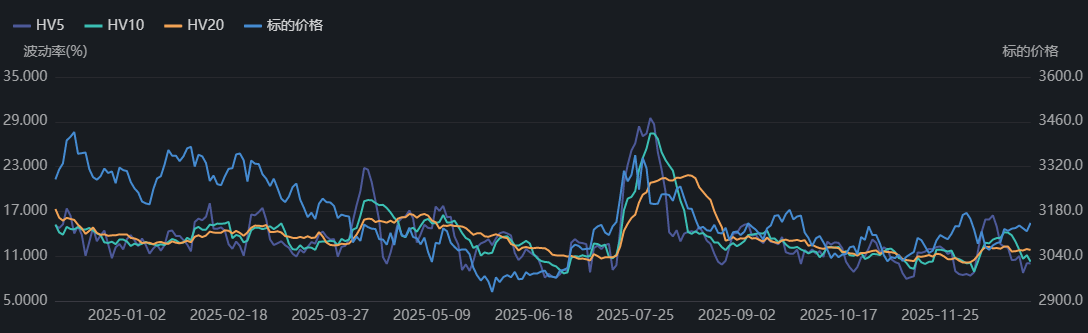
光大期货钢材策略月报-20251201
Guang Da Qi Huo· 2025-12-01 07:47
1. Report Industry Investment Rating - Not provided in the document 2. Core View of the Report - The fundamentals of supply and demand in the steel industry have limited driving force, and macro - level disturbances may intensify. The demand side is under pressure due to the decline in investment growth, while the supply side is expected to see a further decline in production. The market will be in a situation of weak supply and demand in December, with prices likely to fluctuate within a range, and attention should be paid to macro - level events [4][193][196] 3. Summary by Relevant Catalogs 3.1 Price - In November, the prices of black - series commodities showed divergent trends. Coal and coke prices dropped significantly, while iron ore and steel prices fluctuated within a narrow range, with rebar performing stronger than hot - rolled coil. International hot - rolled coil prices showed mixed trends [6][7] - The basis of rebar and hot - rolled coil futures contracts changed in November. The difference between rebar and billet prices widened, the difference between first - and third - tier rebar resources in East China narrowed, and the difference between rebar and scrap steel prices widened [9][27] - In November, the 1 - 5 spread of rebar futures widened, and the 5 - 10 spread narrowed. The ratio of rebar to iron ore narrowed, and the ratio of rebar to coke widened [37][43] 3.2 Supply - In October, the production of crude steel and pig iron continued to decline. In November, the weekly production of rebar, hot - rolled coil, and five major steel products all decreased. The production of rebar decreased in the northern, eastern, and southern regions [47][55][62] - In November, the blast furnace operating rate, capacity utilization rate, and daily molten iron output declined, while the electric furnace operating rate, capacity utilization rate, and steel mill scrap steel inventory increased [71][77] 3.3 Demand - In October, the year - on - year decline in real estate investment, sales, new construction, and completion widened, while the year - on - year decline in construction narrowed. Infrastructure investment growth continued to be negative, and the growth rates of transportation, water conservancy, and power investment all declined [82][89] - In October, the growth rate of automobile production and sales rebounded, the growth rate of excavator sales declined, and the growth rate of heavy - truck sales increased. The production and export of household appliances showed mixed trends [95][102] - In November, the national building materials trading volume declined, the rebar delivery volume in Hangzhou increased, and the cement delivery volume increased. The trading volume in the eastern and northern regions declined, while that in the southern region increased. The operating rate of cement mills first decreased and then increased [105][113] - In November, the apparent demand for rebar and hot - rolled coil declined, while the apparent demand for five major steel products increased. The land transaction area in 100 large - and medium - sized cities and the commercial housing transaction area in 30 large - and medium - sized cities increased, while the passenger car sales volume declined [121][128] 3.4 Inventory - In November, the inventory of five major steel products decreased by 112.95 million tons, with rebar inventory decreasing by 71.04 million tons and hot - rolled coil inventory decreasing by 5.69 million tons. The inventory in Shanghai and Hangzhou for rebar increased, while that in Guangzhou and Beijing decreased. The inventory of hot - rolled coil in Shanghai and Chengdu increased, while that in Tianjin and Lecong decreased [133][144][156] 3.5 Profit - In November, the losses on the rebar and hot - rolled coil futures contract plates narrowed. The losses of long - process steel mills widened, while the losses of short - process steel mills narrowed. In Jiangsu, the losses per ton of steel for blast furnace steel mills widened, and the losses of electric furnace steel mills during peak - power hours narrowed [160][162] 3.6 Import and Export - From January to October, steel exports increased by 6.6% year - on - year, while in June, steel exports decreased by 12.5% year - on - year [165] 3.7 Liquidity - In October, the growth rate of the stock of social financing, M1, and M2 all declined. The year - on - year and month - on - month growth rates of medium - and long - term loans for enterprises and households decreased significantly [169][178] 3.8 Transaction Data - In November, the positions, settled funds, and trading volumes of rebar and hot - rolled coil all declined [181] 3.9 Steel Options - Information on the historical volatility, position - to - volume ratio of put - to - call options, and trading - volume ratio of put - to - call options of rebar options is provided [184][188]
11月中旬全国流通市场钢材价格涨跌互现
Guo Jia Tong Ji Ju· 2025-11-25 01:33
Core Insights - The national statistics indicate mixed trends in steel prices in the circulating market from early to mid-November 2025, with some products experiencing price increases while others saw declines [1] Price Changes Summary - Rebar (Φ20mm, HRB400E) price is 3139.0 CNY/ton, up by 20.5 CNY/ton, a rise of 0.7%, compared to a previous decline of 0.1% [1] - Wire rod (Φ8-10mm, HPB300) price is 3282.6 CNY/ton, increased by 10.9 CNY/ton, a rise of 0.3%, following a previous decline of 0.3% [1] - Ordinary medium plate (20mm, Q235) price is 3393.7 CNY/ton, down by 18.1 CNY/ton, a decline of 0.5%, which is an increase in the decline rate by 0.1 percentage points compared to the previous period [1] - Hot-rolled ordinary coil (4.75-11.5mm, Q235) price is 3289.0 CNY/ton, decreased by 7.7 CNY/ton, a decline of 0.2%, which is a narrowing of the decline rate by 0.5 percentage points [1] - Seamless steel pipe (219*6, 20) price is 4068.8 CNY/ton, down by 10.4 CNY/ton, a decline of 0.3%, which is a narrowing of the decline rate by 0.1 percentage points [1] - Angle steel (5) price is 3423.3 CNY/ton, increased by 3.4 CNY/ton, a rise of 0.1%, which is a narrowing of the increase rate by 0.1 percentage points [1]
金道科技:今年年初以来钢材价格总体较为平稳
Zheng Quan Ri Bao Wang· 2025-10-15 09:13
Group 1 - The core viewpoint is that the steel prices have remained relatively stable since the beginning of the year, with fluctuations within a certain range, and have generally decreased compared to the same period last year [1] Group 2 - The company, Jindao Technology (301279), responded to investor inquiries on October 15, indicating the current state of the steel market [1] - The overall trend in steel prices suggests a downward movement when compared to the previous year [1]
《黑色》日报-20250924
Guang Fa Qi Huo· 2025-09-24 04:15
Group 1: Steel Industry Report Industry Investment Rating - Not provided Core View - Steel prices are expected to maintain a high - level oscillating trend. The reference range for rebar is 3100 - 3350 yuan/ton, and for hot - rolled coils is 3300 - 3500 yuan/ton. It is recommended to try long positions with light positions and pay attention to the seasonal recovery of apparent demand. The spread between hot - rolled coils and rebar is expected to continue to converge [1]. Summary by Directory - **Prices and Spreads**: Rebar and hot - rolled coil spot and futures prices mostly declined. For example, rebar 05 contract decreased from 3244 to 3212 yuan/ton, and hot - rolled coil 01 contract decreased from 3380 to 3340 yuan/ton [1]. - **Cost and Profit**: The cost of billets and slabs remained unchanged. The profit of hot - rolled coils in different regions and the profit of rebar in different regions showed various changes, such as the profit of hot - rolled coils in East China increasing by 16 [1]. - **Output**: The daily average molten iron output increased slightly by 0.2% to 241.0 tons. The output of five major steel products decreased by 0.2% to 855.5 tons, with rebar output decreasing by 2.6% to 206.5 tons and hot - rolled coil output increasing by 0.4% to 326.5 tons [1]. - **Inventory**: The inventory of five major steel products increased by 0.3% to 1519.7 tons. Rebar inventory decreased by 0.5% to 650.3 tons, and hot - rolled coil inventory increased by 1.3% to 378.0 tons [1]. - **Transaction and Demand**: The building materials trading volume increased by 0.8% to 11.5 tons. The apparent demand for five major steel products increased by 0.8% to 850.3 tons, the apparent demand for rebar increased by 6.0% to 210.0 tons, and the apparent demand for hot - rolled coils decreased by 1.3% to 321.8 tons [1]. Group 2: Iron Ore Industry Report Industry Investment Rating - Not provided Core View - Iron ore is currently in a tight - balance pattern. It is recommended to view it as oscillating upward. The reference range is 780 - 850. It is suggested to go long on the iron ore 2601 contract on dips, and the arbitrage strategy is to go long on iron ore and short on hot - rolled coils [4]. Summary by Directory - **Prices and Spreads**: The warehouse receipt costs of various iron ore powders decreased slightly, such as the warehouse receipt cost of PB powder decreasing from 848.0 to 842.5 yuan/ton. The basis of the 01 contract for various powders decreased significantly, for example, the 01 contract basis of PB powder decreased from 82.0 to 40.0 yuan/ton [4]. - **Supply**: The weekly arrival volume at 45 ports increased by 13.2% to 2675.0 tons, and the global weekly shipping volume decreased by 6.9% to 3324.8 tons. The monthly national import volume increased by 0.6% to 10522.5 tons [4]. - **Demand**: The weekly average daily molten iron output of 247 steel mills increased by 0.2% to 241.0 tons, the weekly average daily port clearance volume at 45 ports increased by 2.4% to 339.2 tons. The monthly national pig iron output decreased by 1.4% to 6979.3 tons, and the monthly national crude steel output decreased by 2.9% to 7736.9 tons [4]. - **Inventory**: The inventory at 45 ports increased by 0.9% to 13930.97 tons, the imported ore inventory of 247 steel mills increased by 3.5% to 9309.4 tons, and the available days of inventory for 64 steel mills increased by 10.0% to 22.0 days [4]. Group 3: Coke and Coking Coal Industry Report Industry Investment Rating - Not provided Core View - **Coke**: It is recommended to go long on the coke 2601 contract on dips, with a reference range of 1650 - 1800. The arbitrage strategy is to go long on coking coal and short on coke. - **Coking Coal**: It is recommended to go long on the coking coal 2601 contract on dips, with a reference range of 1150 - 1300. The arbitrage strategy is to go long on coking coal and short on coke [6]. Summary by Directory - **Prices and Spreads**: For coke, the price of Shanxi quasi - first - grade wet - quenched coke remained unchanged, and the price of Rizhao Port quasi - first - grade wet - quenched coke decreased by 1.3%. For coking coal, the price of Shanxi medium - sulfur main coking coal increased by 3.3%, and the price of Mongolian 5 raw coal increased by 2.6% [6]. - **Supply**: The weekly coke output remained unchanged at 762 tons. The daily average output of full - sample coking plants decreased by 0.1% to 66.7 tons, and the daily average output of 247 steel mills increased by 0.2% to 241.0 tons. The weekly output of Fenwei sample coal mines increased by 1.3% to 872.5 tons, and the clean coal output increased by 1.8% to 450.6 tons [6]. - **Demand**: The weekly molten iron output increased by 0.2% to 241.0 tons, and the weekly coke output remained unchanged at 762 tons [6]. - **Inventory**: The total coke inventory increased by 1.0% to 915.2 tons. The coke inventory of full - sample coking plants decreased by 2.1% to 66.4 tons, and the coke inventory of 247 steel mills increased by 1.8% to 644.7 tons. The coking coal inventory of full - sample coking plants increased by 6.4% to 940.4 tons, and the coking coal inventory of 247 steel mills decreased by 0.4% to 790.3 tons [6]. - **Supply - Demand Gap**: The coke supply - demand gap decreased by 6.5% to - 3.3 tons [6].