
食品添加剂监管

Search documents
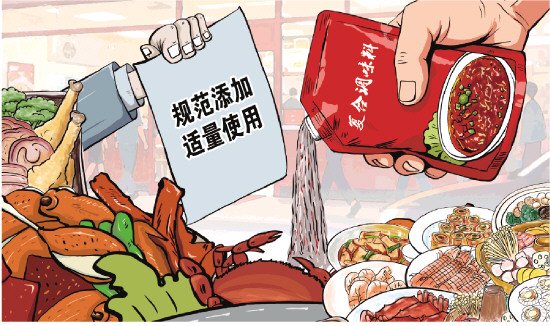
明确标示合规使用让消费者放心
Xin Lang Cai Jing· 2026-01-09 18:42
Core Viewpoint - The article discusses the increasing use of compound seasonings in the restaurant industry, highlighting both their benefits and the risks associated with their improper use, particularly concerning food safety and consumer perceptions [3][4][6]. Group 1: Industry Trends - Compound seasonings are becoming standard in many small and medium-sized restaurants due to their convenience, flavor stability, and cost-effectiveness [3][4]. - The use of compound seasonings allows for improved efficiency in food preparation, as fewer skilled workers are needed to maintain consistent flavor profiles [4]. - For example, a 500-gram package of a certain brand's spicy hot pot base costs 25 yuan and can prepare 3 to 4 servings, making the average cost per serving only 6 to 8 yuan, significantly lower than sourcing multiple ingredients [4]. Group 2: Regulatory and Safety Concerns - There are significant issues with the non-compliant use of compound seasonings, with many restaurant operators exceeding recommended usage amounts without proper knowledge [4][5]. - The regulatory framework for food additives in China is well-established, with standards such as GB31644-2018 governing the use of compound seasonings, although specific regulations for products like "Meat Treasure King" are lacking [6][7]. - Experts emphasize the importance of adhering to national standards and the need for better consumer education regarding the safety of legally used food additives [6][7]. Group 3: Consumer Perceptions - Consumer opinions on compound seasonings are divided, with some believing that they contain harmful additives, while others recognize that compliant additives are safe when used correctly [6][7]. - Misunderstandings about food additives often stem from past food safety incidents, leading to a general mistrust among consumers [6][7]. Group 4: Recommendations for Improvement - To ensure safe usage of compound seasonings, it is recommended that food producers maintain transparency in labeling, provide clear usage instructions, and implement better storage practices [7]. - Ongoing education and awareness campaigns are necessary to improve the understanding of food safety regulations among restaurant operators and consumers alike [7].

堵住食品添加剂使用漏洞
Jing Ji Ri Bao· 2025-11-13 00:41
Core Insights - The article highlights the ongoing efforts and achievements in regulating food additives in China, emphasizing a decrease in the non-compliance rate of food additives in recent inspections [1][2][3]. Regulatory Actions - In the first three quarters of this year, national market regulatory authorities conducted inspections on 2.2745 million batches of food additives, identifying 21,200 non-compliant samples, resulting in a non-compliance rate of 0.93%, which is a decrease of 0.02 percentage points compared to the same period last year [1][2]. - The State Administration for Market Regulation (SAMR) has initiated a comprehensive governance action plan to address the misuse of food additives, which has led to the investigation of 13,180 cases of excessive or unauthorized use, with a total involved amount of 23.31 million yuan and fines totaling 90.38 million yuan [1][2]. Focus Areas - The inspections have particularly targeted high-risk categories such as edible agricultural products, vegetable products, and grain processing products, with a focus on products labeled as "zero additives" or "no preservatives" [2][3]. - Specific measures have been implemented for meat products, including new production licensing guidelines that require strict adherence to standards for food additive usage [3][4]. Industry Response - The China Food Industry Association has called for industry self-discipline and the adoption of a "non-essential, no-additive" philosophy to reduce reliance on food additives, emphasizing the importance of consumer health and industry trust [4]. - The SAMR plans to continue enhancing the safety regulation of food additives and consolidate the achievements of the governance efforts to ensure public safety in food consumption [5].
专项抽检超227万批次、查办案件逾1.3万件 堵住食品添加剂使用漏洞
Jing Ji Ri Bao· 2025-11-13 00:16
Core Viewpoint - Strict regulation of food additives remains a key focus of food safety oversight, with a comprehensive governance action launched to protect consumer safety [1] Group 1: Regulatory Actions and Results - As of now, the special action has led to the investigation of 13,180 cases of excessive or unauthorized use of food additives, involving a total amount of 23.31 million yuan and fines of 90.38 million yuan, with 89 cases referred to law enforcement [1] - In the first three quarters of this year, 2.12 million batches of food additives were tested, with 21,200 non-compliant samples found, resulting in a non-compliance rate of 0.93%, a decrease of 0.02 percentage points compared to the same period last year [1][2] Group 2: Focus Areas for Inspection - The regulatory body is focusing on 21 categories of high-risk products, including agricultural products and processed foods, particularly those labeled as "zero additives" or "no preservatives" [2] - Among the tested categories, beverages, nuts, and dairy products showed no non-compliant samples, while grain products and baked goods had varying degrees of violations related to the use of additives like sulfur dioxide and sweeteners [2] Group 3: Enhanced Measures for Specific Products - New guidelines for meat products require strict adherence to standards for food additive usage, including defined quantities and types, with regular monitoring implemented [3] - In the beverage sector, production guidelines mandate the establishment of product formulation management systems to ensure compliance with national safety standards [3] Group 4: Industry Responsibility and Future Directions - The industry is urged to adopt a "non-essential, no-addition" philosophy to reduce reliance on food additives, promoting self-regulation and accountability among producers [3] - The regulatory authority emphasizes that quality and safety are non-negotiable, and future efforts will focus on strengthening the governance of food additive production and usage [4]
专项抽检超227万批次、查办案件逾1.3万件——堵住食品添加剂使用漏洞
Jing Ji Ri Bao· 2025-11-12 22:23
Core Insights - The article highlights the ongoing efforts and results of China's food additive regulation, emphasizing a decrease in non-compliance rates and the implementation of stricter measures to ensure food safety [1][2][4]. Group 1: Regulatory Actions and Results - In the first three quarters of this year, national market regulatory authorities conducted 2.2745 million batches of food additive inspections, detecting 21,200 non-compliant samples, resulting in a non-compliance rate of 0.93%, a decrease of 0.02 percentage points compared to the same period last year [1][2]. - The regulatory authorities have taken action against 13,180 cases of excessive or unauthorized use of food additives, with a total involved amount of 23.31 million yuan and fines totaling 90.38 million yuan, of which 89 cases have been referred to law enforcement [1][2]. Group 2: Focus Areas and Challenges - The regulatory focus includes high-risk categories such as edible agricultural products, vegetable products, and grain processing products, particularly those labeled as "zero additive" or "no preservatives" [2][3]. - Despite progress, there are still areas where illegal addition and abuse of food additives persist, indicating a risk of resurgence in these practices [2][4]. Group 3: Industry Standards and Compliance - New guidelines for meat product production have been established, requiring strict adherence to standards for food additive usage, including specific quantities and types [3][4]. - In the beverage sector, production companies are mandated to establish product formula management systems to ensure compliance with national food safety standards regarding food additives [4]. Group 4: Industry Self-Regulation and Future Directions - The China Food Industry Association emphasizes the importance of self-regulation within the industry, advocating for reduced reliance on food additives and promoting the principle of "no unnecessary addition" [4]. - The market regulatory authorities plan to continue enhancing the safety supervision of food additive production and usage, aiming to solidify the achievements of the regulatory actions and ensure consumer safety [4].
市场监管总局:是否添加食品添加剂的“自选动作”做不好影响销量,质量安全诚信的“规定动作”做不好就一票否决
Mei Ri Jing Ji Xin Wen· 2025-10-31 16:26
Core Viewpoint - The Chinese government is intensifying its regulation and monitoring of food additives to ensure food safety, following public concern over illegal use and abuse of these substances [1][3]. Group 1: Regulatory Actions - In April, the State Council's Food Safety Office and six other departments issued a comprehensive governance plan to address the misuse of food additives nationwide [1]. - The market regulatory authorities have investigated 13,180 cases of excessive or unauthorized use of food additives, with a total involved amount of 23.31 million yuan and fines totaling 90.38 million yuan [1]. - A total of 2.12 million batches of food additives were tested in the first three quarters, with a non-compliance rate of 0.93%, a decrease of 0.02 percentage points from the previous year [3]. Group 2: Inspection and Compliance - The inspection covered 10 types of food additives across 31 testing projects, focusing on sweeteners, colorants, preservatives, and other substances [4]. - No non-compliant samples were found in seven major food categories, while violations were detected in 14 categories, primarily involving sulfur dioxide, sweeteners, and preservatives [4]. - Regulatory authorities are taking immediate action against non-compliant products, including recalls and legal actions against offending companies [4]. Group 3: Industry Guidelines and Initiatives - The regulatory body is developing risk control lists for meat products and has established guidelines for the supervision of food additives in meat production [5]. - For beverage production, new licensing requirements mandate that companies document the use of food additives and adhere to national safety standards [6]. - The industry is encouraged to reduce the quantity and variety of food additives used, with initiatives launched by the beverage industry association and major companies [6].

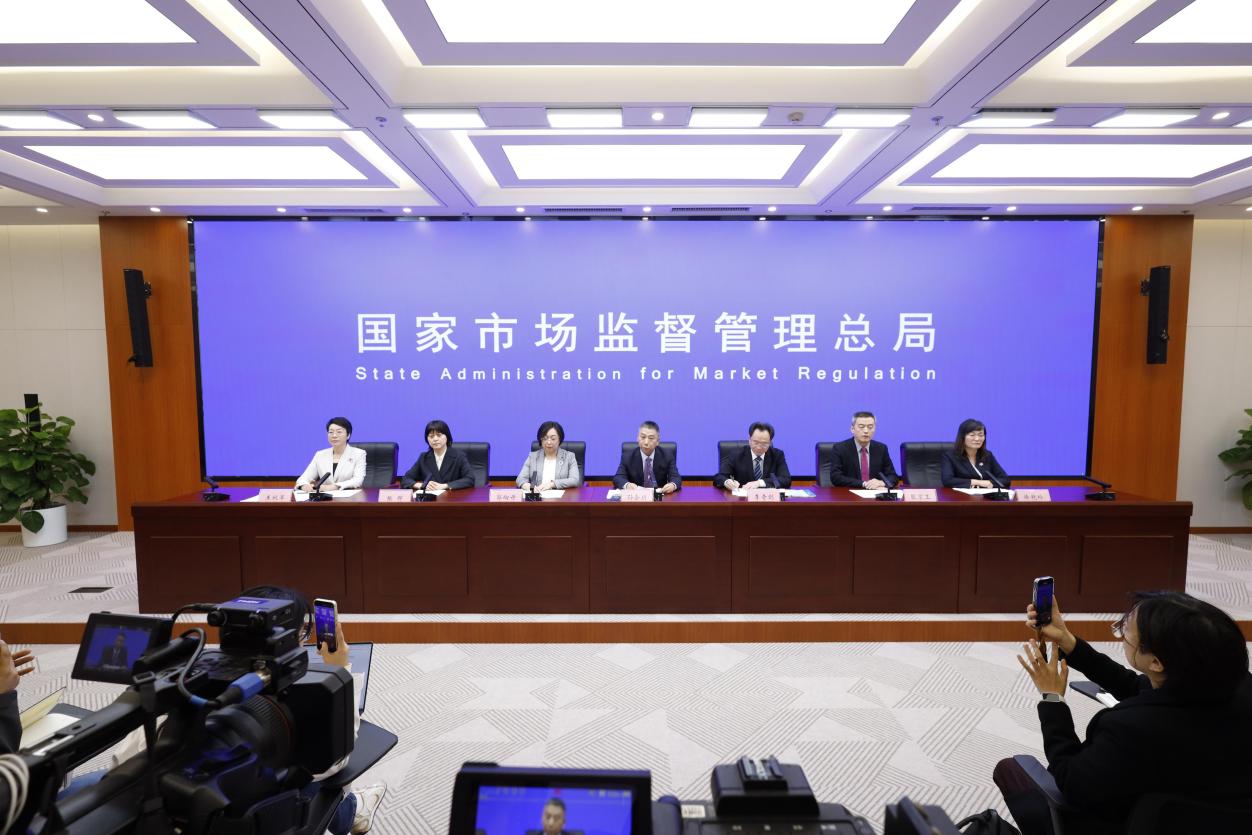
要“科技”不要“狠活” 全国食品添加剂监管成效显著
Zhong Guo Jing Ji Wang· 2025-10-31 09:28
Core Viewpoint - The National Market Supervision Administration of China has reported significant progress in the regulation and comprehensive governance of food additives since the implementation of a joint governance plan in April 2023, with thousands of cases addressed and substantial penalties imposed [1][3]. Group 1: Regulatory Actions and Results - Since April 2023, a total of 13,180 cases of illegal use of food additives have been investigated, resulting in fines totaling 90.38 million yuan, with 89 cases referred for criminal prosecution [1][3]. - The inspection data revealed that 2.2745 million batches of food additives were tested in the first three quarters of 2025, with a non-compliance rate of 0.93%, a decrease of 0.02 percentage points compared to the same period last year [3]. Group 2: Key Features of Governance Actions - The governance actions focus on a full-chain rectification approach, covering all stages from production to consumption, and enhancing inter-departmental and regional collaborative supervision [3]. - The initiative targets four major issues, including risks from the production of edible agricultural products, weak management in the production and sale of food additives, and illegal practices in food production and catering [3]. - The principle of "non-essential additives" is emphasized, promoting a dual reduction in the variety and quantity of food additives used [3]. Group 3: Industry Guidance and Future Plans - The administration is guiding industry associations to urge companies to use food additives in a standardized manner and to accurately label products [3]. - Future efforts will focus on strengthening the safety regulation of food additives and consolidating the achievements of the governance actions to ensure food safety for consumers [4].
新华财经早报:7月30日
Xin Hua Cai Jing· 2025-07-29 23:42
Group 1: US-China Trade Talks - The US-China trade talks were held in Stockholm, where both sides agreed to extend the suspension of the US's 24% reciprocal tariffs and China's countermeasures for an additional 90 days [2] Group 2: State-Owned Enterprises Performance - In the first half of 2025, state-owned enterprises in China reported total operating revenue of 4,074.96 billion yuan, a year-on-year decrease of 0.2% [2] - The total profit of state-owned enterprises for the same period was 218.253 billion yuan, down 3.1% year-on-year [2] - The tax and fee payments by state-owned enterprises amounted to 300.264 billion yuan, a decline of 0.8% year-on-year [2] - By the end of June, the asset-liability ratio of state-owned enterprises was 65.2%, an increase of 0.3 percentage points year-on-year [2] Group 3: Market Developments - The Hong Kong Stock Exchange reported an average daily trading volume of 240.2 billion HKD in the first half of 2025, a year-on-year increase of 118% [2] - Under the Shanghai-Hong Kong Stock Connect mechanism, the average daily trading volume of Hong Kong stocks was 110.96 billion HKD, up 195% year-on-year [2] - As of the end of June 2025, the market capitalization of Hong Kong was 42.7 trillion HKD, reflecting a year-on-year growth of 33% [2] Group 4: Corporate Announcements - China CRRC signed several major contracts worth approximately 32.92 billion yuan recently [7] - Changchun High-tech's overseas subsidiary received approval for a drug in the US [7] - Daoshi Technology signed a strategic cooperation agreement related to humanoid robots [7] - Shijia Photon reported a net profit increase of 1712% year-on-year to 217 million yuan for the first half of 2025 [7]

美国食品药品监督管理局(FDA)计划逐步淘汰八种人工食品色素。
news flash· 2025-04-22 13:57
Group 1 - The FDA plans to phase out eight artificial food colorings [1] - This initiative is part of a broader effort to improve food safety and consumer health [1] - The decision may impact food manufacturers and the overall food industry [1] Group 2 - The move reflects growing consumer demand for natural ingredients and transparency in food labeling [1] - Companies may need to reformulate products to comply with the new regulations [1] - The phase-out could lead to increased costs for manufacturers as they seek alternative colorings [1]