两轮电动车

Search documents
未知机构:申万宏源家电爱玛科技近期交流情况更新近期销售情况新国标影响下开年-20260306
未知机构· 2026-03-06 02:20
【申万宏源家电】爱玛科技近期交流情况更新 近期销售情况:新国标影响下,开年以来电自+电摩整体销售情况一般,但未出现大幅下滑,#好于公司预期。 公司推出低价电摩产品,满足低线城市电摩替代电自的需求,电摩占比快速提升。 新国标后续影响:一二线城市电自仍为刚需,预计后续需求会持续恢复,三四线城市电摩占比有望进一步提升。 #参考上一轮国标情况,限速、续航等核心问题方面后续监管有 增量业务:#高端品牌零际即将线上发布,预计Q2-3布局线下实体店。 公司尝试高端产品布局,布局前沿技术未来也有望赋能爱玛品牌大众产品。 【申万宏源家电】爱玛科技近期交流情况更新 #电三轮业务快速增长,公司加速产能布局,随着后续产能释放增速有望进一步提升。 近期销售情况:新国标影响下,开年以来电自+电摩整体销售情况一般,但未出现大幅下滑,#好于公司预期。 海外业务仍处于前期布局阶段,东南亚仍需配套基建跟进。 公司推出低价电摩产品,满足低线城市电摩替代电自的需求,电摩占比快速提升。 新国标后续影响:一二线城市电自仍为刚需,预计后续需求会持续恢复,三四线城市电摩占比有望进一步提升。 #参考上一轮国标情况,限速、续航等核心问题方面后续监管有望逐步放宽 ...

九号公司王野:以智能化、全球化为核心 冲刺下一个“千万台”
Shang Hai Zheng Quan Bao· 2026-02-24 17:49
"在常州基地,九号用6年时间创下智能电动两轮车出货量破1000万台的纪录,这既是一个重要的里程 碑,更是一个新起点。"谈及下一个1000万台征程,王野信心满满,未来九号将以智能化、全球化为核 心,让发展步伐迈得更快、更稳。 全球化探路:用技术和产品解用户的"题" 全球化是九号公司的核心战略之一,自成立之初,公司便以全球视野布局市场。"今年,我们将正式开 启东南亚市场布局,这是全球化征程的关键一步。"王野告诉记者,出海的核心不是简单的产品输出, 而是通过深入洞察当地消费者的习惯与痛点,提供适合他们的产品。"我们的技术和产品,最终要为解 决用户问题而生,只有真正解了消费者的'题',才能赢得市场认可。" s 5 a e s . s a s @ L 王野 ◎邱思雨 记者 操子怡 走进占地5000平方米的九号检测中心,在整车碰撞试验区,一台崭新的电动两轮车被机械装置牢牢固 定。随着指令下达,车辆以设定速度精准撞向墙壁——"砰"的一声闷响在实验室回荡,工程师立刻上前 采集车架形变数据。不远处,一辆电动自行车正被机械臂缓缓拉升至数米高度,随后自由落体砸向地 面,这是行业首创的整车跌落测试台,验证着车辆最极端的耐冲击底线。环 ...


财信证券晨会纪要-20260224
Caixin Securities· 2026-02-23 23:30
Group 1: Market Overview - The A-share market is experiencing a wide range of fluctuations, with a focus on price-increasing sectors and export industry chains [6][9] - As of February 13, 2026, the major indices showed declines: the Shanghai Composite Index fell by 1.26% to 4082.07 points, and the ChiNext Index dropped by 1.57% to 3275.96 points [6][7] - The overall market sentiment is cautious, with expectations of a gradual return to intrinsic market dynamics as the National People's Congress approaches [6][8] Group 2: Industry Dynamics - Hansoh Pharmaceutical's (3692.HK) Amivantamab has been approved for marketing in the EU for specific types of lung cancer [27] - The world's largest offshore wind farm, Hornsea 3, is set to begin construction, with significant logistical preparations already underway [29] - The CWEA reported that China's wind power installation capacity is expected to grow significantly, with a 49.9% year-on-year increase anticipated for 2025 [31] Group 3: Company Updates - Dongfang Cable (603606.SH) has successfully shipped a large-scale underwater cable to the UK, valued at over 900 million RMB, for use in multiple offshore wind projects [37] - The actual controller of Youkeshu (300209.SZ) plans to increase his stake in the company, reflecting confidence in its business recovery [39] - The electric motorcycle industry is seeing accelerated growth due to new policies and market demand, with over 12.5 million units expected to be replaced under the "old for new" subsidy program in 2025 [33]
从春晚到街头,雅迪如何把流量变成留量?
Di Yi Cai Jing· 2026-02-19 06:30
在消费信心尚未完全回暖而流量红利几近见顶的2026年,品牌营销正经历一场深刻的"去泡沫化"——情绪和共鸣如果无法落地为真实交易,流量终会转瞬即 逝。在此背景下,能将春节这一国民级情感节点高效转化为终端销售动能的品牌屈指可数。 甫一开年,雅迪以「骑雅迪 马年旺」CNY整合传播战役,交出了一份合格答卷。依托4万家门店构成的终端网络,雅迪将央视春晚的势能、旺旺IP的年味情 感和王鹤棣的青年号召力,统一汇聚到产品之上,并通过门店迅速转化为了真实销售。雅迪是怎么高效实现结果的? 实际上,这一切的根基,离不开其核心产品——雅迪冠能的智能科技支撑。在《2026 Young在春晚》节目中,雅迪冠能白鲨II被央视赋予独特角色——作为 具备主动交互能力的"智能场外主持",深度融入节目叙事。这标志着中国智造的电动车以"科技共创者"身份登上国家级春晚舞台,而非仅仅只是植入软广或 者展示产品。这一高规格认可,正是对雅迪连续九年全球销量第一、累计销量超1亿台背后技术积淀的认可——真正引领行业的标杆品牌,终将被时代主场 看见。 雅迪的"开门红",并非偶然的节日爆款,而是雅迪多年深耕用户、产品与渠道后,在春节档期的一次水到渠成结果。 从流量 ...


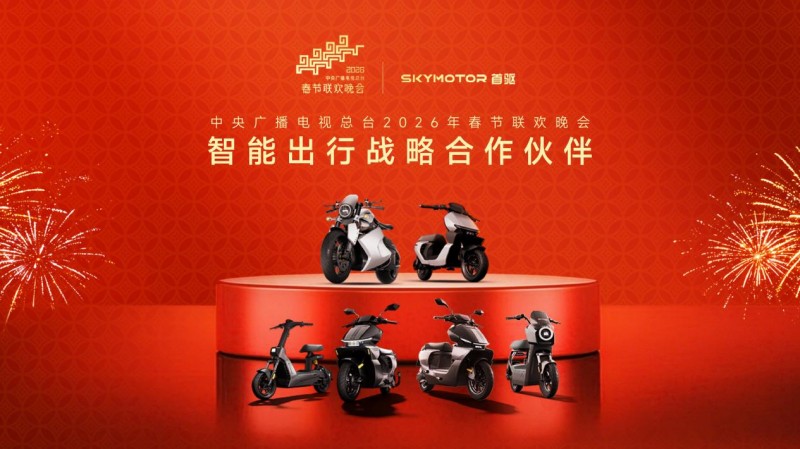
春晚“黄金席位”背后:首驱科技如何用两轮承载起国家级平台的信赖与期待?
Sou Hu Wang· 2026-02-19 04:32
Core Viewpoint - Shouqu Technology's appearance as a "smart mobility strategic partner" at the CCTV Spring Festival Gala marks a significant milestone for the two-wheeled electric vehicle industry, representing a strategic positioning in the smart mobility sector for the first time in over 40 years of the gala's history [1] Group 1: National Strategic Value - The current phase of China's economy is focused on high-quality development, with "new quality productivity" being a core direction for industrial upgrades, aiming to transform "Made in China" into "Intelligent Manufacturing in China" [3] - Shouqu Technology differentiates itself by integrating electronic and electrical architecture from the automotive sector into two-wheeled products, creating intelligent terminals that can sense the environment and understand user needs [3] - The collaboration with Tsinghua University to establish a joint laboratory for advanced explorations in various fields aligns with the national push for "AI+" strategies, positioning Shouqu as a pioneer in defining a new category of "intelligent mobility robots" [3] Group 2: Systematic Verification of Industrial Capability - In its first year, Shouqu Technology achieved significant milestones, including the production and nationwide distribution of 10,000 units, supported by a manufacturing base with an investment of 1.521 billion yuan and an annual capacity of 1.5 million units [6] - The company demonstrated rapid channel expansion, reaching over 1,000 flagship stores within four months, indicating a scalable and replicable user-driven retail model [6] - The comprehensive construction of its industrial capabilities, from research and development to manufacturing and distribution, highlights the company's growth potential and reliability beyond mere technological breakthroughs [6] Group 3: Generational Transition in the Industry - The Spring Festival Gala appearance signifies a deeper industrial meaning, as the two-wheeled electric vehicle industry transitions from parameter and price-based competition to a new era defined by intelligent mobility [10] - Shouqu Technology's positioning as an "intelligent mobility robot" indicates a shift away from traditional market share battles, focusing instead on a generational change in the industry [11] - The strategic partnerships with top global esports IPs reflect a clear brand-building path, capturing the attention of over 200 million young users and facilitating a shift from "transportation tools" to "lifestyle choices" [11] Group 4: National Recognition and Future Prospects - Shouqu Technology's recognition on a national platform accelerates the industry's shift from a "parameter-driven" evaluation system to an "experience-driven" one, where intelligence and adaptability become new competitive dimensions [15] - The Spring Festival Gala serves as a starting point for Shouqu Technology, backed by national trust, as it continues to advance in the smart mobility sector, embodying the spirit of "Chinese intelligent manufacturing" [15]
互联网时代,经销商的增长正回归“能力本位”
Sou Hu Cai Jing· 2026-02-07 17:40
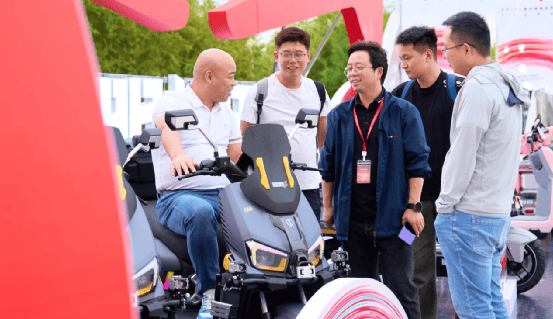
Core Insights - The industry consensus indicates that while market size remains, growth increasingly tests operational capabilities as the sector transitions from rapid expansion to a mature phase emphasizing quality, compliance, and operational stability [1][3] Group 1: Industry Transition - The implementation of new national standards and the improvement of regulatory frameworks are driving the industry from a focus on network coverage to a focus on systemic capabilities [3] - Market space remains considerable, but the benefits are no longer universal, shifting towards companies with stable systems in product, service, and channel collaboration [3] Group 2: Dealer Core Competencies - Dealers' growth paths are increasingly centered on key capabilities such as efficiency, service, digitalization, and collaboration [4][6] - Efficiency involves inventory turnover, capital utilization, and market response speed, with data showing that stores with healthy inventory structures perform better during industry fluctuations [4] - Service capability is crucial as user experience now relies on stable service standards rather than individual store performance [4] - Digitalization is essential for systematic operations and data-driven decision-making, becoming a necessary tool for maintaining operational certainty [6] - Collaboration capability is vital for sustainable growth, requiring effective cooperation with brands to integrate into broader market and service chains [6] Group 3: Evolution of Manufacturer-Dealer Relationships - The relationship between manufacturers and dealers is evolving towards deeper collaboration, focusing on better user service and enhanced operational stability [7] - Both parties are shifting their focus from short-term sales to long-term operational quality, leading to more professional and capability-matched cooperation models [7] Group 4: Case Study of Channel System Evolution - The example of Tailin demonstrates sustained growth through continuous investment in systematic capabilities rather than short-term tactics, achieving 23 years of consecutive growth [9] - By enhancing terminal support, standardizing service, and improving service efficiency, frontline store performance has significantly improved [9] - Dealers with cross-regional operational capabilities are increasingly participating in market and service collaboration, creating more resilient channel structures [9] Group 5: Conclusion on Long-term Growth - The industry is entering a new development stage where growth relies on continuous enhancement of capabilities across the supply chain rather than frequent changes in business models [11] - Dealers should focus on solidifying their value in efficiency, service, and collaboration rather than worrying about external environmental changes [11] - Future manufacturer-dealer relationships may evolve into a symbiotic form based on professional division of labor and close collaboration, allowing each party to leverage their strengths for sustainable high-quality growth [11]
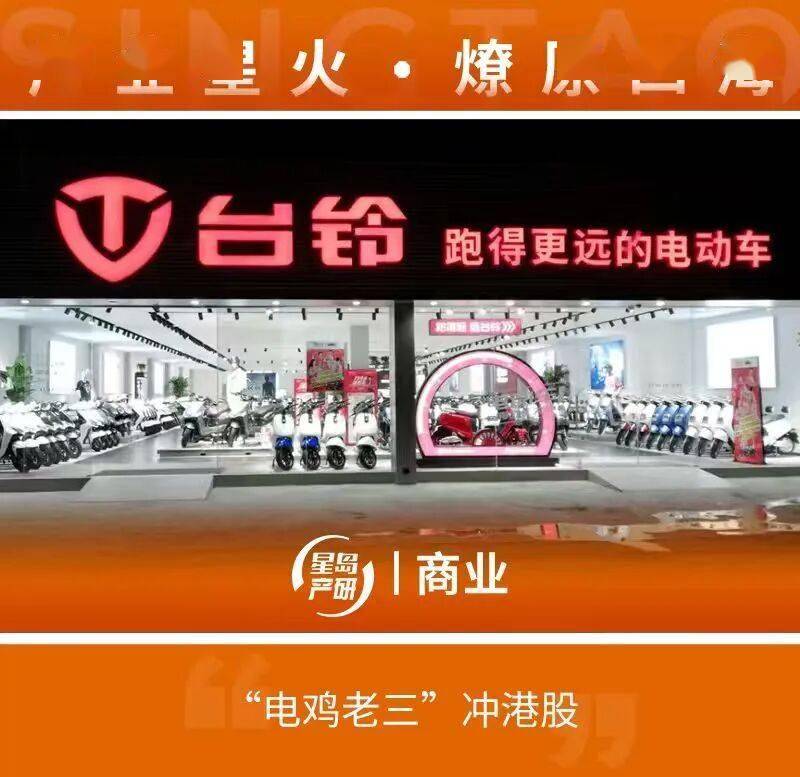
毛利率不及雅迪、爱玛,负债率超88%,“电鸡老三”台铃冲刺港股IPO
Sou Hu Cai Jing· 2026-02-05 09:35
据招股书介绍,台铃以"低碳出行"为愿景,是国内"长续航电动两轮车"的定义者。根据弗若斯特沙利文的资料, 按2024年电动两轮车的收入计,台铃在中国内地排名第三,市场份额约为12.7%,仅次于雅迪和爱玛。 | 中國電動兩輪車競爭格局(按收入計,2024年) | | | | --- | --- | --- | | 公司 收入 | | 市場份額 | | (人民幣十億元) | | (%) | | A公司 | 27.3 | 26.8% | | B公司 | 18.3 | 17.9% | | 本公司 | 13.0 | 12.7% | | C公司 | 7.2 | 7.1% | | 其他 | 36.2 | 35.5% | | 合計 | 102.0 | 100% | | 資料來源:上市公司公開文件·文獻研究·弗若斯特沙利文分析 | | | 《星岛》记者 钟凯 实习生 胡庭玮 深圳报道 近日,台铃科技股份有限公司(下称"台铃")正式向港交所递交主板上市申请,中信证券(香港)、招商证券 (香港)担任联合保荐人。 2025年前三个季度,台铃直销收入仅占比2.6%,其97.4%的收入都是通过经销商销售实现的。这种模式需要向经 销商让渡大 ...
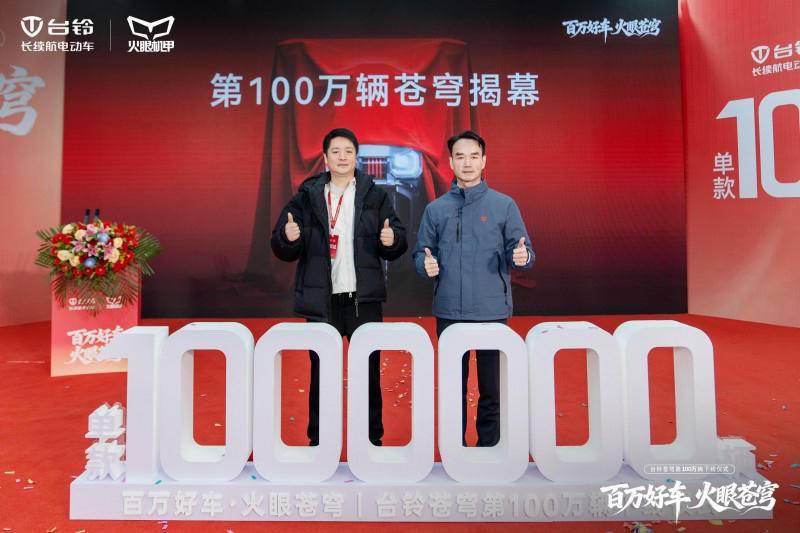
台铃第100万辆苍穹下线仪式,宣布与AG电竞达成战略合作
Yang Zi Wan Bao Wang· 2026-02-05 06:33
2月4日,台铃在无锡制造基地隆重举办以"百万好车.火眼苍穹"为主题的第100万辆苍穹下线仪式,并正式宣布与 AG电子竞技俱乐部达成战略合作,通过多元举措引领行业价值竞争,开拓市场增长新格局。 产环节的透明化,彰显对全链路品控的底气。 官宣AG电竞战队合作,跨界联动共创新竞界 台铃苍穹实现百万下线,树立行业价值竞争新范式 仪式现场,台铃集团执行总裁孙木楚与AG电子竞技俱乐部代表一同揭幕,宣告第100万辆台铃苍穹正式下线。 "苍穹不仅仅是一款车,更是台铃战略定力与创新精神的集中体现。"执行总裁孙木楚指出,苍穹以原创的"双灯机 甲"设计语言,开创了两轮电动车全新的美学与功能品类。台铃苍穹实现百万辆下线,充分证明了市场对于优质原 创产品的渴求,证明了价值路线的巨大生命力。 台铃集团执行总裁孙木楚 "这个'100万'的数字,意义非凡。对台铃而言,这是一次重要的跨越,但更是新征程的起点。而对整个两轮电动 车行业而言,这'一小步',或许是迈向高质量发展、树立价值竞争新范式的一大步。"他在致辞中表示。 与此同时,百万下线的达成也建立在台铃对产品品质的持续追求之上。活动中通过直播镜头,全网观众得以"云参 观"台铃生产线与获国家 ...
小牛电动将新增六条生产线 西太湖基地年产能预达300万辆
Zheng Quan Ri Bao Wang· 2026-01-30 12:49
Group 1 - The company announced the appointment of actors Wu Lei and Song Yuqi as global brand ambassadors, launching a brand renewal campaign targeting Generation Z with the new slogan "I want a Niu" [1] - The company signed a contract for a high-end smart mobility project in Xitai Lake, aiming for an annual production capacity of 3 million units and an expected output value exceeding 10 billion yuan [1] - The CEO highlighted the importance of the Xitai Lake base in the company's global strategy, citing the region's supply chain, innovation environment, and efficient government services as key support [1] Group 2 - The company plans to launch 19 new products by 2025, featuring industry innovations such as customizable vehicle wallpapers and a two-way intelligent control system [2] - The company has accumulated over 800 patents related to high-end smart electric vehicles, covering key areas like battery management and smart control [2] - By 2026, the company aims to introduce five major series and nearly 20 new national standard products to meet diverse market demands [2] Group 3 - The company achieved significant online growth through innovative marketing strategies on platforms like Douyin and Kuaishou, with over 3.7 million online-to-offline conversions [1] - The company empowered over 4,000 stores and conducted more than 230 expert training sessions, creating a complete ecosystem of "content seeding + live streaming + in-store experience" [1] - The company will continue to focus on the high-end smart mobility sector, leveraging product innovation, brand renewal, and channel upgrades to deepen its market presence among younger consumers [2]

再来1000万台,九号的二轮电动车怎么开
Guan Cha Zhe Wang· 2026-01-29 00:42
Core Insights - Ninebot has achieved a significant milestone by surpassing 10 million units in global electric scooter shipments, setting a record for the fastest sales in the two-wheeler market within six years, and is now focusing on its next target of 20 million units [1][3] - The company has announced three core strategies: dual-branding, globalization, and the "electric cut oil" initiative, aiming to address the challenges of the saturated Chinese two-wheeler market [1][3] Dual-Brand Strategy - Ninebot's dual-brand strategy distinguishes between Ninebot and Segway based on user characteristics rather than price tiers, targeting different consumer segments [5][7] - Ninebot focuses on convenience, safety, and simplicity for the majority of users, while Segway caters to professional riders seeking performance and adventure [5][7] - Both brands share core technologies but operate independently in terms of channels and services, allowing for tailored marketing and product adjustments based on local consumer preferences [7] Electric Cut Oil Initiative - The "electric cut oil" strategy aims to replace traditional fuel-powered two-wheelers with electric alternatives, addressing the environmental and maintenance issues associated with combustion engines [9][10] - Ninebot is enhancing battery technology and vehicle design to achieve significant improvements in energy density and range, with new models expected to offer up to 300 km of range [10][12] - The company is also focused on cost optimization through partnerships and technological advancements to make electric vehicles more accessible [12] Globalization Efforts - Ninebot is pursuing a globalization strategy that emphasizes innovation and localization, moving away from low-cost mass production to create a high-value brand image [13][14] - The company has established subsidiaries in key global cities and employs a diverse workforce to better understand and meet local market demands [14][15] - Ninebot's unique business model, which integrates online and offline sales, has proven effective in China and is being adapted for international markets [17][18] Industry Transformation - Ninebot's strategies reflect a broader shift in the Chinese two-wheeler industry from price competition to technology and value competition, setting a precedent for innovation-driven growth [19] - The company's approach aims to provide a replicable model for other Chinese manufacturers looking to expand globally while contributing to the advancement of smart transportation technologies [19]