太空旅游

Search documents
是否安全?市场多大?有何带动?太空旅游市场“从天而降”
Xin Hua Wang· 2026-02-09 02:15
Core Viewpoint - The recent sale of China's first commercial space travel tickets has sparked interest, raising questions about safety, affordability, and the broader implications of space tourism for the industry and society [1] Group 1: Safety and Feasibility - The first paid passenger for China's commercial space travel, Qiu Heng, expressed that experiencing weightlessness and viewing Earth from space is sufficient for him [2] - The current space travel offered by the company "Chuan Yue Zhe" involves suborbital flights reaching the Kármán line at 100 kilometers, allowing passengers to experience 5-10 minutes of weightlessness [2] - Safety remains a core challenge, with high reliability requirements for manned spaceflight, and the industry is still in the technical validation phase [3] Group 2: Pricing and Market Potential - The current ticket price of around 2 million yuan is considered high, but it is expected to decrease to tens of thousands of yuan as rocket reusability increases and technology optimizes [4] - The global space economy, including space tourism, is projected to reach $300 billion by 2030, indicating significant market potential [4] - The existing infrastructure for commercial space tourism is limited, as many resources are allocated to national projects, which may keep prices elevated for an extended period [4][5] Group 3: Broader Implications of Space Tourism - Space tourism is seen as a potential driver for the commercial space industry, with the possibility of creating a service industry around it, including space hotels and educational facilities [7] - The engagement of the public in space tourism could enhance awareness and interest in space exploration, leading to a more diverse commercial model and sustainable growth for the industry [7] - The industry anticipates breakthroughs in commercial suborbital flights and high-orbit stays by 2030, which could lead to the emergence of new sectors such as space manufacturing and biotechnology [8]
Wipe推出ORBIT NINE,正式进军商业太空旅游
Shang Wu Bu Wang Zhan· 2026-02-08 16:26
Core Insights - Wipe Technologies has launched a new brand, ORBIT NINE, marking its entry into the commercial space tourism sector [1] - The company plans to offer zero-gravity experiences, suborbital, and orbital flights, laying the groundwork for future lunar and planetary travel [1] - This initiative strengthens the UAE's position as a global hub for future mobility and frontier innovation [1]
90后央视女主播,创业造飞船
盐财经· 2026-01-24 09:56
Core Viewpoint - The article discusses the emergence of Beijing ChuanYueZhe Manned Space Technology Co., a private space tourism company in China, which aims to offer suborbital flights at a competitive price compared to international counterparts, highlighting the potential growth of the space tourism industry [4][14][25]. Company Overview - Beijing ChuanYueZhe was founded in January 2023 and is the first private company in China to develop reusable spacecraft and operate space tourism [15]. - The company has secured national-level commercial manned space project approval and has raised several rounds of funding, including a 30 million yuan angel investment from QiFu Capital [15]. - The core product is the "ChuanYueZhe No. 1" spacecraft, which recently completed successful testing of its landing buffer system, making it the third commercial space company globally to master this technology [16][19]. Space Tourism Market Potential - The global space tourism market is projected to exceed $800 billion by 2040, equivalent to over 5.7 trillion yuan, indicating significant growth potential [26]. - Suborbital tourism is currently the most popular segment due to its relatively mature technology and lower price points [27]. Competitive Landscape - The global space tourism market is dominated by U.S. companies, with the top three holding nearly 70% market share. SpaceX leads with orbital flights priced between $50 million to $90 million, while Blue Origin and Virgin Galactic focus on suborbital flights priced around $80,000 to $100,000 and $60,000, respectively [30][31][32]. - ChuanYueZhe's ticket price of 3 million yuan (approximately $430,000) is lower than that of its competitors, making it an attractive option for wealthy individuals seeking space experiences [33]. Future Plans - The company aims to conduct its first flight in 2028, with plans to expand to near-Earth orbit by 2032 and lunar orbit tourism by 2038, with a long-term goal of reducing ticket prices to make space travel accessible to the general public [21][25].


两个太空主题,今天火了
Zhong Guo Zheng Quan Bao· 2026-01-23 04:28
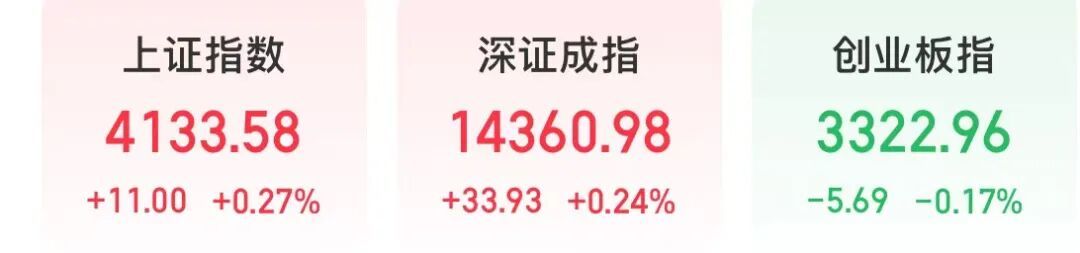
Group 1: Space Concepts - The space photovoltaic and space tourism concepts showed strong performance, with stocks like Maiwei Co., Longhua New Material, and Taili Technology experiencing significant gains [1][2] - The space photovoltaic concept led the market, boosting the photovoltaic sector, including photovoltaic equipment, BC batteries, and POE film, which saw substantial increases [2] - The technology behind space solar power involves collecting solar energy in space via satellites and transmitting it to Earth in the form of microwaves or lasers, achieving 2-3 times the efficiency compared to ground-based systems [3][4] Group 2: Market Performance - The commercial aerospace sector experienced a notable rise, while the computing power industry chain saw declines, with stocks like Zhongji Xuchuang and Xinyi Sheng falling significantly [1] - As of the morning close, the Shanghai Composite Index rose by 0.27%, the Shenzhen Component Index increased by 0.24%, while the ChiNext Index fell by 0.17% [1] Group 3: Space Tourism Developments - The "Chuan Yue Zhe" manned spacecraft was publicly showcased, with over 20 space tourists already booked for future flights, aiming for a manned launch by 2028 [5] - The company has completed comprehensive verification tests for the landing buffer system of the spacecraft, marking it as the third commercial aerospace enterprise globally to validate such technology [5] Group 4: Pharmaceutical Sector - The pharmaceutical sector saw gains, with significant increases in stocks like Renmin Tongtai and Yifeng Pharmacy, reflecting a positive trend in the industry [6][8] - A new policy document aimed at promoting high-quality development in the pharmaceutical retail sector was released, outlining 18 specific measures to enhance service quality and market vitality [9] - Leading companies in the pharmaceutical retail sector are expected to benefit from ongoing regulatory support, with opportunities for market share growth and diversification into non-pharmaceutical products [9]
特朗普四处“兴风作浪”,欧洲富豪开始"逃离"美国资产
Hua Er Jie Jian Wen· 2026-01-23 02:05
Core Viewpoint - The unpredictable actions of Trump regarding geopolitical issues, such as the Greenland sovereignty dispute and tariff threats, are prompting some European wealthy individuals to consider reducing their exposure to U.S. assets and diversifying their investments geographically [1]. Group 1: European Wealthy Individuals' Investment Strategies - A Danish pension fund has begun to exit U.S. Treasury investments, partly due to Trump's comments on Greenland [2]. - Ray Dalio, founder of Bridgewater Associates, noted that there is a trend of funds diversifying away from the U.S. [2]. - Swiss private bank Edmond de Rothschild is contemplating tactical adjustments to its overweight positions in U.S. stocks based on Trump's policies regarding Greenland [2]. - European clients are particularly anxious about becoming targets of potential retaliation from Trump [2]. Group 2: Historical Context of European Investments in the U.S. - Historically, the close ties between Europe and the U.S. have allowed global elites to easily invest across the Atlantic, facilitating wealth diversification [2]. - Notable European investors include Amancio Ortega, who rents properties to companies like Amazon, and the Wertheimer family, who manage investments in U.S. cosmetics retailer Ulta Beauty Inc. [3]. - Richard Branson sold over $1 billion in shares of Virgin Galactic during the pandemic to support his business empire [3]. - A number of American billionaires have acquired sports teams across Europe over the past two decades [3]. Group 3: Challenges in Reducing U.S. Investment Exposure - Despite the reassessment of U.S. holdings by European wealthy individuals and institutional investors, the sheer size and scale of the U.S. economy make it extremely difficult to completely avoid investing in the country [4]. - Sergio Ermotti, CEO of UBS Group, warned that weaponizing U.S. Treasury holdings is a "dangerous gamble" [5]. - Trump indicated that significant retaliation would occur if European nations sold U.S. assets due to tariff threats related to Greenland, suggesting that any withdrawal strategy may focus on reducing concentration and hedging tail risks rather than a large-scale exit [5].
北京穿越者载人航天科技有限公司已预订首批20余位太空游客,预计2028年实现载人首飞;潘功胜表态,2026年继续实施好适度宽松的货币政策——《投资早参》
Mei Ri Jing Ji Xin Wen· 2026-01-23 00:44
Important Market News - The People's Bank of China will continue to implement a moderately loose monetary policy in 2026, focusing on promoting stable economic growth and reasonable price recovery [1] - U.S. stock indices closed higher, with the Dow up 0.63%, Nasdaq up 0.91%, and S&P 500 up 0.55%. Tech stocks saw significant gains, with Meta rising 5.7% [2] - International oil prices fell sharply, with WTI crude down 1.95% to $59.44 per barrel and Brent crude down 1.74% to $63.41 per barrel. Gold and silver prices reached new historical highs, with spot gold hitting $4928 [3] Industry Insights - Beijing ChuanYueZhe Manned Space Technology Co., Ltd. held a global launch for its commercial manned spacecraft "ChuanYueZhe No. 1 (CYZ1)", with over 20 space tourists already booked for flights expected to commence in 2028. The space economy is projected to become a new industry sector, with satellite communication expected to exceed 200 billion to 400 billion yuan by 2030 [4] - Alibaba Cloud launched new products at the 2026 PolarDB Developer Conference, including AI data lake capabilities. The rising memory prices, which have increased by 30% to 40%, are expected to continue to rise by two to three times, benefiting the storage industry [5] - The year 2025 is anticipated to be the "mass production year" for humanoid robots, with significant delivery volumes expected. Companies like Yuzhu Technology project over 5,500 humanoid robots to be delivered in 2025, indicating a shift from technology exploration to commercial application [6]

人类首家月球酒店开放预订!5晚房价1000万美元,酒店将配备完整生命保障系统,后续计划使用“月壤砖”建造,其公司创始人是22岁华人小伙
Mei Ri Jing Ji Xin Wen· 2026-01-19 06:36
Core Viewpoint - A startup company, GRU Space, has announced the opening of the world's first "lunar hotel" for reservations, aiming to officially open by 2032, with support from Nvidia and Y Combinator [1][2]. Company Overview - GRU Space was founded in 2025 and has received seed funding from Y Combinator, as well as investments from SpaceX and Anduril-related capital [2]. - The hotel will initially be constructed on Earth and then launched into space, inflating on the lunar surface to form a pressurized habitat [2]. Hotel Features and Pricing - The lunar hotel can accommodate four guests and is equipped with a complete life support system, solar storm shelter, and emergency evacuation plans, with a lifespan of 10 years and an annual capacity of only 12 guests [4]. - The initial pricing structure includes a non-refundable application fee of $1,000, followed by a refundable deposit ranging from $250,000 to $1 million depending on the package [1][2]. Development Phases - The hotel development will occur in three phases: - By 2029, a 10 kg payload will be launched to test materials and processes for the inflatable habitat [4]. - In 2031, a larger inflatable structure will be deployed in a lunar pit for resource utilization testing [4]. - By 2032, the main habitat will be delivered to the moon via a heavy lander [4]. Leadership and Expertise - The CEO, Skyler Chan, is a 22-year-old Chinese-American with a background in electronic engineering and experience at Tesla and NASA [4]. - The CTO, Kevin Cannon, is a world-class expert in lunar and Martian surface materials, while advisor Robert Lillis focuses on radiation and space weather [6]. Market Context - Supporters of the project believe it aligns with the growing space tourism market, projected to reach $2.74 billion by 2030 [6]. - Critics express concerns about the technical challenges of adapting to the lunar environment and the high costs associated with the project, questioning its feasibility and accessibility [6].

终于不“逃票”了?维珍银河将发射首架商业火箭进行太空飞行
Xin Lang Ke Ji· 2025-11-26 07:42
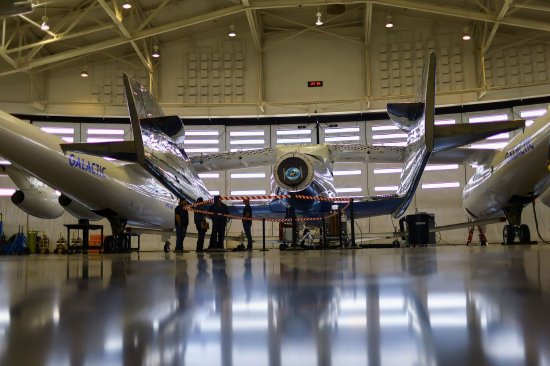
Core Insights - Virgin Galactic is set to conduct its first commercial flight with a crew of three Italian personnel, marking a significant milestone for the company in the space tourism industry [1][3] Company Overview - Virgin Galactic, founded by Richard Branson in 2004, is one of the few private spaceflight companies alongside SpaceX and Blue Origin, catering to wealthy individuals willing to pay for suborbital space experiences [3][6] - The company aims to demonstrate the safety of rocket flights to the public, especially after a tragic incident in 2014 that resulted in a fatality [6] Flight Details - The flight, named Galactic 01, will take place in New Mexico, reaching an altitude of approximately 50 miles (80 kilometers) [1][3] - The mission is defined as a scientific endeavor rather than a typical space tourism trip, with the crew planning to collect biometric data and study the behavior of certain materials in microgravity [3][4] - The flight is expected to last 90 minutes, with the spacecraft being released from a carrier aircraft at around 50,000 feet (15.24 kilometers) [4][5] Future Plans - If successful, Virgin Galactic plans to conduct another flight in early August and aims for monthly flights thereafter [6] - The company anticipates booking its first 1,000 paying customers at a price of approximately $250,000 per seat, with a vision to establish a fleet capable of 400 flights annually [6] Industry Context - The definition of spaceflight is a contentious issue within the industry, with NASA and the U.S. Air Force defining astronauts as those who fly above 50 miles (80 kilometers) [6] - Blue Origin, led by Jeff Bezos, has conducted multiple commercial flights and has criticized Virgin Galactic for not reaching the internationally recognized boundary of space, known as the Kármán line, which is above 62 miles (100 kilometers) [7]

研判2025!中国太空旅游行业产业链、市场规模及重点企业分析:政策技术双驱动,可复用火箭推动商业化加速[图]
Chan Ye Xin Xi Wang· 2025-11-08 02:53
Core Insights - The Chinese space tourism industry is rapidly developing and is recognized as a highly potential new sector within the aerospace industry, with a market size projected to reach approximately 3.25 million yuan in 2024, reflecting a year-on-year growth of 5.52% [1][7] - The industry is supported by strong government policies, including the 2021 white paper on China's space development and the 2024 Beijing action plan aimed at accelerating commercial space innovation [1][7] - Technological advancements, particularly in reusable rocket technology, are significantly reducing operational costs, enhancing economic efficiency, and promoting commercialization within the space tourism sector [1][7] Industry Overview - Space tourism involves non-professional astronauts engaging in activities for entertainment, sightseeing, or research purposes, typically reaching altitudes above 100 kilometers [2] - The industry is categorized into three main types: suborbital flights, orbital flights, and deep space travel [2] Industry Development History - The Chinese space tourism industry has evolved through three phases: the exploratory phase (2003-2015), the accumulation phase (2016-2023), and the rapid development phase (2024-present) [4] - Key milestones include the successful launches of Shenzhou spacecraft and the introduction of supportive policies for space tourism [4] Industry Value Chain - The upstream of the space tourism industry includes rocket and spacecraft manufacturing, launch services, and ground support facilities [6] - The midstream focuses on space tourism operational services, while the downstream primarily consists of tourists [6] - The target consumer groups include high-net-worth individuals, technology enthusiasts, adventurers, and social media influencers, each with distinct motivations and preferences [6] Market Size - The market size for China's space tourism is projected to reach approximately 3.25 million yuan in 2024, with a growth rate of 5.52% [1][7] - The high entry barriers for consumers include significant financial costs, health and physiological requirements, and time commitments for training and preparation [8] Competitive Landscape - Companies like China Aerospace Science and Technology Corporation and Deep Blue Aerospace are leading in technology development and spacecraft manufacturing [9] - Notable projects include the successful launches of the "Li Jian" rocket by China Aerospace and the rapid sale of suborbital flight tickets by Deep Blue Aerospace [9] Industry Development Trends - Technological advancements are expected to drive significant cost reductions and enhance the overall experience of space tourism [10] - The market is anticipated to diversify, targeting a broader range of consumer groups beyond high-net-worth individuals [11] - Continued government support and policy initiatives are likely to accelerate the global integration of the industry and foster collaborations with other sectors such as tourism, AI, and 5G [12]


2025会议明牌:未来5年钱往哪流,都在这13个领域
Sou Hu Cai Jing· 2025-10-25 18:33
Core Viewpoint - The era of land finance is officially over, and the next five years will see a shift in wealth towards technology and green innovation, with a target to increase per capita GDP from $13,000 to $20,000 by 2035 [1][3] Group 1: Economic Transition - The focus of economic growth has shifted from investment and real estate to high-quality development, emphasizing self-controlled industrial chains, particularly in chips and artificial intelligence [3][5] - Significant investments are expected in high-end manufacturing, aerospace, and comprehensive transportation networks, indicating a strong capital flow into these sectors [5] Group 2: Emerging Opportunities - The AI sector is moving from concept to practical integration across various industries, while quantum technology is being pushed from laboratories to applications [5] - The domestic market is identified as a new growth area, with sectors like specialty dining, healthcare, and cultural entertainment poised for rapid development, especially in central and rural regions [5][6] Group 3: Policy Support and Market Trends - The "Three Guarantees" policy aims to support employment, consumption, and livelihood, benefiting businesses related to basic living needs, such as community services and affordable consumption [6] - The silver economy is projected to reach ¥30 trillion by 2035, creating a vast industry around elderly care and related services [8] Group 4: Infrastructure and Digital Trade - Urban development will shift from expansion to internal renewal, with over 700,000 kilometers of underground pipeline renovations expected, generating nearly ¥5 trillion in new investment demand [6] - The digital trade sector is expanding, with a current scale exceeding ¥3 trillion and 165 cross-border e-commerce pilot zones, allowing even small companies to engage in global trade [6] Group 5: Regional Development and Financial Market - Key regional developments are focused on the Yangtze River Delta and the Guangdong-Hong Kong-Macao Greater Bay Area, with specific attention to integrated circuits and biomedicine [10] - Financial market reforms are optimizing channels for long-term funds, enhancing market stability and potentially increasing foreign investment in A-shares [10]