绿色贸易

Search documents
我国与APEC其他经济体进出口总值达26.29万亿元
Ren Min Ri Bao· 2026-02-06 00:40
亚太经济总量已超全球六成,贸易总量接近世界一半,成为世界经济增长的引擎。海关总署副署长赵增 连介绍,我国将着眼普惠包容,持续释放更多开放红利,与各方共享数字化、智能化、绿色化发展机 遇。 记者从亚太经合组织(APEC)"中国年"首场正式活动上获悉:2025年,我国与APEC其他经济体进出口总 值达26.29万亿元,占同期外贸总值的57.82%。我国在区域供应链中实现了从"加工制造"向"研发+制造 +服务"的跃升,对APEC经济体进出口双向发力,其中高新技术产品出口4.63万亿元,同比增长8.1%, 能源、农产品、半导体设备、精密仪器等关键领域进口也保持较快增长。新业态新模式蓬勃发展,跨境 电商快速增长,以数据流动、电子单证为代表的数字贸易,以及新能源、低碳产品等绿色贸易,成为外 贸增长新亮点。 ...
外贸规则适配性持续提升
Jing Ji Ri Bao· 2026-02-05 22:13
与此同时,新业态新模式蓬勃发展,成为外贸增长新亮点。其中,跨境电商出口海外仓快速增长,数字 贸易(数据流动、电子单证)与绿色贸易(新能源、低碳产品)双轮驱动,进一步夯实了我国外贸持续 增长的基础。 亚太经济合作组织(APEC)"中国年"首场正式活动日前在广州开幕。记者从APEC海关手续分委会2026 年第一次全体会议上获悉,2025年我国与APEC其他经济体进出口总值达26.29万亿元,占同期外贸总值 的57.82%。"十四五"期间,这一数字累计达125.49万亿元,比"十三五"时期增长39.4%。 "新技术、新业态加速演进,为全球包容性增长与可持续发展带来新机遇。国际社会亟须以先进科技与 改革创新为抓手,推进治理能力变革与合作机制升级,携手应对各类挑战。"海关总署副署长赵增连表 示,中方将"建设亚太共同体,促进共同繁荣"作为APEC"中国年"的主题,并将"开放、创新、合作"确 定为三大优先领域,旨在锚定亚太共同体建设的长远目标,为贸易增长注入确定性和新动能。 去年以来,我国外贸市场布局持续优化,产业协同纵深发展,区域合作加快升级,贸易韧性显著增强。 2025年,我国对东盟、秘鲁、墨西哥等新兴经济体贸易保持高 ...
重庆将打造链接欧亚大陆战略枢纽
Zhong Guo Xin Wen Wang· 2026-01-28 17:58
Core Viewpoint - Chongqing aims to enhance its role as a comprehensive inland open hub by 2026, linking the Eurasian continent strategically [1][2] Group 1: Economic Development Plans - By 2026, Chongqing will focus on developing a hub economy, emphasizing the hub port industrial park to create an international logistics hub and supply chain organization center [1] - The city plans to expand its service industry through a new round of comprehensive pilot projects, enhancing cooperation in advanced manufacturing and productive services with Europe and Hong Kong-Macao [1] - Chongqing will establish a national digital service export demonstration zone to promote digital trade and green trade [1] Group 2: Infrastructure and Logistics - The city will accelerate the construction of a modern transportation and logistics system, enhancing the logistics and operational organization functions of the new western land-sea corridor [1] - Efforts will be made to improve the development level of the China-Europe Railway Express (Chengdu-Chongqing) and increase the throughput of the international aviation hub for passengers and cargo [1] - A digital cross-border settlement financing system will be established to improve the entire international logistics service chain from order to delivery [1] Group 3: Foreign Trade and Investment - Over the past five years, Chongqing's open economy has optimized, with a cumulative import and export value exceeding 3.8 trillion yuan, with emerging markets contributing about 70% of export growth [2] - The city has established 1,770 new foreign-funded enterprises, with an average annual growth rate of over 30% in direct investment in countries along the Belt and Road [2] - By 2030, Chongqing aims to form an industrial chain and logistics trade hub connecting Europe, China, and ASEAN, becoming a strategic high ground for China's southward and westward opening [2]
北京将构建对外开放新高地 扩大服务出口
Zhong Guo Xin Wen Wang· 2026-01-25 05:28
Core Viewpoint - Beijing aims to enhance its foreign trade quality and efficiency, focusing on expanding service exports and supporting key industries such as automotive and biomedicine [1] Group 1: Policy Initiatives - Beijing will build a new high ground for opening up to the outside world, deepening the construction of "two zones" and aligning with international high-standard economic and trade rules [1] - The government plans to implement a 3.0 plan for expanding service industry openness and explore the establishment of free trade pilot zone linked development areas [1] - Actions will be taken to enhance the openness of key parks and promote the differentiated development of comprehensive bonded zones [1] Group 2: Infrastructure and Logistics - The city will expand international flight routes from its aviation hub and strengthen the backbone network of modern logistics [1] - Beijing will leverage various open platforms such as the China International Service Trade Fair and the Zhongguancun Forum to attract high-quality foreign investment projects [1] Group 3: Investment and Cooperation - The report emphasizes the steady expansion of institutional openness and the enhancement of bilateral investment cooperation [1] - Policies will be implemented to encourage foreign enterprises to reinvest domestically, and a full lifecycle service mechanism for foreign-invested enterprises will be established [1] - The city aims to attract more international organizations and multinational corporate regional headquarters [1]
虹口这支专业团队,为大楼披上可发电的“新甲”
Xin Lang Cai Jing· 2026-01-18 06:08
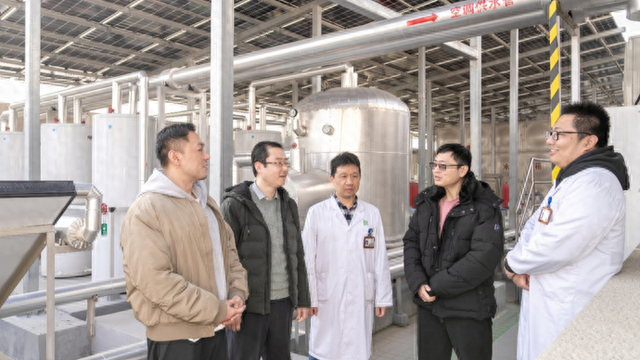
Core Insights - The article highlights the efforts of the Hongkou District Green Low-Carbon Service Task Force in successfully integrating photovoltaic panels on the rooftop of the Shanghai Integrated Traditional Chinese and Western Medicine Hospital, overcoming challenges posed by the building's height and existing equipment [3][4]. Group 1: Project Implementation - The task force collaborated with various entities, including the Shanghai Runtianlei New Energy Co., to ensure the photovoltaic components were seamlessly integrated with existing rooftop equipment, enhancing the project's wind resistance [3]. - The project transformed a previously deemed "unusable" rooftop into a functional energy-generating space, showcasing the task force's innovative approach to resource management and green energy solutions [3]. Group 2: Statistical Framework Development - Starting in 2024, Hongkou District will serve as a pilot area for green low-carbon services, necessitating the development of a precise statistical framework to measure the industry's growth [4]. - The task force, in collaboration with the Shanghai Energy Efficiency Center, created an industry map and statistical measurement system to reflect the local green low-carbon service industry, addressing challenges such as unclear statistical standards and data barriers [4]. - The initiative resulted in the establishment of the "Hongkou Code," a statistical framework that aligns with national standards while incorporating regional characteristics, gaining recognition from city-level authorities [4]. Group 3: Innovation and Ecosystem Development - The task force initiated the "Tianjiao Bay Cup" Green Low-Carbon Innovation and Entrepreneurship Competition to foster an entrepreneurial ecosystem and stimulate development within the sector [6]. - The competition facilitated connections between innovative companies and local projects, exemplified by Shanghai Lanjimi Technology Co., which proposed smart lighting solutions for an underground parking garage [6]. - The task force actively encourages green low-carbon enterprises to cluster in specialized parks, enhancing technological upgrades and supporting the growth of a vibrant green industry in Hongkou District [6]. Group 4: Industry Growth Metrics - Over the past two years, Hongkou District has seen the establishment of more than 50 new green low-carbon enterprises, with the industry scale approaching 800 billion yuan [7]. - The region has achieved a cumulative photovoltaic grid connection of over 20,000 kilowatts, indicating significant progress in renewable energy adoption [7].

2025年中国机电产品出口首次突破六成
Zhong Guo Jing Ji Wang· 2026-01-16 06:35
Core Viewpoint - In 2025, China's total foreign trade import and export volume is projected to reach 45.47 trillion yuan, marking a 3.8% growth and achieving growth for nine consecutive years. The resilience and vitality of China's foreign trade are highlighted, contributing significantly to global economic development [1]. Group 1: Trade Growth and Innovation - The export of electromechanical products is expected to grow by 9%, with its proportion exceeding 60% for the first time [1]. - The international competitiveness of green low-carbon products has significantly improved, and new business models such as cross-border e-commerce are emerging [1]. - Trade partnerships are becoming more diversified, with imports and exports to over 190 countries and regions showing growth, particularly with countries involved in the Belt and Road Initiative, which now accounts for 51.9% of trade [1]. Group 2: Future Challenges and Opportunities - In 2026, China will face profound and complex changes in the external environment, with both strategic opportunities and risks coexisting, leading to increased uncertainty [1]. - Despite challenges, China's economic foundation remains stable, with numerous advantages, strong resilience, and significant potential for foreign trade development [1]. Group 3: Policy Implementation and Support - The Ministry of Commerce will focus on implementing foreign trade policies effectively, providing precise support to enterprises, and maintaining confidence and expectations [2]. - There will be an emphasis on guiding localities and enterprises to stabilize traditional markets while expanding into emerging markets, including support for overseas exhibitions and trade promotion activities [2]. - New growth drivers will be cultivated, particularly in cross-border e-commerce and green trade, enhancing the international competitiveness of green low-carbon products [2]. - Efforts will be made to promote balanced development in imports and exports, including branding initiatives and facilitating access for quality products and services from other countries to meet domestic demand [2].
商务部召开例行新闻发布会(2026年1月15日)
Shang Wu Bu Wang Zhan· 2026-01-15 08:38
Group 1 - The "2026 National Online New Year Goods Festival" will be held from January 19 to March 4, focusing on promoting traditional culture, enhancing quality supply, renewing consumption scenarios, and connecting domestic and international markets [2] - The festival will adopt a "1+N" format, with a national launch ceremony in Lanzhou, Gansu, and various local activities to create a vibrant celebration that combines cultural heritage with e-commerce [2] - Activities will include non-heritage performances and cultural exhibitions, aiming to enrich the festive atmosphere and promote Chinese New Year goods globally [2] Group 2 - In 2025, China's foreign trade showed resilience with a total import and export value of 45.47 trillion yuan, marking a 3.8% year-on-year increase, achieving growth for nine consecutive years [5] - The export of mechanical and electrical products grew by 9%, accounting for over 60% of total exports, indicating a shift towards innovative and green low-carbon products [5] - China is enhancing its trade partnerships, with imports and exports to countries involved in the Belt and Road Initiative accounting for 51.9% of total trade [5] Group 3 - In 2026, China will face complex external changes but maintains a strong economic foundation, with the Ministry of Commerce focusing on stabilizing foreign trade through policy implementation, market diversification, and fostering new trade dynamics [6][7] - The Ministry plans to support enterprises in expanding into new markets and enhancing their capabilities through trade promotion activities and exhibitions [6][7] - Efforts will also be made to balance imports and exports, promoting high-quality products and services from other countries to meet domestic demand [7] Group 4 - The 2026 APEC meetings will be hosted in Suzhou, focusing on significant trade issues and aiming to strengthen cooperation in regional economic integration and green economy development [8] - The meetings will provide opportunities for dialogue among APEC economies, international organizations, and the business community, fostering collaboration and development [8] Group 5 - The recent resolution of the electric vehicle trade dispute between China and the EU is seen as a positive step towards sustainable trade relations, enhancing market confidence and cooperation in the automotive sector [9] - This resolution reflects a commitment to resolving trade differences through dialogue and maintaining a rules-based international trade order [9]
外贸“基本法”大修 固定改革成果保障高水平对外开放
Zheng Quan Shi Bao Wang· 2026-01-11 23:13
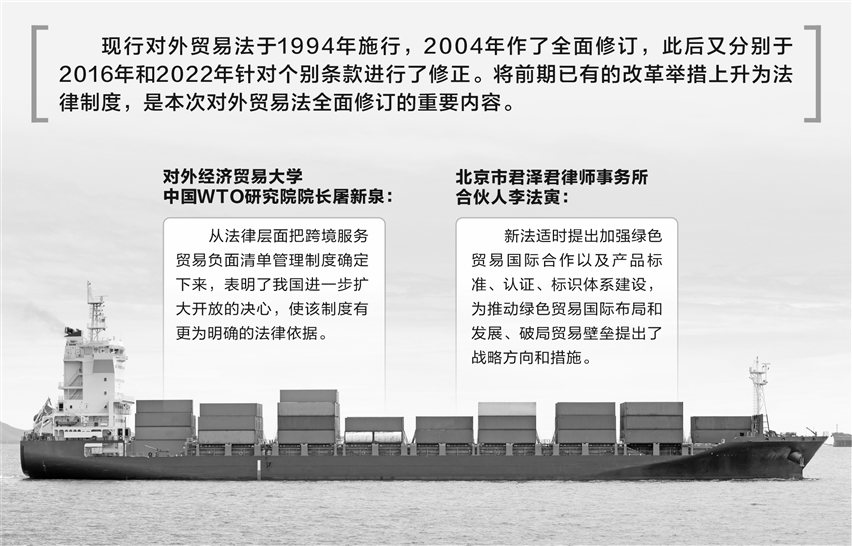
Core Viewpoint - The newly revised Foreign Trade Law of the People's Republic of China will take effect on March 1, 2026, marking a significant overhaul aimed at enhancing the legal framework for foreign trade and expanding high-level openness in the sector [2][3]. Group 1: Legislative Changes - The new law consists of 11 chapters and 83 articles, establishing a negative list management system for cross-border service trade, reflecting China's commitment to opening up international service trade [3][4]. - The law incorporates previous reform measures into a legal framework, enhancing the stability and authority of policies related to cross-border service trade [5]. Group 2: Support for Small and Medium Enterprises - The law explicitly states that the government will support and facilitate small and medium-sized enterprises (SMEs) in engaging in foreign trade, providing conveniences in regulation, financing, and foreign exchange settlement [9]. - It also establishes a trade adjustment assistance system to support enterprises affected by trade remedy measures, enhancing their resilience [9][10]. Group 3: Promotion of Green Trade - The new law emphasizes the establishment of a green trade system, encouraging the export of green low-carbon products and promoting international cooperation in green trade [6][7]. - It aims to address trade barriers related to green products, providing strategic directions for international collaboration and standardization [6][7]. Group 4: Digital Trade and New Business Models - The law recognizes the importance of new business models such as cross-border e-commerce and supports the use of electronic documents and international mutual recognition of digital certificates and signatures [8]. - This legal backing is expected to facilitate the development and transformation of digital trade, ensuring compliance with international standards [8].
迈向全国一体化!国常会部署跨境贸易便利化新措施
2 1 Shi Ji Jing Ji Bao Dao· 2026-01-04 12:18
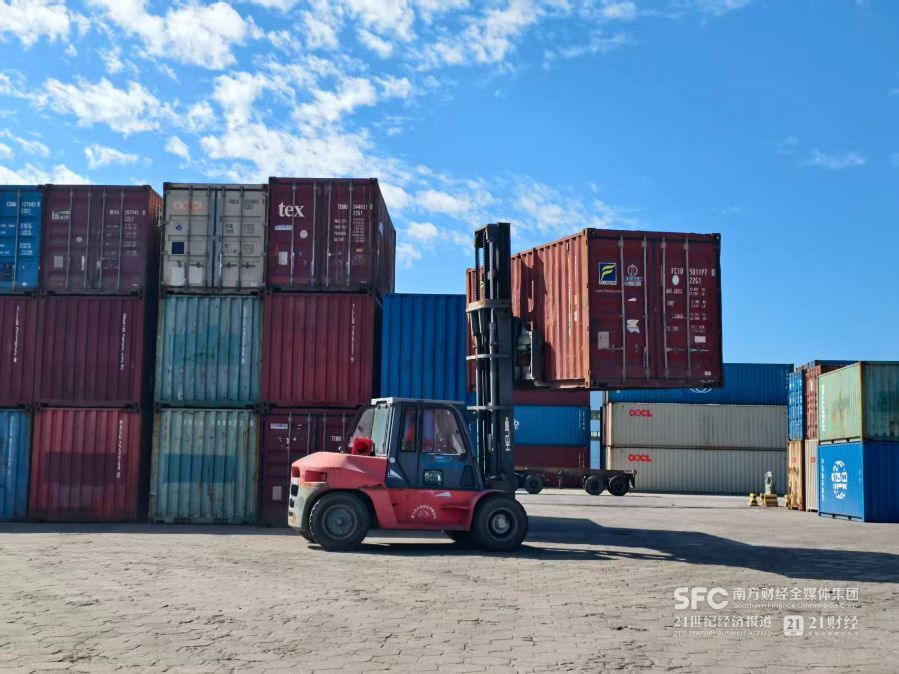
Core Viewpoint - The cross-border trade facilitation initiative in China aims to create a first-class business environment, with significant reforms and innovations implemented during the 14th Five-Year Plan period, totaling 108 measures that have received positive feedback from enterprises [1][2]. Group 1: Policy Measures and Implementation - The State Council's meeting on December 31, 2025, announced the replication and promotion of cross-border trade facilitation policies, marking a transition from localized optimization to nationwide integration [1][6]. - The cross-border trade facilitation initiative includes 29 specific measures across five areas: policy supply enhancement, logistics promotion, regulatory optimization, interconnectivity advancement, and cost reduction [2]. - Specific measures include optimizing inspection and supervision for lithium battery exports, implementing convenient customs clearance for food imports, and expanding the functionality of bonded warehouses [2][4]. Group 2: Logistics and Regulatory Innovations - The initiative promotes efficient logistics through multi-modal transport coordination, enhancing international road transport channels, and supporting the development of the "Air Silk Road" [2][10]. - Regulatory innovations include expanding the application of the "pre-inspection before shipment" model for export consolidation cargo and supporting the air transport of battery-powered goods [4][10]. - The initiative emphasizes the need for a digitalized and standardized approach to create a replicable and assessable reform model, focusing on the integration of customs, logistics, and information flows [5][9]. Group 3: Support for New Business Models - The initiative encourages the development of new business models such as green trade and cross-border e-commerce, addressing challenges like high compliance costs and inefficient reverse logistics [7][12]. - Recommendations for improving cross-border e-commerce include implementing a dual-track system for customs compliance and establishing return centers for e-commerce [7][8]. - The goal is to adapt regulatory frameworks to keep pace with evolving business models, ensuring that institutional arrangements support the growth of new trade formats [9][12]. Group 4: Achievements and Future Directions - The "single window" system has significantly reduced logistics costs for enterprises, with examples from cities like Guangzhou and Shanghai demonstrating substantial financial benefits [11]. - Experts highlight that advancing trade facilitation is essential for transforming China's trade advantages into a competitive business environment and enhancing the credibility of its regulatory systems [12].
从规则“接收者”到“塑造者” 中国绿色贸易转型进行时
“内外兼修”应对绿色壁垒
将碳成本转化为绿色竞争力
中国绿色贸易的2030蓝图
Xin Lang Cai Jing· 2025-12-23 02:02
Core Viewpoint - The article emphasizes the importance of green trade as a key driver for economic growth and highlights China's transition from being a "receiver" of global rules to a "shaper" of them, particularly in the context of green trade and climate governance [1][10][11]. Group 1: Green Trade Development - The recent Central Economic Work Conference in China underscored the need to "actively develop green trade," aligning with the Ministry of Commerce's implementation opinions on expanding green trade [1][10]. - Experts view the implementation opinions as a significant step for China to engage more proactively in global green trade rules and governance, enhancing the design, production, and market expansion of green products [1][11]. Group 2: Global Challenges and Responses - The global green trade landscape is currently undergoing a "rule reshaping" and "pattern reconstruction" phase, facing challenges such as "rule fragmentation" and "green protectionism" [4][15]. - The EU's Carbon Border Adjustment Mechanism (CBAM) is set to expand its coverage to 180 products, including various steel and aluminum-intensive downstream products, starting from January 1, 2026 [4][15]. Group 3: China's Position in Green Trade - By 2024, China is projected to become the world's largest green trade economy, with its import and export scale accounting for 16.1% of the global total [5][17]. - The implementation opinions propose a dual strategy of internal enhancement and external rule-breaking to address challenges, including the establishment of a carbon footprint database to improve data credibility [5][17]. Group 4: Future Outlook - By 2030, China is expected to evolve into a "solution provider" rather than just a "product exporter," and become a key co-creator of global green trade rules [8][21]. - China's green trade policies are anticipated to have a profound impact globally, aiding in the low-carbon transition and influencing the establishment of green standards and rules [8][21]. Group 5: Market Trends and Corporate Strategies - The global business environment is shifting towards sustainability, with 86% of global manufacturing buyers considering green capabilities as a core competitive advantage [6][18]. - Chinese companies are integrating sustainability into their strategies, with brands like "Moli Naibai" emphasizing the importance of aligning with local environmental standards and sustainable practices [6][18][19]. Group 6: Common Misconceptions and Recommendations - Common misconceptions among Chinese enterprises include treating ESG as a marketing topic rather than a core operational capability [7][19]. - Recommendations for Chinese companies include establishing verifiable data systems, focusing on practical scenarios rather than visions, and building long-term content assets [7][19][20].