机电产品出口

Search documents
2026年的春运,注定被载入史册
3 6 Ke· 2026-01-30 08:11
Core Insights - The Spring Festival travel rush is expected to reach a record 9.5 billion trips, indicating a significant shift in workforce dynamics and attitudes towards employment in major cities [1] - The number of new graduates in China is projected to peak at 15.93 million by 2026, leading to increased competition and a shift in career expectations among young professionals [2] - There is a notable trend of mid-to-high-end talent considering opportunities in second and third-tier cities, driven by changing industry demands and the pursuit of better work-life balance [2][4] Group 1: Talent Migration and Industry Shifts - The migration of talent from first-tier cities to second and third-tier cities is influenced by the changing landscape of job opportunities, particularly in emerging industries such as new energy and digital transformation [2][6] - The demand for high-end technical talent is increasing in sectors like steel, new energy vehicles, and photovoltaics, which are experiencing high-quality growth post "anti-involution" [2][3] Group 2: Salary Trends and Job Market Dynamics - Overall salary adjustments across industries are expected to slightly decrease to 4.0% in 2026, while technical and professional skill positions are projected to see a 5.3% increase, indicating a premium on specialized skills [3] - The shift towards a performance-oriented evaluation system is changing hiring standards, with a focus on practical achievements rather than traditional credentials [4] Group 3: Job Search Strategies for Returning Talent - Professionals considering a return to their hometowns are advised to evaluate not just base salaries but also "invisible income" such as overtime pay and benefits, which can vary significantly between urban and rural job markets [5] - It is recommended to target companies aligned with the "14th Five-Year Plan" that are involved in sectors like new energy and smart manufacturing, avoiding those with outdated capacities [6] - Maintaining professional networks through social media and platforms like Liepin is crucial for accessing job opportunities and information about employer reputations in local markets [7]
2025年中国机电产品出口首次突破六成
Zhong Guo Jing Ji Wang· 2026-01-16 06:35
Core Viewpoint - In 2025, China's total foreign trade import and export volume is projected to reach 45.47 trillion yuan, marking a 3.8% growth and achieving growth for nine consecutive years. The resilience and vitality of China's foreign trade are highlighted, contributing significantly to global economic development [1]. Group 1: Trade Growth and Innovation - The export of electromechanical products is expected to grow by 9%, with its proportion exceeding 60% for the first time [1]. - The international competitiveness of green low-carbon products has significantly improved, and new business models such as cross-border e-commerce are emerging [1]. - Trade partnerships are becoming more diversified, with imports and exports to over 190 countries and regions showing growth, particularly with countries involved in the Belt and Road Initiative, which now accounts for 51.9% of trade [1]. Group 2: Future Challenges and Opportunities - In 2026, China will face profound and complex changes in the external environment, with both strategic opportunities and risks coexisting, leading to increased uncertainty [1]. - Despite challenges, China's economic foundation remains stable, with numerous advantages, strong resilience, and significant potential for foreign trade development [1]. Group 3: Policy Implementation and Support - The Ministry of Commerce will focus on implementing foreign trade policies effectively, providing precise support to enterprises, and maintaining confidence and expectations [2]. - There will be an emphasis on guiding localities and enterprises to stabilize traditional markets while expanding into emerging markets, including support for overseas exhibitions and trade promotion activities [2]. - New growth drivers will be cultivated, particularly in cross-border e-commerce and green trade, enhancing the international competitiveness of green low-carbon products [2]. - Efforts will be made to promote balanced development in imports and exports, including branding initiatives and facilitating access for quality products and services from other countries to meet domestic demand [2].
2025:出口热,生活冷
3 6 Ke· 2025-12-23 10:06
Economic Overview - The Chinese economy in 2025 shows a clear trend of strong external demand and export growth, while internal demand remains weak, particularly in real estate and fixed asset investment, leading to continued pressure on consumption [1][3] Internal vs External Demand - The balance between internal and external demand is crucial for determining the economic direction, with final consumption contributing 2.8 percentage points to GDP, capital formation contributing 0.9 percentage points, and net exports contributing 1.5 percentage points [2] Employment and Consumer Sentiment - A significant portion of the population feels pessimistic about employment, with 57.4% of respondents in a survey expressing concerns about job prospects, leading to a low consumer sentiment index of 25.8 [4] - Retail sales growth remains weak, with a year-on-year increase of only 1.3% in November, influenced by high base effects from the previous year and a shift in consumer behavior towards saving rather than spending [4] Real Estate Market Dynamics - The real estate market shows a divergence between first-tier cities, which have seen relatively stable prices, and lower-tier cities, which have experienced significant declines. However, by late 2025, this divergence is expected to narrow [5] - New home and second-hand home prices in major cities have declined, with notable drops in Beijing, Shanghai, Guangzhou, and Shenzhen [5] Investment Trends - Fixed asset investment has decreased by 2.6% year-on-year, heavily influenced by a 15.9% drop in real estate investment. Private investment has also declined by 5.3% [13] - Government and state-owned enterprise investments are becoming the primary drivers of new investments, with social financing growing by 8.5% year-on-year [13] Export Performance - Exports are experiencing a structural transformation, with machinery and electronics exports accounting for 60.9% of total exports, growing by 8.8%, while labor-intensive product exports have decreased [11] - Trade with the U.S. has declined by 16.9%, while trade with ASEAN countries has increased by 8.5%, indicating a shift in trade dynamics [12] Sectoral Disparities - New industries supported by national policies are showing stable income and development expectations, but their ability to create jobs is limited due to automation [6] - Traditional sectors, such as new energy vehicles, are facing challenges from price wars, limiting their ability to provide substantial employment opportunities [7] Consumer Behavior - Consumer spending is characterized by a decline in large durable goods, while basic and discretionary spending remains stable but under price pressure [10] - The trend of "emotional consumption" is evident, with increased travel and entertainment participation but lower average spending per outing [10] Government Debt and Real Estate Risks - The real estate sector faces significant risks, including asset-liability risks from falling prices and systemic pressures on local finances due to shrinking land revenue [15] - Government debt is increasing, with a year-on-year growth of 18.8%, while public budget revenues are only growing by 0.8%, indicating ongoing fiscal pressures [16]


人民币创14个月来新高
第一财经· 2025-12-23 04:08
Core Viewpoint - The continuous appreciation of the RMB poses challenges for small and medium-sized foreign trade enterprises, leading them to adopt more timely settlement practices to mitigate exchange rate losses [3][5][6]. Group 1: Impact of RMB Appreciation - The RMB has reached a 14-month high, causing immediate exchange losses for export companies as the amount of RMB received from USD settlements decreases [3][5]. - Companies are increasingly settling their foreign exchange as soon as payments are received to maintain cash flow, rather than using hedging strategies [3][5][6]. - The appreciation of the RMB may force companies to raise product prices, potentially diminishing their competitive pricing advantage in the manufacturing sector [3][5]. Group 2: Market Trends and Predictions - Analysts predict that the RMB may enter the "6 era" in the long term, with expectations of continued appreciation driven by seasonal capital flows and increased foreign exchange inflows [9][12]. - The recent increase in the RMB's value is attributed to the decline in the US dollar index and heightened settlement demands as the year-end approaches [11][12]. - The Chinese government emphasizes the importance of boosting consumption and trade innovation, which aligns with the ongoing appreciation of the RMB [13]. Group 3: Recommendations for Enterprises - Experts suggest that companies should consider using financial derivatives like forward contracts to lock in favorable exchange rates during the RMB appreciation phase [15]. - The need for timely settlements is underscored by the current market conditions, where companies face pressure to manage their financial costs effectively [15].

超1万亿美元顺差!11月外贸数据解读:韧性背后藏着新变局
Sou Hu Cai Jing· 2025-12-10 04:21
Core Insights - China's imports and exports grew by 4.1% year-on-year in November, marking ten consecutive months of growth, with a trade surplus exceeding $1 trillion for the first time in history [1][2] Trade Performance - In the first eleven months of the year, China's total foreign trade reached 41.21 trillion yuan, a 3.6% increase year-on-year, with exports rising by 6.2% and imports only increasing by 0.2% [1] - The total value of goods trade in November was 3.9 trillion yuan, with both exports and imports showing positive growth [1] - Exports to the U.S. fell by 28.6%, while exports to Africa surged by 27.6% [1][4] Product Categories - Mechanical and electrical products accounted for 60.9% of total exports, with an 8.8% year-on-year increase, particularly in integrated circuits, automobiles, and ships [2] - In November, integrated circuit exports rose by 34.2%, driven by increased demand for AI-related electronic products [2] - Automobile exports reached 896.91 billion yuan in the first eleven months, a 17.6% increase, with November seeing a 53% year-on-year surge [2] Trade Partners - The U.S. share in China's foreign trade continues to decline, with a 15.9% drop in trade value in the first eleven months [4] - In contrast, exports to the EU, ASEAN, Latin America, and Africa grew by 14.8%, 8.2%, 14.9%, and 27.6% respectively [4] - ASEAN remains China's largest trading partner, with a trade value of 6.82 trillion yuan, up 8.5% year-on-year [4] Role of Private Enterprises - Private enterprises accounted for 57.1% of China's foreign trade, with a 7.1% year-on-year increase [5] - The number of newly registered private enterprises with import and export records reached 66,000, indicating sustained market vitality [5] Free Trade Zones - The combined import and export value of China's free trade zones and Hainan Free Trade Port reached 8.07 trillion yuan, a 5.2% increase, representing nearly 20% of the national foreign trade [5] Import Trends - Imports have shown a steady increase for six consecutive months, with November imports rising by 1.7% year-on-year [5] - However, the growth rate of imports remains slower compared to exports, with a two-year compound annual growth rate of -1.1% for November [5] Commodity Imports - In November, imports of iron ore, copper, and natural gas increased, while the growth rate of crude oil and coal imports declined [6] U.S.-China Trade Policy - Recent positive changes in U.S.-China trade policy include a reduction in tariffs on certain Chinese imports, which may improve future trade relations [8] - The diversification strategy in foreign trade continues, with a significant increase in imports from least developed countries [8] Future Outlook - Experts maintain a cautiously optimistic view on future trade trends, with predictions of an increase in China's global export share by 2030 [9] - China's foreign trade is undergoing a transformation, focusing on optimizing trade structure, market diversification, and enhancing innovation capabilities [9]
最新数据大跌眼镜!
Sou Hu Cai Jing· 2025-11-14 15:45
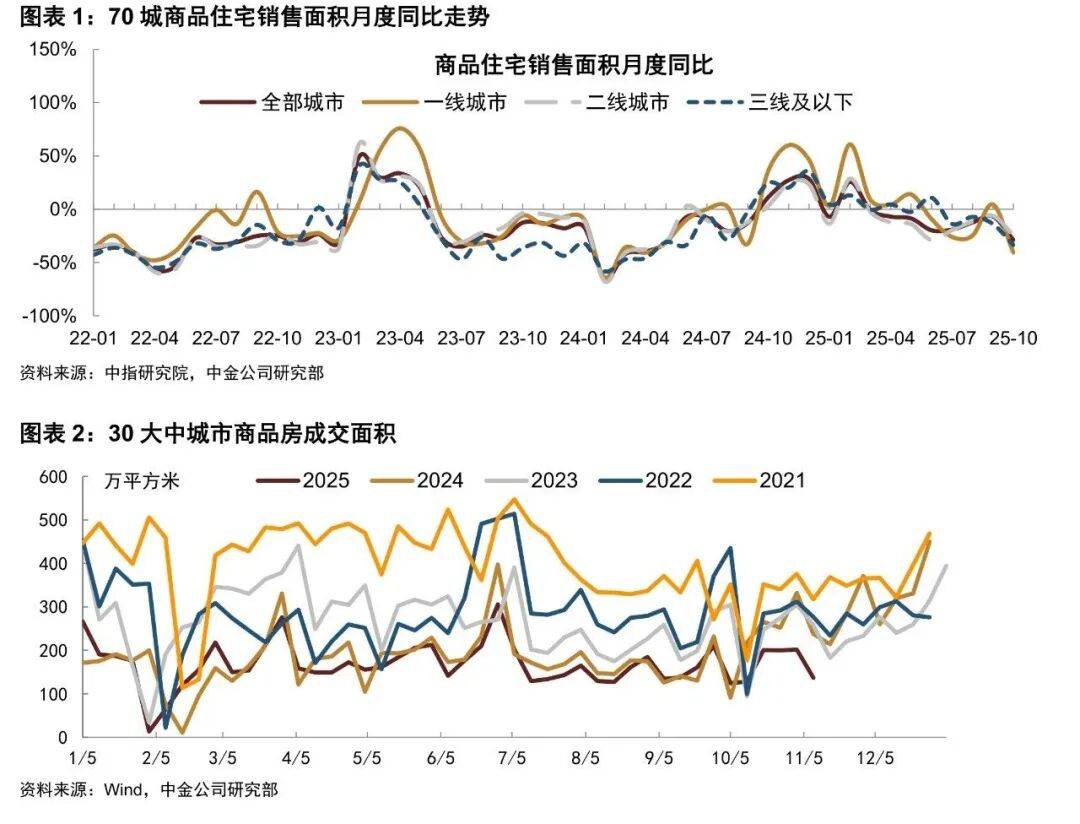
Economic Overview - The economic data for October shows a significant slowdown across multiple sectors, with industrial output, exports, and investments all experiencing declines [2][4] - Industrial value-added growth fell from 6.5% in September to 4.9% in October, while fixed asset investment decreased by 1.7% year-on-year and 1.62% month-on-month [2] - Consumer spending growth was impacted by the withdrawal of government subsidies, with retail sales growth slowing to 2.9% [2] Real Estate Sector - The real estate market continues to face challenges, with both sales volume and sales area declining, indicating a persistent "cold air" in the sector [3][5] - Real estate development investment dropped by 14.7%, with new residential sales area at 71.982 million square meters, down 6.8% year-on-year, and sales revenue at 690.17 billion yuan, down 9.6% [6] - The confidence crisis in the real estate market is more critical than policy changes or interest rate adjustments, affecting both sales and land auction markets [12][15] Investment Trends - Excluding real estate, fixed asset investment actually grew by 1.7%, with private investment showing a slight increase of 0.2% [17] - Notable growth was observed in information services investment, which surged by 32.7%, and aerospace manufacturing, which grew by 19.7% [17] - The shift in economic growth drivers indicates a transition from traditional construction to high-tech industries, marking a significant structural change towards "high-quality development" [17][18] Trade Dynamics - The total import and export volume saw a slight increase of 0.1%, with exports of mechanical and electrical products rising by 8.7%, now constituting 60.7% of total exports [17][18] - Private enterprises accounted for 57% of total exports, reflecting their agility and responsiveness in the current economic climate [17] Future Outlook - The current economic pain is viewed as a necessary adjustment for past development models, while the ongoing transformation is seen as laying the groundwork for future growth [19]
3.5%增长,量质齐升!我国外贸向上向新的势头更加巩固
Yang Shi Wang· 2025-08-22 06:02
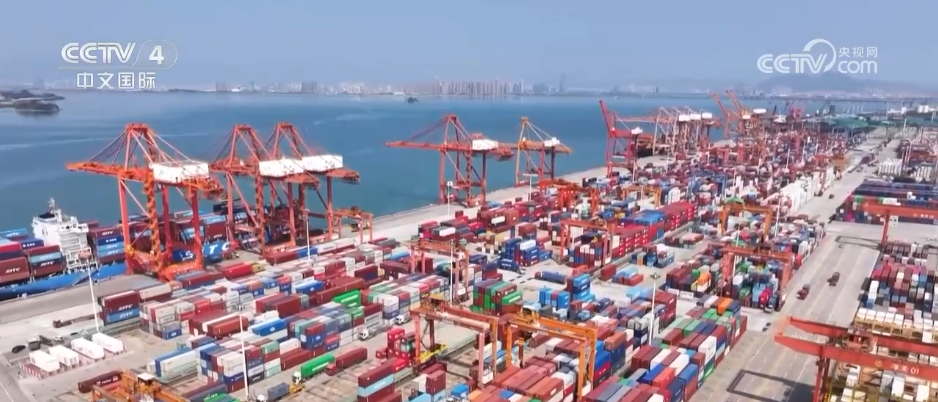
Core Insights - China's foreign trade has shown a steady growth of 3.5% in the first seven months of the year, despite increasing risks and challenges in international economic and trade development [1][4][6] Group 1: Trade Performance - In the first seven months, imports and exports to emerging and other markets increased by 5%, accounting for 65.5% of total trade [4] - Exports of mechanical and electrical products grew by 9.3%, making up 60% of total exports, which is an increase of 1.1 percentage points year-on-year [4] - Notable growth in exports was observed in high-tech and high-value-added products such as smart home devices, electric vehicles, industrial robots, and ships [4] Group 2: Policy Support - Since the fourth quarter of last year, the Ministry of Commerce has been working with relevant departments to strengthen policy support for foreign trade enterprises, focusing on stabilizing orders and employment [4] - The commitment to expand high-level opening-up remains strong, with confidence in continuing to promote stable and quality improvements in foreign trade [6]
商务部:我国外贸“向上”“向新”的势头更加巩固
Xin Hua Cai Jing· 2025-08-21 08:48
Core Insights - China's foreign trade is showing a solid upward and innovative momentum, with a total import and export value of 25.7 trillion yuan in the first seven months of the year, reflecting a year-on-year growth of 3.5% [2] Group 1: Trade Performance - In the first seven months, China's exports of electromechanical products increased by 9.3%, accounting for 60% of total exports, which is a 1.1 percentage point increase year-on-year [2] - High-tech and high-value-added products such as smart home devices, electric vehicles, industrial robots, and ships maintained a high export growth rate [2] - A total of 654,000 foreign trade enterprises achieved import and export performance in the first seven months, with nearly 90% being private enterprises [2] Group 2: Challenges and Strategies - The international economic and trade environment is facing significant risks and challenges, with increased tariff barriers raising global trade costs and affecting supply chain efficiency and stability [2] - China will continue to expand high-level opening-up and focus on high-quality development to address various uncertainties in the global trade landscape [2]
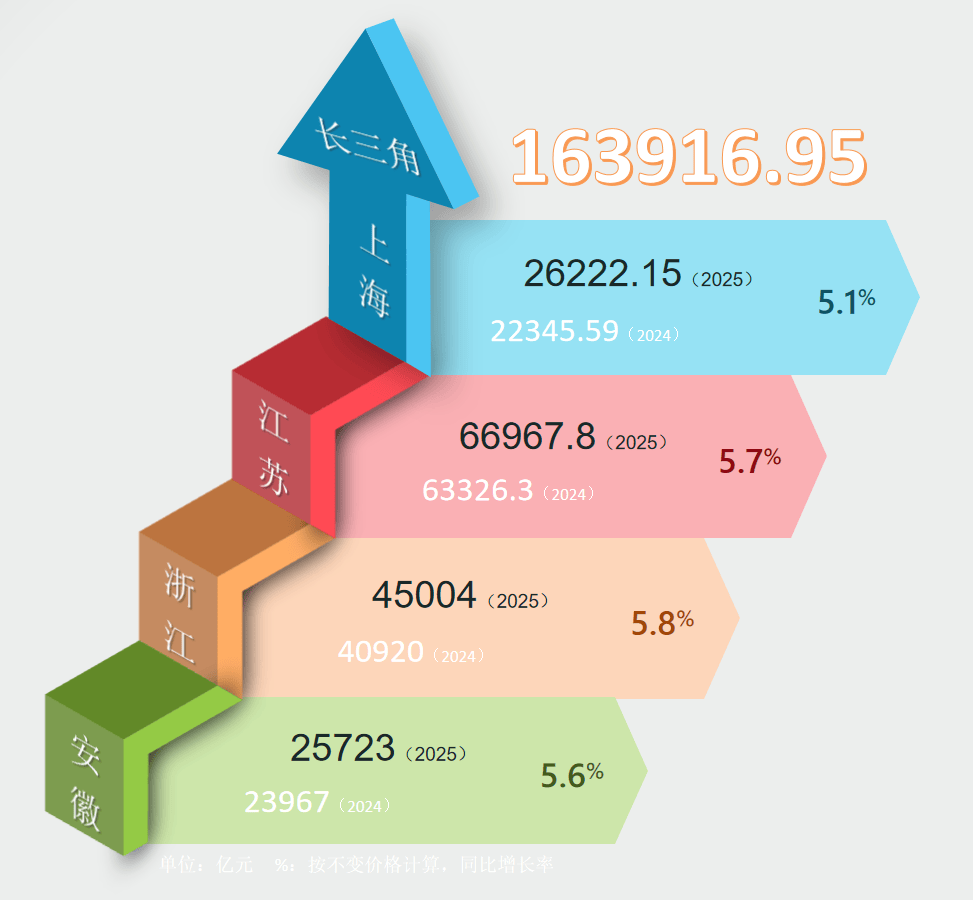
长三角观察 | 稳居“15万亿台阶”之上
Sou Hu Cai Jing· 2025-07-27 04:00
Group 1: Economic Resilience in the Yangtze River Delta - Major projects in Shanghai for 2025 include 186 officially planned projects with an investment of 240 billion yuan, showing strong investment completion rates in the first half of the year [2] - Anhui province announced 537 major projects with a total investment of 324.08 billion yuan, focusing on emerging industries and high-tech projects, indicating a shift towards new and high-quality investments [2] - Jiangsu province's 800 major industrial projects are over 98% advanced manufacturing, with a 12% acceleration in project completion compared to targets [3] Group 2: Sports Economy Impact - The "Su Super" football league in Jiangsu has significantly boosted local consumption, with hospitality and dining sectors seeing increased revenue growth in areas hosting matches [5] - The "Zhe BA" basketball league in Zhejiang aims to stimulate consumption through sports events, with a focus on integrating sports with tourism and services [6] Group 3: Foreign Trade Stability - The Yangtze River Delta's import and export volume reached 8.16 trillion yuan in the first half of the year, a 5.4% increase, accounting for 37.4% of the national total [7] - High-value products dominate exports, with a notable increase in exports of integrated circuits by 17.8% and a significant rise in the number of active import-export enterprises [7] - Shanghai's foreign trade showed resilience with a historical high in import-export volume in the second quarter, while Jiangsu and Zhejiang reported substantial growth in specific sectors [8]