
豪华汽车

Search documents
阿斯顿马丁入不敷出,阿斯顿马丁拟裁员20%
Xin Lang Cai Jing· 2026-02-25 14:36
Core Viewpoint - Aston Martin is facing significant financial challenges, leading to a series of drastic measures including potential layoffs, reduced capital expenditure, and a strategic business transformation [1] Group 1: Financial Performance - In fiscal year 2025, Aston Martin's global wholesale sales reached 5,448 units, a year-on-year decline of 10% [1] - Revenue for the same period was £1.26 billion, representing a 21% decrease compared to the previous year [1] - The adjusted EBIT loss amounted to £190 million, while the operating loss widened to £260 million, up from a £100 million loss in fiscal year 2024 [1] - The company reported a full-year free cash flow outflow of £410 million [1] - At year-end, net debt stood at £1.38 billion [1] Group 2: Strategic Measures - Aston Martin plans to implement a global workforce reduction of up to 20% [1] - The company intends to permanently sell the naming rights of its F1 team for £50 million [1] - There will be a reduction in medium to long-term capital expenditures as part of the overall business transformation strategy [1] Group 3: Market Context - The CEO highlighted that 2025 is expected to be one of the most turbulent years for the global luxury car market due to escalating geopolitical conflicts, increased global tariffs, and macroeconomic pressures [1] - These challenges have hindered the company's ability to leverage its brand and technological advantages, negatively impacting sales, efficiency, and profitability [1]

欧洲一超豪华车企入不敷出,将裁员20%
Di Yi Cai Jing· 2026-02-25 13:00
Core Viewpoint - Aston Martin has announced a comprehensive set of measures including a global workforce reduction of up to 20%, a decrease in medium to long-term capital expenditure, a permanent sale of the F1 team naming rights for £50 million, and a push towards a full business transformation [1] Group 1: Financial Performance - For the fiscal year 2025, Aston Martin reported a wholesale volume of 5,448 units, a year-on-year decline of 10% [1] - Revenue for the same period was £1.26 billion, down 21% year-on-year [1] - Adjusted EBIT loss reached £190 million, while operating loss widened to £260 million compared to a £100 million loss in fiscal year 2024 [1] - The company experienced a free cash flow outflow of £410 million and ended the year with net debt of £1.38 billion [1] Group 2: Product Development and Strategy - Despite operational pressures, Aston Martin delivered a diverse range of new models in 2025, including the Vantage S, DBX S, and DB12 S high-performance vehicles [2] - The company plans to deliver seven new models and derivatives in 2025, with the hybrid supercar Valhalla expected to deliver 152 units in its first year and around 500 units in 2026 [2] - Aston Martin aims to optimize its business to enhance profit margins and achieve profitability and positive free cash flow in the coming years [2] Group 3: Organizational Changes and Cost Management - The company has initiated an organizational restructuring process, which is expected to lead to a reduction of up to 20% of its workforce, saving approximately £40 million annually [2] - Capital expenditure is projected to decrease from £2 billion to £1.7 billion for the period 2026-2030, with a focus on high-performance vehicles and delaying investments in electric platforms [2] - A new compensation policy is proposed to align incentives with sustainable profit growth and future value [3] Group 4: Liquidity and Future Plans - Aston Martin plans to sell the naming rights for £50 million to enhance liquidity [3] - The company is committed to expanding customer personalization options in 2026 to support average selling price growth and improve profit margins [3] - The execution committee will be reduced by nearly half by the end of the first quarter of 2026, aiming to streamline operations and enhance efficiency [3]
在华转型关键期,豪华车企密集引入外籍CEO
2 1 Shi Ji Jing Ji Bao Dao· 2026-02-25 04:57
Group 1 - The core point of the article is the recent personnel changes at Jaguar Land Rover China, indicating a strategic shift in the luxury automotive sector towards a more aggressive approach in the market [1] - Jaguar Land Rover China's President and CEO, Pan Qing, has been promoted to Global Procurement Director while retaining his role as China President [1] - Tim Howard, the current CFO of Jaguar Land Rover China, will take over as CEO of Jaguar Land Rover China [1] Group 2 - The article highlights a trend of key executive changes in the luxury automotive sector, with BMW and Mercedes-Benz also announcing significant leadership adjustments in their China operations [1] - BMW appointed Christian Ach as the new President and CEO for Greater China at the end of January, following the departure of Gao Xiang [1] - Mercedes-Benz announced the departure of Duan Jianjun and the appointment of Daniel Lescow as the new President and CEO of Beijing Mercedes-Benz Sales Service Co., Ltd. in mid-February [1] Group 3 - The frequent leadership changes among luxury car manufacturers signal a shift from a defensive to an offensive strategy as they prepare for the competitive landscape leading up to 2026 [1]
豪华汽车行业动态:BBA密集发布2026年战略,产业链个股表现活跃
Xin Lang Cai Jing· 2026-02-19 16:52
Recent Events - The luxury automotive industry is focusing on brand strategy adjustments and product dynamics, with BBA (Benz, BMW, Audi) announcing their 2026 market strategies emphasizing new vehicle launches and localized R&D [1] - On February 13, Benz plans to launch over 15 new and updated models in the Chinese market, including the pure electric GLC SUV and the long-wheelbase GLE SUV, while BMW will introduce over 20 new vehicles, including the new generation iX3, leveraging partnerships with Chinese tech companies to enhance smart driving and cockpit technology [1] - Audi's E5 Sportback won the "2025 Car of the Year" award at the 6th Automotive Wind and Cloud Festival on February 15, highlighting its recognition in design and intelligent driving [1] - On February 19, Benz's former chief designer revealed a concept car paying tribute to the classic racing car "Red Pig," blending retro and modern design elements, showcasing the brand's innovation direction [1] - Pan Shiqi Automotive announced a dividend of $1.4 per share on February 19, with an ex-dividend date of February 25, amid significant stock price fluctuations (a drop of 4.50% from February 13 to 18), reflecting market attention on the dividend event [1] Stock Performance - The luxury car industry-related A-share companies have shown active performance recently, although BBA being foreign brands indirectly influences the sentiment of the A-share automotive sector [1] - On February 19, notable stock price increases were observed within the automotive sector, such as Jingjin Electric-UW (688280.SH) rising by 10.68% in a single day, and Zhejiang Shibao (002703.SZ) hitting the daily limit, with capital focusing on smart driving and component sub-sectors [1] - The dividend event from Pan Shiqi Automotive, as a US-listed dealer, may attract short-term capital flows [1]
捷豹路虎:不逐潮,自成潮
Xin Lang Cai Jing· 2026-02-05 05:50
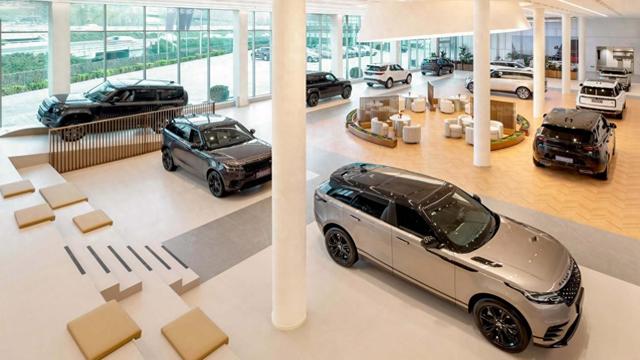
Core Insights - The luxury car market in China is experiencing a price war, but Jaguar Land Rover (JLR) maintains a steady approach by focusing on high-end consumers and core models without participating in price reductions [1][3] - JLR's strategy emphasizes long-term value and brand integrity, aiming to build market resilience amidst market chaos [1][3] Market Dynamics - The luxury car market in 2025 shows a clear polarization, with mid-to-low-end models engaged in aggressive price competition, while high-end consumers are becoming more rational, prioritizing brand value, product experience, and exclusive services [1][3] - JLR's decision to avoid price competition is based on a precise understanding of high-end consumer needs, as blind price cuts could harm the brand's long-term premium pricing ability [3][5] Product and Service Development - JLR's product lineup includes the introduction of new models like the Defender OCTA and the upgraded Range Rover Sport, alongside enhanced bespoke services, which have contributed to its strong sales performance in 2025 [5][7] - The company has achieved recognition as the top luxury brand in J.D. Power's 2025 sales and after-sales service study, indicating a successful focus on product and service refinement [5][7] Localization Strategy - JLR's success in the Chinese market is attributed to its deep localization efforts, including a complete local R&D and supply chain system that allows for rapid response to consumer demands [7][9] - The partnership with Chery and the establishment of a manufacturing base in Changshu have enabled JLR to enhance its product offerings tailored to local preferences [7][9] Global Strategy and Market Position - China is increasingly central to JLR's global strategy, with the new CEO's first overseas visit to China highlighting its importance in the luxury market [9][11] - JLR is one of the largest UK companies investing in China, contributing approximately 22% to the UK's total exports to China, reinforcing its role in Sino-British trade [9][11] Technological Advancements - JLR's participation in global motorsport events, such as the Dakar Rally and Formula E, showcases its technical capabilities and serves as a testing ground for production technologies [11][13] - The success in these events validates JLR's commitment to integrating racing technology into its consumer vehicles, enhancing the brand's technical strength [11][13] Corporate Social Responsibility - JLR's long-term commitment to social responsibility, including initiatives like the "Youth Dream Fund," has positively impacted over 700,000 young people in China, reinforcing the brand's emotional connection with consumers [14][16] - The company's innovative approach to philanthropy, such as integrating cultural heritage into product design, enhances its brand image and deepens customer relationships [16][18] Conclusion - JLR's strategy in the 2025 Chinese luxury car market focuses on maintaining high-end positioning, refining product quality, deepening local engagement, and leveraging technological advancements, providing a model for luxury brands facing homogenization in the market [20]

破局豪华存量战:一汽奥迪“油电混共进全智”的生存法则
2 1 Shi Ji Jing Ji Bao Dao· 2026-02-01 04:03
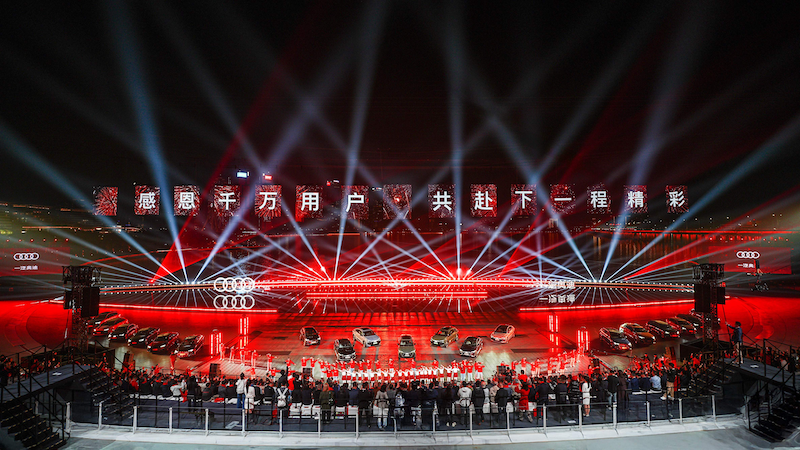
Core Viewpoint - The traditional luxury car brands in China are at a crossroads as the luxury car market faces a decline in market share, with a significant drop in the fuel luxury car segment, while domestic brands and new forces are gaining market share through electric and intelligent advantages [1][15]. Market Trends - The luxury car market share in China decreased by 2.8% year-on-year, with the fuel luxury car segment experiencing an 11.3% decline [1]. - The penetration rate of new energy vehicles has surpassed 50%, leading to a consensus on "comprehensive electrification" within the industry [1]. Audi's Strategy - Audi's decision to reverse its plan to stop developing internal combustion engine vehicles by 2033 has been controversial but resulted in strong sales performance, with retail sales reaching 570,088 units in 2025, reclaiming the top position in luxury fuel vehicle sales [1][15]. - Audi's strategy is not to abandon electrification but to create a diverse product matrix that includes internal combustion engines (ICE), battery electric vehicles (BEV), and plug-in hybrid electric vehicles (PHEV) [2][16]. Product Performance - The Audi A6L and Q5L have been standout performers, with A6L selling 172,000 units and Q5L selling 140,000 units in 2025, leading their respective segments [2][5]. - The launch of the Audi A5L, based on the PPC luxury fuel intelligent platform, has been pivotal in revitalizing the fuel vehicle market, achieving over 25,000 deliveries by December 2025 [5][11]. Technological Advancements - The PPC platform aims to enhance the value of fuel vehicles through advanced technology, including a 48V mild hybrid system and L2+ level intelligent driving capabilities [4][11]. - The PPE platform, which underpins the Audi Q6L e-tron family, features an 800V high-voltage architecture and advanced charging technology, addressing range anxiety and enhancing competitive edge in the electric vehicle market [7][9]. Collaboration and Innovation - Audi's collaboration with Huawei on intelligent driving technology emphasizes a tailored approach rather than a one-size-fits-all solution, ensuring that luxury attributes are maintained [9][10]. - The integration of advanced features such as a high-performance central computing platform and vehicle motion management system in the A5L demonstrates Audi's commitment to enhancing user experience [5][11]. Future Outlook - Audi aims to solidify its position in the luxury car market by balancing fuel and electric vehicle offerings while enhancing intelligent features, with plans to introduce new models like the A6L and A6L e-tron in 2026 [11][16]. - The company's entry into F1 racing in 2026 is expected to reinforce its "performance luxury" branding and engage users through experiential marketing [13][16].
新一代梅赛德斯-奔驰S级轿车全球首秀
Yang Shi Wang· 2026-01-30 12:00
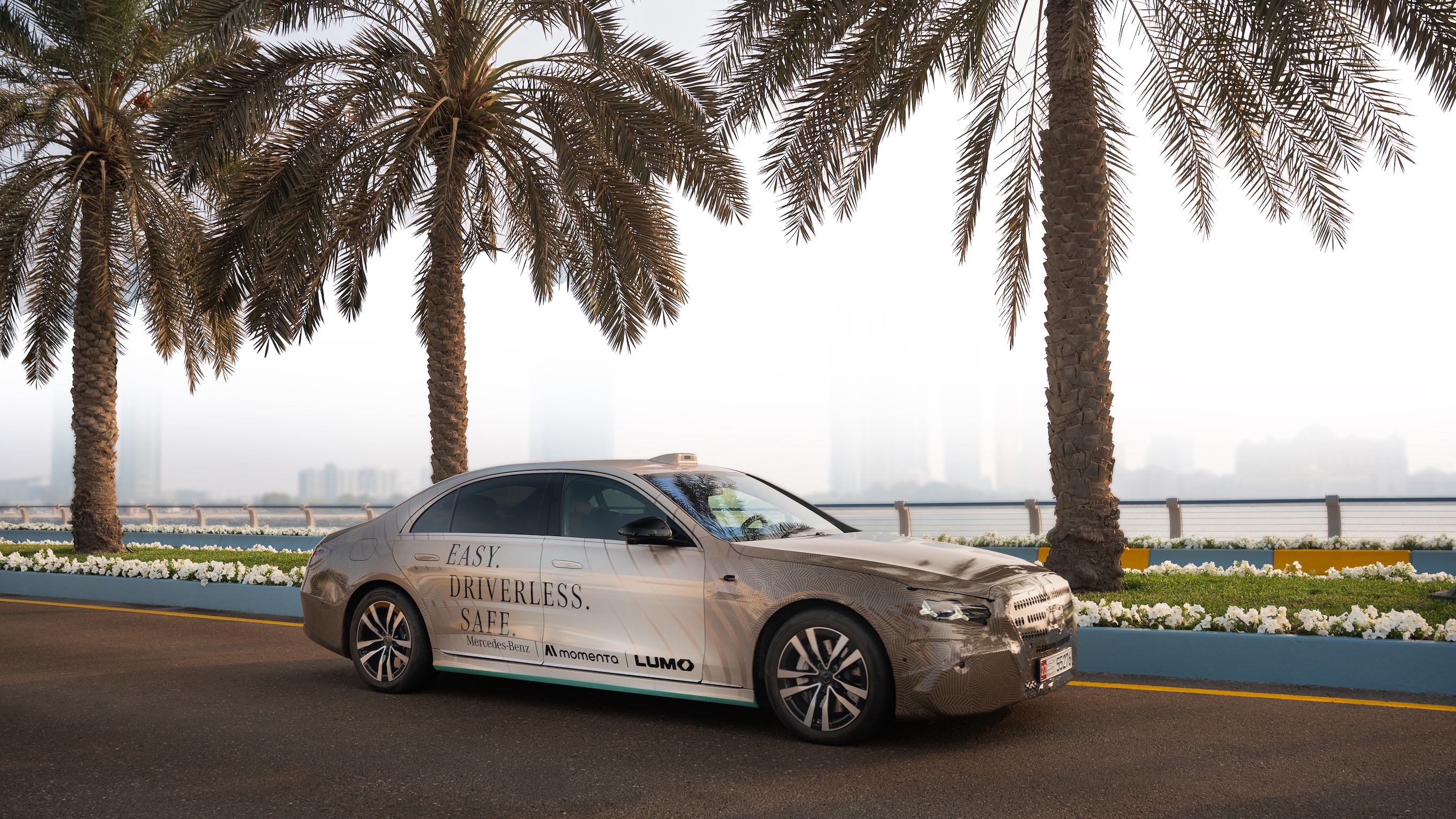
Core Insights - The new generation Mercedes-Benz S-Class sedan marks a significant milestone in the luxury automotive market, celebrating the 140th anniversary of the invention of the automobile with over 50% of its components being innovatively redesigned [1] - This model represents a shift towards software-defined luxury, featuring the proprietary MB.OS electronic architecture that integrates core functionalities such as assisted driving and intelligent cockpit systems into a cohesive smart ecosystem [3] Technological Advancements - The S-Class introduces an AI-powered virtual assistant for more natural emotional interactions, along with immersive navigation and AR head-up display systems that enhance driving intuitiveness and safety [6] - The vehicle will debut advanced parking assistance systems in the Chinese market, capable of "space-to-space" intelligent driving, utilizing a robust sensor array and algorithms for improved parking efficiency [6] Design and Luxury Features - The new S-Class has evolved in design, with a length of 5,304 millimeters and features like a luminous star emblem and unique "dual star" digital headlights, enhancing visibility and safety [10] - The interior is designed to embody luxury, featuring a "super screen" for interactive and entertainment functions, and a rear seating area that offers first-class amenities, including high-end entertainment systems and intelligent air purification [10] Performance and Safety - The new model offers optimized V8 and inline-six engines, equipped with ISG smart motors and a 48-volt mild hybrid system for improved power response and driving comfort [11] - Safety features have been elevated, with up to 15 airbags, including a world-first rear-facing airbag, and the PRE-SAFE® system that provides proactive protection against collision risks [11] Brand Commitment - The Chairman of Mercedes-Benz Group emphasized that the S-Class continues to embody the brand's core values, combining deep heritage with future vision, and represents a commitment to luxury mobility in a new era [11]
保时捷中国渠道大收缩,不能让车主为品牌转型买单
Xin Jing Bao· 2026-01-29 03:45
Core Viewpoint - Porsche China plans to reduce its dealer network from 114 to 80 by 2026, a nearly 30% decrease, in response to a projected 26% decline in sales in 2025, which has raised concerns about consumer rights protection during this transition [1][2][3] Group 1: Dealer Network Optimization - The reduction in the number of dealers is part of Porsche's strategy to optimize its channel layout amid a competitive luxury car market [1][4] - The decision to close or consolidate dealerships has led to dissatisfaction among some customers who purchased maintenance packages that are no longer valid due to the closure of authorized stores [1][2] Group 2: Consumer Rights and Brand Responsibility - Customers have expressed frustration over the lack of clear communication and solutions regarding the usability of maintenance packages after dealership closures, questioning Porsche's accountability [2][3] - The brand's failure to provide a seamless transition for consumer rights during channel adjustments has been criticized as a significant oversight in brand management [2][3] Group 3: Market Challenges and Brand Image - Porsche's current challenges reflect broader issues faced by traditional luxury brands in adapting to market changes, particularly in the context of electric vehicle demand and consumer expectations [3][4] - The brand's reputation is at risk as it has not adequately addressed consumer concerns, which could further erode trust and impact future sales [3][4]
贝壳车评|保时捷中国渠道大收缩,不能让车主为品牌转型买单
Bei Ke Cai Jing· 2026-01-29 03:41
Core Insights - Porsche China CEO announced plans to reduce the number of dealerships from 114 in 2025 to 80 by 2026, a nearly 30% decrease, in response to a projected 26% decline in sales in 2025 [1] - The channel optimization has led to dissatisfaction among some customers who are unable to use maintenance packages purchased at authorized dealerships due to closures, raising questions about consumer rights protection [1][2] - The luxury car market is entering a phase of inventory competition, where brands are consolidating resources and focusing on high-potential markets, but Porsche's main controversy lies in its responsibility to consumers during market changes [1][2] Company Response and Consumer Trust - Porsche has faced criticism for not adequately addressing consumer concerns regarding the usability of maintenance packages after dealership closures, which has led to a loss of trust among customers [2][3] - The company has been accused of enjoying the benefits of the booming luxury car market without properly addressing consumer rights, resulting in unnecessary losses for loyal customers [2] - The lack of clear solutions for customers who purchased maintenance packages at closed dealerships reflects a failure in brand management and a depletion of consumer trust [2][3] Market Challenges and Brand Strategy - The announcement of a significant reduction in dealerships amid unresolved consumer issues may exacerbate the brand's trust crisis and further damage consumer confidence [3] - Porsche's challenges are indicative of broader issues faced by traditional luxury brands in adapting to the evolving Chinese market, particularly in terms of electric vehicle development and meeting local consumer demands [3][4] - To regain consumer trust, Porsche must implement clear solutions for affected customers and adopt a transparent approach in addressing public concerns, demonstrating accountability and commitment to consumer rights [4] Industry Implications - The situation serves as a warning for all traditional luxury brands, emphasizing the importance of respecting market dynamics and prioritizing consumer rights [4] - Brands must focus on both product quality and service experience to maintain competitiveness in a challenging market environment, or risk being eliminated from the market [4]
资深豪华车主集体“换轨”:从尊界S800车主看高端消费迁徙
Feng Huang Wang Cai Jing· 2026-01-27 12:19
Core Insights - The Chinese automotive market is experiencing a significant dichotomy, with luxury brands like Maserati, Bentley, and Rolls-Royce facing declining sales, while the new brand ZunJie S800 is achieving remarkable success with daily orders exceeding 128 units and single-day deliveries surpassing 200 units [1] Group 1: Consumer Profile - The first keyword defining ZunJie S800 owners is "seasoned players," who often have a history of owning traditional luxury brands such as Rolls-Royce and Porsche, alongside younger individuals with strong family backgrounds or career growth, driven by a desire for advanced intelligent experiences and high-quality comfort [2] - The second keyword is "value migrators," who recognize the shifting value landscape in luxury vehicles, with owners like Mr. Chen noting that the technology in ZunJie S800 is something traditional luxury brands cannot replicate [2] Group 2: Purchasing Behavior - A notable "extremely short decision chain" phenomenon is emerging among these consumers, who often skip extensive comparisons and make quick purchasing decisions after understanding the product, driven by a clear and demanding checklist of top-tier intelligence, luxury, and high-end business features [3] - The ZunJie S800 has become the sole option to meet these demands, as many owners, like Mr. Gu, express that they made their purchase without much comparison due to the unique offering of advanced technology and high-end products [3] Group 3: Product Features - The core of the ZunJie S800's appeal lies in a new luxury formula characterized by "intelligence as the core, luxury as the surface," with Huawei's technology addressing practical pain points and enhancing the driving experience [4] - Features such as intuitive gesture controls and advanced safety systems contribute to a seamless user experience, while the luxurious interior and driving quality have garnered praise from former owners of high-end brands like Rolls-Royce and Porsche [4] Group 4: Word-of-Mouth Effect - The strong product performance has led to a "ZunJie effect," where satisfied owners actively share their experiences, creating a powerful word-of-mouth marketing dynamic within high-net-worth circles [5] - Real-life examples include a hotel chairman purchasing 13 units for guest transport and a business owner influencing three partners to buy after just 18 days of ownership, highlighting the effectiveness of trust-based referrals [6] Group 5: Market Impact - The success of ZunJie S800 marks a significant breakthrough for a Chinese brand in the million-level luxury market, redefining consumer perceptions and cultural values around luxury vehicles [6] - The resonance between ZunJie S800 and its owners signifies the onset of a new era in the automotive industry, where the definitions and narratives of luxury are undergoing irreversible transformation [6]
