钴金属

Search documents
华友钴业控股子公司5926万元项目环评获同意
Mei Ri Jing Ji Xin Wen· 2026-01-27 08:12
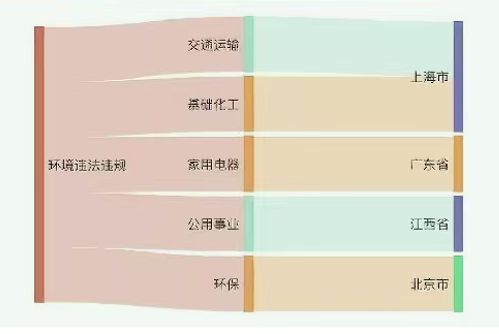
Core Viewpoint - The environmental impact assessment approval for Guangxi Huayou New Materials Co., a subsidiary of Huayou Cobalt Co., has been granted for a valuable metal compound recycling project with a total investment of 59.26 million yuan, as disclosed by regulatory authorities on January 14, 2026 [1]. Group 1 - The "A-share Green Report" project, launched by the Daily Economic News in collaboration with the public environmental research center (IPE), aims to enhance transparency in environmental information of listed companies [1]. - The project monitors environmental performance based on authoritative regulatory data from 31 provinces and 337 cities, analyzing and interpreting the data to provide insights into listed companies and their subsidiaries [1]. - The project includes the timely release of AI-generated green reports for listed companies and weekly updates on environmental risk rankings [1]. Group 2 - The previous issue of the A-share Green Weekly Report indicated that five listed companies recently exposed environmental risks [3].


寒锐钴业1月16日获融资买入1.16亿元,融资余额9.35亿元
Xin Lang Cai Jing· 2026-01-19 01:39
Group 1 - The core viewpoint of the news highlights the financial performance and trading activity of Hanrui Cobalt Industry, indicating a mixed market response with a slight decline in stock price despite positive revenue and profit growth [1][2]. Group 2 - On January 16, Hanrui Cobalt's stock price fell by 1.42%, with a trading volume of 902 million yuan. The financing buy-in amount for the day was 116 million yuan, while the financing repayment was 101 million yuan, resulting in a net financing buy of 14.30 million yuan [1]. - As of January 16, the total balance of margin trading for Hanrui Cobalt was 939 million yuan, with a financing balance of 935 million yuan, accounting for 6.14% of the circulating market value, which is above the 70th percentile of the past year [1]. - In terms of securities lending, on January 16, there were no shares repaid, with 15,000 shares sold short, amounting to 737,800 yuan at the closing price. The remaining short selling volume was 64,100 shares, with a balance of 3.15 million yuan, which is below the 40th percentile of the past year [1]. Group 3 - As of January 9, the number of shareholders for Hanrui Cobalt was 62,900, an increase of 4.29% from the previous period, while the average circulating shares per person decreased by 4.12% to 4,329 shares [2]. - For the period from January to September 2025, Hanrui Cobalt achieved operating revenue of 4.871 billion yuan, representing a year-on-year growth of 16.49%, and a net profit attributable to shareholders of 238 million yuan, up 42.57% year-on-year [2]. - Since its A-share listing, Hanrui Cobalt has distributed a total of 640 million yuan in dividends, with 124 million yuan distributed over the past three years [2]. - As of September 30, 2025, among the top ten circulating shareholders, Hong Kong Central Clearing Limited held 2.3867 million shares, a decrease of 182,900 shares from the previous period, while the Southern CSI 1000 ETF held 1.9719 million shares, down 15,700 shares [2].

腾远钴业(301219.SZ)发预增,预计2025年度归母净利润同比增长50.02%-69.87%
智通财经网· 2026-01-13 08:56
Core Viewpoint - Tengyuan Cobalt (301219.SZ) forecasts a net profit attributable to shareholders of 1.028 billion to 1.164 billion yuan for the year 2025, representing a year-on-year growth of 50.02% to 69.87% [1] Group 1: Performance Drivers - The significant growth in performance is primarily driven by the gradual release of production capacity from fundraising projects, leading to an increase in total metal output of cobalt, copper, nickel, lithium, and manganese [1] - The company has continuously promoted lean management reforms and implemented cost reduction and efficiency enhancement measures, which have improved operational efficiency and overall profitability [1] - The improvement of the secondary resource recovery system has led to a continuous increase in the proportion of recycled materials in the raw material structure, effectively enhancing supply chain resilience and self-sufficiency in raw materials [1] - The company has benefited from the year-on-year price increase of metals such as cobalt and copper, significantly enhancing the profitability of its products [1]
腾远钴业发预增,预计2025年度归母净利润同比增长50.02%-69.87%
Zhi Tong Cai Jing· 2026-01-13 08:56
Core Viewpoint - Tengyuan Cobalt (301219.SZ) forecasts a net profit attributable to shareholders of 1.028 billion to 1.164 billion yuan for the year 2025, representing a year-on-year growth of 50.02% to 69.87% [1] Group 1: Performance Drivers - The significant growth in performance is primarily attributed to the gradual release of production capacity from fundraising projects, leading to an increase in total metal output of cobalt, copper, nickel, lithium, and manganese [1] - The company has continuously promoted lean management reforms and implemented cost reduction and efficiency enhancement measures, which have improved operational efficiency and overall profitability [1] - The improvement of the secondary resource recovery system has led to a continuous increase in the proportion of recycled materials in the raw material structure, effectively enhancing supply chain resilience and self-sufficiency in raw materials [1] - The company has benefited from the year-on-year price increase of metals such as cobalt and copper, significantly enhancing the profitability of its products [1]
华友钴业2025年净利润约16.95亿元-22.95亿元,同比预增40.8%至55.24%
Ju Chao Zi Xun· 2026-01-06 03:11
Core Viewpoint - Huayou Cobalt Co., Ltd. expects significant growth in its 2025 financial performance, with net profit projected to increase substantially compared to the previous year [2][3] Financial Performance Summary - The company anticipates a net profit attributable to shareholders ranging from 585 million to 645 million yuan, representing an increase of 169.5 million to 229.5 million yuan compared to the previous year's reported profit of 415.48 million yuan, which translates to a year-on-year growth of 40.8% to 55.24% [2] - The net profit after excluding non-recurring gains and losses is expected to be between 560 million and 630 million yuan, an increase of 180.49 million to 250.49 million yuan from the previous year's 379.51 million yuan, indicating a year-on-year growth rate of 47.56% to 66% [2] Key Factors for Performance Increase - The significant profit increase is attributed to three main factors: 1. Continuous release of integrated operational advantages, with upstream resource projects achieving production targets and downstream material business recovering growth, enhancing the self-sufficiency rate of MHP raw materials [3] 2. Improved product profitability due to the rebound in prices of cobalt and lithium carbonate, which has effectively expanded the profit margins of related products [3] 3. Ongoing optimization of operational efficiency through management reforms and cost reduction initiatives, leading to improved operational metrics [3]
华友钴业(603799.SH)发预增,预计2025年度归母净利润58.5亿元至64.5亿元,同比增长40.80%至55.24%
智通财经网· 2026-01-05 11:37
Core Viewpoint - The company expects a significant increase in net profit for the fiscal year 2025, projecting a range of 5.85 billion to 6.45 billion yuan, representing a year-on-year growth of 40.80% to 55.24% [1] Group 1: Profit Growth Drivers - The substantial profit growth is primarily attributed to the continuous release of the company's integrated operational advantages [1] - Recovery in prices of cobalt and lithium metals has contributed to improved profitability of the company's products [1] - The company has implemented management reforms and cost reduction initiatives, leading to enhanced operational efficiency [1] Group 2: Operational Highlights - The upstream resource project, Indonesia Huafei, has achieved production beyond capacity, while the Huayue project maintains stable and high production levels [1] - The self-sufficiency rate of MHP raw materials has further increased, supporting the company's operational capabilities [1] - The recovery of the downstream materials business and significant enhancement in technological innovation capabilities have reinforced the company's competitive strategy of "product leadership and cost leadership" [1]
浙江华友钴业股份有限公司 关于对外担保的进展公告
Zheng Quan Ri Bao· 2025-12-10 07:59
Core Viewpoint - The company, Zhejiang Huayou Cobalt Co., Ltd., has provided significant guarantees for its subsidiaries, with a total guarantee amount of 246,818.35 million RMB as of November 2025, raising concerns about its financial leverage and risk exposure [2][11]. Group 1: Guarantee Overview - In November 2025, the company provided a total guarantee of 183,218.35 million RMB, including 113,618.35 million RMB for five subsidiaries with a debt-to-asset ratio exceeding 70% and 69,600.00 million RMB for three subsidiaries with a lower ratio [3]. - As of November 30, 2025, the total external guarantee balance was 8,943,946.43 million RMB, primarily for controlling subsidiaries [8]. Group 2: Guarantee Details - The company anticipates that the total guarantee amount for its subsidiaries will not exceed 1,420.00 billion RMB, with 714.00 billion RMB allocated for subsidiaries with a debt-to-asset ratio below 70% and 686.00 billion RMB for those above [4]. - The guarantees include various forms such as guarantees, mortgages, and pledges [4]. Group 3: Necessity and Reasonableness of Guarantees - The guarantees are deemed necessary to support the normal operations of the company and its subsidiaries, which are currently in good financial health without significant litigation or default risks [6]. - The board of directors has approved the guarantees, asserting that they will not adversely affect the company's operations or shareholder interests [7].
刚刚!外围突传重磅消息!
天天基金网· 2025-09-22 02:24
Core Viewpoint - The extension of the cobalt export ban by the Democratic Republic of the Congo (DRC) until October 15, 2025, is expected to significantly impact the global cobalt supply chain, potentially leading to a sharp increase in cobalt prices due to supply shortages and rising demand from industries such as electric vehicles and consumer electronics [4][5][7]. Cobalt Export Ban - The DRC's strategic mineral regulatory authority announced the extension of the cobalt export ban until October 15, 2025, with a quota system to be implemented thereafter [5][6]. - The annual export limit for cobalt is set at 18,125 tons for the remainder of 2025, with limits of 96,600 tons for 2026 and 2027 [5]. Price Trends - Cobalt prices have surged significantly this year, with the latest price exceeding 270,000 yuan per ton, marking a 62.7% increase since the beginning of the year [7][9]. - The price increase is attributed to the DRC's export ban and the rising demand from the electric vehicle and consumer electronics sectors [7][9]. Demand Outlook - Cobalt is a critical component in lithium-ion batteries, enhancing energy density and stability [9]. - The global cobalt consumption is projected to reach approximately 200,200 tons in 2024, reflecting a year-on-year increase of 7.15%, with China's consumption expected to grow by 5.6% [9][10]. Market Sentiment - Analysts maintain an optimistic outlook on cobalt prices, predicting a potential upward cycle from 2025 to 2027, with price levels possibly exceeding 350,000 yuan per ton [10]. - The stock performance of leading cobalt companies in the A-share market has been strong, with significant year-to-date gains reported [10].
刚刚!外围,突传重磅消息!
券商中国· 2025-09-21 23:36
Core Viewpoint - The extension of the cobalt export ban by the Democratic Republic of the Congo (DRC) until October 15 is expected to significantly impact the global cobalt supply chain, potentially leading to a sharp increase in cobalt prices [1][2][5]. Summary by Sections Cobalt Export Ban - The DRC's strategic mineral regulatory agency announced the extension of the cobalt export ban until October 15, with a planned lifting on October 16 and the implementation of annual export quotas [1][5]. - The export quotas allow mining companies to export a maximum of 18,125 tons of cobalt for the remainder of 2025, with annual limits of 96,600 tons for 2026 and 2027 [5]. Price Impact - The ban's extension is likely to create a supply gap, accelerating the consumption of existing inventories and leading to a significant short-term increase in cobalt prices [5]. - As of September 18, cobalt prices have surged to over 270,000 yuan per ton, reflecting a 62.7% increase since the beginning of the year [2][7]. Long-term Outlook - Analysts maintain an optimistic view on cobalt prices for the year, with expectations that the DRC's export quotas will enhance its pricing power, potentially raising the price center [3][12]. - Projections indicate that cobalt prices could reach over 350,000 yuan per ton between 2026 and 2027 [10]. Demand Drivers - Cobalt is a critical component in lithium-ion batteries, particularly in electric vehicles and consumer electronics, with demand expected to rise due to advancements in technology such as 5G, AI, and IoT [9][11]. - Global cobalt consumption is projected to increase by 7.15% in 2024, with China's consumption expected to grow by 5.6% [9]. Market Performance - The DRC's export ban has led to a significant improvement in the global cobalt market's supply-demand dynamics, with prices rebounding sharply [7]. - Major players in the cobalt industry, such as Luoyang Molybdenum and Huayou Cobalt, have seen substantial stock price increases, reflecting the positive market sentiment [12].

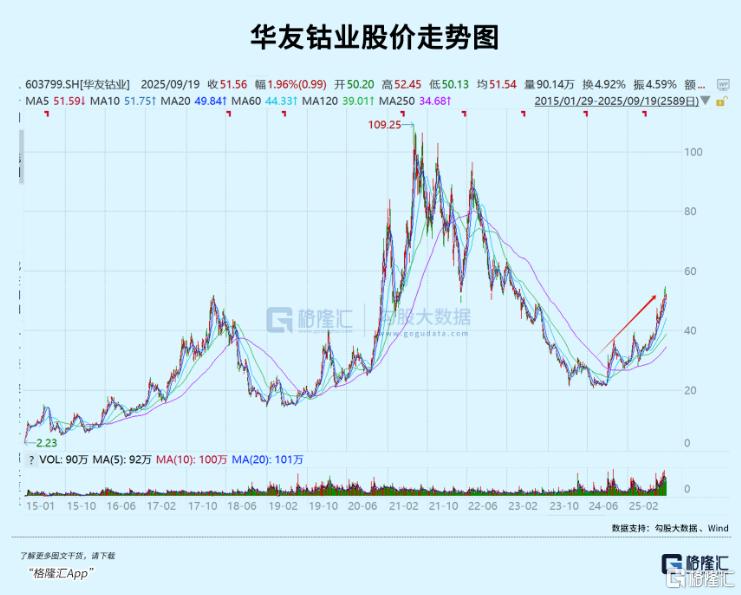
华友钴业,起飞了
Ge Long Hui· 2025-09-20 12:05
Core Viewpoint - The recent surge in Huayou Cobalt's stock price may indicate a significant reversal in the cyclical trend of the industry, following a period of decline [2][6]. Company Overview - Huayou Cobalt, established in 2002 and headquartered in Zhejiang, initially focused on cobalt and copper mining, later expanding into lithium battery materials and significant investments in nickel resources in Indonesia and lithium resources in Africa [2]. - As of 2024, the company's revenue composition includes cobalt (6%), copper (9%), nickel (35%), lithium (5%), ternary precursors (11%), and ternary cathode materials (14%) [2]. - Nickel contributes the highest gross margin at 52%, while traditional businesses like cobalt and copper account for lower margins [2]. Financial Performance - From 2020 to 2024, Huayou Cobalt's revenue grew from 21.2 billion to 60.9 billion yuan, with a compound annual growth rate (CAGR) exceeding 30% [2]. - Net profit attributable to shareholders increased from 1.165 billion to 4.155 billion yuan, with a CAGR of 37.4% [2]. - In the first half of 2025, the company reported revenue of 37.2 billion yuan, a year-on-year increase of 23.8%, and a net profit of 2.71 billion yuan, up 62.3% year-on-year [4]. Market Dynamics - The cobalt market has experienced significant price fluctuations over the past two decades, with three major bull markets driven by factors such as the rise of electric vehicles [7]. - Cobalt prices fell to a low of 9.95 USD/pound in February 2025 but began to recover due to supply constraints from the Democratic Republic of Congo (DRC) [7][8]. - The DRC, which accounts for 78% of global cobalt supply, has implemented export bans that have significantly reduced global supply, leading to a surge in domestic cobalt prices [11][12]. Nickel Market Insights - Indonesia's nickel production has rapidly expanded, with output increasing from 770,000 tons in 2022 to 1.6 million tons in 2024, contributing to a global oversupply [12]. - However, long-term demand for nickel is expected to rise significantly due to the anticipated growth of solid-state batteries, which could lead to a supply-demand imbalance by 2027 [13]. - Huayou Cobalt has strategically invested in Indonesian nickel resources since 2018, with nickel-related revenue growing from 250 million to 21.3 billion yuan from 2021 to 2024 [13]. Investment Outlook - The market is expected to shift from technology stocks to cyclical and consumer sectors, which may benefit Huayou Cobalt's valuation recovery [14]. - The company's current price-to-book (PB) ratio of 2.24 is significantly lower than the median of 4.69 over the past decade, suggesting potential for valuation improvement [6].