
铝土矿开采

Search documents
几内亚铝土矿政策专家交流
2026-03-19 02:39
Summary of Guinea Bauxite Market Conference Call Industry Overview - Guinea's bauxite exports account for nearly 100% of the increase in China's imports, with an expected export volume of 183 million tons by 2025, of which China will absorb approximately 150 million tons [1][2] - The Guinean government plans to implement a quota system to control global exports between 165 million and 175 million tons, aiming to stabilize prices at $75 per ton and increase national revenue [1][2] - Shipping costs have risen from $22 to $30, increasing the CIF cost to $72, with long-term contracts for Q2 already locked in above $70, confirming a price uptrend [1][7] Government Policies and Market Dynamics - The Guinean government is considering export restrictions due to falling prices, with bauxite prices dropping from a peak of $130 in 2025 to $60 in February 2026, nearly halving [2][3] - The government aims to stabilize revenue and protect resources, especially as the military government transitions to a legitimate government, providing a stable policy framework [2][4] - The proposed export restrictions may face challenges, as many large mines exceed their planned production, while smaller mines often underperform [4][5] Export Quotas and Market Balance - For 2026, China's demand for Guinean bauxite is projected at 150 million tons. To maintain market balance without excessively raising prices, Guinea should set export levels between 150 million and 160 million tons [6] - If Guinea reduces exports to 140-150 million tons to raise prices, it could impact global supply dynamics, especially as Guinea also exports about 19 million tons to Europe and India [6] Cost Structure and Price Trends - The main cost component in FOB pricing is transportation, with road transport costs around $11 per 100 km. For mines relying on road transport, costs are nearing their limits under current FOB prices [8][9] - The cost of mining in Guinea is relatively low, averaging $4 to $5 per ton, with minimal differences between large and small mining companies [9] - High oil prices could significantly increase mining and transportation costs, but the current oversupply of bauxite may limit the transmission of these costs to alumina prices [11][15] Alumina Market Outlook - The price of alumina is expected to be influenced by the commissioning of new alumina plants in Guangxi, with four new plants expected to start production between March and June 2026 [12][13] - Despite potential short-term price increases due to supply constraints, significant long-term price hikes are unlikely due to existing oversupply issues [11][12] Challenges in Downstream Development - Guinea faces significant challenges in developing its alumina industry, including a lack of key raw materials, insufficient power supply, and weak infrastructure [19] - The government aims to build five alumina plants by 2030, but the lack of supporting conditions has hindered progress [5][19] Global Supply Risks and Resource Nationalism - Other bauxite-exporting countries may adopt similar policies to control exports and stabilize prices, reflecting a trend of resource nationalism [20] - Rising oil prices pose risks to supply in other countries, but Guinea's situation is particularly vulnerable due to its reliance on imported oil and recent supply disruptions [20] Domestic Bauxite Production Outlook - Domestic bauxite production in China is unlikely to see significant growth, with a total capacity of 700 million tons and production levels around 65-70 million tons [21] - The declining quality of domestic bauxite is a global issue, impacting effective production yields [21] Conclusion - The Guinean bauxite market is at a critical juncture, with government policies aimed at stabilizing prices and increasing revenue amid fluctuating global demand and supply dynamics. The interplay between domestic production challenges and international market conditions will be crucial in shaping the future of the industry.
几内亚铝土矿出口约束政策全解析
2026-03-18 02:31
Summary of Guinea Bauxite Export Policy Conference Call Industry Overview - The conference call discusses the bauxite export policies of Guinea, a key player in the global bauxite market, particularly in relation to China's aluminum production needs [1][4][6]. Key Points and Arguments Export Policy and Price Control - The Guinean government plans to limit bauxite exports to 150-160 million tons by April 2026 to boost prices and support the downstream alumina industry [1][2][14]. - China is heavily reliant on Guinea for bauxite, with imports expected to reach 150 million tons by 2025, accounting for 74% of Guinea's total exports [1][4]. - If the export quota is set at 150 million tons, the supply to China would be only 130 million tons, leading to a potential demand-supply gap of 20 million tons, which could drive CIF prices above $100 [1][9]. Current Market Conditions - The current shipping costs and rising oil prices have increased operational costs, with CIF prices at $64, which is below the cost threshold [1][10][15]. - The FOB cost of Guinean bauxite ranges from $35 to $45, with many small and medium enterprises facing pressure to reduce production if prices remain low [12][13]. Government's Rationale for Intervention - The Guinean government aims to stabilize prices to avoid stimulating alternative production in competing countries like Sierra Leone and Cameroon [2][5][6]. - The government has been adjusting its mining policies, with a focus on increasing national revenue and developing the downstream alumina industry, including plans to build five alumina plants by 2030 [7][11]. Potential Impacts of Export Restrictions - If Guinea implements export restrictions, it could lead to increased production from other countries, which may undermine Guinea's market competitiveness [9][17]. - The government may face challenges in balancing the interests of large and small mining companies when enforcing export quotas [13][14]. Future Projections - The expected bauxite export volume for 2026 could reach 220-230 million tons, leading to significant oversupply if not managed [5]. - The anticipated CIF price target of $75-$76 per ton would allow Guinean miners to maintain profitability while controlling supply [14][16]. Market Dynamics and Risks - The rising costs of shipping and oil could lead to a situation where CIF prices exceed operational costs, creating a risk of market instability [10][15]. - The current high inventory levels in China (approximately 50 million tons) suggest that the market is not in a state of shortage, which may limit price increases unless extreme export quotas are enacted [18]. Other Important Considerations - The Guinean government's approach to export restrictions is influenced by its need to maintain a balance between domestic economic interests and global market dynamics [6][9]. - The potential for price fluctuations in the alumina market is closely tied to the decisions made regarding bauxite export quotas and the overall supply-demand balance [18].
氧化铝:持续反弹还需越过几重山?
Wu Kuang Qi Huo· 2025-12-30 01:13
Group 1: Report Investment Rating - No information provided Group 2: Core View - The continuous rebound of alumina prices still faces triple pressures, and attention should be paid to domestic and foreign policy changes [2][3] Group 3: Summary by Directory 1. Smelting End - Focus on Domestic Policy Implementation - On December 26, 2025, the National Development and Reform Commission's article raised market expectations for alumina supply contraction policies, leading to a significant rebound in futures prices [6] - The latest weekly alumina production is 183.8 million tons, and the weekly inventory is 517 million tons, with a weekly increase of 5.7 million tons. Since July, production has remained high, and demand is close to the policy ceiling, resulting in continuous oversupply. To achieve supply - demand balance, about 2.6 billion tons/year of production capacity (2.8% of the total) needs to be cut. In 2026, with 13.4 billion tons of planned projects, the oversupply pattern may intensify [7] 2. Ore End - Focus on Guinea's Price - Support Willingness - The short - term oversupply at the smelting end is difficult to change, and the bauxite price at the cost end is the core contradiction. After the rainy season in Guinea, ore shipments increased, and the restart of the AXIS mine in early December exacerbated the bauxite oversupply. The latest sea - floating inventory of bauxite reached 15.01 billion tons, and the port inventory was 26.02 billion tons. High inventory and shrinking downstream profits drove the bauxite price down. A large Guinean mine will lower the Q1 2026 long - term price by $7.5 to $66.5/ton [14] - The reversal of bauxite prices depends on large - scale overseas supply contraction. The FOB cost of Guinean bauxite is in the range of $20 - $50/ton, and the sea freight from Guinea to China is $20 - $25/ton. The CIF price of $60 - $65/ton is expected to be a strong support, corresponding to an alumina cost support of 2450 - 2550 yuan/ton. If the price falls below this range, the Guinean government may have a strong willingness to support prices [15] 3. Futures Warehouse Receipts - Need to Be Digested - The standard warehouse receipts of alumina have a 180 - day validity period. The concentrated expiration of warehouse receipts in December, January, and February may drive the futures price to be at a discount for delivery, suppressing the short - term sharp rebound of futures prices [23]
中铝国际午前涨超3% 中铝几内亚博法项目年内铝土矿装船量突破2000万吨大关
Zhi Tong Cai Jing· 2025-12-23 04:52
Core Viewpoint - China Aluminum International (中铝国际) has achieved a significant milestone with its Boffa project in Guinea, where the bauxite shipment volume is expected to exceed 20 million tons in 2025, marking a new record for the company's overseas bauxite supply [1] Group 1: Company Performance - As of the latest report, China Aluminum International's stock has risen by 3.49%, trading at HKD 2.67, with a transaction volume of HKD 33.41 million [1] - The operational capability of the Boffa project has improved, enhancing the strategic resource security for the China Aluminum Group and supporting its high-quality development [1] Group 2: Industry Trends - Guinea, as China's largest supplier of bauxite, has seen a continuous increase in import volumes in recent years [1] - From 2021 to 2025, Guinea's bauxite production is projected to grow by 9.55%, while exports are expected to increase by 12.07%, driven by new entrants in the bauxite production sector and the expansion of existing investments and capacities [1] - By the end of 2025, Guinea's bauxite production capacity is anticipated to reach 195.7 million tons [1] Group 3: Regulatory Environment - In May of this year, Guinea's transitional president announced the revocation of mining licenses, which could escalate if negotiations regarding alumina production capacity with relevant companies do not meet expectations [1]

只用10个月,欧洲“摆脱中国”技术却在华率先落地
Guan Cha Zhe Wang· 2025-12-10 01:48
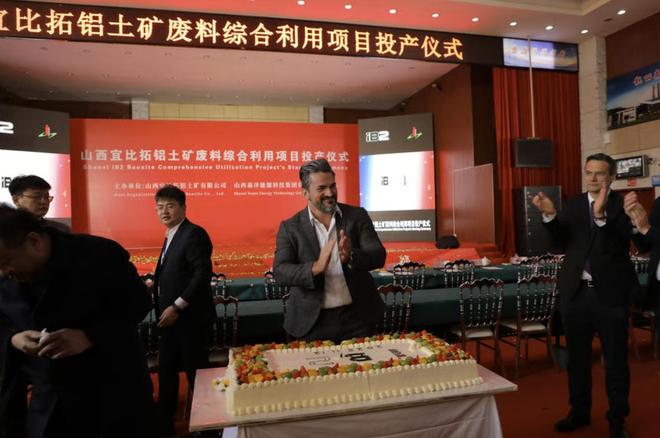
Core Viewpoint - A European startup has developed a groundbreaking technology that converts low-grade bauxite, previously considered waste, into high-quality raw materials for aluminum production, which could revitalize depleted mines and open new avenues for extracting critical minerals and rare earth elements essential for semiconductors, electric vehicles, and defense sectors [1] Group 1: Technology and Application - The technology was first announced at an industry conference in Miami six years ago, but despite Western governments' calls to reduce reliance on China, no significant progress was made in Europe or the U.S. [1] - The first large-scale application of this technology has been established in China, with a project in Shanxi province completed in just 10 months [1] - The project aims to utilize China's abundant low-grade bauxite reserves, reducing dependence on imports from Guinea and Australia [2] Group 2: Market Impact - The technology not only allows for aluminum resource independence but also enables the extraction of gallium, vanadium, lithium, niobium, and potentially rare earth elements, which are crucial for clean energy and modern military applications [2] - China currently produces 60% of the world's aluminum, and the CEO of the startup emphasized the necessity of collaboration with Chinese companies due to their remarkable efficiency [2][6] Group 3: Industry Challenges - China's reliance on imported high-grade bauxite has reached nearly 90%, with domestic reserves only accounting for 3% of global totals [4] - The industry faces challenges due to declining quality of bauxite, with many companies unable to process low-grade ores effectively [7] Group 4: Future Plans - The startup plans to expand its technology in China, aiming to process 3 million tons of low-grade bauxite annually at its Shanxi facility within two years [8] - The company encourages more Chinese enterprises to exploit economically viable local low-grade bauxite to enhance mineral sovereignty and reduce foreign dependence [9]

西芒杜顺利投产,矿石供应迎变局
Bao Cheng Qi Huo· 2025-11-17 03:45
1. Report Industry Investment Rating No relevant content provided. 2. Core Viewpoints of the Report - On November 11, 2025, the Simandou project held a grand commissioning ceremony. The first shipment of iron ore by the Weltrade fleet marked the full completion and official operation of the world - class Simandou mining and infrastructure integration project [6][11][49]. - Guinea is rich in mineral resources, especially bauxite and iron ore. The Simandou iron ore is the world's largest undeveloped high - grade iron ore with great potential. Its proven resources are about 5 billion tons, and the total resource is estimated to reach 10 billion tons [6][12][49]. - The commissioning of the Simandou project, led by domestic funds, will impact the global iron ore supply pattern. In the early stage of production ramp - up, the incremental contribution is limited. The combined output of the north and south blocks is expected to reach 20 million tons in 2026, and approach 80 million tons in 2028. The north and south blocks are conservatively estimated to reach full production in 2029 and 2030 respectively. The new capacity release may lead to lower prices, and the project is unlikely to impact the four major miners but may squeeze the share of non - mainstream miners with medium - high costs [7][36][50]. 3. Summary by Directory 3.1 Guinea's Rich Mineral Resources - Guinea, located in western Africa, is known as a "geological miracle" with rich minerals. In 2024, its GDP was $25.76 billion, with a 6% year - on - year increase. The mining industry accounted for 25% [12]. - Guinea is the world's second - largest bauxite exporter. In 2024, its bauxite reserves reached 7.4 billion tons, about 1/4 of the global total. In 2023, its bauxite production was 122.9918 million tons (up 19% year - on - year), and exports were 126.5877 million tons (up 24% year - on - year). Many international mining companies have invested in Guinea [13]. - Guinea also has abundant iron ore resources, with proven reserves of 19.9 billion tons in 2018 and an iron grade of 56% - 65%. Well - known iron ore projects include Simandou, Zogota, and Monts Nimba [14]. - China - Guinea economic and trade cooperation has deepened. China is Guinea's largest export destination and import source. By June 2025, there were 114 Chinese - funded enterprises in Guinea, mainly in the mining industry. In the first half of 2025, Chinese - funded enterprises contributed 96.2% of the incremental bauxite shipments. Chinese enterprises are also involved in engineering construction and infrastructure operation in Guinea [20][21][22]. 3.2 Basic Information of the Simandou Iron Ore Project - The Simandou mountain range in Guinea is rich in iron ore. The Simandou Iron Ore Project consists of the north block (mining areas 1&2) and the south block (mining areas 3&4), with a total resource of over 4.6 billion tons [23][25][26]. - The north block is jointly developed by the Winning Consortium (WCS) and Baowu Resources Group, with iron ore reserves of over 1.8 billion tons and an iron grade of about 65.5%. The south block is led by Simfer, with participation from Rio Tinto and China Aluminum Iron Ore Holdings, and has reserves of about 2.8 billion tons and an iron grade of 65.5% [26][27]. - The Simandou project's infrastructure includes a railway system over 600 kilometers long and a dual - hub port system. By September 2025, the SimFer port was in the final equipment commissioning stage, with an annual shipping capacity of 65 million tons [30][31]. - The Simandou ore is mainly hematite, with high grade and low impurities. The average iron grade is 65.5%, and the average aluminum and silicon contents are below 3% and 2% respectively. However, as the mining depth increases, the main mineral components will change, which may affect costs in the long term [34][35]. 3.3 Analysis of the Impact of Simandou's Commissioning on Iron Ore Supply - Although the Simandou project was successfully commissioned in November 2025, its current impact is more symbolic, and the incremental supply may not exceed 1 million tons. It is expected to gradually release production capacity during the 14th Five - Year Plan period. The combined output of the north and south blocks is expected to reach 20 million tons in 2026 and approach 80 million tons in 2028 [36]. - The Simandou project is expected to break the current pattern dominated by Australia and Brazil and form a new supply pattern of "Australia - Brazil - Africa". It also helps improve domestic resource supply security [41]. - New capacity release may lead to price decline. Referring to FMG's history, the new capacity of Simandou is unlikely to impact the four major miners but may squeeze the share of non - mainstream miners with medium - high costs, making the overall ore supply more abundant and testing the cost support of non - mainstream miners [41][42]. 3.4 Conclusion - The Simandou project was officially put into operation on November 11, 2025. Guinea is rich in mineral resources, and the Simandou iron ore has great advantages [49]. - The commissioning of the Simandou project will affect the global iron ore supply pattern. The output will gradually increase in the future, and the new capacity may lead to price decline and squeeze the share of non - mainstream miners [50].

雨季影响几内亚发运 中国9月铝土矿进口量减逾一成
Wen Hua Cai Jing· 2025-10-21 10:04
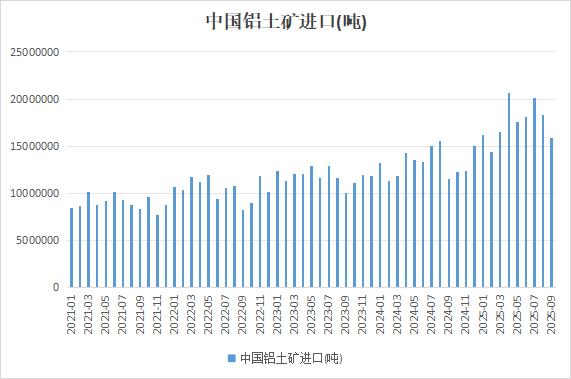
Group 1 - The core point of the article indicates that China's bauxite imports in September 2025 reached 15.88 million tons, showing a month-on-month decrease of 13.2% but a year-on-year increase of 37.5% [1] - Guinea remains the largest supplier of bauxite to China, with shipments in September declining by 14.9% to 10.49 million tons [1] - The decrease in shipments from Guinea is attributed to the rainy season in July and August, which affected mining operations and led to a drop in delivery volumes [1]
几内亚第三季度铝土矿出口跳增23% 尽管遭遇降雨和监管压力
Wen Hua Cai Jing· 2025-10-17 01:43
Group 1 - Guinea's bauxite exports surged by 23% year-on-year in Q3, reaching 39.41 million tons, despite challenges from heavy rainfall and regulatory hurdles [1] - The average monthly shipment volume for Q3 was 13.14 million tons, which is nearly a 19% decrease compared to the first half of the year due to disruptions in mining and port operations [1] - China accounted for 54.6% of Guinea's bauxite exports in Q3, with Guinea supplying about one-third of China's bauxite imports [1] Group 2 - The long-delayed Simandou iron ore project is set to make its first shipment, primarily of high-grade ore destined for China [1] - In Q3 2025, Guinea exported only 78,000 tons of alumina, as the government increased pressure on miners to build alumina refineries domestically [2]
中金:保障与重塑—几内亚铝土矿与西芒杜铁矿专题
中金点睛· 2025-10-15 23:54
Core Viewpoint - Guinea is emerging as a significant player in the global commodity market, particularly in bauxite and iron ore supply, with the potential to influence pricing trends in these sectors due to its resource endowment and ongoing projects like the Simandou iron ore project [2][6]. Natural Conditions - Guinea has abundant mineral resources, particularly bauxite and iron ore, with distinct wet and dry seasons affecting production and transportation [3][9]. - The country experiences significant seasonal variations in rainfall, impacting the shipping volumes of bauxite during the rainy season [12][13]. Infrastructure - Guinea's infrastructure, including electricity and transportation, is underdeveloped, posing challenges for mining operations [15][16]. - The country has a limited road network primarily consisting of unpaved roads, which can hinder transportation during the rainy season [18]. Policy Environment - The Guinean government has shown a trend towards resource protectionism, increasing control over the mining sector and emphasizing local processing [25][26]. - Recent policy changes have aimed to enhance government control over mining operations while still promoting foreign investment [32][33]. Iron Ore - The Simandou iron ore project is set to significantly alter the global iron ore supply landscape, with an estimated total resource of approximately 1.99 billion tons [4][39]. - The project is expected to increase China's iron ore self-sufficiency from less than 3% to 6-8% upon full production [4]. Bauxite - Guinea is the world's largest bauxite producer, with a projected supply of 77% of global maritime bauxite in 2024 [2][6]. - The country maintains a favorable bauxite production ratio, indicating strong potential for continued output growth [5][10]. Economic Impact - Mining is a critical pillar of Guinea's economy, contributing 25% to GDP, with significant growth in export revenues driven by bauxite [28][29]. - The influx of foreign direct investment (FDI) in the mining sector has been stable, contributing to infrastructure development and economic resilience [28][29]. Logistics and Transportation - Guinea's logistics rely heavily on maritime transshipment due to inadequate port facilities, necessitating the use of smaller vessels for transporting minerals [22][24]. - The upcoming Maribaya port is expected to enhance the export capacity for iron ore, with a projected throughput of 60 million tons annually [23]. Future Outlook - The anticipated increase in bauxite and iron ore production from Guinea is expected to exert downward pressure on global prices, with projections indicating a gradual decline in price levels over the next few years [5][42]. - The government's push for local processing of minerals may lead to increased operational costs and potential supply constraints in the future [36][38].
王晖参赞到博法铝土矿公司检查安全生产工作
Shang Wu Bu Wang Zhan· 2025-10-03 15:40
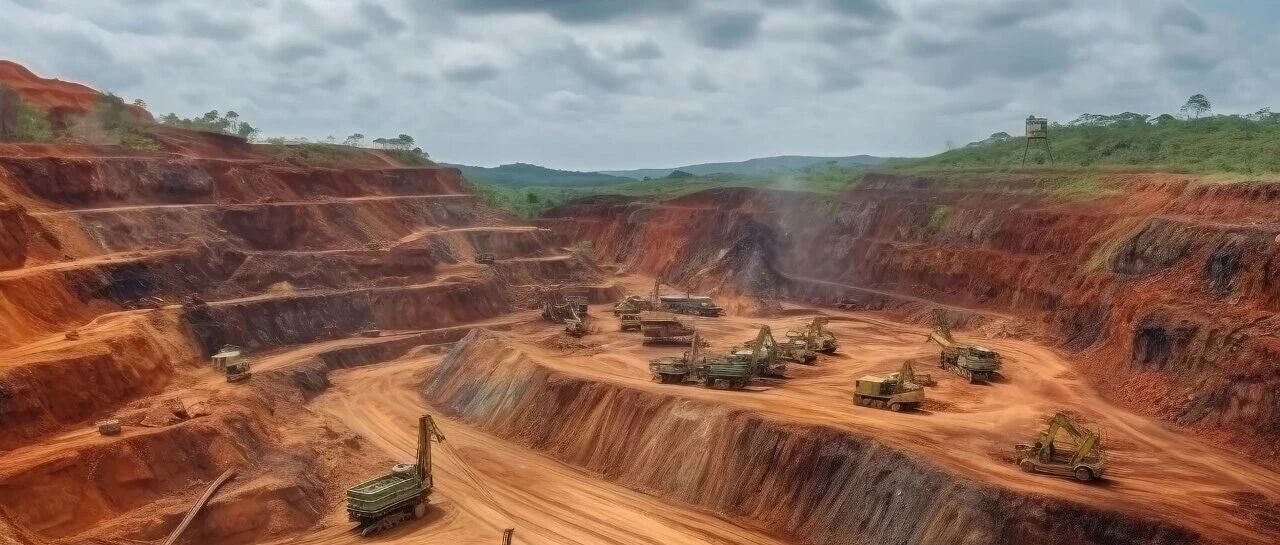
Core Viewpoint - The visit by Wang Hui, the counselor, to the Bofa bauxite mine in Guinea emphasizes the importance of safety production management in mining operations [1] Group 1: Safety Management - Wang Hui inspected various areas of the bauxite mine, including the mining area, stockpile, and control room, highlighting the need for detailed safety management [1] - The meeting with representatives from three mining companies and Yifeng Shipping stressed that safety production is the top priority for enterprises [1] - Company leaders agreed on the necessity to refine safety management and enhance safety responsibility awareness to ensure safe project operations [1]