具身智能

Search documents
谁来啃下全球汽车制造业“最后15%难题”
虎嗅APP· 2026-01-20 13:20
Core Viewpoint - The article discusses the challenges and opportunities in the automotive manufacturing sector, particularly focusing on the "last 15% problem" where automation rates drop significantly in assembly lines compared to other manufacturing processes. The company, Guangxiang Technology, aims to address this gap by developing embodied intelligence solutions tailored for complex tasks in automotive manufacturing [3][4][10]. Group 1: Industry Challenges - The automotive manufacturing industry faces a significant automation gap, with assembly line automation rates plummeting from nearly 99% in other processes to below 15% [3][4]. - Traditional industrial robots struggle with flexible tasks that require hand-eye coordination, such as connecting wiring harnesses and installing components, which are essential in the assembly process [4][6]. - The complexity of tasks in assembly lines presents a barrier to automation, as existing robots are not equipped to handle the variability and intricacies of these operations [10][11]. Group 2: Company Strategy - Guangxiang Technology adopts a gradual approach to embodied intelligence, similar to Tesla's strategy in autonomous driving, by focusing on specific, complex tasks within the automotive manufacturing sector rather than pursuing general-purpose humanoid robots [4][9]. - The company has developed a four-quadrant analysis framework to identify suitable environments and tasks for their robots, aiming to transition from standard environments with simple tasks to more complex operations in standard environments [6][15]. - The core of Guangxiang's strategy is the GOPS platform, which serves as a model-building system for embodied robots, enabling rapid skill acquisition and deployment across different manufacturing sites [6][10][40]. Group 3: Market Insights - The automotive manufacturing sector is deemed a more viable entry point for embodied intelligence due to its structured processes and the potential for significant automation improvements, unlike other sectors like chip manufacturing where automation is already prevalent [19][20]. - The company emphasizes the importance of understanding the specific needs and workflows within automotive manufacturing to develop effective robotic solutions, which involves extensive on-site research and collaboration with industry professionals [21][23]. - Guangxiang Technology identifies that the core skills required for assembly tasks can be distilled into a limited number of common operations, significantly reducing the complexity of developing robotic solutions [23][24]. Group 4: Technological Development - The company recognizes the necessity of integrating advanced data solutions, including synthetic data generation and real-time operational data collection, to overcome the data scarcity in industrial settings [29][31]. - Guangxiang Technology plans to leverage simulation data as a primary source for training models, given the high precision of industrial 3D models and the consistency of objects in manufacturing environments [31][32]. - The company aims to differentiate itself by combining advanced modeling capabilities with deep industry knowledge, ensuring that their robotic solutions are tailored to the specific demands of automotive manufacturing [36][34].

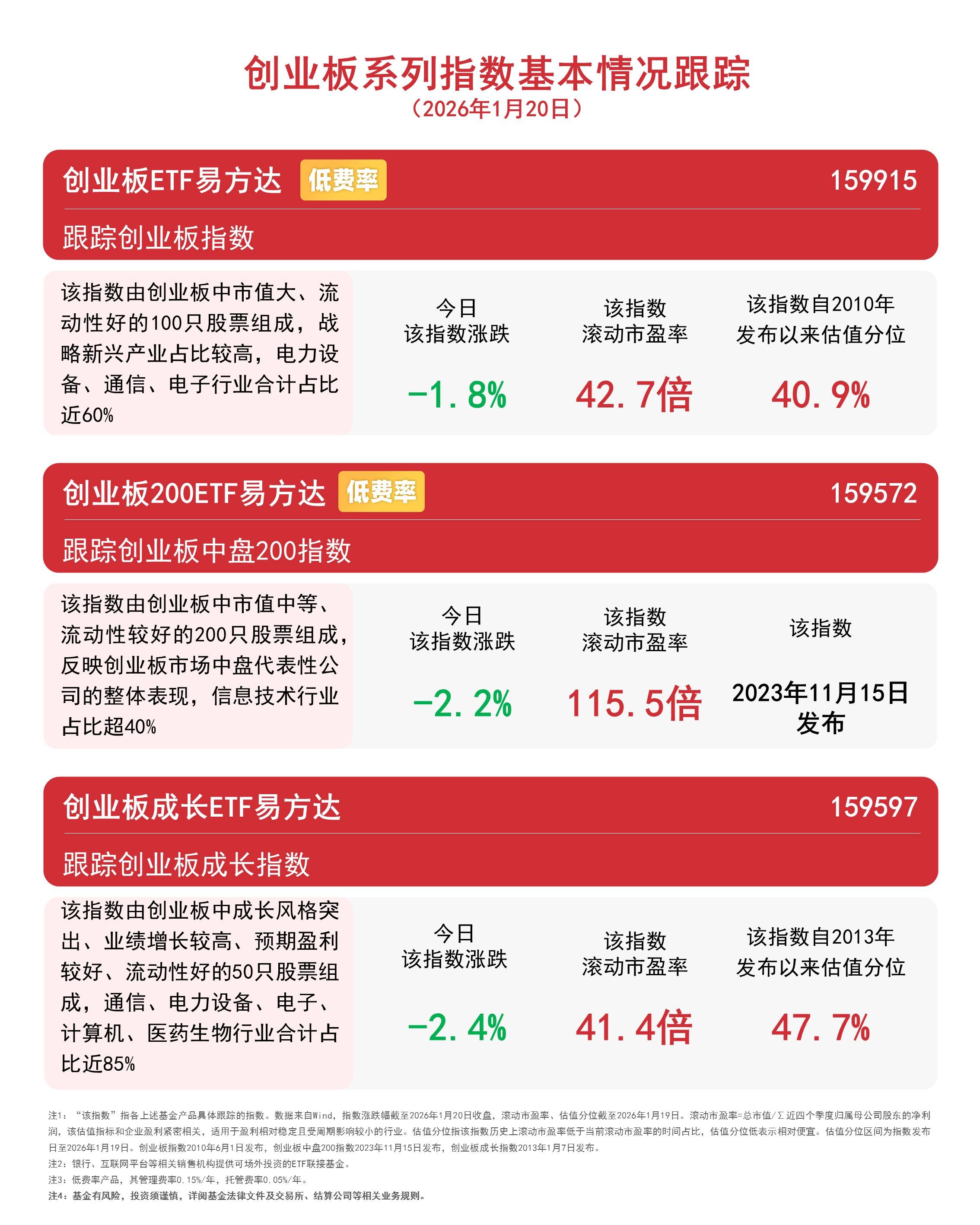
新的经济增长点蓄势待发,创业板ETF易方达(159915)助力便捷布局新兴产业发展机遇
Sou Hu Cai Jing· 2026-01-20 11:15
Group 1 - The ChiNext Index fell by 1.8%, the ChiNext Mid 200 Index decreased by 2.2%, and the ChiNext Growth Index dropped by 2.4% [1] - The National Development and Reform Commission stated that new economic growth points such as new energy, new materials, aerospace, quantum technology, biomanufacturing, and embodied intelligence are gaining momentum [1] - The installed capacity of new energy storage has surpassed 100 million kilowatts, accounting for over 40% of the global share [1] Group 2 - The "Artificial Intelligence +" initiative implemented last year is enhancing the advantages of various scenarios in China, accelerating the transition of AI from the digital world to the physical world [1] - This transition is expected to drive explosive growth in high-end manufacturing, emerging consumption, and new business models in China [1]

具身智能“领跑”,自变量机器人完成10亿元新融资
2 1 Shi Ji Jing Ji Bao Dao· 2026-01-20 08:19
Group 1: Technology and Manufacturing Sector - The technology and manufacturing sectors have seen over 20 significant financing cases, highlighting the increasing prominence of hard technology [1] - The company Zivariable Robotics secured 1 billion RMB in A++ round financing, backed by major investors like ByteDance and Sequoia China [21] - Star Ring Fusion completed 1 billion RMB in A round financing, setting a record for private fusion companies in China [1][24] - Other notable financings include over 600 million RMB for Jindie Space in B round financing focused on RISC-V chips and nearly 100 million RMB for Zhongke Kuyuan in quantum computing [1][25] Group 2: Healthcare Sector - The healthcare sector remains active with significant financing and innovation in niche areas [1] - Shizai Bio raised 400 million RMB in C round financing to advance universal stem cell drug development [14] - Qinhao Pharmaceutical completed over 300 million RMB in financing to tackle difficult drug targets, while Oricell raised 70 million USD to accelerate CAR-T therapy internationalization [1][11] Group 3: Investment Trends - The week of January 12-18, 2026, saw 27 financing events in the domestic primary market, totaling approximately 5.221 billion RMB [2][3] - The majority of financing cases were concentrated in Shanghai, Beijing, and Guangdong, with 5, 4, and 8 cases respectively [6] - Active investment institutions included Yifeng Investment and Songhe Capital, each completing 2 financing cases primarily in technology and healthcare sectors [8] Group 4: Consumer Services - LINLEE, a hand-crafted lemon tea brand, completed several million RMB in A round financing to support market expansion and product innovation [10] - The brand focuses on high-quality ingredients and unique product combinations to enhance consumer experience [10] Group 5: Regional Financing Distribution - The financing activities were predominantly concentrated in major cities, with Guangdong leading in the number of cases [6][7]



国家发改委:航空航天、量子科技等新经济增长点正在蓄势待发
Zhong Guo Xin Wen Wang· 2026-01-20 04:08
Group 1 - The core viewpoint of the article emphasizes the strategic planning and initiatives by the National Development and Reform Commission (NDRC) to promote high-tech industries during the 14th Five-Year Plan period, aiming for a strong economic start [1][3] - By 2026, the economic structure of China is expected to continue improving, with new development momentum emerging from consumption, investment, technology, and industry, indicating significant growth potential [1][3] - New economic growth points are emerging in sectors such as renewable energy, new materials, aerospace, quantum technology, and biomanufacturing, with new energy storage installations exceeding 100 million kilowatts, accounting for over 40% of the global total [1][2] Group 2 - The integration of innovation, industry, and talent is accelerating, supported by a complete industrial system and a large-scale market of over 1.4 billion people, with over 5 million graduates in science, technology, engineering, and mathematics each year [2] - The digital economy is projected to reach a value of 49 trillion yuan by 2025, representing approximately 35% of GDP, creating substantial market opportunities [2] - China has 24 global top 100 innovation clusters, with the "Shenzhen-Hong Kong-Guangzhou" cluster ranking first globally, and the establishment of international technology innovation centers in Beijing, Shanghai, and the Guangdong-Hong Kong-Macau Greater Bay Area [2]
国家发改委:今年将释放消费投资、科技产业、城乡区域潜能
Nan Fang Du Shi Bao· 2026-01-20 04:01
Core Viewpoint - The Chinese economy is poised for significant growth and transformation, with a focus on leveraging its super-large market potential and fostering innovation to drive new economic momentum as it enters the 14th Five-Year Plan period in 2026 [1][3]. Group 1: Economic Structure and Growth Potential - The economic structure of China is expected to continue improving, with development momentum shifting towards new sectors, leading to a favorable overall development trend [1]. - Key growth areas include new technologies and products in sectors such as renewable energy, aerospace, quantum technology, and intelligent manufacturing, which are anticipated to drive substantial economic growth [3]. Group 2: Innovation and Talent Integration - The integration of innovation, industry, and talent is accelerating, supported by a complete industrial system and a large population, which provides a robust talent pool of over 5 million graduates in science, technology, engineering, and mathematics each year [4]. - The digital economy is projected to reach a value of 49 trillion yuan by 2025, accounting for approximately 35% of GDP, indicating significant market expansion opportunities [4]. Group 3: Regional Innovation and Development - China boasts 24 of the world's top 100 innovation clusters, with the "Shenzhen-Hong Kong-Guangzhou" cluster ranking first globally, highlighting the country's strong position in global innovation [4][5]. - The establishment of international technology innovation centers in Beijing, Shanghai, and the Guangdong-Hong Kong-Macau Greater Bay Area is part of a strategic initiative to enhance regional innovation capabilities and foster new industries [5].
2025年经济社会发展主要目标任务圆满实现
Ke Ji Ri Bao· 2026-01-20 03:04
Economic Performance - In 2025, China's GDP reached 140,187.9 billion yuan, growing by 5.0% year-on-year at constant prices, marking a successful completion of the 14th Five-Year Plan [1] - China's economic growth rate ranks among the top of major economies, contributing approximately 30% to global economic growth despite a challenging external environment [2] Research and Development - R&D expenditure intensity in 2025 reached 2.8%, surpassing the OECD average for the first time, with China's innovation index entering the global top ten [2] - Investment in basic research accounted for 7.08% of total R&D spending, achieving a historical high [1] Manufacturing and Technology - The added value of the digital product manufacturing industry grew by 9.3% year-on-year, with new energy vehicles accounting for over 50% of domestic new car sales [2] - High-tech manufacturing value added grew at an average annual rate of 9.2% over the past five years, driven by advancements in AI, 5G, and other digital technologies [3] Patent and Innovation - In 2025, China became the first country to hold over 5 million effective domestic invention patents, maintaining the top position in PCT international patent applications for six consecutive years [4] - Significant achievements in high-end equipment and green energy sectors indicate robust investment and development in emerging fields [4]
上海国际具身智能产业博览会7月举办
Xin Lang Cai Jing· 2026-01-20 00:26
Core Insights - The Shanghai International Embodied Intelligence Industry Expo (CIEI 2026) will take place from July 2 to 4, 2026, focusing on the full chain of technology innovation and commercial application in embodied intelligence [1][2] - The global embodied intelligence market is projected to reach 19.525 billion yuan by 2025, with increasing penetration of humanoid and bionic robots across various sectors [2] - The expo will feature over 500 domestic and international companies, covering nine key exhibition areas related to embodied intelligence technology [2][3] Industry Overview - The embodied intelligence industry is at a critical juncture of technological explosion and large-scale application, with a complete industrial ecosystem established in China [2] - Key components include hardware supply chains, software algorithms, and various intelligent robots for end applications [2] Exhibition Details - The expo will cover an exhibition area of 30,000 square meters, showcasing nine major exhibition zones: embodied intelligence body, perception systems, decision-making systems, execution systems, battery storage systems, automotive intelligence, platform organizations, technology transfer, and manufacturing equipment [2][3][4] - Each exhibition zone will highlight advancements in specific areas, such as perception sensors, decision-making algorithms, and execution components [3][4][5] Concurrent Activities - A series of concurrent activities will enhance the expo's professional value, including forums, technology exchanges, and business matchmaking events [6] - The 2026 expo is positioned as a pivotal year for the commercialization of embodied intelligence, facilitating collaboration and resource matching across the industry [6] Organizational Structure - The expo is guided by the China Council for the Promotion of International Trade Shanghai Branch and co-hosted by relevant industry associations and exhibition companies [7]
“十四五”时期国资系统监管企业资产总额年均增长10.5% 国有企业质量效益全面提升
Sou Hu Cai Jing· 2026-01-19 22:38
国务院国资委日前召开的地方国资委负责人会议介绍,"十四五"时期,我国国有企业质量效益全面提 升,国资系统监管企业资产总额从235万亿元增至387万亿元,年均增长10.5%,有力支撑了我国经济社 会持续健康发展。 国务院国资委主任张玉卓在会上表示,2025年,国资国企科技创新持续强化,创新机制不断完善,创新 生态持续优化,在推进科技自立自强中实现了新突破。16个地方国资委建立研发投入产出评价制度;湖 南省全年完成85项关键核心技术攻关,取得全球最大吨位4000吨级全地面起重机、世界首台(套)220 吨级纯电矿用自卸车等18项重要成果。 传统产业提质升级,新兴产业培育壮大,未来产业前瞻布局,在建设现代化产业体系中展现新作为。例 如,河南省制定实施煤炭、钢铁、煤化工等重点行业转型升级方案,大力推动企业技术改造、行业资源 整合、产业布局优化;山东省开展战略性新兴产业培育发展三年行动、梯次培育行动,遴选170余个项 目,实行分级管理和精准赋能;北京市积极布局脑机接口、具身智能等未来产业,"北脑二号"填补国内 脑机接口技术空白,全国首个通用人形机器人母平台"天工"正式运行。 "国有企业发展质量效益的高低,直接关系我国经济 ...
具身智能,业内最新研判
Shang Hai Zheng Quan Bao· 2026-01-15 14:28
Core Insights - The commercialization of embodied intelligence is on the verge of explosion, with expectations for large-scale application by 2026 and significant growth within 5-10 years as costs and demand dynamics change [1][4]. Industry Outlook - Industry experts agree that while the commercialization of embodied intelligence is imminent, widespread adoption will take time. Predictions suggest that 2026 will mark the beginning of accelerated commercialization, with a full rollout requiring long-term efforts over the next 5-10 years [4][5]. - The key threshold for commercialization is when the comprehensive cost of robots aligns with the annual wages of industrial workers or service staff, which will trigger mass demand and lead to explosive growth in the industry [5]. Company Perspectives - Companies like Galaxy General and Crowd Intelligence are positioning themselves as leaders in the market, with Galaxy General aiming to be a frontrunner in typical scenario applications and Crowd Intelligence targeting an annual production of over 100,000 units by 2030 [5]. - Titanium Tiger Robotics has already begun receiving hundreds of orders for applications in settings like unmanned restaurants, indicating that 2025 could be a pivotal year for application [4][5]. Technological Development - The development of embodied intelligence is a collaborative effort involving three main components: "brain" (intelligent algorithms), "cerebellum" (motion control), and "body" (hardware and components). This requires deep cooperation among various stakeholders [7]. - Investment strategies focus on a systematic layout across the entire spectrum of "brain, body, and components" to accelerate technological breakthroughs and commercialization processes [7]. Hardware and Standardization - The emphasis on deep standardization and process innovation in components is crucial for cost reduction and efficiency, with potential cost decreases of over 70% achievable through self-research and stringent process control [8]. - The focus on component-level standardization is seen as more manageable than whole machine production, allowing companies to specialize and effectively address foundational issues in robotics [8].
机器人「组团」上春晚,总赞助金额达到 5 亿
3 6 Ke· 2026-01-14 07:13
Group 1 - The Spring Festival Gala has attracted competition among several embodied intelligence companies, with no single company securing exclusive sponsorship rights, leading to a collaboration of around five companies, each contributing approximately 100 million yuan [2] - The estimated cost for exclusive sponsorship rights is around 500 million yuan, which exceeds the financial capacity of any single embodied intelligence company [2] - Companies such as Yushu, Zhiyuan, Galaxy General, Songyan Power, and Yundongchu have shown significant interest in participating in the Spring Festival Gala [2] Group 2 - The investment in marketing for these companies is considered aggressive, especially for startups that have not yet established a mature business model, with some companies not having an annual marketing budget of 100 million yuan [2] - Some companies may opt for non-cash methods to cover the substantial marketing expenses associated with the event [2] - The Central Broadcasting Media Fund has been involved in recent funding rounds for several embodied intelligence companies, indicating a growing interest from investors [2][3] Group 3 - The competition among embodied intelligence companies for the Spring Festival Gala signifies a new development phase for the industry, with expectations of increased market penetration and competition by 2026 [5] - Since the third quarter of 2025, embodied intelligence companies have been receiving large orders, indicating a surge in market demand [5] - Companies are expected to transition from B2B to B2C models, with significant developments anticipated, such as Tesla's Optimus V3.0 expected to enter mass production by the end of 2026 [5] Group 4 - Companies face three main challenges in moving from technology validation to mass production and market validation: engineering capability, brand capability, and financing capability [6] - Participating in the Spring Festival Gala is seen as a shortcut for transforming "hard technology" into a "national brand," which could attract more investor attention and facilitate future listings or financing [6] - Besides embodied intelligence, Huoshan Engine will be the exclusive AI cloud partner for the 2026 Spring Festival Gala, although the full list of other sponsors has not yet been announced [6]