
大数据

Search documents
广州大数据行业协会十周年,政企学共议要素市场化改革与湾区实践
Zhong Guo Fa Zhan Wang· 2025-12-24 08:09
Core Viewpoint - The Guangzhou Big Data Industry Association is evolving from a service-oriented role to becoming an ecosystem builder, focusing on data as a new productive force and promoting collaboration among members to enhance talent development and market opportunities [2][3]. Group 1: Association's Evolution - The association has transformed over ten years from a communication platform to a key hub linking thousands of enterprises and over 300 experts, establishing collaborative nodes in cities like Foshan, Dongguan, and Zhuhai [3]. - Future initiatives will focus on accelerating the development of new productive forces and promoting the deep integration of digital technology with the real economy, aligning with national strategies [3]. Group 2: National Strategy and Data Market - The marketization of data elements has become a national strategy, emphasizing the establishment of a property rights system that separates ownership, usage, and operational rights, and fostering a unified national data market [4]. - The development and utilization of public data will be a key focus, with a new "1+3" system being constructed to address challenges in data openness, aiming to create significant industrial scale from demonstration scenarios [4]. Group 3: Computing Power and Accessibility - The concept of a "computing power bank" is proposed to facilitate the sharing of idle computing resources from large state-owned enterprises to small and medium-sized enterprises, enhancing the accessibility of computing power [5]. Group 4: Regional Collaboration and Ecosystem Development - The establishment of ten professional committees marks an upgrade in the association's services, with a focus on multi-faceted collaboration and regional synergy [6]. - The experience shared by Jiaxing City highlights the importance of cross-regional cooperation in computing power and industry complementarity, aiming to explore new opportunities in data elements [6]. Group 5: Future Outlook - The association aims to continue its journey as a co-builder and definitional leader of the ecosystem, leveraging data to support national strategies and improve public welfare in the Guangdong-Hong Kong-Macao Greater Bay Area [8].
“六个新”勾勒山东“十四五”数字强省建设新图景
Feng Huang Wang Cai Jing· 2025-12-24 07:57
Core Viewpoint - The construction of a digital strong province in Shandong during the 14th Five-Year Plan period has made significant progress, focusing on six key areas of development that enhance the digital economy and infrastructure, ultimately supporting high-quality economic and social development [1][7]. Group 1: Data Value Release - Shandong has achieved breakthroughs in data value release by promoting market-oriented data element allocation reforms and establishing a comprehensive data platform, providing over 54 billion data sharing services [1]. - The province has launched the first marine big data trading service platform in the country, with a total transaction volume exceeding 1.92 billion yuan since 2023 [1]. Group 2: Digital Economy Development - The digital economy is projected to account for over 49% of GDP by 2024, supported by over 600 major technology innovation projects and the establishment of 30 digital industry clusters [2]. - Shandong ranks third nationally in the number of core digital economy entities, with 416,400 legal entities in the sector [2]. Group 3: Digital Government Construction - The digital government initiative has seen significant advancements, with the "Love Shandong" service platform registering 120 million users and providing over 1.2 billion electronic certificates [3]. - The province has implemented a unified "Lu Tong Code" and a policy fulfillment platform that has disbursed over 10 billion yuan in funds [3]. Group 4: Digital Society Construction - Shandong has made progress in building smart cities, with all 16 cities achieving "city brain" status and ranking first in the number of cities in the national digital city top 100 [4]. - The province has developed a comprehensive digital public service system, enhancing services in education, employment, and healthcare [4]. Group 5: Digital Infrastructure - Shandong has established two national-level backbone internet connection points, becoming the first province with a "dual hub" status, and has opened 272,000 5G base stations [5]. - The total computing power in the province exceeds 23.18 exaflops, with intelligent computing power accounting for 51.04% [5]. Group 6: Digital Development Environment - The province has developed a robust regulatory framework, issuing 823 standards in the digital field and enhancing network and data security measures [6]. - Shandong is actively promoting digital literacy and has initiated various campaigns to foster a strong digital development atmosphere [6].
港区全国人大代表:深港优势互补,打通数据流通最后一公里
Nan Fang Du Shi Bao· 2025-12-24 04:44
Group 1 - The core viewpoint emphasizes the collaboration between Shenzhen and Hong Kong to advance the development of big data and artificial intelligence (AI) industries within the Guangdong-Hong Kong-Macao Greater Bay Area [1][3] - The forum highlighted the importance of resource complementarity and collaborative innovation in the AI large model sector, focusing on cross-border data flow as a key aspect of Shenzhen-Hong Kong cooperation [1][3] - The integration of national strategies like "Digital China" presents unprecedented opportunities for Shenzhen and Hong Kong to work together, leveraging their respective strengths in international rules and research capabilities [1][3] Group 2 - Shenzhen has implemented measures to accelerate the development of an AI industry environment, including the establishment of a joint innovation mechanism to open government application scenarios and data for enterprise collaboration [2] - Hong Kong's government has introduced a funding plan of 3 billion HKD to attract top international researchers in AI and has received approval for an additional 1 billion HKD to establish an AI research institute by 2026 [4] - The innovation capabilities of the Guangdong-Hong Kong-Macao Greater Bay Area have been recognized globally, with Shenzhen, Hong Kong, and Guangzhou showing improved rankings in the 2025 Global Innovation Index [4] Group 3 - Experts discussed the potential of AI in urban planning to address challenges posed by urbanization and promote sustainable development [5] - The forum also released the "2025 Shenzhen-Hong Kong Data Application Achievements," showcasing innovative practices in cross-border data flow and institutional collaboration [5]
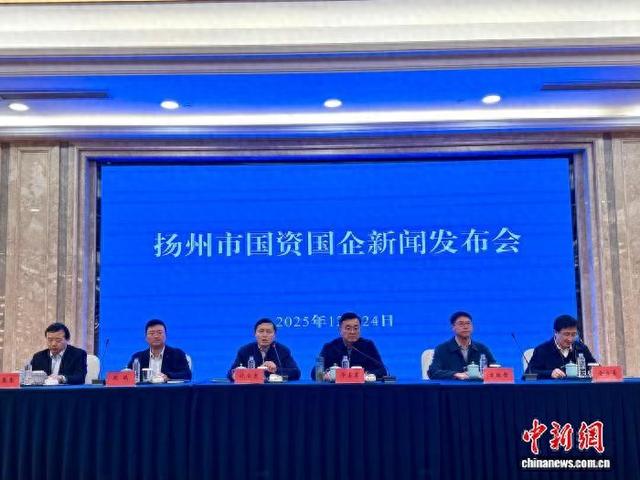
“十四五”江苏扬州市属国资国企实现“质”“量”双升
Xin Lang Cai Jing· 2025-12-24 04:23
Core Insights - During the "14th Five-Year Plan" period, the state-owned enterprises (SOEs) in Yangzhou have made significant progress in reform and development, achieving qualitative improvements and reasonable quantitative growth in state-owned assets and enterprises [1][3]. Group 1: Economic Performance - The total assets and operating income of Yangzhou's state-owned enterprises are projected to grow from 194.135 billion yuan and 26.946 billion yuan at the end of the "13th Five-Year Plan" in 2020 to 302.739 billion yuan and 40.29 billion yuan by the end of 2025, representing increases of 74.34% and 49.52% respectively [3]. Group 2: Infrastructure and Public Projects - Over the "14th Five-Year Plan" period, more than 200 key projects and livelihood initiatives have been promoted, with investments exceeding 41 billion yuan, resulting in the completion of significant transportation projects and cultural tourism landmarks [3][4]. Group 3: Capital Optimization - The restructuring of state-owned capital has led to the establishment of new companies in various sectors, including big data, health care, and modern agriculture, forming six major industrial sectors: investment in production, urban investment, cultural tourism, transportation, construction and real estate, and local financial control [3][4]. Group 4: Innovation and Development - The Yangzhou State-owned Assets Supervision and Administration Commission has implemented a comprehensive set of policies to encourage innovation, resulting in the cultivation of 17 national high-tech enterprises and several specialized and innovative companies [4]. Group 5: Future Development Strategy - The "15th Five-Year Plan" will focus on aligning with national strategies and addressing development bottlenecks, emphasizing the importance of state-owned capital and enterprises in urban renewal, regional collaboration, and public service provision [5].

昔日“孔雀东南飞” 今朝“信商雁归来”——从信阳返乡创业现象看河南发展活力
He Nan Ri Bao· 2025-12-24 00:00
Group 1: Investment and Development - The Huibo Yuntong Big Data Industrial Park in Luoshan County is under construction, set to become an AI data labeling base accommodating 7,000 people by June next year [1] - The project is spearheaded by Yu Hao, who returned to his hometown to invest, highlighting the trend of entrepreneurs returning to their roots to foster local development [1] - In Xinyang, over 150,000 entrepreneurs have returned to establish more than 100,000 businesses, creating job opportunities for over a million people in the revolutionary old district [1] Group 2: Economic Migration and Opportunities - Xinyang has over 3 million residents working outside the region, primarily in economically developed areas like the Yangtze River Delta and the Pearl River Delta, focusing on industries such as circular economy and textile processing [3] - The local government has implemented policies to support returning entrepreneurs, including financial assistance and tax reductions, to stimulate the "return economy" [8][11] Group 3: Entrepreneurial Success Stories - Zhang Chuanwei, who founded Mingyang Group, successfully transitioned from military service to entrepreneurship, establishing a leading international renewable energy company [3][5] - Yu Hao's company has grown into a high-tech enterprise valued at over 10 billion, showcasing the potential for success among returning entrepreneurs [6] - The story of Wang Chenghai illustrates the journey from a factory worker to a successful business owner in high-end manufacturing, reflecting the entrepreneurial spirit of Xinyang residents [7] Group 4: Government Support and Infrastructure - The local government has shifted its role from a manager to a partner, providing comprehensive support for businesses from project negotiation to operational launch [10] - Initiatives like the "Return to Hometown" project aim to attract talent back to Xinyang, offering support in education and housing for returning entrepreneurs [8][11] - The establishment of "Xinyang Business Home" serves as a platform for entrepreneur training and communication, enhancing the local business environment [8]

上海乐聚数智科技有限公司成立
Zheng Quan Ri Bao Wang· 2025-12-23 11:51
Group 1 - Shanghai Leju Smart Technology Co., Ltd. has recently been established with a registered capital of 10 million yuan [1] - The company's business scope includes big data services, artificial intelligence software development, and research and development of intelligent robots [1] - Leju Smart (Shenzhen) Co., Ltd. is the sole shareholder of the newly established company [1]
平潭扬帆,驶向更美好的明天!
Xin Lang Cai Jing· 2025-12-22 23:27
Core Viewpoint - Pingtan is undergoing significant development and transformation, focusing on industrial upgrades, social improvements, urban quality enhancement, and deepening cross-strait integration, driven by the strategic blueprint outlined by General Secretary Xi Jinping [8][20]. Group 1: Industrial Development - Pingtan's GDP is projected to grow at an average rate of 3% from 2021 to 2024, with fixed asset investment totaling 77.9 billion yuan [8]. - The Pingtan port has resumed regular cross-strait shipping operations, with 449 shipments completed since the resumption, and a total value of 2.54 billion yuan for Taiwanese agricultural products imported [8][9]. - The digital economy is expanding, with over 3,600 new digital economy enterprises established during the 14th Five-Year Plan, and the launch of the Cross-Strait Integration Intelligent Computing Center with a computing power scale of 2,300P [10][11]. Group 2: Urban and Rural Quality Enhancement - Pingtan has improved urban infrastructure, including the construction of 60 kilometers of new water supply pipelines and 120 kilometers of sewage pipelines, enhancing the overall urban quality [14]. - The number of new school places has increased by 13,205, and the number of hospital beds per thousand people has risen from 3.91 to 5.88, indicating significant improvements in education and healthcare [15]. - The rural economy is thriving, with 11 villages reporting collective incomes exceeding 1 million yuan, a 57% increase year-on-year [15]. Group 3: Cultural and Tourism Integration - Pingtan has implemented 62 key cultural and tourism projects with a fixed asset investment of 11.8 billion yuan, a 127% increase compared to the previous five-year period [17]. - The region is promoting various cultural events and sports competitions, with over 250 brand events held in the past five years, enhancing tourism and local engagement [18]. - The expected total number of tourists during the 14th Five-Year Plan is 46 million, with total tourism expenditure projected at 48.6 billion yuan, representing 2.1 and 2.2 times the figures from the previous five-year period [19]. Group 4: Cross-Strait Exchanges - Pingtan has attracted 56 Taiwanese agricultural enterprises and introduced 144 new agricultural varieties, fostering deep agricultural integration between the two sides [21]. - The establishment of the Taiwan Youth Entrepreneurship Incubation Center aims to support Taiwanese youth in entrepreneurship, addressing challenges such as financing and market access [22]. - The region is enhancing cross-strait exchanges through various initiatives, including the "Kirin Craftsman" vocational skills competition, which promotes skills exchange and collaboration [22].
“十五五”时期国资央企将深化拓展“AI+”专项行动
Xin Lang Cai Jing· 2025-12-21 23:12
Core Viewpoint - The State-owned Assets Supervision and Administration Commission (SASAC) will actively undertake major national technological tasks during the 14th Five-Year Plan period, focusing on breakthroughs in critical areas and weak links, particularly in sectors requiring significant investment and long cycles, where other enterprises lack willingness or capability [1][4] Group 1: Traditional Industry Transformation - Emphasis on the transformation and upgrading of traditional industries through a new round of digital transformation actions, integrating AI, big data, cloud computing, 5G, and IoT with traditional industries [2][5] - Continuous promotion of technological upgrades and large-scale equipment renewal, leading the implementation of carbon peak plans in key industries, enhancing resource recycling, and accelerating product iteration and upgrading [2][5] Group 2: Emerging and Future Industries - Focus on cultivating emerging and future industries through actions that highlight engineering and scenario-driven approaches, targeting sectors with substantial size, rapid growth, and promising prospects over the next five years [6] - Active development in key areas such as new energy, new energy vehicles, new materials, aerospace, low-altitude economy, and advanced planning in cutting-edge fields like quantum technology, embodied intelligence, biomanufacturing, green shipping, and 6G [6] Group 3: Investment and Financing System - Development of a specialized and market-oriented investment and financing system, leveraging state-owned capital investment and operation companies, and utilizing various financial tools to support strategic emerging industries [3][6] - Establishment of a comprehensive investment decision-making mechanism covering all stages from seed to growth, aiming to create a high-level state-owned capital operation platform to support the long-term and strategic capital needs of the real economy [3][6] - SASAC aims to deepen the reform of state-owned enterprises, focusing on enhancing core functions and competitiveness [3][6]
影响市场重大事件:我国成功发射通信技术试验卫星二十三号;公募基金大手笔分红,全年逼近2300亿元;A500ETF最新规模近2500亿元,首只产品突破400亿大关
Mei Ri Jing Ji Xin Wen· 2025-12-21 22:26
每经记者|杨建 每经编辑|彭水萍 |2025年12月22日 星期一| NO.1 我国成功发射通信技术试验卫星二十三号 北京时间2025年12月20日20时30分,我国在文昌航天发射场使用长征五号运载火箭,成功将通信技术试 验卫星二十三号发射升空,卫星顺利进入预定轨道,发射任务获得圆满成功。该卫星主要用于开展多频 段、高速率卫星通信技术验证。此次任务是长征系列运载火箭的第618次飞行。 NO.2 商务部会议强调,要做强国内大循环、畅通国内国际双循环 12月20日,商务部召开会议强调,2026年是"十五五"规划开局之年,做好商务工作责任重大。要做强国 内大循环、畅通国内国际双循环、拓展国际循环,为经济实现质的有效提升和量的合理增长贡献商务力 量。鼓励支持服务出口,积极发展数字贸易、绿色贸易。稳步推进制度型开放,有序扩大服务领域自主 开放,深化外商投资促进体制机制改革,优化自由贸易试验区布局范围,塑造吸引外资新优势。引导产 业链供应链合理有序跨境布局,完善海外综合服务体系。推动商签更多区域和双边贸易投资协定。 12月20日,年末ETF排位赛如火如荼,A500ETF霸屏成交榜。最新数据显示,全市场A500ETF规模达 ...
【着力优化营商环境 助推高质量发展】优质营商环境助力庆阳经济总量四年跨越4个百亿台阶
Xin Lang Cai Jing· 2025-12-21 02:12
【着力优化营商环境 助推高质量发展】 优质营商环境助力庆阳经济总量四年跨越4个百亿台阶 当地以保护企业合法权益为核心,建立完善纠纷化解"七步"闭环流程,对企业诉求一站式受理、一揽子 调处、全链条解决,全面推行网上立案、跨域立案、远程开庭和电子送达,平等保护企业合法权益,有 效降低企业维权成本,全市民商事案件审限内结案率达到98.86%。特别是结合庆阳产业特色,实体化 运行"苹果法庭",专门处理果农与果商间的买卖、仓储、侵权等纠纷。创新设立"大数据基地法庭",专 业调处数据权属、交易、侵权等新型案件,维护市场秩序、保障企业权益。 聚焦精准赋能,庆阳市创新资金、土地、人才等要素资源保障方式,特别是围绕"东数西算"工程建设, 开通数字经济"人才专列",建设数字经济"人才公寓",与兰州大学、西安交通大学、西安电子科技大 学、陇东学院等高校达成合作协议,每年培养各类数字经济人才4500人,全方位解决企业的"后顾之 忧"。抢抓国家"东数西算"战略机遇和数字经济发展东风,招引落地了金山云、首都在线、燧弘、阿 里、百度、龙芯中科等500多家数字经济企业,数字经济产值连续三年实现倍数级增长。 责任编辑:白柳 每日甘肃网兰州讯( ...