智能家居

Search documents
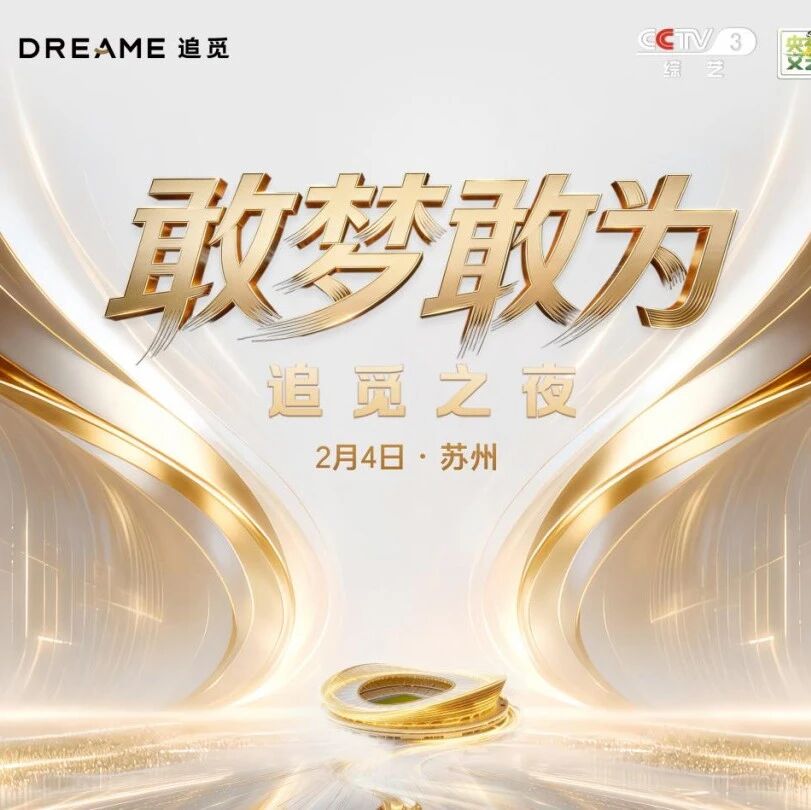
追觅科技与央视携手打造新式年会,以硬核福利诠释员工关怀
IPO早知道· 2026-01-26 14:13
Core Viewpoint - The article highlights the upcoming concert "Dare to Dream, Dare to Pursue Night" organized by the high-end technology brand, Chase Technology, as a new-style annual meeting that emphasizes employee welfare and corporate culture [2][3]. Group 1: Event Overview - Chase Technology will hold the concert on February 4 at the Suzhou Olympic Sports Center, in collaboration with CCTV, marking a departure from traditional employee gatherings [2]. - The event aims to provide a visually and audibly appealing experience, integrating professional production teams and high-standard stage resources [2]. Group 2: Employee Welfare Initiatives - The company has been increasing its investment in employee welfare, including a "Family Health Protection Plan" that covers critical illness and cancer insurance for employees and their immediate family members, fully funded by the company [3]. - Additional initiatives include "heavy reward incentives," late-night meals, and family open days, creating a comprehensive support system that combines material support, emotional connection, and long-term security [3]. Group 3: Business Performance and Market Position - Chase Technology's products and services are available in over 120 countries and regions, with more than 6,500 physical stores globally, serving over 42 million households [3]. - The company holds top-three positions in several core business areas, with its robotic vacuum business leading the market in 30 countries and its floor washing machine business ranking first in 17 countries, with some market shares exceeding 70% [3]. Group 4: Talent Development Focus - The company emphasizes talent development by investing in a systematic welfare and growth mechanism, aiming to create a stable and sustainable environment for employee development [3]. - Chase Technology seeks to provide a platform that fosters value recognition and growth opportunities, achieving a win-win situation for both personal and corporate development [3].

2026浙江新春消费季启动
Mei Ri Shang Bao· 2026-01-25 22:32
Group 1 - The 2026 Zhejiang Spring Consumption Season has been officially launched in Hangzhou, focusing on enhancing consumer spending through various activities and subsidies [1] - The initiative aims to distribute over 300 million yuan in consumption subsidies and organize more than 1,700 promotional events across the province in the first quarter [1] - Hangzhou will issue over 1 billion yuan in consumer vouchers and promote various sports and cultural events to attract consumers [1] Group 2 - The event showcases innovative products from Hangzhou's Shangcheng District, emphasizing its status as a digital consumption hub [2] - The main venue features eight thematic sections, highlighting a blend of cultural heritage and modern consumer experiences with nearly 300 brands participating [2] - The activities will run until January 27, inviting citizens to engage in a rich cultural and shopping experience [2]
石头科技IPO等待临门一脚,全球第一能否经受住考验
Sou Hu Cai Jing· 2026-01-25 07:36
Group 1 - The core point of the article is that Stone Technology has received preliminary approval from the Hong Kong Stock Exchange for its H-share listing, pending final approval, which could make it the first company in the "robot vacuum" sector to be listed in Hong Kong [2] - The market reaction to this news has been notably tepid, indicating a sense of disappointment or melancholy regarding the company's prospects [2] - In June 2021, Stone Technology's stock price peaked at 1494.99 yuan per share, with its market capitalization approaching 100 billion yuan, making it the second-largest "robot vacuum" company in the A-share market after Moutai [2]


江苏明确:2026年将持续推进大规模设备更新
Zheng Quan Shi Bao Wang· 2026-01-23 13:56
Core Viewpoint - Jiangsu Province is implementing a large-scale equipment update and consumer goods trade-in policy starting in 2026, aimed at promoting economic growth and enhancing consumer spending through various subsidies and support measures [1][2][3][4]. Group 1: Large-Scale Equipment Update - The policy expands support for equipment updates to include new sectors such as old residential elevators, elderly care facilities, fire rescue equipment, inspection and testing, video security, and commercial facilities like shopping centers and supermarkets [1] - There is a focus on updating elevators that are over 15 years old, with priority given to those over 20 years old, and increased support for small and medium-sized enterprises [1] - The investment threshold for applying for equipment update projects will be lowered, and the review process will be optimized [1] Group 2: Consumer Goods Trade-In - The policy supports the scrapping and updating of vehicles, providing a one-time subsidy for individuals who scrap eligible gasoline and diesel vehicles, as well as certain new energy vehicles [2] - For scrapped vehicles replaced with new energy vehicles, a subsidy of 12% of the vehicle price (up to 20,000 yuan) is offered, while for fuel vehicles with an engine size of 2.0 liters or less, the subsidy is 10% (up to 15,000 yuan) [2] - Consumers can receive subsidies for trading in old appliances like refrigerators, washing machines, and air conditioners, with a 15% subsidy on the purchase price (up to 1,500 yuan) for energy-efficient products [3] Group 3: Recycling and Circular Economy - The policy aims to enhance recycling networks and support high-level recycling projects through long-term special government bond funding [4] - It promotes the establishment of a three-tier recycling system for renewable resources and encourages the development of "Internet + second-hand" models [4] - There is a focus on regulating the trading of second-hand goods and the remanufacturing of used equipment, ensuring that remanufactured products meet quality and safety standards [4]
科沃斯:截至2025年前三季度欧洲业务收入占总收入的比重超过20%
Zheng Quan Ri Bao Wang· 2026-01-23 11:11
Group 1 - The core viewpoint of the article highlights that Ecovacs (603486) is successfully expanding its European business through a subsidiary in Europe and some third-party agents [1] - By the third quarter of 2025, the revenue from the European business is expected to account for over 20% of the company's total revenue [1]

江苏消费品以旧换新政策“更新”!扫地机器人、智能马桶等智能家居被纳入
Yang Zi Wan Bao Wang· 2026-01-23 06:15
Core Viewpoint - Jiangsu Province has announced a large-scale equipment update and consumer goods trade-in policy to be implemented by 2026, focusing on promoting green, low-carbon, and smart products while managing funding limits and qualifications for subsidies [1][4]. Group 1: Automotive Support - The policy supports the scrapping of gasoline and diesel vehicles registered before specific dates, offering a one-time subsidy for purchasing new energy vehicles or low-displacement fuel vehicles [2]. - For scrapped eligible vehicles, a subsidy of 12% of the vehicle price (up to 20,000 yuan) is provided for new energy vehicles, and 10% (up to 15,000 yuan) for low-displacement fuel vehicles [2]. - Consumers must register their scrapped vehicles in their name by January 8, 2025, to qualify for the subsidy [2]. Group 2: Home Appliance Support - The policy includes support for six categories of home appliances, providing a subsidy of 15% of the sales price (up to 1,500 yuan) for energy-efficient products [3]. - Consumers can receive a subsidy for one item per category, including refrigerators, washing machines, televisions, air conditioners, computers, and water heaters [3]. - The policy also supports the purchase of digital and smart products, offering a 15% subsidy (up to 500 yuan) for items like smartphones and smartwatches [3]. Group 3: Funding Management - The funding for the consumer goods trade-in program will be managed with a limit, and any unused funds by December 31, 2026, will be reclaimed [1][4]. - The funding distribution will consider factors such as population, GDP, and local sales, with a focus on maximizing the impact of subsidies [1][4]. - The provincial and municipal governments will share the funding burden, with specific ratios for different regions [4]. Group 4: Regulatory Oversight - The policy emphasizes strict regulatory oversight of the funding and project implementation, with local governments being the primary responsible entities [6]. - There will be measures to prevent misuse of funds, including penalties for violations and a requirement for transparent reporting and evaluation of the program's effectiveness [6]. - Local governments are encouraged to develop their own funding plans while adhering to the unified standards set by the province [6].

豪江智能:2025年度业绩预告
Zheng Quan Ri Bao Wang· 2026-01-22 11:49
Core Viewpoint - The company, Haojiang Intelligent (301320), has announced a significant decline in its expected net profit for the fiscal year 2025, projecting a range between 8.50 million to 12.00 million yuan, which represents a decrease of 74.40% to 81.87% compared to the previous year [1] Financial Performance - The projected net profit for 2025 is estimated to be between 8.50 million yuan and 12.00 million yuan [1] - This represents a substantial decline of 74.40% to 81.87% from the net profit of the previous year [1]
狄耐克最新筹码趋于集中
Zheng Quan Shi Bao Wang· 2026-01-22 09:23
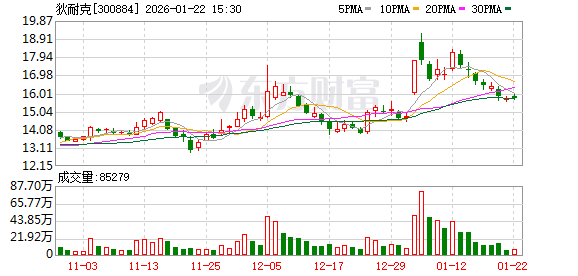
Group 1 - The number of shareholders for the company as of January 20 is 27,686, a decrease of 6,131 from the previous period, representing a month-on-month decline of 18.13% [2] - The closing price of the company's stock is 15.75 yuan, with a slight increase of 0.32%, but the stock has cumulatively decreased by 7.41% since the concentration of shares began [2] - The company's third-quarter report indicates a total operating revenue of 461 million yuan for the first three quarters, a year-on-year decrease of 11.29%, and a net profit of -1.5979 million yuan, a year-on-year decline of 109.10%, with basic earnings per share at -0.0063 yuan [2]
融适老化设计于全屋智能解决方案,金隅天坛与华为鸿蒙智家达成深度合作
Cai Jing Wang· 2026-01-22 09:02
Core Viewpoint - The opening of the first Huawei HarmonyOS Smart Home Super Experience Center in Beijing marks a significant collaboration between Jinju Tiantan and Huawei, aiming to enhance the integration of smart home solutions and traditional home decoration services [1] Group 1: Collaboration and Strategic Goals - Jinju Tiantan has signed a comprehensive annual framework cooperation agreement with Huawei, indicating a strategic move towards smart home integration and innovation in the home decoration sector [1] - This partnership aligns with national industrial strategies and aims to empower public needs through technology, contributing to high-quality development in the home furnishing industry [1] Group 2: Smart Home Integration - The collaboration will leverage the Huawei HarmonyOS as a core intelligent foundation to promote the deep integration of smart home solutions with home decoration services [1] - Jinju Tiantan plans to establish a comprehensive business system that includes design, construction, intelligence, and operation and maintenance, facilitating a seamless transition from basic decoration to smart living environments [1] Group 3: Focus on Elderly Care - The initiative will incorporate elderly-friendly design into smart home solutions, aiming to create convenient, safe, and emotionally supportive living spaces for the elderly [1] - This approach aligns with the "14th Five-Year Plan" to enhance and expand elderly care services, contributing to a more fulfilling living experience for citizens [1] Group 4: Future Directions - Jinju Tiantan will continue to deepen its collaboration with Huawei HarmonyOS to drive the integration of the home furnishing industry with digital technology [2] - The company aims to fulfill national strategies and meet public aspirations for ideal living conditions, showcasing the strength and responsibility of state-owned enterprises in the modern era [2]

萤石网络2025年成绩单:营收59亿净利增12%,董事长蒋海青五年薪酬超千万
Sou Hu Cai Jing· 2026-01-22 05:40
Core Insights - In 2025, the company achieved total revenue of 5.901 billion yuan, representing a year-on-year growth of 8.44% [1] - The net profit attributable to the parent company was 567 million yuan, with a year-on-year increase of 12.43% [1] - As of the end of the reporting period, total assets reached 9.068 billion yuan, an increase of 8.55% from the beginning of the period [1] - The equity attributable to the parent company was 5.79 billion yuan, up 5.4% from the beginning of the period [1] Performance Drivers - The company focused on its core strengths, enhancing technology research and development, and advancing the development of smart consumer IoT products and cloud platform services [3] - Continuous introduction of competitive innovative products and services helped to solidify the business landscape and drive steady growth in overall operating performance [3] - The company expanded and improved domestic and international channel construction, optimized channel and product structures, and enhanced operational efficiency through lean management [3] Company Background - Established in 2015, the company specializes in the design, research and development, production, and sales of smart home products, as well as IoT cloud platform services [3] - The chairman of the company is Jiang Haiqing, whose salary for 2024 is 2.392 million yuan, a decrease of 68,000 yuan from 2023 [3] - Other executives, including vice presidents Li Xingbo, Chen Guanlan, and Jin Shengyang, also experienced salary reductions, while the financial director Guo Hangbiao received a salary of 1.204 million yuan, an increase of 29,000 yuan from the previous year [3]