
网络设备

Search documents
以太网和InfiniBand外,第三种选择
半导体行业观察· 2025-06-24 01:24
Core Viewpoint - The article discusses the evolution of networking technologies, particularly focusing on Cornelis Networks' CN500 architecture, which enhances AI performance by coordinating up to 500,000 computers without increasing latency, outperforming existing technologies like InfiniBand and Ethernet in terms of message throughput and latency reduction [1][2][3]. Group 1: Networking Technology Evolution - Ethernet has long been synonymous with local area networks (LAN), but the rise of data centers necessitated new networking solutions to handle diverse systems and resource sharing [2]. - Cornelis Networks' Omni-Path architecture, developed for high-performance computing (HPC), maximizes throughput and eliminates packet loss, addressing the need for efficient data exchange in AI model training [3][4]. Group 2: Challenges in Data Coordination - Coordinating processors for AI model training requires high bandwidth and low latency, with congestion management being a significant challenge [4][5]. - Cornelis' dynamic adaptive routing algorithm mitigates congestion by rerouting traffic and employing credit-based flow control to prevent delays caused by insufficient memory at endpoints [5][6]. Group 3: Market Dynamics and Trends - The CN5000 product, built on custom chips, targets organizations looking to upgrade for AI or faster HPC simulations, with partnerships with original equipment manufacturers (OEMs) to facilitate sales [7]. - The Ethernet switch market is diversifying, with IDC reporting significant growth in data center Ethernet switch sales, driven by AI cluster needs, while non-data center markets also show growth [8][21]. Group 4: Competitive Landscape - Nvidia has surpassed Cisco and Arista in data center Ethernet sales, with a remarkable growth rate of 760.3% year-over-year, indicating its strong position in the market [17][23]. - Arista Networks remains a key player, with a 26.4% increase in sales, while Cisco's growth is more modest at 4.7% [23][22].


Ethernet跟InfiniBand的占有率越差越大
傅里叶的猫· 2025-06-21 12:33
Core Insights - The article discusses the competitive landscape of AI networking, highlighting the advantages of InfiniBand over Ethernet in large data centers, particularly in the context of NVIDIA's dominance in the GPU market [1][6][13]. Broadcom Tomahawk 6 - Broadcom announced the shipment of the Tomahawk 6 (TH6) switch chip, which utilizes 3nm technology and supports up to 102.4Tbps switching capacity, doubling the capacity of current mainstream Ethernet switch chips [2][4]. - The TH6 chip is priced at under $20,000, nearly double that of its predecessor, but offers significant performance improvements that justify the cost [2][4]. AI Network Optimization - TH6 excels in both scale-out and scale-up architectures, allowing connections to up to 100,000 XPUs and supporting 512 XPU single-hop connections, significantly reducing latency and power consumption [3][9]. - The chip features Cognitive Routing 2.0 technology, optimized for modern AI workloads, enhancing global load balancing and dynamic congestion control [3][9]. Market Trends - The introduction of TH6 is expected to drive rapid growth in the demand for 1.6T optical modules and data center interconnects, marking a new technology upgrade cycle in the global AI infrastructure market [4][10]. - The global optical circuit switch hardware sales are projected to grow at a CAGR of 32% from 2023 to 2028, outpacing Ethernet and InfiniBand switches [10]. Ethernet vs InfiniBand - Approximately 78% of top supercomputers use Ethernet solutions based on RoCE, while 65% utilize InfiniBand, indicating a competitive dynamic between the two technologies [13][16]. - InfiniBand has gained traction in the early stages of generative AI infrastructure deployment due to NVIDIA's market position, although Ethernet is expected to regain momentum as cloud service providers invest in self-developed ASIC projects [16]

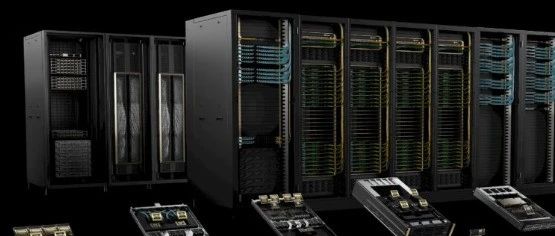
AI时代,网络交换机市场强势复苏
半导体行业观察· 2025-06-21 03:05
Core Insights - The data center network switch market is experiencing significant growth driven by artificial intelligence, with a reported revenue of $11.7 billion in Q1 2025, marking a 32.3% year-over-year increase [3] - IDC noted a remarkable 54.7% growth in data center switch revenue compared to the previous quarter [4] Revenue Growth - The revenue from 200/400 GbE switches surged by 189.7% year-over-year [5] - IDC has started tracking 800 GbE switches, which generated $350.8 million in revenue, capturing nearly 5% of the market [5] Vendor Performance - NVIDIA emerged as the biggest winner in the switch market, with a staggering 760.3% year-over-year revenue increase, reaching $1.46 billion [5] - Arista's data center switch revenue grew by 27.1% to $1.6 billion, while Cisco's revenue declined by 3.2%, indicating competitive pressures [5] Non-Data Center Revenue - Non-data center related revenue from campus and branch network switches grew by a modest 9.6% [6] WLAN Market Insights - The WLAN market recorded a 10.6% revenue growth in Q1, with stabilization in supply-demand dynamics following the pandemic-related supply chain issues [7] - Innovations such as 6 GHz Wi-Fi and AI-driven management features are expected to drive future growth in enterprise WLAN [7]

聊一聊目前主流的AI Networking方案
傅里叶的猫· 2025-06-16 13:04
Core Viewpoint - The article discusses the evolving landscape of AI networking, highlighting the challenges and opportunities presented by AI workloads that require fundamentally different networking architectures compared to traditional applications [2][3][6]. Group 1: AI Networking Challenges - AI workloads create unique demands on networking, requiring more resources and a different architecture than traditional data center networks, which are not designed for the collective communication patterns of AI [2][3]. - The performance requirements for AI training are extreme, with latency needs in microseconds rather than milliseconds, making traditional networking solutions inadequate [5][6]. - The bandwidth requirements for AI are exponentially increasing, creating a mismatch between AI demands and traditional network capabilities, which presents opportunities for companies that can adapt [6]. Group 2: Key Players in AI Networking - NVIDIA's acquisition of Mellanox Technologies for $7 billion was a strategic move to enhance its AI workload infrastructure by integrating high-performance networking capabilities [7][9]. - NVIDIA's AI networking solutions leverage three key innovations: NVLink for GPU-to-GPU communication, InfiniBand for low-latency cluster communication, and SHARP for reducing communication rounds in AI operations [11][12]. - Broadcom's dominance in the Ethernet switch market is challenged by the need for lower latency in AI workloads, leading to the development of Jericho3-AI, a solution designed specifically for AI [13][14]. Group 3: Competitive Dynamics - The competition between NVIDIA, Broadcom, and Arista highlights the tension between performance optimization and operational familiarity, with traditional network solutions struggling to meet the demands of AI workloads [16][24]. - Marvell and Credo Technologies play crucial supporting roles in AI networking, with Marvell focusing on DPU designs and Credo on optical signal processing technologies that could transform AI networking economics [17][19]. - Cisco's traditional networking solutions face challenges in adapting to AI workloads due to architectural mismatches, as their designs prioritize flexibility and security over the low latency required for AI [21][22]. Group 4: Future Disruptions - Potential disruptions in AI networking include the transition to optical interconnects, which could alleviate the limitations of copper interconnects, and the emergence of alternative AI architectures that may favor different networking solutions [30][31]. - The success of open standards like UCIe and CXL could enable interoperability among different vendor components, potentially reshaping the competitive landscape [31]. - The article emphasizes that companies must anticipate shifts in AI networking demands to remain competitive, as current optimizations may become constraints in the future [35][36].
上海一芯片团队突发重大裁员,赔偿N+3且当天离职;曝传音进军两轮电动车市场;地平线余凯:消费者并没有那么重视辅助驾驶丨雷峰早报
雷峰网· 2025-06-16 00:32
Key Points - A chip team in Shanghai has announced significant layoffs, compensating employees at N+3, which is higher than the legal N+1 standard, indicating a strategic shift rather than a complete exit from the WiFi chip sector [4] - Transsion Holdings has established a mobility division to explore the two-wheeled electric vehicle market, focusing on expansion in Africa and other developing countries [6] - GAC Group has committed to ensuring dealer rebates are fulfilled within two months, aligning with new regulations aimed at improving payment timelines for small and medium enterprises [9] - Baidu has launched a large-scale recruitment drive for top AI talent, expanding job openings by over 60% compared to previous years, with no salary cap for selected candidates [10] - Apple has regained the top spot in smartphone sales in China, with significant sales growth attributed to price reductions and the introduction of the iPhone 16 series [12] - Horizon Robotics' founder noted that while consumers enjoy discussing advanced driver assistance systems, they prioritize vehicle appearance, space, and safety when purchasing [13] - Toyota's chairman has sparked controversy by claiming that one electric vehicle's pollution is equivalent to three hybrid vehicles, emphasizing the need for a balanced approach to automotive transition [24][25] - Ant Group has undergone a leadership change, with CEO Han Xinyi becoming the legal representative, while former representative Jing Xiandong remains as chairman [17] - Skild AI has attracted investment from Nvidia and Samsung, raising its valuation to $4.5 billion, focusing on developing AI software for robotics [28]

飞速创新“带病”上市:利润“开倒车”,内控漏洞曾遭深交所通报
Sou Hu Cai Jing· 2025-06-10 16:37
Core Viewpoint - Shenzhen Feisuo Innovation Technology Co., Ltd. has submitted its IPO application to the Hong Kong Stock Exchange after withdrawing its A-share application, amid concerns over internal control deficiencies and discrepancies in inquiry responses [3][20][24] Group 1: Company Overview - Feisuo Innovation, established in April 2009, focuses on enterprise-level network solutions, offering over 120,000 SKUs including optical modules, high-speed cables, and network management platforms [4][7] - The company has served over 450,000 customers across more than 200 countries, with approximately 60% of its clients being Fortune 500 companies [7] Group 2: Financial Performance - Feisuo Innovation's revenue grew from RMB 19.88 billion in 2022 to RMB 22.13 billion in 2023, and is projected to reach RMB 26.12 billion in 2024, reflecting an 18.0% growth rate [7][12] - The company's net profit increased from RMB 3.65 billion in 2022 to RMB 4.57 billion in 2023, but fell to RMB 3.97 billion in 2024, indicating a 13.0% decline [12][13] Group 3: Revenue Sources - Approximately 99% of Feisuo Innovation's revenue comes from overseas markets, with the U.S. accounting for 46% and Europe over 30% of total revenue [10][11] Group 4: Cost and Profitability Challenges - The company's financial costs surged by 298.4% from RMB 4.65 million in 2023 to approximately RMB 18.54 million in 2024, contributing to the decline in net profit despite revenue growth [14][12] - Sales and distribution expenses rose by 43.9% to RMB 4.88 billion in 2024, while general and administrative expenses and R&D expenses also saw significant increases [16] Group 5: Internal Control Issues - Feisuo Innovation faced regulatory scrutiny from the Shenzhen Stock Exchange due to internal control deficiencies related to its information systems, leading to written warnings for the company and its sponsors [20][22][24] - The company acknowledged the need to strengthen its internal control systems in response to the regulatory feedback received during its A-share IPO process [24]

性能飞跃10倍!思科(CSCO.US)新一代交换机为人工智能“提速”
智通财经网· 2025-06-10 13:55
Group 1 - Cisco is updating its networking and security products to enhance AI network performance, aiming for a tenfold increase in the performance of its next-generation switches to prevent data transmission bottlenecks in AI applications [1] - The importance of network speed is emphasized as data center operators handle large volumes of AI information from both cloud and on-premises sources, with slow network speeds potentially hindering AI model operations during both training and inference phases [1] - Cisco has also released updated security firewall products after a two-year upgrade process, announced during the Cisco Live event in San Diego [1] Group 2 - Following the $28 billion acquisition of Splunk, Cisco has invested heavily in AI product development, focusing on security and monitoring software, and has secured over $1 billion in AI infrastructure orders from major cloud service providers ahead of schedule [2] - Cisco has formed a partnership with Saudi Arabian AI company Humain and will play a role in the "Stargate" project in the UAE [2] - The company has integrated 15 different management consoles for its security products into a single system over the past year, with plans to enhance management capabilities for its networking devices and launch a product called "Cisco Cloud Control" [2]
英伟达20250529
2025-05-29 15:25
Key Points Summary of NVIDIA's Earnings Call Company Overview - **Company**: NVIDIA - **Date of Call**: May 29, 2025 Core Industry Insights - **Industry**: Semiconductor and AI Technology - **Market Impact**: U.S. export controls are expected to significantly affect NVIDIA's revenue, particularly in the Chinese market, with an anticipated loss of $2.5 billion in revenue due to restrictions on the H20 data center GPU [2][4][26]. Financial Performance - **Q1 2026 Revenue**: NVIDIA reported a strong performance with total revenue of $44 billion, a 69% year-over-year increase. Data center revenue reached $39 billion, up 73% year-over-year [4]. - **H20 Revenue**: Confirmed $460 million in H20 revenue, but faced a $4.5 billion expense due to inventory and procurement obligations write-downs [4][26]. - **Gaming Revenue**: Achieved a record $3.8 billion in gaming revenue, a 42% increase year-over-year [2][18]. - **Network Business**: Revenue grew 64% year-over-year to $5 billion, with the Spectrum X product line exceeding $8 billion in annual revenue [2][13][16]. Product and Technology Developments - **Blackwell Product Line**: Contributed nearly 70% of data center computing revenue, with rapid growth and deployment of NVL 70 dual racks [5][6]. - **AI Factory Deployment**: Nearly 100 AI factories are operational, doubling GPU usage across various industries [7]. - **Nemo Microservices**: Widely adopted across industries, enhancing model accuracy and response times significantly [9]. - **Spectrum X and Quantum X**: New products launched to enhance AI factory scalability and efficiency [16]. Market Challenges and Opportunities - **Export Controls**: Anticipated to create an $8 billion negative impact in Q2, with a total estimated impact of $15 billion [3][26]. - **China Market**: Data center revenue from China is expected to decline significantly due to export restrictions, although over 99% of data center computing revenue comes from U.S. customers [2][17]. - **AI Spending Growth**: Projected near $1 trillion in AI spending over the next few years, driven by infrastructure investments [27]. Strategic Partnerships and Collaborations - **Partnerships**: Collaborated with Yum Brands to implement AI in 500 restaurants, with plans to expand to 61,000 [10]. - **Cybersecurity Solutions**: Leading companies like Checkpoint and CrowdStrike are utilizing NVIDIA's AI-driven security solutions [11][12]. Future Outlook - **Growth Confidence**: Despite challenges, NVIDIA maintains confidence in sustained growth for the year, driven by the removal of AI diffusion rules and strong performance in non-China business segments [30][31]. - **Investment in AI Infrastructure**: Significant investments in domestic manufacturing and AI infrastructure are underway, including new facilities in Arizona and Texas [24]. Additional Insights - **Gaming and AI PC Growth**: The gaming sector continues to thrive with a user base of 100 million, and new AI PC products are being introduced [18]. - **Automotive Sector**: Revenue from automotive reached $567 million, a 72% increase, driven by demand for autonomous driving solutions [20]. - **Professional Visualization**: Revenue in this segment was $509 million, with strong demand for AI workstations [19]. This summary encapsulates the key points from NVIDIA's earnings call, highlighting the company's financial performance, product developments, market challenges, and future outlook.
海通国际:给予锐捷网络增持评级,目标价94.99元
Zheng Quan Zhi Xing· 2025-05-23 06:19
Core Viewpoint - The report highlights that Ruijie Networks is experiencing significant growth in its data center switch segment, driven by the domestic AI development, with a target price set at 94.99 yuan, reflecting a potential upside of 45% [1][2]. Group 1: Financial Performance - In 2024, the company is expected to achieve a revenue of 116.99 billion yuan, a year-on-year increase of 1.36%, with a gross margin of 38.62% [3]. - The net profit attributable to shareholders for 2024 is projected to be 5.74 billion yuan, representing a year-on-year growth of 43.09% [3]. - For Q1 2025, revenue is anticipated to reach 25.36 billion yuan, a year-on-year increase of 18.14%, with a net profit of 1.07 billion yuan, showing a remarkable year-on-year growth of 4543.67% [3]. Group 2: Market Position and Growth Drivers - The data center switch revenue is expected to reach 39.64 billion yuan in 2024, marking a substantial year-on-year growth of 120%, with the company achieving the top market share in the 200G/400G data center switch segment [4]. - The company has successfully expanded its international market presence, with overseas revenue reaching 18.69 billion yuan in 2024, a year-on-year increase of 52.72% [4]. - The company maintains a competitive edge in the domestic internet market for data center switches, holding the largest market share [4]. Group 3: Cost Management - The company has effectively controlled its expense ratios, leading to an upward adjustment in profit forecasts despite a downward revision in revenue expectations for certain business segments [2][3]. - The sales, management, financial, and R&D expense ratios for 2024 are reported as 15.51%, 5.50%, -0.12%, and 16.12%, respectively, with notable changes in comparison to the previous year [3].
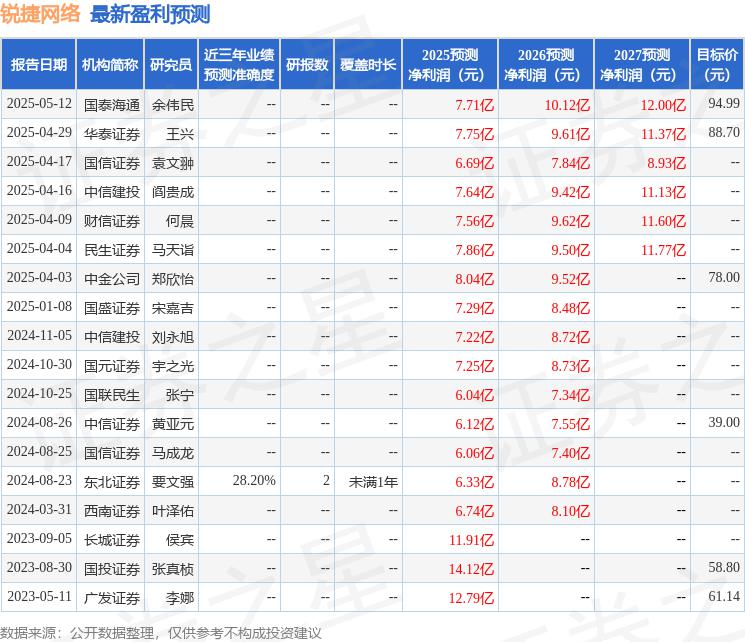
锐捷网络:公司 2024 年报、2025Q1业绩点评数通交换机翻倍以上增长,毛利率维稳、业绩高增-20250522
海通国际· 2025-05-22 13:30
数通交换机翻倍以上增长,毛利率维稳、业绩高增 公司 2024 年报&2025Q1 业绩点评 本报告导读: 2024 年以来受益国内 AI 发展,公司数据中心交换机全面爆发、收入增速超预期,取 得 200G/400G 数据中心交换机、数据中心交换机互联网行业市场份额第一 投资要点: | [Table_Finance] 财务摘要(百万元) | 2023A | 2024A | 2025E | 2026E | 2027E | | --- | --- | --- | --- | --- | --- | | 营业收入 | 11,542 | 11,699 | 13,837 | 16,095 | 18,136 | | (+/-)% | 1.9% | 1.4% | 18.3% | 16.3% | 12.7% | | 净利润(归母) | 401 | 574 | 771 | 1,012 | 1,200 | | (+/-)% | -27.3% | 43.1% | 34.3% | 31.2% | 18.6% | | 每股净收益(元) | 0.71 | 1.01 | 1.36 | 1.78 | 2.11 | | 净资产收益率(%) | ...