航天科技

Search documents
中国航天科技集团:将谋划推动太空旅游、太空数智基础设施、太空资源开发、太空交通管理等新领域发展
Xin Lang Cai Jing· 2026-01-29 03:16
Core Viewpoint - The China Aerospace Science and Technology Corporation (CASC) plans to promote the development of new fields such as space tourism, space digital infrastructure, space resource development, and space traffic management during the 14th Five-Year Plan period [1] Space Tourism - CASC aims to accelerate the iteration of suborbital and orbital space tourism vehicles, complete relevant unmanned or manned flight validations, and establish a comprehensive operational system for space tourism, with the goal of achieving regular suborbital space tourism flights and gradually developing orbital space tourism [1] Space Digital Infrastructure - The company plans to build gigawatt-level space digital infrastructure, creating a new type of space system architecture that integrates cloud, edge, and terminal, enabling deep integration of computing power, storage capacity, and transportation capacity, facilitating "sky computing" and "earth-sky computing" [1] Space Resource Development - CASC will conduct major project demonstrations for "Heavenly Works," establishing a comprehensive experimental and ground support system for space resource development, focusing on breakthroughs in key technologies such as small celestial body resource exploration, intelligent autonomous mining, low-cost transfer and transportation, and in-orbit processing [1] Space Traffic Management - The corporation will work on key technologies for monitoring, early warning, and removal of space debris, laying a solid foundation for China to gain initiative in the formulation of international rules for space traffic management and ensuring the safe operation of space infrastructure [1]

中国航天科技集团:“十五五”时期 将谋划推动太空旅游、太空交通管理等新领域发展
Bei Jing Shang Bao· 2026-01-29 03:11
Core Viewpoint - China Aerospace Science and Technology Corporation plans to develop new fields such as space tourism, space digital infrastructure, space resource development, and space traffic management during the 14th Five-Year Plan period [1] Group 1: Space Tourism - The company aims to accelerate the iteration of suborbital and orbital space tourism vehicles, completing relevant unmanned or manned flight verification [1] - A comprehensive space tourism operation system will be established to achieve regular suborbital space tourism flights and gradually develop orbital space tourism [1] Group 2: Space Digital Infrastructure - The construction of gigawatt-level space digital infrastructure is planned, creating a new type of space system architecture that integrates cloud, edge, and terminal [1] - The goal is to achieve deep integration of computing power, storage capacity, and transportation capacity, enabling "sky computing" and "earth-sky computing" [1] Group 3: Space Resource Development - The company will conduct major project demonstrations for space resource development, establishing comprehensive experimental and ground support systems [1] - Key technologies to be focused on include small celestial body resource exploration, intelligent autonomous mining, low-cost transfer and transportation, and in-orbit processing [1] Group 4: Space Traffic Management - Key technology research will be conducted on space debris monitoring, early warning, and removal [1] - This initiative aims to lay a solid foundation for China's proactive role in the formulation of international rules for space traffic management and ensure the safe operation of space infrastructure [1]
中国航天科技集团:将推动太空旅游、太空资源开发、太空交通管理等新领域发展
Yang Shi Xin Wen· 2026-01-29 02:59
Core Viewpoint - The China Aerospace Science and Technology Corporation (CASC) plans to promote the development of new fields such as space tourism, space digital infrastructure, space resource development, and space traffic management during the 14th Five-Year Plan period [1] Group 1: Space Tourism - The company aims to accelerate the iteration of suborbital and orbital space tourism vehicles, complete relevant unmanned or manned flight validations, and establish a comprehensive space tourism operation system [2] - The goal is to achieve regular operations of suborbital space tourism flights and gradually develop orbital space tourism [2] Group 2: Space Digital Infrastructure - The construction of gigawatt-level space digital infrastructure is planned, creating a new type of space system architecture that integrates cloud, edge, and terminal [3] - This initiative aims to achieve deep integration of computing power, storage capacity, and transportation capacity, enabling "sky computing" and "earth computing" [3] Group 3: Space Resource Development - The company will conduct major project demonstrations for "Heavenly Works and Material," focusing on the construction of a comprehensive experimental and ground support system for space resource development [4] - Key technological breakthroughs will target small celestial body resource exploration, intelligent autonomous mining, low-cost transfer and transportation, and in-orbit processing [4] Group 4: Space Traffic Management - The company will focus on key technologies for monitoring, early warning, and removal of space debris, laying a solid foundation for China's proactive role in the formulation of international rules for space traffic management [5] - This initiative aims to ensure the safe operation of space infrastructure [5]
SpaceX权衡在6月IPO,寻求以1.5万亿美元估值筹资500亿美元
Ge Long Hui A P P· 2026-01-28 05:21
格隆汇1月28日|据英国金融时报,SpaceX权衡在6月IPO,公司正寻求以约1.5万亿美元的估值筹集高达 500亿美元。 ...
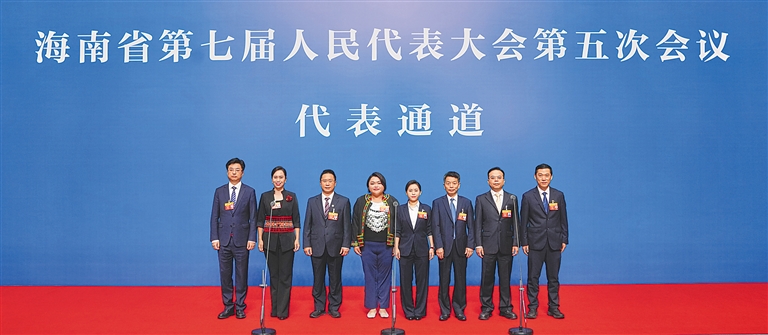
省七届人大五次会议“代表通道”举行
Hai Nan Ri Bao· 2026-01-28 04:11
Core Viewpoint - The article highlights the achievements and future prospects of Hainan's Free Trade Port, showcasing various representatives' contributions to cultural, economic, and technological advancements in the region [4][18]. Group 1: Cultural and Economic Development - Tang Lijin, a representative and leader of a cultural cooperative, emphasizes the importance of innovation in expressing traditional culture, leading to over 1 million yuan in sales for her cooperative last year [6]. - The digital economy in Chengmai County surpassed 100 billion yuan in revenue for the first time, with a year-on-year growth of over 20% [8]. - The deep-sea oil service industry in Chengmai achieved a revenue of 17.4 billion yuan, with a growth rate exceeding 40% [8]. Group 2: Technological Advancements - The Wenchang Supercomputing Center is set to invest 1.5 billion yuan by 2026 to enhance capabilities in satellite data and computing [9]. - The integration of multiple satellites has established the world's largest sub-meter level remote sensing satellite data collection and reception capability [9]. Group 3: Community and Financial Services - The community governance model in the Pearl River community has improved service efficiency, resolving over 90% of resident issues within the community [12]. - The financial system in Hainan has established over 650 multi-functional free trade accounts, facilitating capital transactions exceeding 250 billion yuan [13]. - Innovative financial products, such as a 300 million yuan technology innovation bond, have been introduced to support local high-tech enterprises [13]. Group 4: Infrastructure and Logistics - The Yangpu Port has significantly increased its container throughput from 710,000 TEUs in 2019 to 3.31 million TEUs, with a port throughput increase from 50.15 million tons to 85.95 million tons, marking a growth of over 70% [15]. - The number of registered vessels at Yangpu Port rose from 30 to 380, with a total deadweight tonnage increasing from 700,000 to over 14 million tons [15]. Group 5: Healthcare and Global Integration - The Boao Lecheng International Medical Tourism Pilot Zone received 860,000 medical tourists last year, generating over 8.39 billion yuan in medical revenue [18]. - By 2025, Lecheng aims to introduce over 100 types of global innovative drugs and medical devices, enhancing its role as a healthcare hub [18]. Group 6: Sustainable Development - The China Nuclear Group is advancing the construction of the "Linglong One" nuclear power project in Hainan, aiming to position it as a key symbol of industrial development in the Free Trade Port [19].

中国团队引领太空算力:首次太空在轨部署通用大模型,发2800颗卫星服务数亿硅基智能体
量子位· 2026-01-28 02:48
Core Viewpoint - The article discusses the emerging trend of space computing power in the global AI competition, highlighting advancements from both American and Chinese companies in deploying AI models in space [1][4][13]. Group 1: Space Computing Power Developments - Starcloud, backed by Nvidia, has successfully run a large model in space, marking a significant milestone in space computing power [1][4]. - Guoxing Aerospace has announced the launch of the world's first silicon-based intelligent agent service network in space, planning to deploy 2,800 satellites to support billions of silicon-based intelligent agents [2][4]. - The total computing power from the planned satellites will reach 100,000 P-level for inference and 1,000,000 P-level for training, with full deployment expected by 2035 [4][6]. Group 2: Technological Differences - Starcloud's approach involves deploying large models on the ground before sending them to space, while Guoxing Aerospace can deploy general large models directly in orbit and update them as needed [9][10]. - This capability allows for real-time updates and operational flexibility, akin to over-the-air updates in smartphones [9][10]. Group 3: Advantages of Space Computing Power - Space computing power can significantly reduce costs and save land resources, as it operates without the constraints of terrestrial data centers [13]. - It offers energy efficiency by utilizing solar power directly in space, avoiding the high energy consumption associated with ground-based data centers [13]. - The real-time service capabilities of space computing power can enhance applications in various sectors, such as providing fishermen with timely information about fish movements [14][16]. Group 4: Challenges and Technical Considerations - The development of space computing power faces challenges such as hardware selection, the need for on-orbit hardware replacement mechanisms, and the unique environmental conditions of space [19][21]. - Issues like heat management and protection against high-energy particles must be addressed to ensure the reliability and accuracy of space-based computing systems [21][22]. Group 5: Future Outlook - The integration of space computing power with open-source large models presents a unique opportunity for China to establish a leading position in this emerging field [23][24]. - The ongoing advancements in both space computing and AI models are expected to drive significant changes in various industries, promoting broader access to AI technologies [17][24].
全球首次!通用大模型太空在轨部署成功
Huan Qiu Wang Zi Xun· 2026-01-28 01:29
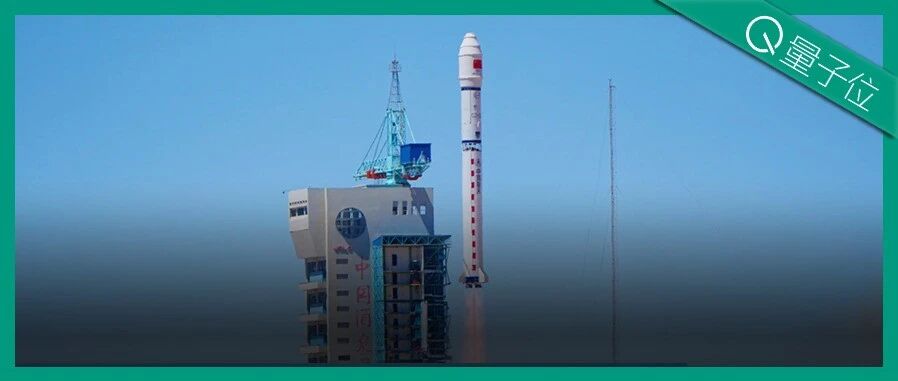
Core Insights - The "Star Computing" plan by Guoxing Aerospace aims to deploy a network of satellites for AI model inference and training, marking a significant advancement in space computing capabilities [1][2] Group 1: Deployment and Achievements - In November 2025, Guoxing Aerospace successfully deployed the Qwen3 large model to the "Star Computing" plan's space computing center, achieving the world's first in-orbit deployment of a general large model from the ground to a satellite [1] - The Qwen3 model successfully executed multiple end-to-end inference tasks in space, with a total process time of under 2 minutes for data transmission and processing [1] Group 2: "Star Computing" Plan Overview - The "Star Computing" plan consists of 2,400 inference satellites and 400 training satellites, focusing on serving silicon-based intelligent systems such as autonomous vehicles, drones, and intelligent robots [2] - The satellites will be deployed in orbits ranging from 500-1,000 km, utilizing laser communication for high-speed data transmission, forming a global training and inference computing network with capabilities of 100,000 P-level inference and 1,000,000 P-level training [2] Group 3: Future Plans and Milestones - The first group of the space computing center was successfully launched in May 2025, with subsequent groups planned for deployment in 2026 [2] - By 2030, the plan aims to complete a network of thousands of satellites, with over 95% being inference satellites, and to validate large-scale training satellites in orbit [2] - By 2035, the goal is to fully establish the network to provide computing power for billions of silicon-based intelligent systems [2]
我们离星际航行还有多远
Xin Lang Cai Jing· 2026-01-27 18:56
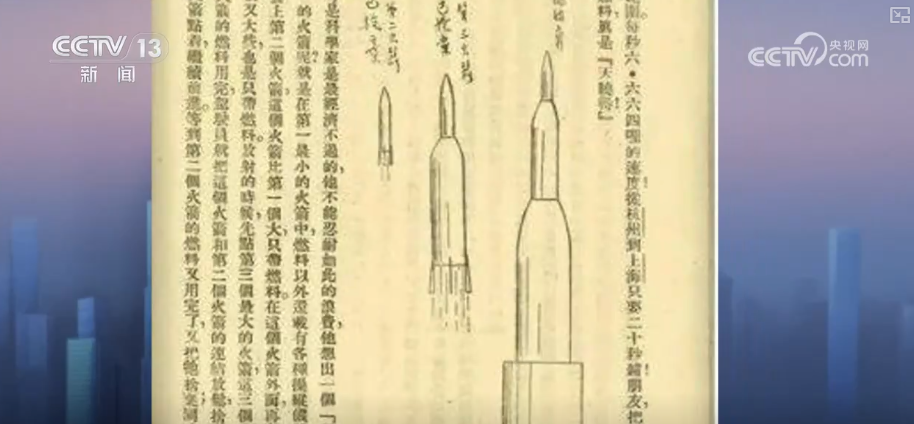
转自:成都日报锦观 中国首个星际航行学院成立 点燃太空探索"人才引擎" 我们离星际航行还有多远 星际航行是什么? 星际航行是行星际航行和恒星际航行的统称,也包括对目标天体和这一空间范围的科学探索。 星际航行学院干什么? 主要是面向星际航行的国家需求,来培养卓越的工程师、顶尖的科学家,为航天强国的建设奠定人才队 伍的基础。这个人才培养的专项有三大领域,包括星际航行的前沿科学、技术及应用。 我国首个星际航行学院成立。记者获悉,1月27日,中国科学院大学星际航行学院正式揭牌成立。这所 特色学院将聚焦星际推进、深空通信导航、空间科学等前沿领域,培育兼具扎实功底、战略视野与家国 担当的紧缺复合型人才。 中国科学院大学立足中国科学院"科教融合3.0"战略,设立星际航行人才培养专项并组建学院,旨在响 应国家战略,推进教育、科技、人才一体化发展,破解人才瓶颈。 "今天,我们在此共商星际航行领军人才培育大计,既是对前辈家国情怀的赓续,更是立足新时代对人 才培养事业的全方位升级。"中国科学院国家空间科学中心主任王赤院士说。 二十世纪六十年代,钱学森先生在他的《星际航行概论》一书中,以惊人的前瞻性,构筑起完整的星际 航行理论框架。 ...
“算力上天”成为全球科技竞争新焦点
Zheng Quan Ri Bao· 2026-01-27 16:37
Core Insights - The AI industry is rapidly expanding, with data center construction booming, and the core bottleneck has shifted to energy constraints, making "computing in space" a crucial path to break this bottleneck and a new focus in global tech competition [1] Group 1: Development of Space Computing - The transition from "ground sensing and computing" to "space computing" is accelerating in China, with the deployment of data centers and computing capabilities in space [2] - China has established a multi-dimensional approach led by national teams, with commercial space following and deep integration of industry, academia, and research, achieving significant breakthroughs [2] - The "Xingcan" plan by Guoxing Aerospace aims to create a space computing network of 2,800 satellites, focusing on AI model inference and training, marking a global first in deploying a general model in orbit [2] Group 2: Innovations in Energy Monitoring - The "Dianjian No. 1" satellite, China's first energy engineering-specific satellite, offers a new solution for energy infrastructure monitoring, overcoming traditional monitoring challenges [3] - The satellite features X-band synthetic aperture radar (SAR) for all-weather observation, enabling precise monitoring even in adverse weather conditions [3] - Future plans include collaboration with "Dianjian No. 2" to create a comprehensive space information support system for the entire lifecycle of energy engineering [3] Group 3: Challenges in Space Computing - The development of space computing is a complex system engineering challenge, requiring advancements in radiation-resistant chips, high-speed inter-satellite communication, and cost-effective launch capabilities [4] - The commercial viability of space computing hinges on breaking the cost and capacity bottlenecks in commercial spaceflight, with a target launch cost of approximately $200 per kilogram [5] - The industry faces deeper challenges in building business models and application ecosystems, as 90% of space data remains underutilized, necessitating high-value application scenarios to support significant investments [5]
星际航行码头、行星际导航、火星通讯……奇思妙想逐步化作现实 | 全释硬科技一探究竟↓
Yang Shi Wang· 2026-01-27 09:17
Core Viewpoint - The establishment of the Interstellar Navigation College at the University of Chinese Academy of Sciences marks a significant step in advancing China's capabilities in deep space exploration, which is seen as a critical area of global technological competition [12][36]. Group 1: Significance of the College - The Interstellar Navigation College aims to cultivate comprehensive talents capable of addressing the multifaceted challenges of interstellar navigation, integrating knowledge from various disciplines such as engineering, space science, and artificial intelligence [10][20]. - The college serves as a "breakthrough station" to overcome research bottlenecks in interstellar navigation by leveraging the strengths of various institutes within the Chinese Academy of Sciences [12][18]. Group 2: Educational Approach - The college's curriculum emphasizes interdisciplinary learning, breaking down traditional academic barriers to foster innovation and adaptability among students [23][10]. - A unique mentorship model will be implemented, where a team of mentors will guide individual students, ensuring that the latest scientific and technological advancements are incorporated into the educational process [23][20]. Group 3: Technological Challenges - Achieving true interstellar navigation freedom requires significant technological breakthroughs, particularly in advanced propulsion systems, life support systems, and deep space communication technologies [30][31]. - The college will focus on developing high-energy density fuels and closed-loop life support systems to support long-duration space missions [8][31]. Group 4: Future Platforms and Initiatives - The college plans to establish six specialized platforms, including an intelligent drone simulation platform and a comprehensive teaching practice platform for space science satellites, to provide immersive training environments for students [33][35]. - These platforms will enhance practical learning and innovation, aligning with the college's mission to prepare students for the challenges of deep space exploration [33][12].