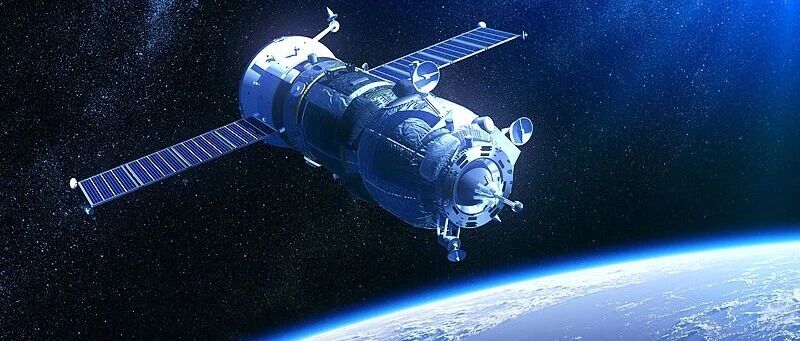
通义千问Qwen3大模型

Search documents
当“云端算力”遇见“交易本体”,企业数智化进化出“最佳解法”
Cai Jing Wang· 2026-02-04 04:03
Core Insights - The core viewpoint of the article emphasizes the shift in enterprise focus from AI computing power to the accuracy of AI-driven decision-making, highlighting the collaboration between Alibaba Cloud and Baiwang in developing advanced AI solutions for business applications [1][2]. Group 1: AI and Data Integration - Enterprises' primary concern has transitioned from "Is there enough computing power?" to "Are the results accurate?" [2] - Alibaba Cloud has established a long-term partnership with Baiwang, focusing on the integration of AI and data intelligence through the creation of a "Data Intelligence Joint Laboratory" [2]. - The "Transaction Ontology" proposed in Baiwang's white paper offers an innovative interpretation of enterprise data assets, contributing to Alibaba Cloud's "Trusted AI Infrastructure" by ensuring data certainty [2][3]. Group 2: Data Quality and Decision-Making - The article discusses the need for "high-purity fuel" in computing, emphasizing that not all data is equal and that unverified data is merely "digital noise" [3]. - Baiwang's "Transaction Ontology" purifies data at the cloud entry point through institutional confirmation, transforming invoices and contracts into legally binding "economic facts" [3]. - The combination of Alibaba Cloud's high-performance computing clusters with these high-purity "transaction ontologies" enables a shift from probabilistic correlations to evidence-based causal reasoning in enterprise AI applications [3]. Group 3: RaaS Model and Infrastructure Challenges - The white paper outlines a transition from SaaS (Software as a Service) to RaaS (Results as a Service), presenting unprecedented challenges for cloud infrastructure services [4]. - In the RaaS model, service providers directly commit to helping clients save costs or obtain bank credit, making system reliability crucial [4][5]. - Alibaba Cloud's elastic computing and high-availability architecture provide the necessary stability and computing power for RaaS, enabling real-time data processing for accurate market pricing [5]. Group 4: Privacy Computing and Data Sharing - The article highlights a future evolution in data circulation, moving from raw data transactions to "model parameter exchanges" based on privacy computing, forming a "federated ecosystem" [6]. - Alibaba Cloud's privacy computing technology can integrate with Baiwang's algorithms to create a "usable but invisible" cloud sandbox, ensuring data sovereignty while allowing for secure model execution [6]. - This architecture resolves "data silos" and facilitates the development of a cross-industry "business decision operating system," aligning with national data security regulations [6]. Group 5: Future Vision and Strategic Goals - In the AI 2.0 era, enterprises require intelligent services that directly lead to business outcomes (RaaS), rather than just faster computing and larger storage [7]. - Alibaba Cloud aims to provide the foundational infrastructure for the digital economy, collaborating with Baiwang and industry partners to establish a trustworthy and auditable "business decision operating system" [7]. - The vision includes leveraging the "Transaction Ontology" as a trust anchor to enable enterprises to benefit from data assetization and intelligence-driven growth [7].
火箭加AI,马斯克1.25万亿美元“太空圈地”
阿尔法工场研究院· 2026-02-04 00:08
Core Viewpoint - SpaceX is shifting its strategy from merely connecting Earth to providing computational capabilities through a proposed deployment of 1 million satellites, aiming to create a "Space AI Empire" valued at approximately $1.25 trillion, integrating AI with satellite technology [4][13][50]. Group 1: SpaceX's Strategic Shift - SpaceX has applied to deploy up to 1 million satellites, marking a fundamental shift in its strategy towards creating a computational layer around Earth [4][11]. - The acquisition of xAI is a critical component of this strategy, with SpaceX's valuation at around $1 trillion and xAI at approximately $250 billion [4][13]. - The goal is to establish a massive computational system in low Earth orbit, utilizing solar energy and enabling efficient data processing and AI model training [11][12]. Group 2: Competitive Landscape - The competition for low Earth orbit resources is intensifying, with China also applying for approximately 203,000 satellites, indicating a race for satellite frequency and orbital slots [7][8]. - The International Telecommunication Union mandates that applicants must launch their first satellite within seven years and complete deployment within 14 years, adding pressure to competitors [8][20]. - SpaceX's aggressive strategy is prompting other players, including national and private entities, to respond with their own satellite deployment plans [18][38]. Group 3: Business Model Transformation - SpaceX is transitioning from a telecommunications company charging subscription fees for satellite internet to a cloud computing service provider renting computational power, expanding its market potential from billions to trillions [23][24]. - The new model will allow SpaceX to compete directly with established cloud service providers like Amazon AWS and Microsoft Azure [25][36]. - The anticipated cost efficiency of space-based computational power could disrupt the AI industry, with projections suggesting that space will become the most cost-effective location for generating AI computational power [24][25]. Group 4: Technological and Regulatory Challenges - Significant technical challenges remain, including the development of radiation-resistant chips and high-speed inter-satellite communication systems necessary for effective space-based computing [28][29]. - Regulatory hurdles are also a concern, as SpaceX's previous applications for satellite deployments have faced scrutiny, and the new proposal for 1 million satellites will likely encounter rigorous review [29][30]. - Despite these challenges, advancements in satellite technology and launch capabilities are being pursued to facilitate the ambitious deployment plans [30][34]. Group 5: Implications for Global Technology Landscape - SpaceX's transformation could reshape the global technology landscape, particularly impacting traditional cloud computing giants that rely on terrestrial data centers [36][51]. - The emergence of a space-based computational network could redefine geopolitical dynamics in technology, as it would allow for a more distributed and less geographically constrained AI development environment [36][52]. - The competition for orbital resources is not just a commercial battle but also a strategic one, with implications for national security and technological sovereignty [9][52].


【太平洋科技-每日观点&资讯】(2026-01-29)
远峰电子· 2026-01-28 12:56
Market Overview - The major indices showed mixed performance with the Shanghai Composite Index up by 0.27%, Shenzhen Component up by 0.09%, while the ChiNext Index fell by 0.57% [1] - The TMT sector led the gains with SW discrete devices up by 3.79%, SW communication cables and supporting up by 3.17%, and SW integrated circuit packaging and testing up by 2.23% [1] - Conversely, the TMT sector also saw declines with SW marketing agents down by 3.72%, SW portal websites down by 3.21%, and SW robotics down by 3.17% [1] Domestic News - Licheng Technology announced that its panel-level packaging (FOPLP) technology has received gradual certification from clients, with plans to establish an initial monthly production capacity of 3,000 pieces this year and an additional 3,000 pieces in Q1 next year [2] - Tailin Micro plans to acquire 100% of Panqi Micro, which has significant differentiated technology advantages in low-power and low-cost fields, with its ultra-low power RF transceiver technology achieving competitive levels against leading international manufacturers [2] - Anlu Technology raised 1.262 billion yuan through a private placement, with the net proceeds intended for advanced process platform ultra-large scale FPGA chip R&D projects and upgrades [2] - Haosheng Technology launched the world's first ultra-wide polarizer suitable for 130-inch LCD panels, improving visual uniformity and reducing overall energy consumption of LCD backlight modules [2] Overseas News - Meta and Corning announced a multi-year partnership worth up to $6 billion to accelerate the construction of advanced data centers in the U.S., supporting the development of applications and technologies for the metaverse [3] - Lightmatter announced a breakthrough in laser architecture with its ultra-large scale photonics technology, enhancing bandwidth density by 8 times for AI applications [3] - ASML expects significant growth in its EUV business by 2026, with revenues projected to increase compared to 2025 [3] - Texas Governor expanded the state's banned technology list, adding 35 Chinese tech companies and AI platforms [3] AI News - Google launched a low-cost subscription plan, Google AI Plus, originally designed for emerging markets, now available in the U.S. for $7.99 per month [4] - Blueglass introduced the Blueglass AI Alpha ring, a smart wearable device with various health monitoring features [4] - Guoxing Aerospace deployed the Qwen3 large model to its "Star Computing" space computing center, marking the first in-orbit deployment of a general large model [4] - OpenAI launched Prism, a free collaborative research platform based on GPT-5.2, integrating various research tools [4] Industry Tracking - Shuo Technology successfully tested the ignition of the "Mammoth No. 1" engine, which will be used in its medium-sized launch vehicle "Glacier No. 1" [5] - Virtual Reality announced completion of over 50 million yuan in Series A+ financing, focusing on AI algorithm development for brain diseases [5] - Jilin University developed a new high-sensitivity measurement technology based on surface plasmon resonance, aiming to break foreign technology barriers [5] - Ant Group's Lingbo Technology announced the open-source of its embodied AI model LingBot-VLA, enhancing generalization capabilities across tasks [5] Earnings Forecast - Industrial Fulian expects a net profit of 35.1 billion to 35.7 billion yuan for 2025, a year-on-year increase of 51% to 54% [6] - Zhenlei Technology forecasts a net profit of 12.3 million to 14.5 million yuan for 2025, a year-on-year increase of 529.64% to 642.26% [6] - Changchuan Technology anticipates a net profit of 1.25 billion to 1.4 billion yuan for 2025, a year-on-year increase of 172.67% to 205.39% [6] - Wol Nuclear Materials expects a net profit of 1.1 billion to 1.18 billion yuan for 2025, a year-on-year increase of 29.79% to 39.22% [6] High-Frequency Data Updates - The international DRAM spot prices showed varied changes, with DDR5 16G prices averaging $36.6, unchanged from the previous day [7] - Semiconductor material prices were reported, with 4N zinc oxide powder priced between 1,470 to 1,520 yuan per kilogram [8]

格林大华期货早盘提示:全球经济-20260128
Ge Lin Qi Huo· 2026-01-28 01:22
Report Summary 1. Investment Rating - No investment rating for the industry is provided in the report. 2. Core Viewpoints - The global economy has passed its peak and is on a downward trend due to consecutive wrong policies in the US [4]. - The US's return to the Monroe Doctrine and global contraction will have a profound and disruptive impact on major asset classes such as the global economy, US Treasuries, US stocks, the US dollar, precious metals, and industrial metals [3]. 3. Summary by Related Catalogs Global Economic News - Bridgewater Associates founder Ray Dalio warns that the US is like a powder keg on the verge of civil war, having deeply entered the "pre - collapse stage" and at risk of entering the sixth stage marked by the collapse of the existing order [1]. - Emerging market stock and bond ETFs have seen a total of $6.83 billion in capital inflows, with Chinese - related ETFs being the most favored. $1.65 billion flowed into the Chinese market last week [1]. - Guoxing Aerospace has deployed the Tongyi Qianwen Qwen3 large - model to the "Star Computing" Plan 01 group space computing center, the world's first deployment of a general large - model to an orbiting satellite [1]. - Microsoft has released its second - generation self - developed AI chip Maia 200, marking significant progress in its self - developed chip field [1]. - NVIDIA CEO Jensen Huang announced the launch of the server CPU "Vera" to solve the CPU bottleneck in the AI supply chain [1]. - If the imbalance between supply and demand of memory chips persists until the first half of 2027, it may be an opportunity for Chinese manufacturers to narrow the technological gap [1]. - Samsung and SK Hynix doubled the price of low - power DRAM supplied to Apple in Q1, and prices may rise further in the second half of the year [1]. - Zijin Mining acquired Allied Gold for $28 billion, with Allied Gold having 533 tons of gold resources as of the end of 2024 [1]. Global Economic Logic - The US is facing a high risk of civil war, and the global political order has entered a chaotic period, bringing great uncertainty to the global economy [2]. - There are speculations about the possibility of a "Plaza Accord 2.0", and the uncertainty of the Fed is expected to peak from July to November 2026, which may lead to a "flight from US assets" [2]. - The Fed will cut interest rates by 25 basis points in December and purchase $40 billion in short - term bonds monthly, restarting the expansion of its balance sheet [2]. - The decline in gambling revenue in Las Vegas is similar to the early warning signal before the 2008 financial crisis [2]. - The US will adjust its economic relations with China and revive its economic autonomy [2]. - The K - shaped differentiation of consumers in the US is intensifying, with high - income consumers maintaining spending while middle - and low - income families are cutting back [2]. - TSMC's capital expenditure in 2026 is expected to be between $52 billion and $56 billion, a significant increase of 27% - 37% year - on - year, indicating the continued AI boom [2]. - SpaceX hopes to achieve full rocket reusability this year, which will reduce the cost of space access by 100 times [2].





格林大华期货早盘提示-20260128
Ge Lin Qi Huo· 2026-01-27 23:30
Group 1: Market Performance - Tuesday saw pressure on the market at the opening with selling, followed by a surge in buying as pressure eased in the afternoon, leading to a quick rebound in growth - related indices and then renewed selling pressure. The semiconductor sector led the gains. The total trading volume of the two markets was 2.89 trillion yuan, showing a contraction compared to the previous period. The CSI 500 index closed at 8,548 points, up 42 points or 0.50%; the CSI 1000 index closed at 8,382 points, up 16 points or 0.20%; the SSE 50 index closed at 3,052 points, up 2 points or 0.09%; while the SSE 300 index closed at 4,705 points, down 1 point or - 0.03% [1]. - Among industry and theme ETFs, those related to Sino - Korean semiconductors, science - innovation semiconductors, etc. led the gains, while vaccine, coal, and agricultural ETFs led the losses. Among sector indices of the two markets, automotive chips, cultivated diamonds, etc. led the gains, and coke processing, aquaculture, etc. led the losses [1]. - Net inflows of settlement funds into CSI 1000 and CSI 500 index stock - index futures were 2.8 billion and 1.1 billion yuan respectively [1]. Group 2: Important Information - China's commercial space industry faces challenges of urgent satellite applications and insufficient launch capacity. The keys to success are technological innovation (reusable rockets), efficiency improvement (batch production), and industrial ecosystem improvement. Current difficulties include limited launch sites, restricted resources, and insufficient application scenarios [1]. - The cost of the first - stage rocket body accounts for over 70%. Once reusable technology is achieved, the total rocket launch cost can be reduced by 40% - 60%. In 2026, many commercial rockets like Lijian - 2 and Tianlong - 3 are planned to be launched, with more attempts at reusable rockets to narrow the technological gap [1]. - Guoxing Aerospace deployed Tongyi Qianwen Qwen3 large - model to the "Star Computing" Plan 01 group space computing center, the world's first deployment of a general large - model from the ground to an in - orbit satellite. The whole process of uploading problems to the satellite, in - orbit reasoning by the large - model, and data return to the ground takes less than 2 minutes [1]. - Guoxing Aerospace announced a large - scale "Star Computing" Plan to deploy 2,400 inference - computing satellites and 400 training - computing satellites into 500 - 1000 km orbits, forming a global training - inference computing power network through satellite - to - ground and inter - satellite laser communication networking [1]. - The "Star Computing" Plan aims to achieve a constellation of over a thousand satellites and commercial operation by 2030, with over 95% being inference - computing satellites and on - orbit verification of large - scale training - computing satellites, and full constellation deployment by 2035, mainly serving silicon - based intelligent agents and AI model inference and training in land, sea, air, and space fields [1][2]. - Emerging market stock and bond ETFs had a total net inflow of $6.83 billion, continuing the 14 - week consecutive inflow trend, though slightly lower than the previous week. Chinese - related ETFs were the most favored, with $1.65 billion flowing into the Chinese market that week [2]. - TianShu Intelligence, a general GPU company, released a four - generation architecture roadmap, aiming to create a new paradigm of AI++ computing power system with the goal of "high - quality computing power" centered on "efficiency, predictability, and sustainability", and expects to surpass NVIDIA's Rubin architecture in 2027 [2]. - If the imbalance between supply and demand of memory chips persists until the first half of 2027, it could be an opportunity for Chinese manufacturers to narrow the technological gap as Samsung, SK Hynix, and Micron cannot meet global demand, but Chinese competitors may erode their advantages after the market cools down [2]. - Zijin Mining acquired United Gold for 28 billion yuan. United Gold's core assets include the Sadiola Gold Mine in Mali, a gold complex in Ivory Coast, and the Kurmuk Gold Mine in Ethiopia to be put into production in the second half of 2026. As of the end of 2024, United Gold had 533 tons of gold resources with an average grade of 1.48 grams per ton [2]. - Microsoft launched its second - generation self - developed AI chip Maia 200, a key step to reduce dependence on NVIDIA chips and more efficiently drive its own services. The chip, manufactured by TSMC using 3 - nanometer technology, has been deployed in a data center in Iowa, marking significant progress in Microsoft's self - developed chip field [2]. - Ray Dalio, founder of Bridgewater Associates, warned that the US is like a powder keg on the verge of civil war, deeply in the "pre - collapse stage" with poor financial conditions and internal conflicts, and at risk of entering the sixth stage marked by the collapse of the existing order through civil war or revolution [2]. Group 3: Market Logic - The market situation on Tuesday was characterized by initial selling pressure, followed by a rebound in growth - related indices as buying emerged, and then renewed selling. Guoxing Aerospace's deployment of the large - model to the space computing center, the upcoming maturity of over 50 trillion yuan in long - term fixed - deposits of residents in 2026, SpaceX's plan to achieve full rocket reusability, and high - profile statements from financial institutions all influenced the market [1][2][3]. - Goldman Sachs believes that profit growth will be the core support for the rise of the Chinese stock market in 2026, expecting A - share corporate profit growth to increase from 4% in 2025 to 14% in 2026 and 2027, driven by AI, overseas expansion, and "anti - involution" [2]. - UBS indicates that international investors are accelerating the allocation of Chinese assets. The proportion of Chinese assets held by the top 40 international investment institutions tracked by UBS has reached a new high since 2023, and active overseas funds have started to increase their positions in Chinese assets [2]. Group 4: Market Outlook - In 2026, over 50 trillion yuan in long - term fixed - deposits of residents will mature. Portfolio products like FOF and fund investment advisors are expected to be the preferred choices for banks to absorb the matured funds due to their risk - diversification and relatively stable returns [3]. - SpaceX plans to launch the second - generation Starlink cellular system in 2027, aiming for satellite - direct connection services similar to 5G on the ground, requiring the launch of 15,000 new satellites. The system's capacity will increase by over 100 times, and data throughput will increase by over 20 times [3]. - Goldman Sachs predicts that in 2026, the net inflow of new capital into the Chinese stock market will exceed 3 trillion yuan, including about 2 trillion yuan from individual investors and over 1 trillion yuan from institutional investors [3]. - UBS's communication with overseas clients has heated up. Trading - oriented investors are actively increasing their positions in Chinese assets, and allocation - oriented investors are optimizing the weight of Chinese assets in their global portfolios while monitoring fundamentals and policy implementation [3]. - UBS Wealth Management's Investment Director's Office believes that the upward trend of the Chinese market is likely to continue in 2026, with advanced manufacturing and technological self - reliance becoming new growth engines. Global funds are increasing their positions in the Chinese stock market, and AI capabilities, valuation attractiveness, and resilience are the common logics. The US's return to the Monroe Doctrine will accelerate the flow of global funds into the Chinese capital market [3]. - The RMB is appreciating rapidly, with the offshore RMB exchange rate reaching 6.94, indicating a large - scale return of US dollars hoarded overseas by foreign - trade enterprises. After the New Year's Day, funds are flowing from enterprise accounts to resident accounts and then to securities accounts [3]. - Driven by the wealth effect, a large amount of off - market funds is still flowing in. After continuous selling, the scale of CSI 500 ETF held by policy funds, which was a little over 100 billion yuan, showed signs of exhaustion on Tuesday. Market funds may choose the CSI 500 index, representing mid - cap stocks, as a breakthrough point for an upward trend. The CSI 500 and CSI 1000 indices are still favored in the long - term [3]. Group 5: Trading Strategies - For stock - index futures directional trading, after continuous selling, the selling pressure of policy - held CSI 500 ETF showed signs of exhaustion on Tuesday. Market funds may choose the CSI 500 index, representing mid - cap stocks, as a breakthrough point for an upward trend. The CSI 500 and CSI 1000 indices are still favored in the long - term [3]. - For stock - index option trading, consider buying far - month deep - out - of - the - money call options on the CSI 1000 index [3].
“算力上天”成为全球科技竞争新焦点
Zheng Quan Ri Bao· 2026-01-27 16:37
Core Insights - The AI industry is rapidly expanding, with data center construction booming, and the core bottleneck has shifted to energy constraints, making "computing in space" a crucial path to break this bottleneck and a new focus in global tech competition [1] Group 1: Development of Space Computing - The transition from "ground sensing and computing" to "space computing" is accelerating in China, with the deployment of data centers and computing capabilities in space [2] - China has established a multi-dimensional approach led by national teams, with commercial space following and deep integration of industry, academia, and research, achieving significant breakthroughs [2] - The "Xingcan" plan by Guoxing Aerospace aims to create a space computing network of 2,800 satellites, focusing on AI model inference and training, marking a global first in deploying a general model in orbit [2] Group 2: Innovations in Energy Monitoring - The "Dianjian No. 1" satellite, China's first energy engineering-specific satellite, offers a new solution for energy infrastructure monitoring, overcoming traditional monitoring challenges [3] - The satellite features X-band synthetic aperture radar (SAR) for all-weather observation, enabling precise monitoring even in adverse weather conditions [3] - Future plans include collaboration with "Dianjian No. 2" to create a comprehensive space information support system for the entire lifecycle of energy engineering [3] Group 3: Challenges in Space Computing - The development of space computing is a complex system engineering challenge, requiring advancements in radiation-resistant chips, high-speed inter-satellite communication, and cost-effective launch capabilities [4] - The commercial viability of space computing hinges on breaking the cost and capacity bottlenecks in commercial spaceflight, with a target launch cost of approximately $200 per kilogram [5] - The industry faces deeper challenges in building business models and application ecosystems, as 90% of space data remains underutilized, necessitating high-value application scenarios to support significant investments [5]
A股开盘:沪指跌0.18%、创业板指跌0.09%,有色金属、光伏设备板块调整
Jin Rong Jie· 2026-01-27 01:38
Market Overview - On January 27, A-shares opened slightly lower, with the Shanghai Composite Index down 7.39 points, a decline of 0.18%, closing at 4125.22 points [1] - The Shenzhen Component Index fell by 32.86 points, a decrease of 0.23%, closing at 14283.78 points [1] - The CSI 300 Index decreased by 1.79 points, down 0.04%, closing at 4705.17 points [1] - The ChiNext Index dropped by 3.13 points, a decline of 0.09%, closing at 3316.02 points [1] - The K-50 Index fell by 2.73 points, down 0.18%, closing at 1530.07 points [1] Company News - Zijin Mining plans to acquire all issued common shares of Allied Gold Corporation at a price of CAD 44 per share, totaling approximately CAD 5.5 billion (about RMB 28 billion) [2] - Li Tong Electronics expects a net profit attributable to shareholders of RMB 270 million to RMB 330 million for 2025, representing a year-on-year increase of 996.83% to 1240.57% [2] - China Rare Earth anticipates a net profit of RMB 143 million to RMB 185 million, recovering from a loss of RMB 287 million in the same period last year [2] - Conch Cement plans to use temporarily idle funds to purchase structured deposits with a maximum daily balance of RMB 30 billion and invest in bank wealth management products with a maximum daily balance of RMB 20 billion [2] Industry Insights - Silver products accounted for only 4.54% of Silver's total revenue, with sales of RMB 20.23 billion in the first half of 2025 [3] - Chunzhong Technology expects a net profit of RMB 265 million to RMB 290 million for 2025, a growth of 208.86% to 238.00% year-on-year [3] - Duofu expects a net profit of RMB 20 million to RMB 28 million for 2025, recovering from a loss of RMB 30.8 million in the previous year [3] - Dongfang Risen anticipates a net loss of RMB 2.3 billion to RMB 2.9 billion for 2025, compared to a loss of RMB 3.436 billion in the previous year [3] Hot Topics - The "Star Computing" seminar revealed that Guoxing Aerospace successfully deployed the Qwen3 model to a space computing center, marking the first time a general model has been deployed in orbit [6] - Amazon Web Services (AWS) announced a 15% price increase for its EC2 machine learning capacity blocks, reflecting a significant shift in cloud computing pricing logic amid AI resource shortages [7] - The price of black tungsten concentrate rose by 11.43% to RMB 536,000 per ton, while ammonium paratungstate increased by 12.06% to RMB 790,000 per ton [9] - The U.S. government has signed a non-binding letter of intent with USA Rare Earth for a total of approximately USD 1.6 billion, leading to a significant increase in the company's stock price [10]

全球首次,通用大模型太空在轨部署成功,人形机器人直连低轨高通量卫星试验成功;商务部将启动建设国家数字贸易示范区——《投资早参》
Mei Ri Jing Ji Xin Wen· 2026-01-27 00:04
Market News - US stock indices closed higher, with the Nasdaq up 0.43%, Dow Jones up 0.64%, and S&P 500 up 0.5%. Tech stocks showed mixed results, with Apple, Oracle, and Meta rising over 2%, while Intel fell over 5%, and AMD and Tesla dropped over 3% [1] - The ICE US Dollar Index fell by 0.59% to 97.019 points. The onshore RMB against the USD closed at 6.9540, up 90 basis points from the previous trading day [1] Industry Insights - The Beijing humanoid robot innovation center successfully connected a new type of satellite, marking the first global trial of humanoid robots directly linked to low-orbit satellites. This breakthrough supports reliable communication for outdoor robotic applications and cross-industry integration [3] - The space communication industry is projected to reach between 200 billion to 400 billion yuan by 2030, with an annual compound growth rate of 10%-28%. This sector is transitioning from concept validation to large-scale application, becoming a key driver for high-quality digital economic development [3] - The "Star Computing" plan by Guoxing Aerospace aims to deploy a large model in orbit, achieving end-to-end reasoning tasks in under two minutes. This network consists of 2,400 inference satellites and 400 training satellites, targeting a total of 100,000 P-level inference computing power [4] - The Ministry of Commerce plans to innovate and develop digital trade, establishing a national digital trade demonstration zone and promoting standards for digital trade. By 2025, online retail sales in China are expected to grow by 8.6%, with cross-border e-commerce reaching 2.75 trillion yuan [5][6] Stock Movements - Yili Group plans to reduce its stake in Sun Cable by up to 21.67 million shares, not exceeding 3% of the total share capital [7] - Jianghang Equipment's shareholder plans to reduce its stake by up to 791,340 shares, representing 1% of the total share capital [7] - Shengda Bio announced a plan to reduce its stake by up to 567,090 shares, not exceeding 3% of the total share capital [7]

智通港股早知道 | 商务部:将优化实施消费品以旧换新 黄金、白银刷新历史高点后回调
Zhi Tong Cai Jing· 2026-01-26 23:55
Group 1: Government Initiatives - The Ministry of Commerce will optimize the implementation of the old-for-new consumption policy to boost the consumption of durable goods such as automobiles and home appliances [1] - In 2026, the Ministry will conduct over 20 "Buy in China" themed activities and support local events to create a strong consumption atmosphere [1] - The Ministry aims to accelerate the development of international consumption centers and improve the consumption environment through new business models and scenarios [1] Group 2: Market Trends - The U.S. stock market saw gains with the Dow Jones up 313.69 points, or 0.64%, while the Nasdaq and S&P 500 also rose [2] - Gold and silver prices reached historical highs before experiencing a pullback, with COMEX gold futures rising by $25.10 to $5004.8 per ounce [2] - The NASDAQ Golden Dragon China Index fell by 0.63%, indicating a decline in popular Chinese stocks [2] Group 3: Company Developments - Tencent's CEO emphasized the importance of WeChat as a core asset and called for patience with the growth of Video Accounts and WeChat e-commerce [3] - Tencent is exploring AI integration across its various business units, with a focus on enhancing user experience and content quality [3] - KANAT Optical plans to issue 27 million shares at a discount of approximately 11.1%, raising about HKD 1.4 billion [7] Group 4: Industry Insights - The storage market is experiencing significant price increases, with NAND flash prices expected to rise by over 100% in Q1 2026 [5] - TrendForce predicts NAND Flash prices will increase by 33% to 38%, while DRAM prices are expected to rise by 55% to 60% [5] - High demand and supply constraints are leading to a rare price imbalance in the DRAM market, with spot prices significantly exceeding contract prices [5] Group 5: M&A Activity - Zijin Mining announced plans to acquire Allied Gold Corporation for approximately CAD 5.5 billion (around RMB 280 billion), targeting key gold mining assets [8] - The acquisition includes significant gold resources and production capabilities, with expectations of increased gold output in the coming years [8]
全球首次,通用大模型太空在轨部署成功
财联社· 2026-01-26 10:21
Core Insights - The article highlights the successful deployment of the Qwen3 large model by Guoxing Aerospace to a space computing center, marking the first instance of a general large model being operated on an orbiting satellite [1] - The Qwen model executed multiple end-to-end inference tasks in space, with a total processing time of under 2 minutes for data transmission and result return [1] - The article also reports on the successful connection of the "Embodied Tian Gong" robot to a new type of low-orbit satellite, enabling real-time transmission of visual data without ground network support [1] Group 1 - Guoxing Aerospace's Qwen3 model was deployed to the "Star Computing" plan's space computing center in November 2025, achieving a significant milestone in space technology [1] - The Qwen model's ability to perform inference tasks in space demonstrates advancements in satellite capabilities and artificial intelligence integration [1] - The successful connection of the "Embodied Tian Gong" robot to low-orbit satellites represents a breakthrough in robotics and satellite communication, facilitating reliable outdoor operations [1]