可再生能源

Search documents
国家能源局:全社会用电量中,每3度电就有1度绿电
Zhong Guo Xin Wen Wang· 2025-08-26 03:22
国家发展改革委党组成员、国家能源局局长王宏志在会上表示,"十四五"是绿色低碳转型最快的五 年。我国构建起全球最大、发展最快的可再生能源体系,可再生能源发电装机占比由40%提升至60%左 右,风电光伏每年新增装机先后突破1亿、2亿、3亿千瓦关口,实现台阶式跃升发展,发展速度和力度 前所未有。能源消费"逐绿前行",全社会用电量中,每3度电就有1度绿电。全国能源消费中,非化石能 源占比每年增加1个百分点,预计将超额完成"十四五"确定的20%目标,煤炭占比每年减少1个百分点, 这"一增一减"大大提升了经济发展的"含绿量"。我国出口的风电光伏产品,"十四五"期间累计为其他国 家减少碳排放约41亿吨,为全球低碳转型作出了重大贡献。 中新网8月26日电 国务院新闻办公室26日举行"高质量完成'十四五'规划"系列主题新闻发布会,介 绍"十四五"时期能源高质量发展成就。 ...
全球实现可再生能源目标困难重重
Zhong Guo Hua Gong Bao· 2025-08-26 02:28
Group 1 - The global progress towards renewable energy goals is insufficient, with many countries failing to transition from fossil fuels to green alternatives at a necessary pace [1][2] - A report from the energy think tank "Ashes" indicates that while 133 countries agreed to triple global renewable energy capacity at the 2023 COP28 summit, many countries' policy actions do not align with their commitments [1][2] - As of July 2023, only 7 non-EU countries updated their 2030 renewable energy targets, with a total global renewable energy capacity goal of 7.4 terawatts, which is only 2% higher than at COP28 and far from the 11 terawatts needed to limit global warming to 1.5 degrees Celsius [2] Group 2 - The timely updating of national targets is crucial for advancing climate goals, enhancing energy security, and promoting economic growth, as it helps guide supportive policies and reduces risks of overcapacity or grid congestion [2] - The upcoming COP30 summit in Brazil may lead to criticism of participating countries for not acting on the targets set at COP28 and COP29, potentially prompting nations to update their goals [2] Group 3 - Concerns are rising over the regression of U.S. climate action under President Trump, who has criticized previous climate policies and rolled back funding for green energy and electric vehicles [3] - The U.S. was previously a leader in green transition during Biden's administration, but Trump's focus on fossil fuels and disregard for renewable energy is expected to hinder the U.S. energy transition process [3] - The increasing electricity demand in the U.S., driven by the construction of large data centers, may lead to a rise in greenhouse gas emissions in the coming years [3]
我国建成全球最大的电动汽车充电网络,构建起全球最大、发展最快的可再生能源体系
Xin Hua Wang· 2025-08-26 02:10
Core Insights - During the "14th Five-Year Plan" period, China aims to establish the world's largest electric vehicle charging network, with a target of having 2 charging stations for every 5 electric vehicles [1] - China is set to build the largest and fastest-growing renewable energy system globally, increasing the share of renewable energy generation capacity from 40% to approximately 60% [1]
马来西亚打造区域绿色能源枢纽
Ren Min Ri Bao· 2025-08-25 21:54
Group 1 - Malaysia's Selangor Smart Industrial Park has established a solar power system with a capacity of 40 megawatts, expected to save over 8 million ringgit in electricity costs annually [1] - Residents in Penang are renting their rooftops to solar companies, earning an average of 1,500 ringgit per household per year, contributing to a local green power cycle [1] - Fishermen in Terengganu are using net energy metering to install rooftop solar systems, reducing average monthly electricity bills from 180 ringgit to 50 ringgit, saving over 1,500 ringgit annually [1] Group 2 - Malaysia has introduced three schemes for purchasing green electricity without the 1.6% renewable energy fund fee, potentially lowering procurement costs by 5% to 10% [2] - Under the "green electricity" mechanism, industrial users can save approximately 0.085 ringgit per kilowatt-hour, while solar developers' internal rates of return may increase by 0.8 to 1.2 percentage points [2] - The government plans to add 300 to 400 megawatts of new solar capacity by the second half of 2025, supported by the data center sector's investment in solar energy [2] Group 3 - Malaysia aims to increase the share of renewable energy in its power generation to 70% by 2050, with a current share of about 25%, up 8 percentage points since 2020 [3] - The government has released a national energy transition roadmap covering various energy sectors, promoting sustainable energy industry transformation through subsidies and tax incentives [3] - Plans for a renewable hydrogen roadmap and a green electricity corridor in Johor are underway, aiming to establish Malaysia as a competitive green energy hub in the ASEAN region [3]
为全球绿色发展作出“上合贡献”(弘扬“上海精神”:上合组织在行动)
Ren Min Ri Bao· 2025-08-25 21:50
Group 1: Green Development Consensus - The core viewpoint emphasizes that protecting the ecological environment and promoting green development is a consensus among Shanghai Cooperation Organization (SCO) member states [1] - China has strengthened cooperation with other SCO member countries in the field of green development, contributing to sustainable economic and social development [1] Group 2: Ecological Cooperation and Innovations - In Uzbekistan, a "photovoltaic + cotton water and fertilizer integration" demonstration area has been established, significantly increasing cotton yields by over 200% through Chinese technology [2] - The cooperation center for desertification prevention in Ningxia was established, showcasing China's achievements in sand control techniques, which are being shared with Kazakhstan [3] Group 3: Renewable Energy Initiatives - The Akmolinsk wind power project in Kazakhstan, with a total installed capacity of 221 MW, is expected to save 278,300 tons of standard coal and reduce CO2 emissions by 686,600 tons annually [4] - SCO countries contribute half of the global renewable energy installed capacity, with a total of 2.31 billion kW by the end of 2024, which is 14.5 times the capacity at the organization's inception [4][5] Group 4: Biodiversity Protection Efforts - China is actively promoting biodiversity protection and has collaborated with SCO member countries to protect species like the snow leopard, leading to a resurgence in their population [6] - Collaborative efforts in Sri Lanka and Turkey have focused on coral reef restoration and the protection of endangered species, demonstrating a commitment to ecological preservation [7] Group 5: Comprehensive Green Cooperation - The collaboration among SCO countries spans desertification prevention, clean energy cooperation, and rare species protection, aiming to enhance regional ecological improvement and global environmental governance [8]
能源领域首台(套)重大技术装备公示
Zhong Guo Hua Gong Bao· 2025-08-25 02:02
据悉,国家能源局于今年1月组织开展第五批能源领域首台(套)重大技术装备申报工作,重点聚焦先进 可再生能源、化石能源绿色高效开发利用、氢能及其综合利用、能源系统数字化智能化等方向,持续推 动能源领域首台(套)重大技术装备示范应用,不断提升科技攻关成果转移转化和产业化水平,切实保障 关键技术装备产业链供应链安全。 这些技术装备有兆瓦级质子交换膜电解水制氢一体化测试平台、百千瓦级可逆固体氧化物电池装置、绿 电制氢耦合煤化工一体化能量管控系统、可再生能源直接耦合的宽功率波动适应性兆瓦级PEM电解 堆、260℃超高温高压测井仪器、指向式高速高清地质导向钻井系统、大吨位大管径自动化连续管作业 机、油气管道柔性内焊机器人、重(劣)质原料加氢反应器塔底循环泵、特大型煤/油加氢反应器成套装 备、废塑料连续热解反应器、大型高压固定床非熔渣气化装置等。 中化新网讯 8月19日,国家能源局公布第五批能源领域首台(套)重大技术装备,共计82项,其中包含多 个氢能、石油化工领域技术装备。 ...
一周要闻·阿联酋&卡塔尔|美团Keeta在卡塔尔正式上线/Apollo Go在阿联酋启动测试
3 6 Ke· 2025-08-25 01:58
Group 1: Autonomous Vehicles and Logistics - Baidu has launched open road testing for its Apollo Go autonomous vehicles in the UAE, with plans to deploy thousands of self-driving cars in partnership with Uber, marking the first such initiative in Asia and the Middle East [2] - A new international cargo route from Urumqi to Dubai has been established, significantly reducing transportation time from 20-30 hours to approximately 6 hours, enhancing logistics efficiency by over 70% [2] Group 2: Mergers and Acquisitions - In the first half of 2025, the UAE's merger and acquisition transaction volume reached $25.4 billion, accounting for 43% of the total $58.7 billion in the MENA region [3] Group 3: Banking and Financial Performance - As of May 2025, the total assets of UAE banks increased by 2.7% to AED 4.878 trillion, with total credit rising to AED 2.293 trillion, a growth of 1.5% [3] - The UAE Central Bank's gold reserves grew by 25.9% in the first five months of the year, reaching AED 28.933 billion [3] Group 4: Digital Economy and Startups - In the first half of 2025, Dubai's digital economy chamber supported 308 digital startups, a 39% increase from the previous year [3] - The Dubai International Chamber attracted 143 new companies in the first half of 2025, a 138% increase year-on-year, including 31 multinational companies [4] Group 5: Renewable Energy and Infrastructure - Masdar has invested over AED 6.19 billion (approximately $1.685 billion) in renewable energy projects through green bonds, which are expected to reduce CO2 emissions by over 6.28 million tons annually [5] - Masdar has decided to pause its green hydrogen project and shift focus to data centers due to changing market dynamics [5] Group 6: Electric Vehicles and Charging Infrastructure - Parkin has signed a 10-year agreement to deploy 200 "ultra-fast" electric vehicle charging stations in Dubai, aiming to reduce charging time to under 30 minutes [5] - Faraday Future plans to establish a factory in Ras Al Khaimah, UAE, for assembling its FX Super One electric vans, supported by AED 30 million (approximately $8.1 million) in initial funding [6] Group 7: Economic Growth and Trade - Qatar's economy is expected to grow by 4.8% in 2026, with signs of recovery in the non-energy sector [7] - Qatar's total foreign trade reached QAR 476.28 billion in 2024, a 1.3% increase year-on-year, with a trade surplus of QAR 215.64 billion [7] Group 8: Financial Center and Investments - The Qatar Financial Center registered 828 new companies in the first half of 2025, a 64% increase year-on-year, reflecting investor confidence in the Qatari market [8] - Qatar's royal family has committed to invest $31 billion in Botswana and Zambia for infrastructure and development projects [8]



美国可再生能源行业再遭特朗普打击!企业高管警告:将加剧电力短缺并推高电价
智通财经网· 2025-08-25 00:20
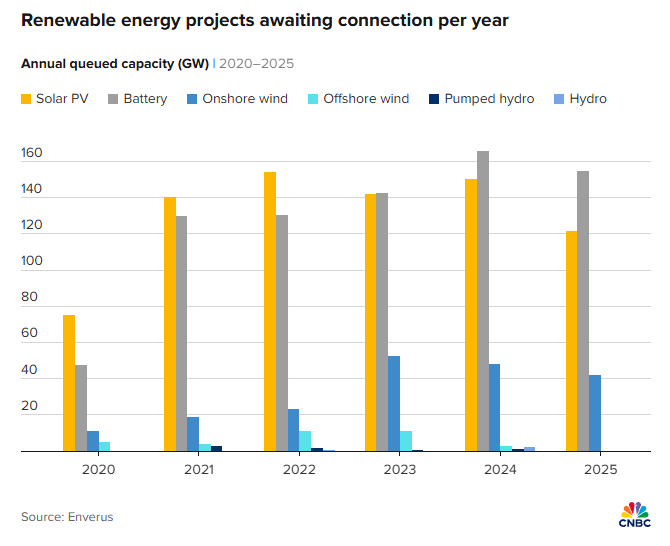
Core Viewpoint - The recent statements by President Trump against renewable energy projects, particularly solar and wind, may lead to increased energy prices for consumers and exacerbate the already strained power grid due to rising electricity demand [1][2]. Group 1: Impact on Renewable Energy Development - Trump's administration has halted approvals for solar and wind projects, raising concerns among industry executives about the potential slowdown in the growth of the renewable energy sector [1][2]. - The Department of the Interior's new permitting authority is viewed as an unprecedented political review that could hinder the development of renewable energy projects [1][2]. - Executives from major renewable energy developers Arevon, Avantus, and Engie North America express that the permitting delays will significantly impact the industry's progress [1][2]. Group 2: Economic and Investment Uncertainty - The bureaucratic processes and rising costs due to tariffs on metals are creating market instability, making it difficult for companies to plan and execute contracts [2][5]. - Engie North America has reduced its planned investments in the U.S. by 50% due to regulatory uncertainties and tariffs, indicating a shift in perception of the U.S. as a stable business environment [5]. - The cost of solar and battery storage projects has increased by up to 30% due to metal tariffs, leading developers to renegotiate electricity prices with utility companies [6]. Group 3: Future Projections and Challenges - The termination of key tax credits for solar and wind projects by the end of 2027 will further complicate the financial viability of new renewable energy projects, potentially leading to higher electricity bills for consumers [6][7]. - The anticipated decline in new renewable energy generation from late 2026 to 2028 could result in the exit of smaller players from the market due to financial risks [7]. - The increasing demand for electricity from data centers and AI systems may lead to power shortages, as the current renewable energy capacity may not meet the rising needs [8][9].
建设中国-东盟蓝色经济共同大市场
Shang Hai Zheng Quan Bao· 2025-08-24 17:47
Core Viewpoint - The acceleration of maritime economic connectivity and cooperation between China and ASEAN is expected to significantly impact sustainable economic development and promote a new regional maritime cooperation framework led by collaboration [1][2]. Group 1: Blue Economy as a Common Market - The construction of a China-ASEAN blue economy common market is seen as a "blue engine" for economic growth and regional economic integration [2][3]. - Currently, approximately 30% of ASEAN countries' GDP comes from the maritime economy, while China's maritime economy contributes about 8% to its GDP. By 2024, China's marine production value is projected to exceed 10 trillion yuan, growing by 5.9% year-on-year [4]. - Investment in blue economy sectors between 2020 and 2050 could yield net returns of $8.2 trillion to $22.8 trillion, with an investment return rate of 450% to 615% [4]. Group 2: Economic and Trade Cooperation - Since the signing of the China-ASEAN Free Trade Area 1.0 in 2010, trade cooperation has deepened, with China maintaining its position as ASEAN's largest trading partner for 16 consecutive years [5]. - In 2023, the trade volume between China and ASEAN increased 16.8 times over 20 years, but cooperation in the maritime sector remains fragmented [5]. - The share of marine product trade in total bilateral trade is only 0.6%, indicating significant potential for growth [5]. Group 3: Industry Transformation - Both China and ASEAN face the challenge of industry transformation, particularly in fisheries, where they account for 80% of global aquaculture and 60% of global fish catch [7]. - The demand for renewable energy in ASEAN is expected to increase by 3 to 4 times by 2050, with an average annual growth rate of 6% in renewable power installations from 2021 to 2023 [7]. Group 4: Promoting Marine Tourism - Developing marine tourism is a significant initiative to meet market demand and promote connectivity in the maritime sector [8][9]. - The global cruise tourism market is expected to recover to a growth rate of around 5% by 2028, with China's cruise tourism market projected to reach 14 million passengers by 2030 [9]. Group 5: Renewable Energy Cooperation - From 2000 to 2020, China's public investment in renewable energy projects in ASEAN accounted for about 60% of total foreign public investment received by ASEAN [12]. - In 2023, China's offshore wind power capacity represented 47% of the global total, highlighting the potential for collaborative development in renewable energy [12]. Group 6: Emerging Fields and New Markets - The global marine emerging industries are expected to grow by up to 107% over the next decade, with over 1,000 marine species in the South China Sea identified for medicinal use [15]. - Establishing marine innovation laboratories and public platforms for marine biological resources is recommended to facilitate resource sharing and research [15]. Group 7: Infrastructure and Governance - The development of maritime infrastructure, particularly ports, is crucial as ASEAN countries lag in infrastructure to meet growing trade demands [17]. - The Regional Comprehensive Economic Partnership (RCEP) is seen as a foundational framework for integrating maritime economic rules and standards [18]. Group 8: Hainan as a Hub - Hainan is positioned as a strategic hub for China-ASEAN maritime economic connectivity due to its location and policy advantages [21]. - Initiatives include establishing offshore warehouses and hosting trade expos to enhance trade and cultural exchanges between China and ASEAN [21].
美国电费涨到交不起?特朗普甩锅新能源,美媒:不是太阳能的错,它们才是元凶!
Sou Hu Cai Jing· 2025-08-24 08:08
Core Viewpoint - Recent increases in electricity prices in the U.S. have outpaced inflation, with President Donald Trump attributing the surge to renewable energy sources, labeling them a "century scam" and vowing to halt related projects [1][3]. Group 1: Renewable Energy and Electricity Prices - Data from the U.S. Energy Information Administration indicates that while the share of renewable energy generation has increased in 2023, the overall cost of generation remains lower than fossil fuels, with ongoing technological advancements reducing the levelized cost of solar and wind energy [3]. - Analysts assert that the recent rise in electricity prices is minimally related to renewable energy, with the primary drivers being surging demand and aging infrastructure [4]. Group 2: Factors Influencing Electricity Prices - The rapid development of cloud computing and artificial intelligence technologies has led to a significant increase in energy demand from data centers, with servers and cooling systems requiring more electricity [4]. - The proliferation of electric vehicles has further intensified the pressure on electricity consumption, while the aging U.S. power grid infrastructure, with some equipment over several decades old, contributes to high transmission losses and maintenance costs [4]. Group 3: Public Perception and Comparative Insights - Residents have reported noticeable increases in their electricity bills, with a recent rate of $0.19 per kilowatt-hour, up from $0.16 a year ago, indicating a growing burden on household energy expenditures amid inflation [6]. - The experience of Eastern countries in renewable energy development, where technological innovation and large-scale applications have led to lower costs for wind and solar power compared to traditional energy, may offer valuable lessons for the U.S. [6].