石油开采

Search documents
中证全指自由现金流指数,投资价值如何?|第399期直播回放
银行螺丝钉· 2025-08-08 14:05
Group 1 - The core viewpoint of the article discusses the significance and characteristics of the Free Cash Flow Index, its historical performance, and its current valuation compared to other indices like dividends and value indices [1][27][35] - The article outlines four common types of indices in the A-share market: broad-based indices, strategy indices, industry indices, and thematic indices [5][6][7][8][9] - It highlights six major strategy indices, including Free Cash Flow, which is closely related to the investment philosophies of Warren Buffett and Benjamin Graham [10][11][12][13][14] Group 2 - The Free Cash Flow Index is defined as the cash available to a company after it has paid for its operating expenses and capital expenditures, emphasizing its importance in assessing a company's financial health [18][20] - The Free Cash Flow Rate is introduced as a key metric, calculated as Free Cash Flow divided by Enterprise Value, which helps in selecting stocks with the highest Free Cash Flow Rate [21][22][23] - The article differentiates the Free Cash Flow Index from dividend and value indices, noting that it includes companies with strong cash flows that may not pay high dividends, thus providing a broader investment opportunity [24][25][26] Group 3 - The article lists four significant Free Cash Flow indices currently in the market, including the FTSE China A-Share Free Cash Flow Focus Index and the CSI 800 Free Cash Flow Index [27][28] - It provides detailed information about the CSI All Index Free Cash Flow Index, including its launch date, weighted methodology, and selection rules, which exclude financial and real estate stocks [29][30] - The industry distribution and top holdings of the CSI All Index Free Cash Flow Index are presented, showing a focus on sectors like industrials and materials, contrasting with the higher financial sector representation in dividend indices [32][34] Group 4 - Historical performance data indicates that the CSI All Index Free Cash Flow Index achieved an annualized return of 14.12% from December 31, 2013, to August 6, 2025, significantly outperforming the broader index [35][51] - The article discusses the valuation metrics of the Free Cash Flow Index, noting that it is essential to consider multiple factors when evaluating its performance [39][40] - The article concludes with insights on the potential of the Free Cash Flow Index as a valuable investment strategy, particularly in conjunction with dividend and value indices that have a higher financial sector exposure [54][55]


港股8日跌0.89% 收报24858.82点
Xin Hua She· 2025-08-08 09:27
蓝筹股方面,腾讯控股跌1.06%,收报561港元;香港交易所跌0.97%,收报427.4港元;中国移动涨 1.11%,收报86.9港元;汇丰控股跌0.66%,收报98.2港元。 香港本地股方面,长实集团涨0.59%,收报37.2港元;新鸿基地产跌2.23%,收报94.1港元;恒基地 产跌1.13%,收报28.06港元。 中资金融股方面,中国银行跌0.44%,收报4.57港元;建设银行跌1.12%,收报7.94港元;工商银行 跌0.65%,收报6.16港元;中国平安跌0.46%,收报54.35港元;中国人寿跌1.66%,收报22.46港元。 石油石化股方面,中国石油化工股份跌0.46%,收报4.37港元;中国石油股份无升跌,收报7.57港 元;中国海洋石油跌0.53%,收报18.7港元。 新华社香港8月8日电 香港恒生指数8日跌222.81点,跌幅0.89%,收报24858.82点。全日主板成交 2067.2亿港元。 国企指数跌86.45点,收报8895.28点,跌幅0.96%。恒生科技指数跌86.43点,收报5460.3点,跌幅 1.56%。 ...






2.4万亿元!上市公司现金分红总额再创历史新高
Sou Hu Cai Jing· 2025-08-08 09:15
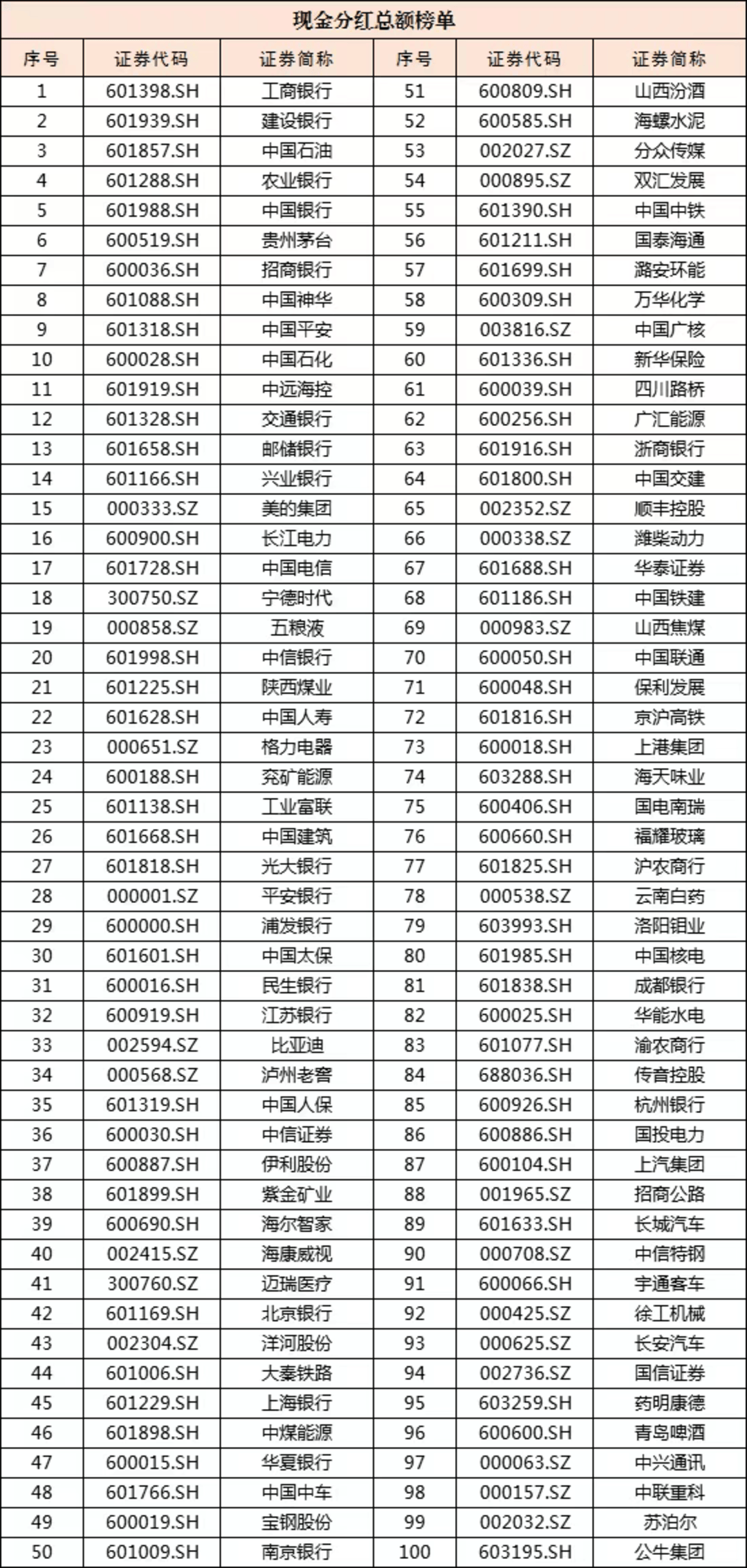
扬子晚报网8月8日讯(记者 马燕)8月8日,中国上市公司协会发布2025年上市公司现金分红榜单。 记者从中上协获悉,为引导上市公司树立回报投资者的理念,增强分红意识,中上协结合现金分红规则要求,编制发布2025年上市公司现金分红榜单。 2025年上市公司现金分红榜单以现金分红客观数据为基础,综合考量多维因素,最终形成现金分红总额、股利支付率、股息率三个榜单,每个榜单100家 公司。强调诚信合规底线,注重分红连续性、稳定性,注重多维度评价。 上市公司现金分红总额再创历史新高,整体分红水平稳中有升。2024年度沪深A股上市公司现金分红总额为2.4万亿元,较2023年度增加9%。有9家上市公 司2024年度现金分红金额超过500亿元,33家上市公司分红金额超过100亿元,61家上市公司分红金额超过50亿元。 上市公司分红的连续性逐年增强,连续分红的上市公司数量逐年增多。2024年度连续分红公司的数量和占比,较去年同期均有所上升,在4445家上市满三 年的沪深A股上市公司中,2447家近三年连续现金分红,数量较2023年度增长12%;在3569家上市满五年的沪深A股上市公司中,1681家近五年连续现金 分红,数量较2 ...
港股27日跌0.17% 收报24284.15点
Xin Hua She· 2025-08-08 08:00
新华社香港6月27日电 香港恒生指数27日跌41.25点,跌幅0.17%,收报24284.15点。全日主板成交 2751.15亿港元。 责任编辑:袁浩 香港本地股方面,长实集团涨0.43%,收报34.95港元;新鸿基地产跌0.44%,收报90.55港元;恒基 地产跌1.95%,收报27.6港元。 中资金融股方面,中国银行跌1.48%,收报4.67港元;建设银行跌1.11%,收报8.03港元;工商银行 跌2.02%,收报6.32港元;中国平安跌1.27%,收报50.4港元;中国人寿跌2.97%,收报18.96港元。 石油石化股方面,中国石油化工股份无升跌,收报4.12港元;中国石油股份涨0.44%,收报6.81港 元;中国海洋石油涨0.11%,收报17.92港元。 国企指数跌41.36点,收报8762.47点,跌幅0.47%。恒生科技指数跌3.73点,收报5341.43点,跌幅 0.07%。 蓝筹股方面,腾讯控股无升跌,收报513港元;香港交易所涨0.29%,收报421.2港元;中国移动跌 0.63%,收报86.35港元;汇丰控股跌0.42%,收报95港元。 ...
港股3日跌0.63% 收报24069.94点
Xin Hua She· 2025-08-08 08:00
新华社香港7月3日电 香港恒生指数3日跌151.47点,跌幅0.63%,收报24069.94点。全日主板成交 2312.47亿港元。 国企指数跌76.46点,收报8648.44点,跌幅0.88%。恒生科技指数跌35.4点,收报5233.71点,跌幅 0.67%。 蓝筹股方面,腾讯控股跌0.1%,收报501港元;香港交易所跌1.42%,收报417.2港元;中国移动跌 0.63%,收报86.35港元;汇丰控股跌0.42%,收报94.85港元。 香港本地股方面,长实集团涨0.57%,收报35.45港元;新鸿基地产涨0.32%,收报93.3港元;恒基 地产涨0.35%,收报29.05港元。 中资金融股方面,中国银行跌0.43%,收报4.61港元;建设银行无升跌,收报8.15港元;工商银行 跌1.14%,收报6.09港元;中国平安跌0.3%,收报50.1港元;中国人寿涨0.22%,收报18.5港元。 石油石化股方面,中国石油化工股份涨0.24%,收报4.19港元;中国石油股份涨0.44%,收报6.83港 元;中国海洋石油涨2.01%,收报18.24港元。 责任编辑:袁浩 ...
港股23日涨1.62% 收报25538.07点
Xin Hua She· 2025-08-08 08:00
新华社香港7月23日电 香港恒生指数23日涨408.04点,涨幅1.62%,收报25538.07点。全日主板成交 3330.67亿港元。 国企指数涨165.6点,收报9241.2点,涨幅1.82%。恒生科技指数涨138.91点,收报5745.74点,涨幅 2.48%。 蓝筹股方面,腾讯控股涨4.94%,收报552港元;香港交易所涨1.66%,收报439.8港元;中国移动涨 0.63%,收报87.35港元;汇丰控股涨0.3%,收报100港元。 香港本地股方面,长实集团涨1.37%,收报36.95港元;新鸿基地产涨0.98%,收报92.3港元;恒基 地产涨1.69%,收报27.15港元。 中资金融股方面,中国银行涨1.5%,收报4.74港元;建设银行涨1.33%,收报8.38港元;工商银行 涨1.15%,收报6.15港元;中国平安涨1.5%,收报54.3港元;中国人寿涨3.34%,收报21.65港元。 石油石化股方面,中国石油化工股份涨0.21%,收报4.68港元;中国石油股份涨0.27%,收报7.47港 元;中国海洋石油涨0.64%,收报18.98港元。 责任编辑:袁浩 ...
中辉期货日刊-20250808
Zhong Hui Qi Huo· 2025-08-08 04:39
1. Report Sector Investment Ratings - Crude oil: Cautiously bearish [1] - LPG: Cautiously bullish [1] - L: Cautiously bearish [1] - PP: Cautiously bearish [1] - PVC: Cautiously bearish [1] - PX: Cautiously bearish [1] - PTA: Cautiously bearish [1] - Ethylene glycol: Cautiously bearish [1] - Glass: Cautiously bearish [2] - Soda ash: Cautiously bearish [2] - Caustic soda: Cautiously bearish [2] - Methanol: Cautiously bearish [2] - Urea: Cautiously bearish [2] - Asphalt: Bearish [2] - Propylene: Cautiously bearish [2] 2. Core Views of the Report - Supply glut leads to weakening oil prices, but downside support is rising; short - term there may be a small rebound [1]. - LPG has a low valuation, and its position has risen to a recent high, increasing the rebound momentum [1]. - Cost support for L has weakened, while the spot price has stabilized and rebounded, and the basis has strengthened [1]. - The cost of PP continues to fall, the total commercial inventory continues to accumulate, and the export profit margin has turned negative, with weak downstream restocking power [1]. - The upstream operation of PVC has increased, and the social inventory has accumulated for 7 consecutive weeks; the supply - demand pattern is expected to continue to accumulate inventory [1]. - The supply - demand of PX is in a tight balance, and the inventory is still relatively high; the cost support of oil prices is expected to weaken [1]. - The operation of PTA devices has little change, the demand is weak, and the cost support is expected to weaken [1]. - The operation of ethylene glycol devices has increased slightly, the arrival and import are lower than the same period, and the demand is weak [1]. - As the delivery month approaches, the market focus of glass has shifted from macro - policy expectations to its own fundamentals, and the inventory has stopped falling and started to increase [2]. - The pattern of the soda ash industry has not improved significantly, the supply is high, and the inventory has increased [2]. - The supply and inventory of caustic soda in Shandong are abundant, and the downstream demand has not improved substantially, showing a supply - surplus situation [2]. - The domestic methanol maintenance devices have resumed production, the overseas devices' load has increased, and the arrival volume in August is expected to be high; the demand is expected to weaken [2]. - The operation load of urea devices is expected to increase, the domestic demand is weak, and the export is relatively good [2]. - The cost of asphalt has compression space, the supply of raw materials is sufficient, and the supply - demand has decreased, with a neutral - bearish fundamental situation [2]. - The spot price of propylene in East China and Shandong has increased, the cost support has weakened, and the downstream demand has not kept up, with obvious surplus pressure [2]. 3. Summaries According to Relevant Catalogs 3.1 Crude Oil - **Market Review**: Overnight international oil prices continued to decline, with WTI down 0.73%, Brent down 0.69%, and SC up slightly by 0.02% [3]. - **Basic Logic**: The support of the peak season for oil prices is gradually decreasing, and the pressure of OPEC+ production increase on oil prices is gradually rising. The oil price still has compression space, but the downside support is gradually strengthening, and it may be suppressed around $60 in the medium - to - long term [4]. - **Fundamentals**: In May, US crude oil production increased by 24,000 barrels per day to 13.488 million barrels per day; in July, Kazakhstan supplied 160,000 tons of oil to Germany through the Druzhba pipeline; in July, the crude oil shipped from Russian ports was 3.46 million barrels per day. As of August 3, the arrival volume of Shandong independent refineries decreased by 190,000 tons, a decline of 8.18%. The US commercial crude oil inventory decreased by 3 million barrels to 423.7 million barrels [5]. - **Strategy Recommendation**: Focus on the break - even point of new shale oil wells around $60. After taking profit on short positions, you can wait and see. Pay attention to the range of SC [490 - 505] [6]. 3.2 LPG - **Market Review**: On August 7, the PG main contract closed at 3,837 yuan/ton, up 0.05% month - on - month [9]. - **Basic Logic**: The cost - end oil price is weak, the basis is at a high level, and the position has risen rapidly recently. As of August 7, the number of warehouse receipts was 10,199 lots, up 480 lots month - on - month. As of the week of August 8, the LPG commodity volume was 529,200 tons, up 2,700 tons week - on - week [10]. - **Strategy Recommendation**: In the medium - to - long term, the center of gravity is expected to move down. Technically, there may be a short - term rebound. Try to go long with a light position. Pay attention to the range of PG [3750 - 3870] [11]. 3.3 L - **Market Review**: The L2509 contract closed at 7,297 yuan/ton, and the L9 - 1 spread was - 67 yuan/ton [15]. - **Basic Logic**: Cost support has weakened, the spot price has stabilized and rebounded, and the basis has strengthened. Most devices have restarted recently, and the supply pressure has increased marginally. The social inventory has accumulated for 6 consecutive weeks. As the delivery month approaches, industrial customers can choose the opportunity to sell for hedging [17]. - **Strategy Recommendation**: Hold short positions [18]. 3.4 PP - **Market Review**: The PP2509 contract closed at 7,075 yuan/ton, and the PP9 - 1 spread was - 31 yuan/ton [22]. - **Basic Logic**: The cost continues to fall, the total commercial inventory continues to accumulate, the export profit margin has turned negative, and the downstream restocking power is weak. The basis for further negative fundamentals is limited, and there is technical support at the bottom [24]. - **Strategy Recommendation**: Take profit on short positions gradually when the price is low [25]. 3.5 PVC - **Market Review**: The V2601 contract closed at 5,046 yuan/ton, and the number of warehouse receipts increased by 251 lots [29]. - **Basic Logic**: The upstream operation has increased, and the social inventory has accumulated for 7 consecutive weeks. The calcium carbide price has risen continuously, and the cost support has improved. New production capacity will be released in August, and the supply - demand is expected to continue to accumulate inventory [31]. - **Strategy Recommendation**: Wait for a rebound and then go short. Pay attention to the range of V [4900 - 5200] [32]. 3.6 PX - **Market Review**: On August 1, the spot price of PX in East China was 7,015 yuan/ton, and the PX09 contract closed at 6,812 yuan/ton. The PX9 - 1 spread was 22 yuan/ton, and the basis in East China was 118 yuan/ton [35]. - **Basic Logic**: The domestic and overseas devices have little change. The PXN spread is at a low level in the same period of the past five years. The demand has weakened slightly but is expected to improve. The supply - demand is in a tight balance, and the inventory is still relatively high [36]. - **Strategy Recommendation**: Hold short positions carefully and pay attention to low - buying opportunities; at the same time, sell call options. Pay attention to the range of PX [6700 - 6790] [37]. 3.7 PTA - **Market Review**: On August 1, the PTA price in East China was 4,740 yuan/ton, and the TA09 contract closed at 4,744 yuan/ton. The TA9 - 1 spread was - 38 yuan/ton, and the basis in East China was - 4 yuan/ton [39]. - **Basic Logic**: The operation of the devices has decreased slightly. The demand of downstream polyester and terminal weaving is weak. The supply - demand tight - balance in August is expected to ease, and the cost support is expected to weaken [40]. - **Strategy Recommendation**: Take profit on long positions, pay attention to high - selling opportunities, and sell call options. Pay attention to the range of TA [4640 - 4710] [41]. 3.8 Ethylene Glycol - **Market Review**: On August 1, the spot price of ethylene glycol in East China was 4,480 yuan/ton, and the EG09 contract closed at 4,405 yuan/ton. The EG9 - 1 spread was - 34 yuan/ton, and the basis in East China was 75 yuan/ton [43]. - **Basic Logic**: The domestic and overseas devices have increased their load slightly, but the arrival and import are still lower than the same period. The demand of downstream polyester and terminal weaving is weak. The supply - demand is in a tight balance in July and August, and the inventory is low [44]. - **Strategy Recommendation**: Take profit on long positions, pay attention to high - selling opportunities, and sell call options. Pay attention to the range of EG [4360 - 4410] [45]. 3.9 Glass - **Market Review**: The spot market quotation has continued to decline, the futures price has fallen slightly, the basis in Hubei has expanded, and the number of warehouse receipts has increased [48]. - **Basic Logic**: The "anti - involution" policy expectation is repeated, the market risk preference has declined, and the sentiment is cautious. A glass production line has been restarted, the production has increased, the sales have slowed down, and the inventory has increased [49]. - **Strategy Recommendation**: Pay attention to the range of FG2509 [1050, 1080] [50]. 3.10 Soda Ash - **Market Review**: The spot price of heavy soda ash has declined, the futures price has fallen slightly, the negative basis has expanded, and the number of warehouse receipts and forecasts has increased [53]. - **Basic Logic**: The hype of macro - policies has cooled down. The supply has increased slightly this week, and the inventory has ended three weeks of destocking. The supply - demand surplus pattern has not improved significantly, and the fundamentals are bearish [54]. - **Strategy Recommendation**: Not clearly stated in the text. 3.11 Caustic Soda - **Market Review**: The spot price of liquid caustic soda has declined, the futures price has fallen, the center of gravity has moved down, the main - contract basis has narrowed, and the number of warehouse receipts has remained unchanged [58]. - **Basic Logic**: The supply and inventory of caustic soda in Shandong are abundant. The terminal alumina industry's demand for caustic soda is low, and the non - aluminum terminal demand is limited. The supply - demand pattern has not changed significantly, and the demand has not improved substantially [59]. - **Strategy Recommendation**: Not clearly stated in the text. 3.12 Methanol - **Market Review**: On August 1, the spot price of methanol in East China was 2,385 yuan/ton, and the main 09 contract closed at 2,393 yuan/ton. The basis in East China was 2 yuan/ton, the port basis was - 8 yuan/ton, the MA9 - 1 spread was - 92 yuan/ton, and the China - Southeast Asia methanol re - export profit was 61 US dollars/ton [61]. - **Basic Logic**: The domestic maintenance devices have resumed production, the overseas devices' load has increased, and the arrival volume in August is expected to be high. The demand is expected to weaken, the social inventory has accumulated, and the cost support has stabilized [62]. - **Strategy Recommendation**: Add short positions at high prices for the 09 contract and sell call options; pay attention to low - buying opportunities for the 01 contract. Take profit on the MA9 - 1 spread gradually when it rebounds. Pay attention to the range of MA [2355 - 2400] [63]. 3.13 Urea - **Market Review**: Not clearly stated in the text. - **Basic Logic**: The operation load of urea devices is expected to increase next week, the domestic industrial and agricultural demand is weak, the factory inventory has decreased but is still high compared with the same period, and the export is relatively good [2]. - **Strategy Recommendation**: Hold short positions carefully for the 09 contract and pay attention to low - buying opportunities for the 01 contract [2]. 3.14 Asphalt - **Market Review**: Not clearly stated in the text. - **Basic Logic**: The cost of oil has compression space, the supply of raw materials is sufficient, the supply - demand has decreased, the inventory has accumulated, and the fundamental situation is neutral - bearish [2]. - **Strategy Recommendation**: Try to go short with a light position. Pay attention to the range of BU [3450 - 3550] [2]. 3.15 Propylene - **Market Review**: Not clearly stated in the text. - **Basic Logic**: The spot price in East China and Shandong has increased, the cost support has weakened, the upstream operation rate has decreased marginally, the downstream demand has not kept up, and the factory inventory has accumulated for 4 consecutive weeks, with obvious surplus pressure [2]. - **Strategy Recommendation**: Hold short positions [2].
最年轻的“油二代”技能专家——记全国劳动模范、大港油田第二采油厂第二采油作业区采注运维二组组长冯萌萌
Zhong Guo Hua Gong Bao· 2025-08-08 03:09
Core Insights - The article highlights the remarkable journey of Feng Mengmeng, who transitioned from a temporary worker to a leading figure in the Daqing Oilfield, showcasing her contributions to innovation and efficiency in oil extraction [1][2][3][4] Group 1: Career Development - Feng Mengmeng began her career as a temporary worker in the Daqing Oilfield after leaving a managerial position in real estate, demonstrating a commitment to the oil industry [2] - She quickly advanced to become the first female station manager in her team within a year, reflecting her rapid skill acquisition and dedication [2][3] Group 2: Innovations and Achievements - Feng developed a device management method that saved over 5 million yuan in repair costs, establishing a benchmark for equipment efficiency in the oilfield [3] - She proposed the integration of digital technology to enhance labor productivity, leading to the creation of an intelligent production model that significantly optimized workforce and increased oil and gas output per capita [3][4] Group 3: Leadership and Mentorship - Under her leadership, a technician studio was established, resulting in the development of 43 national patents and solving 256 production challenges, contributing over 50 million yuan in value [4] - The studio has also become a platform for nurturing young talent, with 13 team leaders and 170 skilled workers trained, increasing the proportion of dual-skilled personnel in the oilfield [4]
中合国信(天津)新能源科技有限公司成立,注册资本2000万人民币
Sou Hu Cai Jing· 2025-08-08 02:20
经营范围含技术服务、技术开发、技术咨询、技术交流、技术转让、技术推广;煤炭及制品销售;石油 制品销售(不含危险化学品);金属材料销售;润滑油销售;非金属矿及制品销售;金属矿石销售;高 性能有色金属及合金材料销售;矿山机械销售;供应链管理服务;企业管理;环境应急治理服务;土壤 污染治理与修复服务;道路货物运输站经营;国内集装箱货物运输代理;普通货物仓储服务(不含危险 化学品等需许可审批的项目)。(除依法须经批准的项目外,凭营业执照依法自主开展经营活动)许可 项目:道路货物运输(不含危险货物)。(依法须经批准的项目,经相关部门批准后方可开展经营活 动,具体经营项目以相关部门批准文件或许可证件为准) 天眼查显示,近日,中合国信(天津)新能源科技有限公司成立,法定代表人为田佳斌,注册资本2000 万人民币,由合信联达(广东)产业投资有限公司全资持股。 序号股东名称持股比例1合信联达(广东)产业投资有限公司100% 企业名称中合国信(天津)新能源科技有限公司法定代表人田佳斌注册资本2000万人民币国标行业采矿 业>石油和天然气开采业>石油开采地址天津市宝坻区海滨街道进京路26号企业类型有限责任公司(法人 独资)营业期限 ...
新疆吉木萨尔页岩油示范区建设取得丰硕成果
Zhong Guo Xin Wen Wang· 2025-08-08 02:08
Core Insights - The Jimsar shale oil demonstration zone has achieved significant results in exploration and development, with cumulative shale oil production exceeding 1 million tons by the end of July, four months ahead of last year [1][2] - The demonstration zone, established in 2020, plays a crucial role in China's shale oil development and energy strategy, facing challenges such as unclear enrichment mechanisms and difficulties in efficient resource utilization [2] Group 1 - The demonstration zone has developed a series of technical achievements and management standards, revealing the differential enrichment mechanisms of lacustrine mixed-type shale oil and creating new evaluation methods for sweet spots [2] - The company has innovated a "small well spacing - close cutting - three-dimensional networking" development model and integrated geological engineering technology for thin oil layers, achieving leading technological innovation recognized by the industry [2][4] Group 2 - The company has established a shale oil standard system framework, leading and participating in the formulation of 85 standards, laying a foundation for the industrial development of shale oil exploration and production in China [4] - The next steps for the demonstration zone include achieving a production target of 1.7 million tons by 2025 and contributing to the construction of a modern comprehensive energy company with a capacity of 50 million tons in Xinjiang [4]